
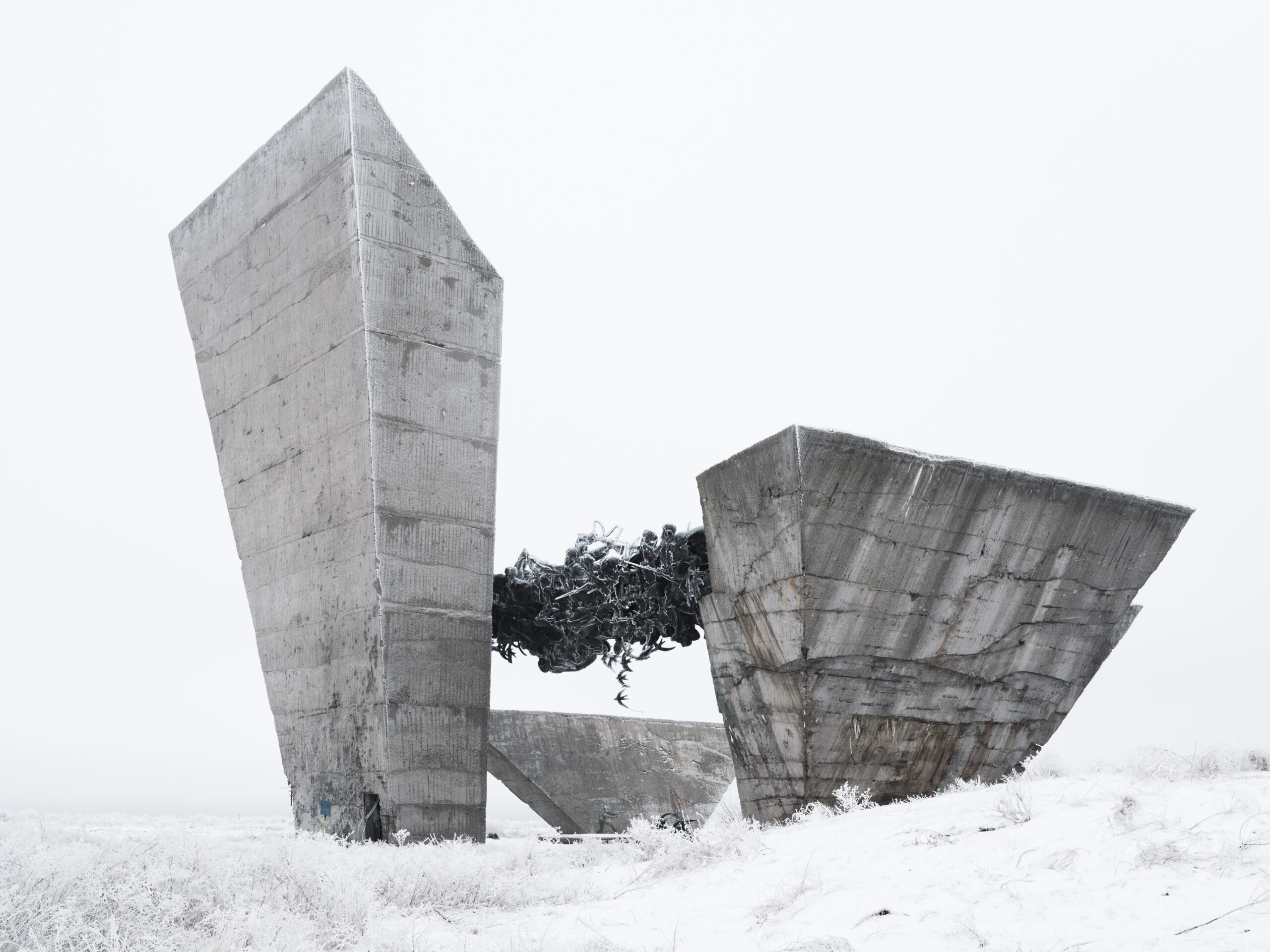
Maxim Dondyuk, White Series, 2017–2024
[February 24, 2026]
Maxim Dondyuk, White Series
By Érika Nimis
“ The place where the troops camp
Thistles and thorns grow
Following the great army
There must be an inauspicious year.”
Lao Tzu, Tao Te Ching, chapter 301
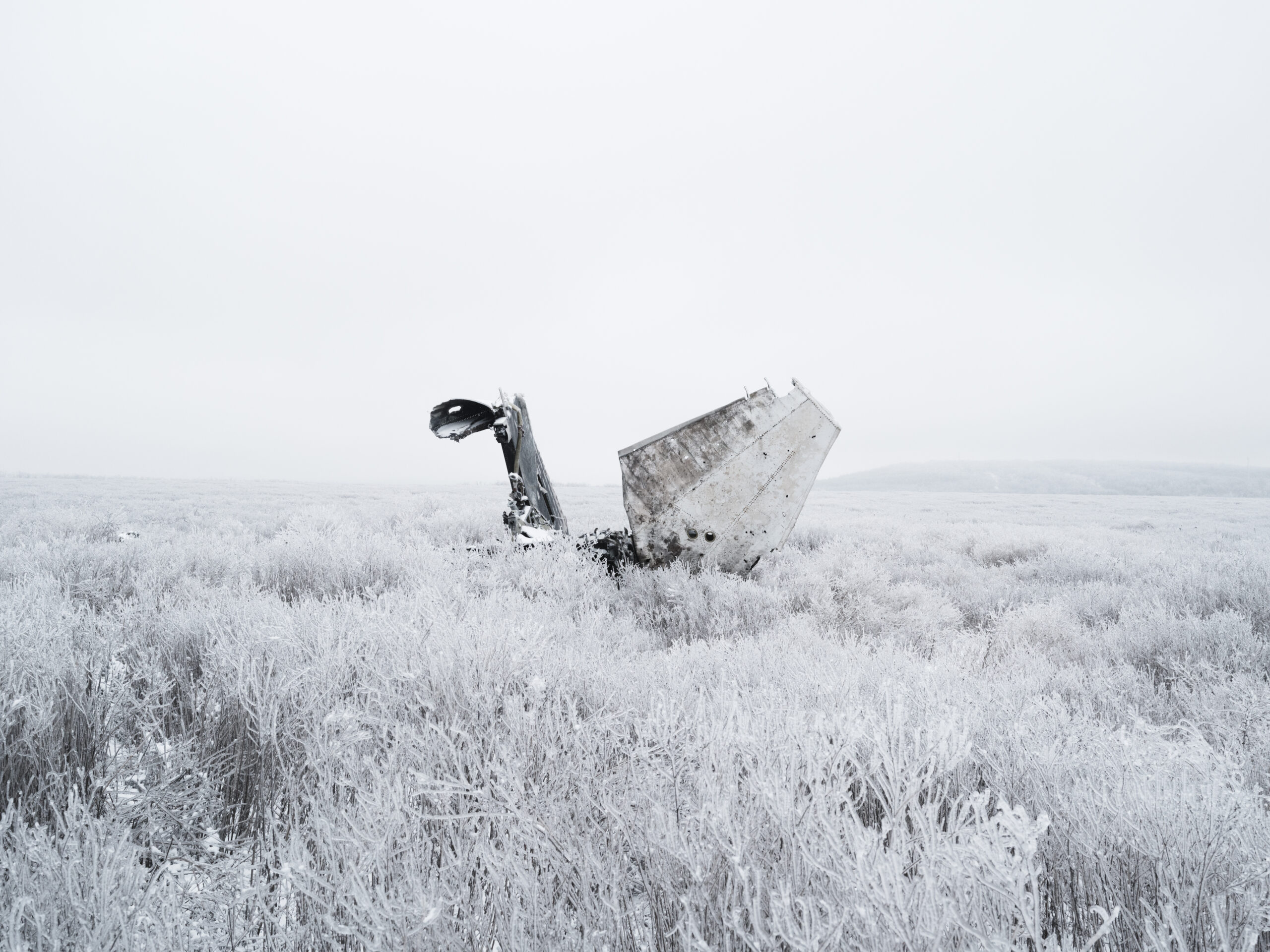
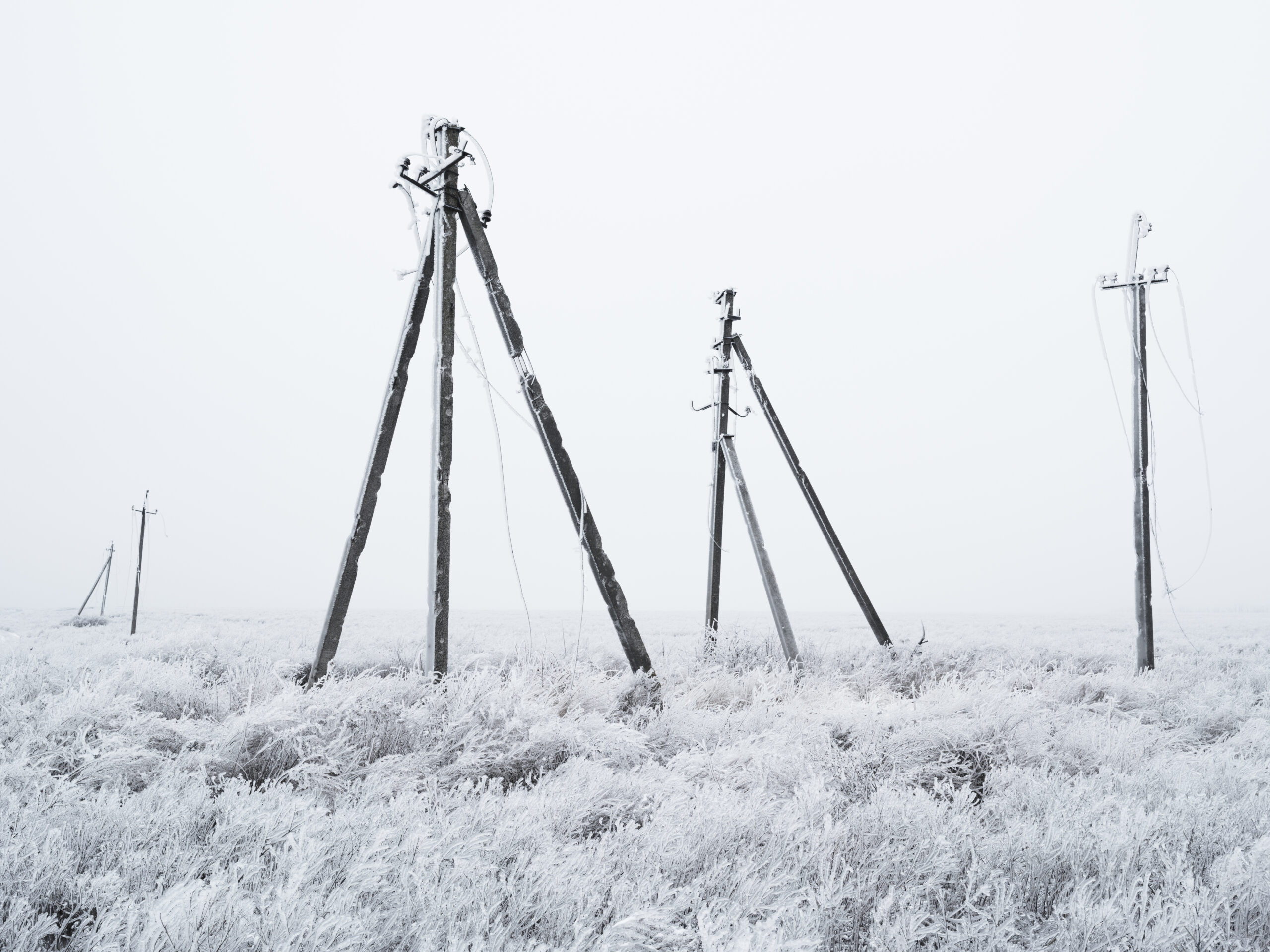
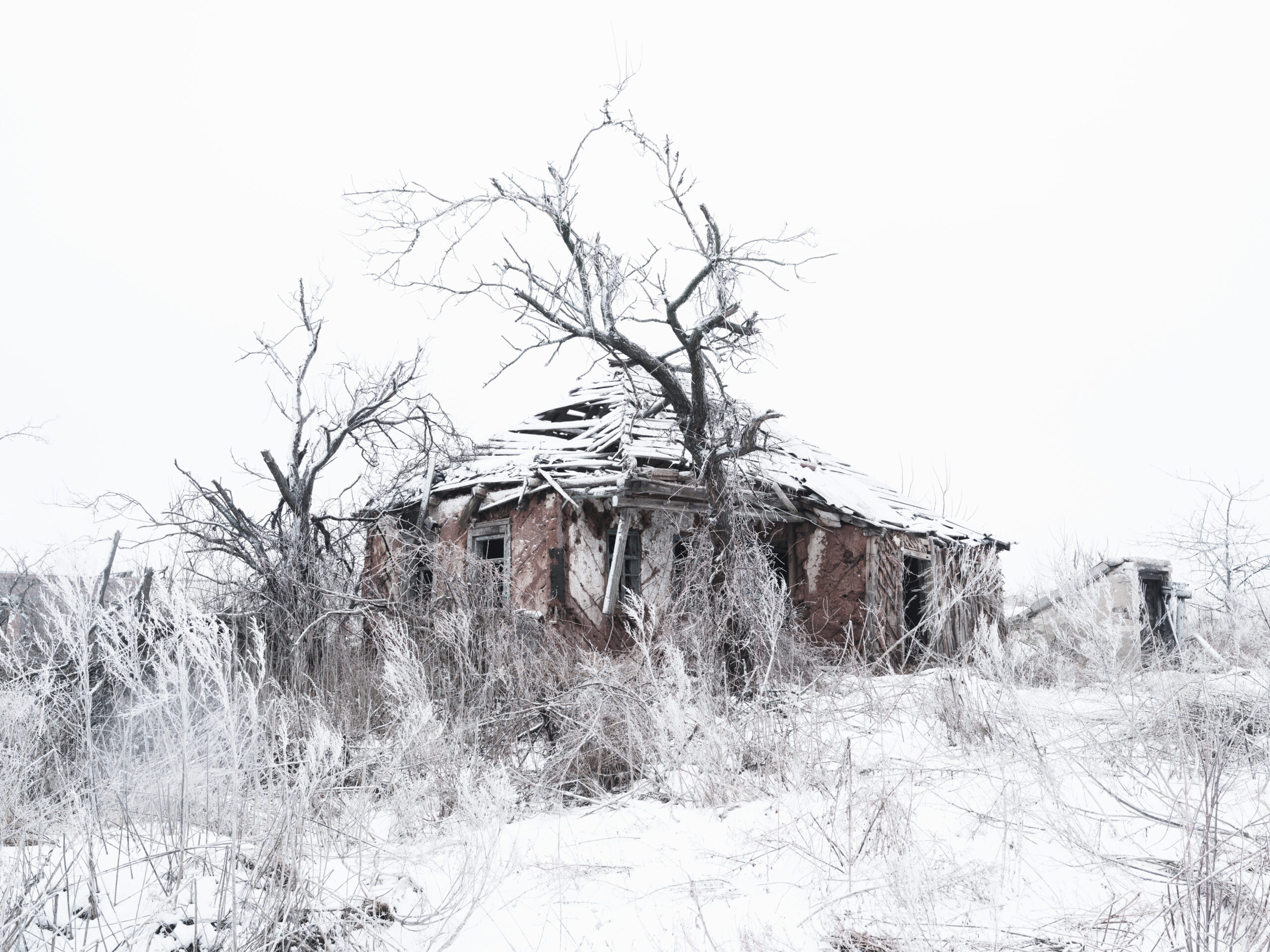
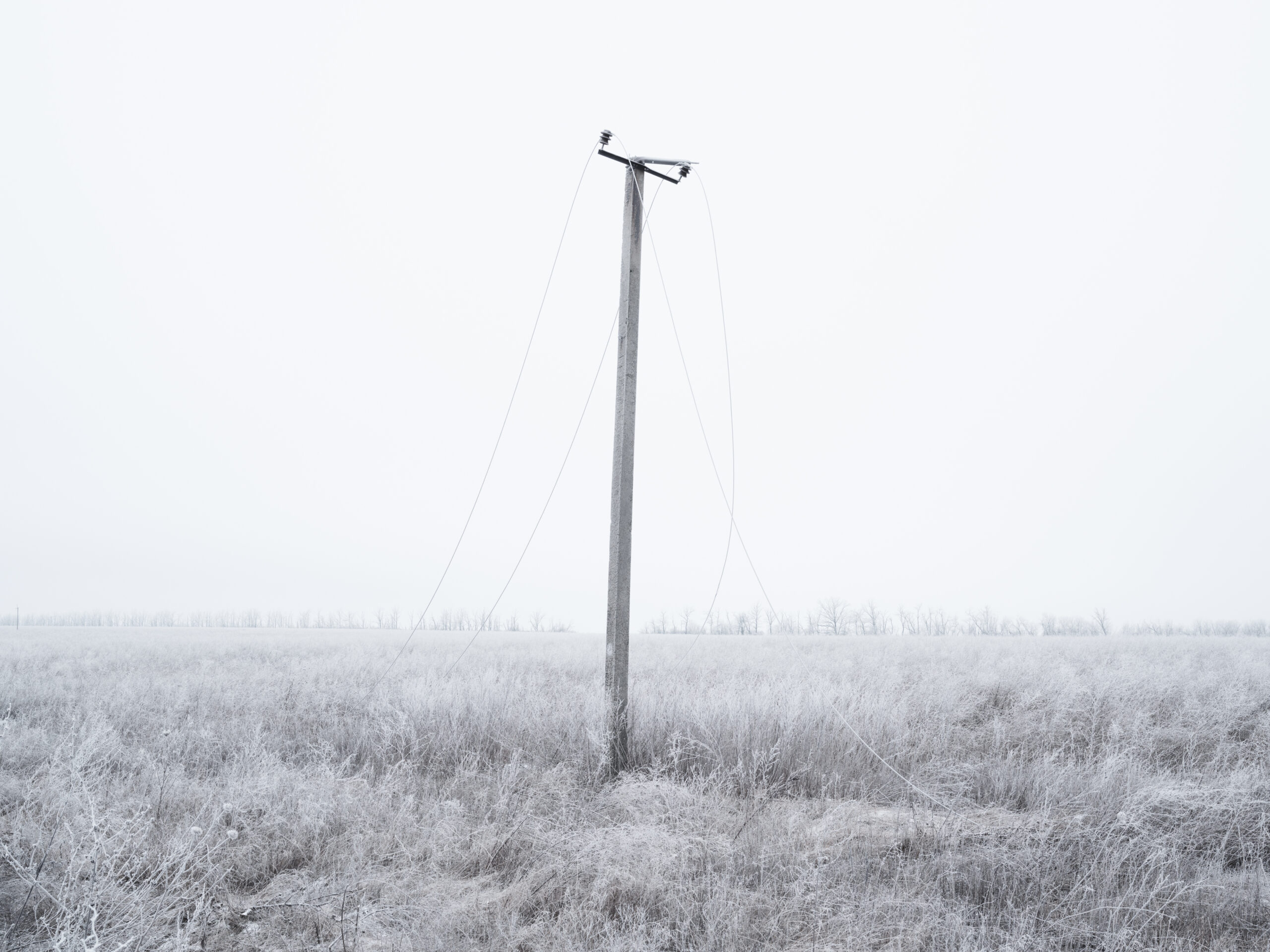
Carcasses of abandoned vehicles, wrecked utility poles rising in a frozen expanse, and gutted buildings populate the lunar settings captured by the Ukrainian photographer Maxim Dondyuk in images that he has grouped together under the title White Series2. A field of unharvested sunflowers reminds us of life brutally interrupted by war. What had formed the wealth of this land has been pulverized under the tanks’ heavy treads. All that remains are skeletons of trees and sapped forests, fragile promises of a possible rebirth.
No captions accompany these landscapes of ruins, except for quotations taken from Lao Tzu’s Tao Te Ching (The Book for the Way and Its Virtue). However, the photograph of a war memorial in full Soviet brutalist style makes the connection to Ukraine. Since 2015, the Russian invasion has transformed eastern Ukraine, perhaps forever, by emptying it of all human presence. Erected to the glory of the Red Army soldiers who fell in 1942, the monument, situated on a hill in the town of Izyum, near Kharkiv, places Dondyuk’s series on the current war within a vaster history in which Ukraine appears as “bloodlands,”3 marked by the recurrence of violence and the confrontation of empires.
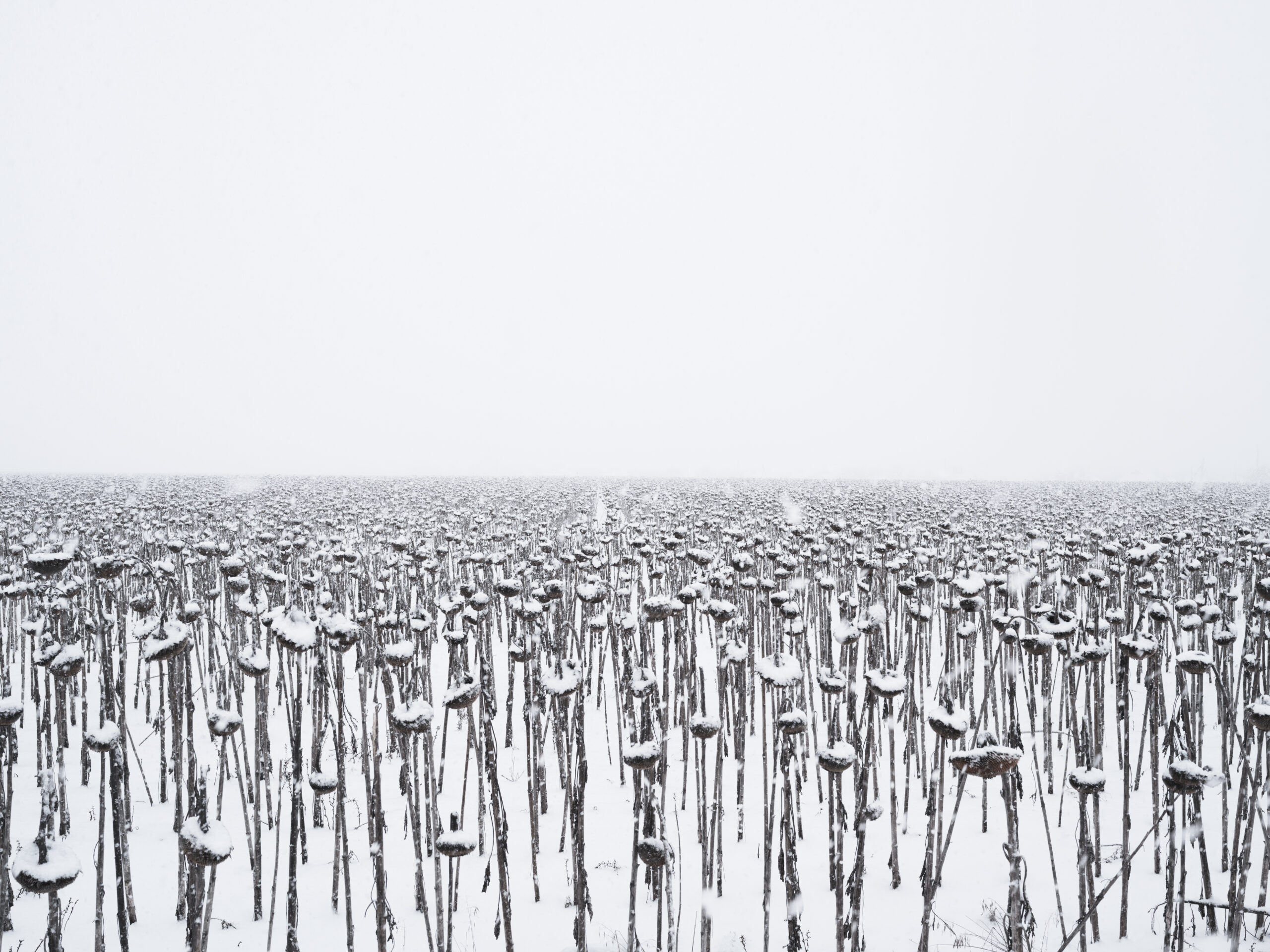 Maxim Dondyuk, White Series, 2017–2024
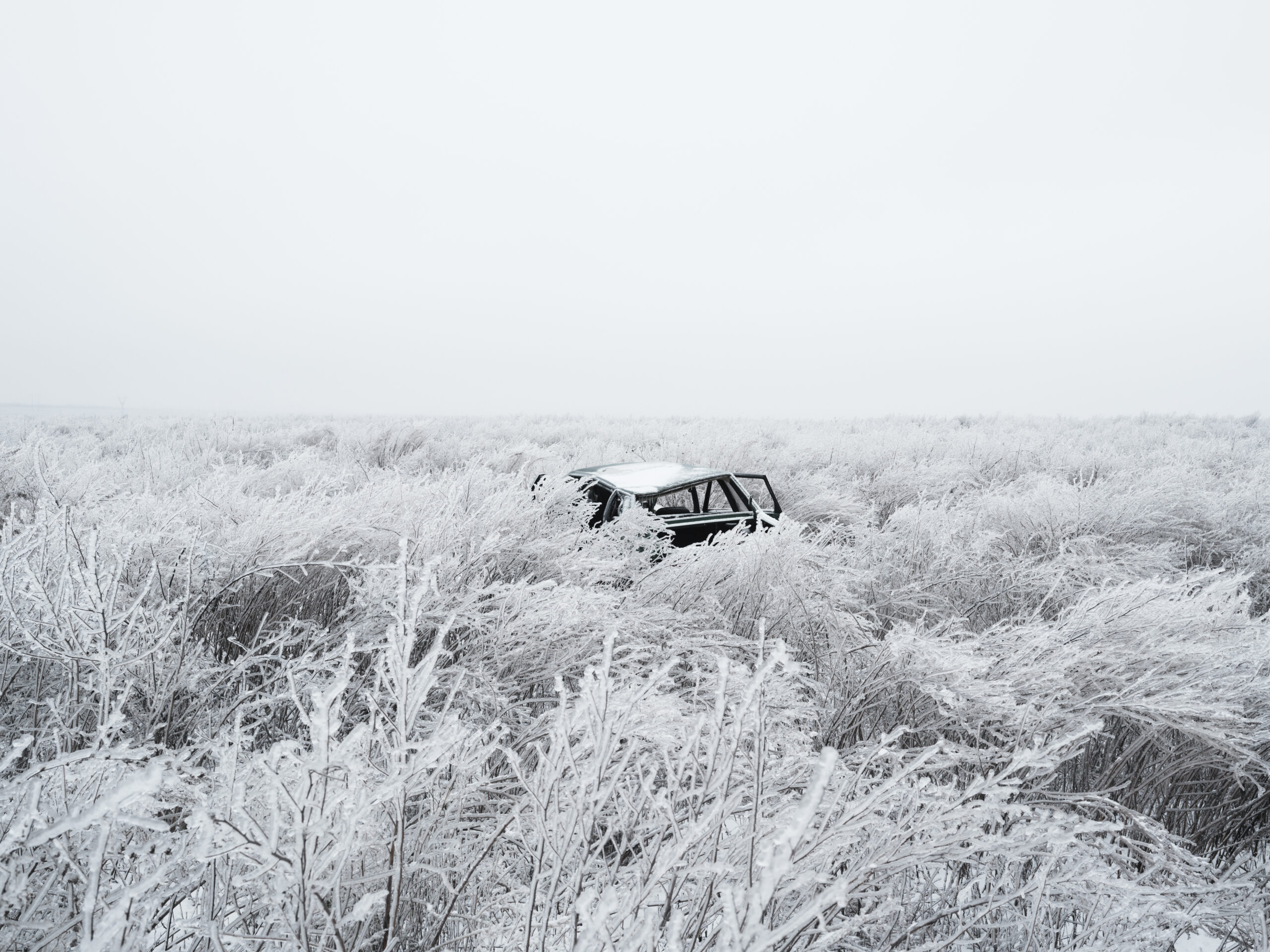
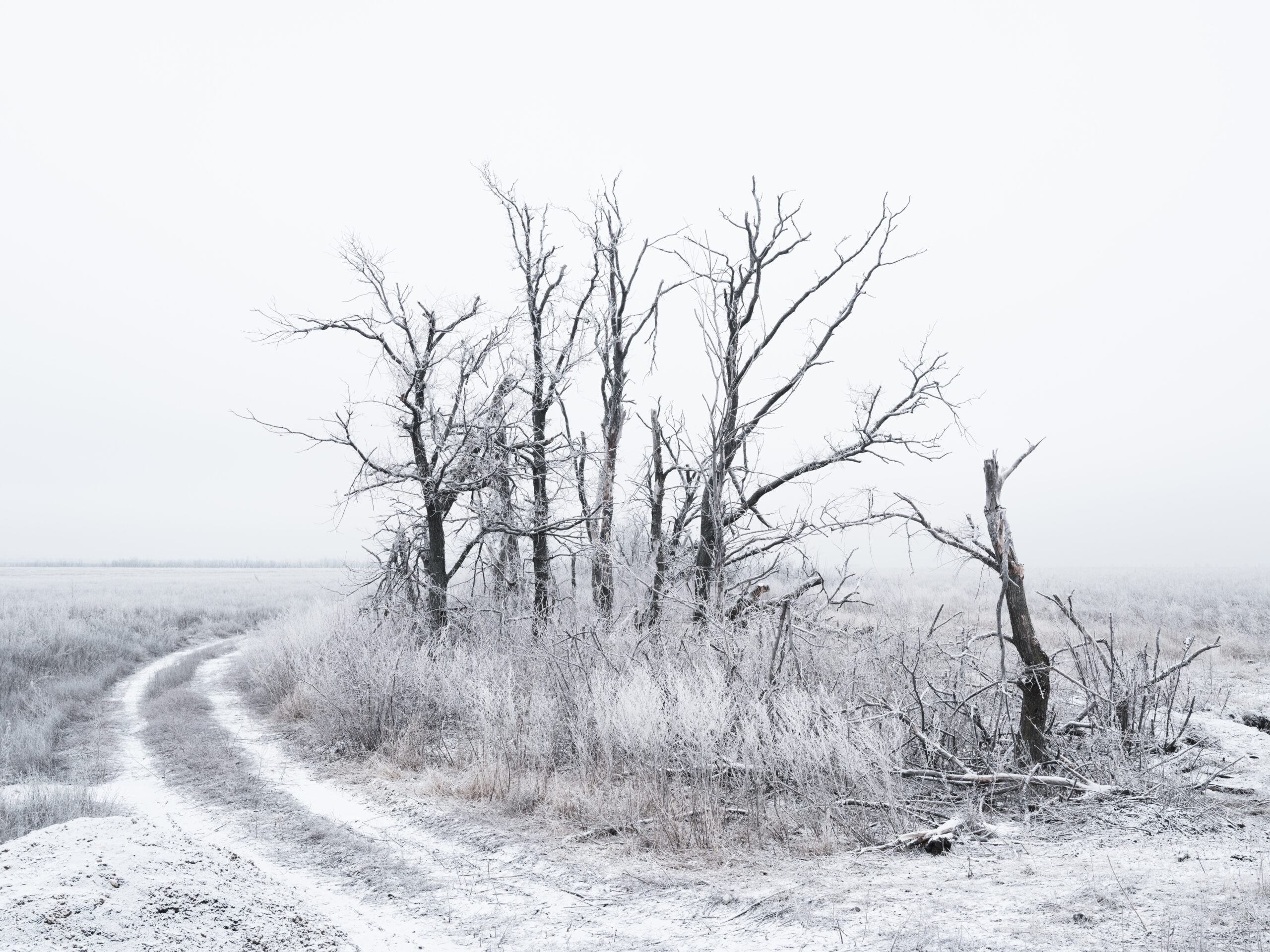
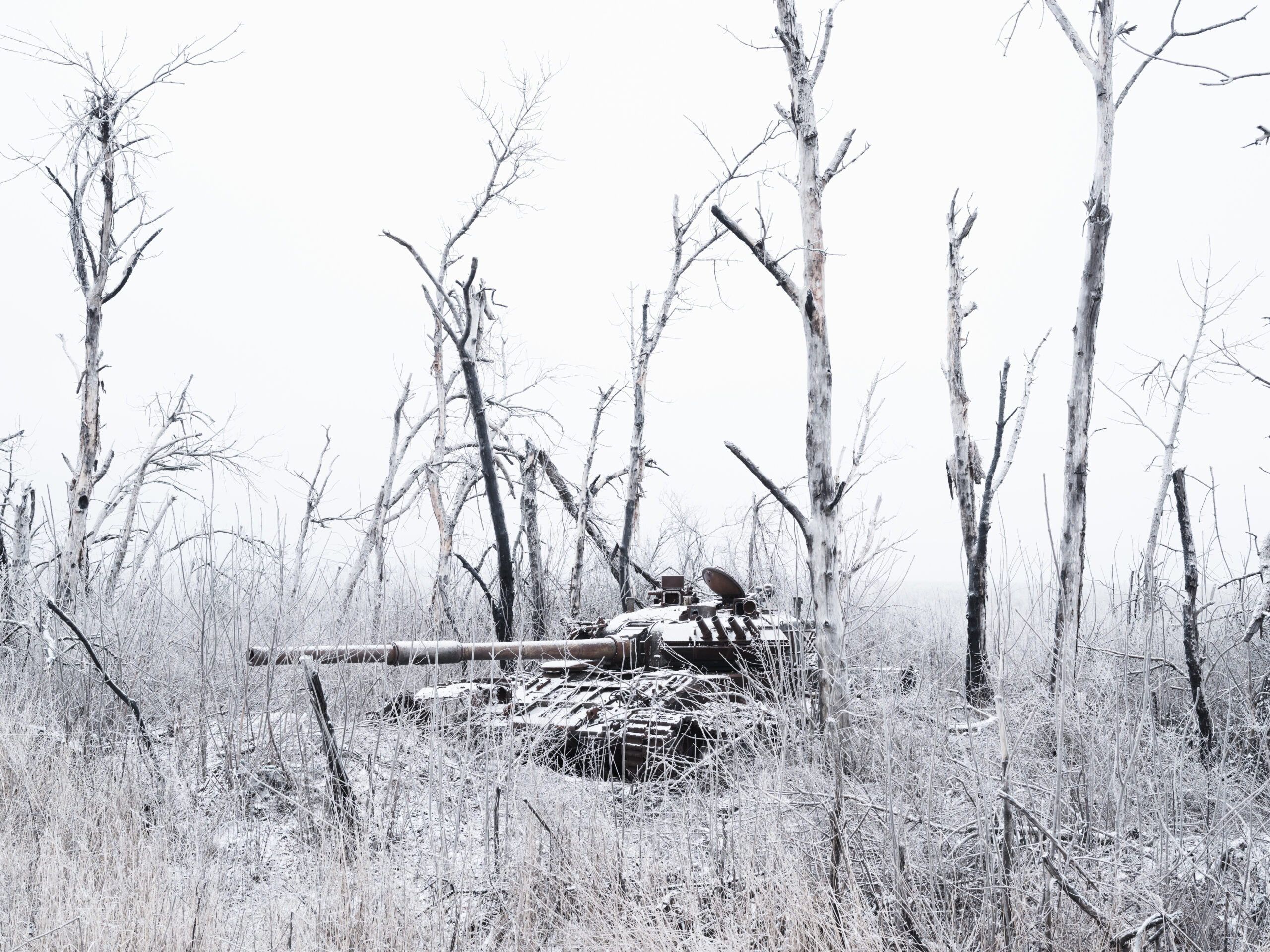
The traces of intense battles dissolve in the white of winter and an oppressive silence. White, the colour of mourning in some cultures, functions here as a layer of memory, inscribing bloodshed in the very soil. It also evokes the toxicity of irradiated territories: Hiroshima in 1945 and Chernobyl in 19864. Begun in 2017, then taken up again in 2022, White Series complements a long-term project, Ukraine 2014/22, devoted to a country’s struggle against Russia for its independence, both territorial and identity-related.
Dondyuk worked on this project alone, camera on his shoulder. He slowly made his way through mine-infested areas, ascetic in his technique, with the aim of comprehending the war not only as a historic event but, more generally, as an experience of human destruction. Through this series of medium-format panoramas, made according to a strict protocol, he invites the public to step into the image, as one enters a painting about ruins, to meditate on the meaning of war.
Maxim Dondyuk, White Series, 2017–2024
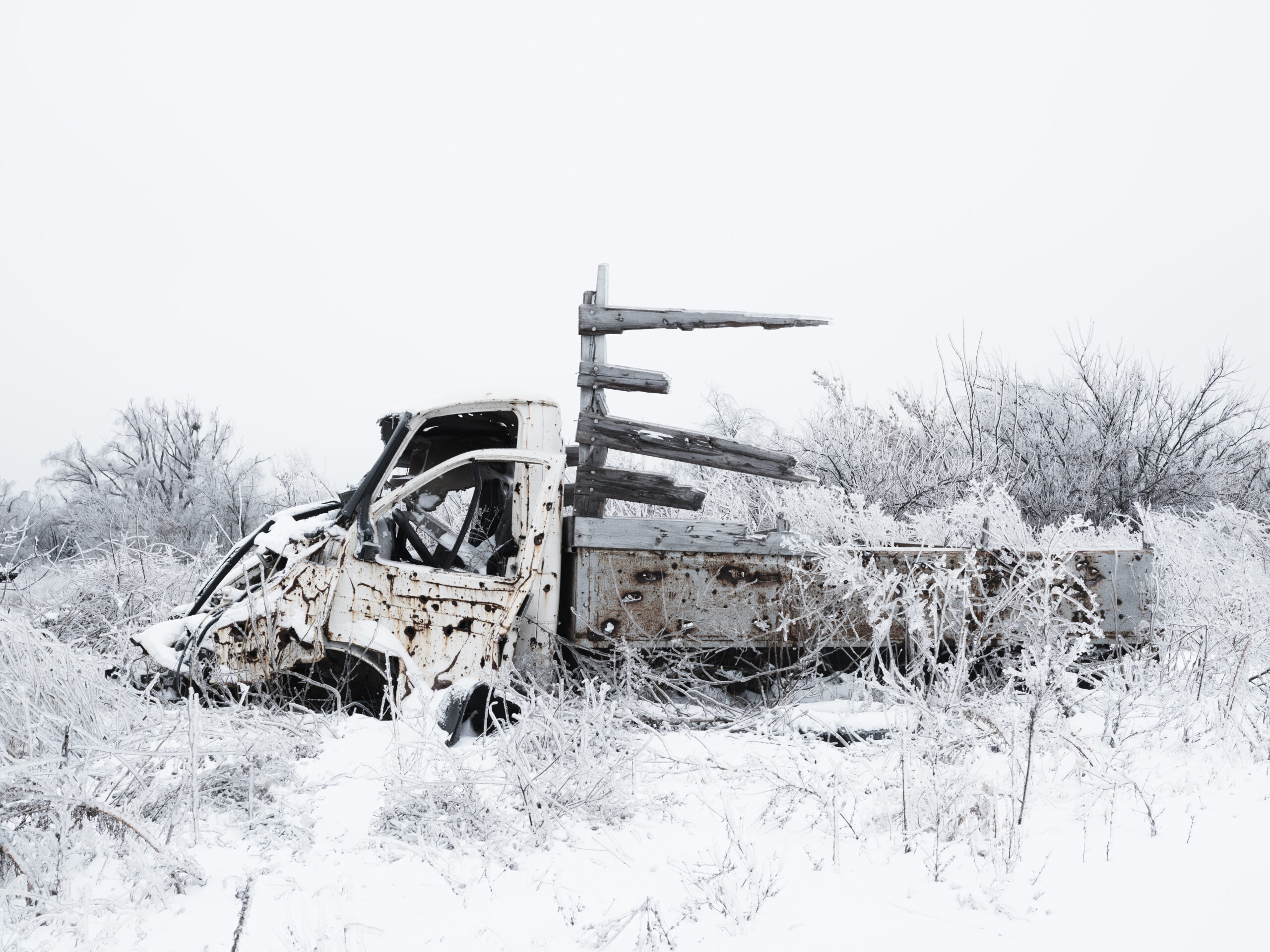
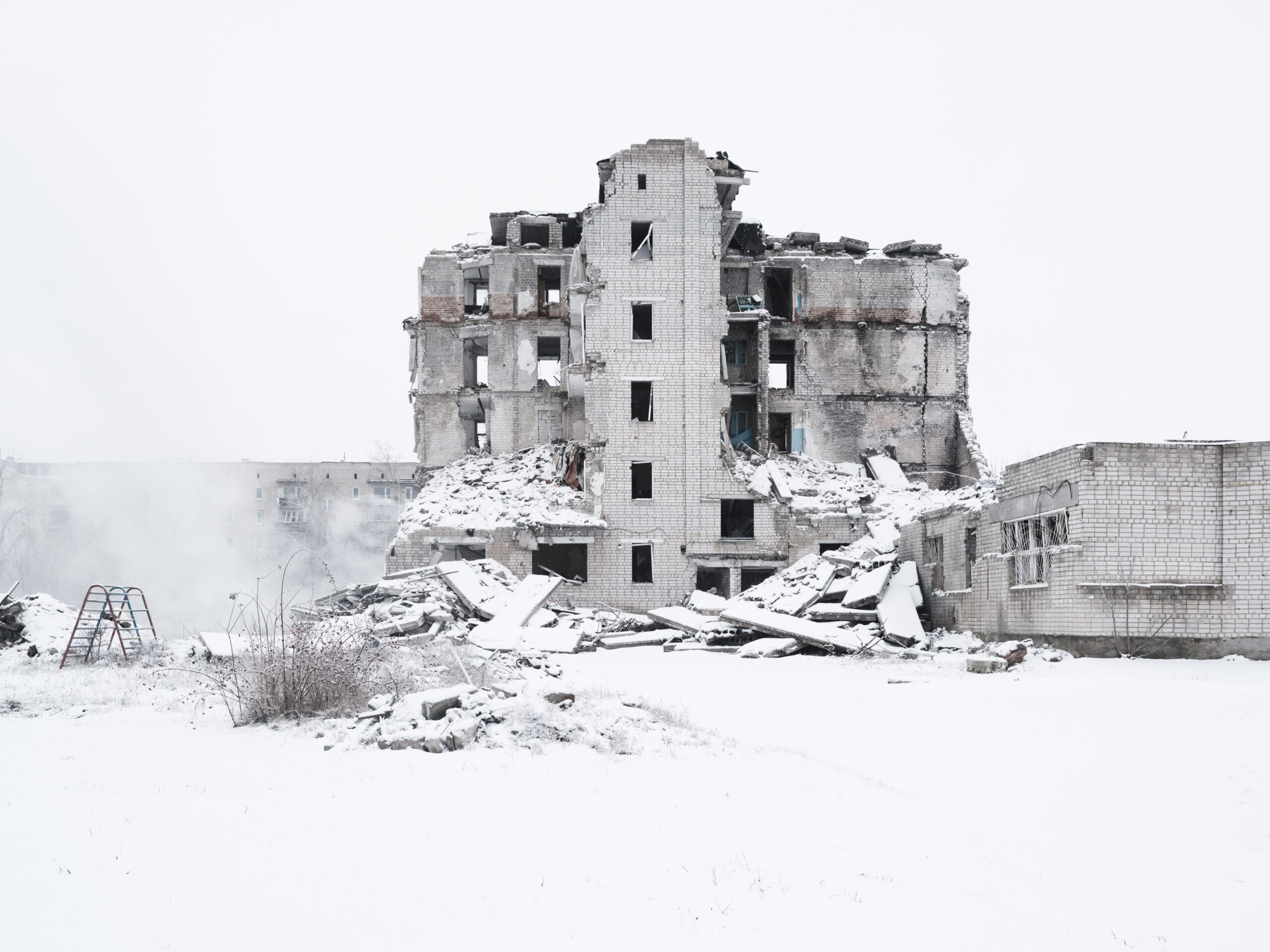
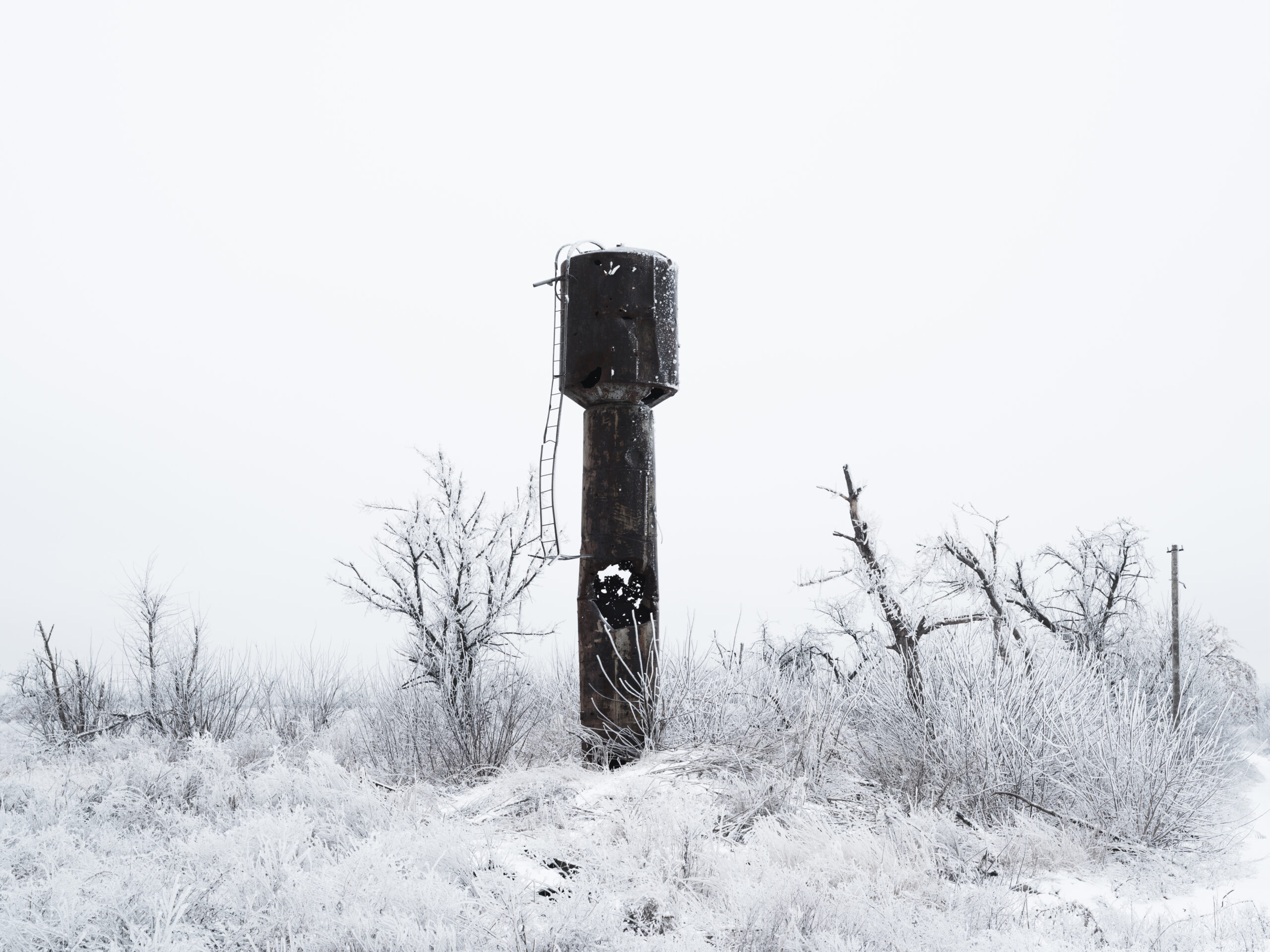
The series shows neither battles nor bodies. It allows us to see what war leaves in its wake. This approach falls within a visual tradition that goes back to the inception of war photography, as exemplified by Roger Fenton’s famous shot of the Crimean War, The Valley of the Shadow of Death (1855). In this gully littered with cannonballs, the absence of corpses in no way attenuates the suggested horror. For technical and ideological reasons, Fenton did not photograph the dead. Yet, the sense of desolation that emanates from the image makes it a lasting symbol of the savagery of combat. Closer to our times, Sophie Ristelhueber’s work on disfigured landscapes extends this reflection: in her photographs, war is apprehended by the scars it leaves. For Dondyuk, absence acts similarly. It does not reduce the violence; it renders it diffuse, persistent, engraved in space and time.
Aesthetics plays an essential role. The images, of great formal beauty, draw the eye first for their chromatic harmony. But this attraction is a trap: what seems peaceful at first glance reveals a desolate reality. Dondyuk thus probes our relationship with images of war and our capacity to transform them into objects of contemplation. By rejecting spectacle and sensationalism, he displaces the gaze toward the long duration, toward the lasting traces left by a conflict.
 Maxim Dondyuk, White Series, 2017–2024
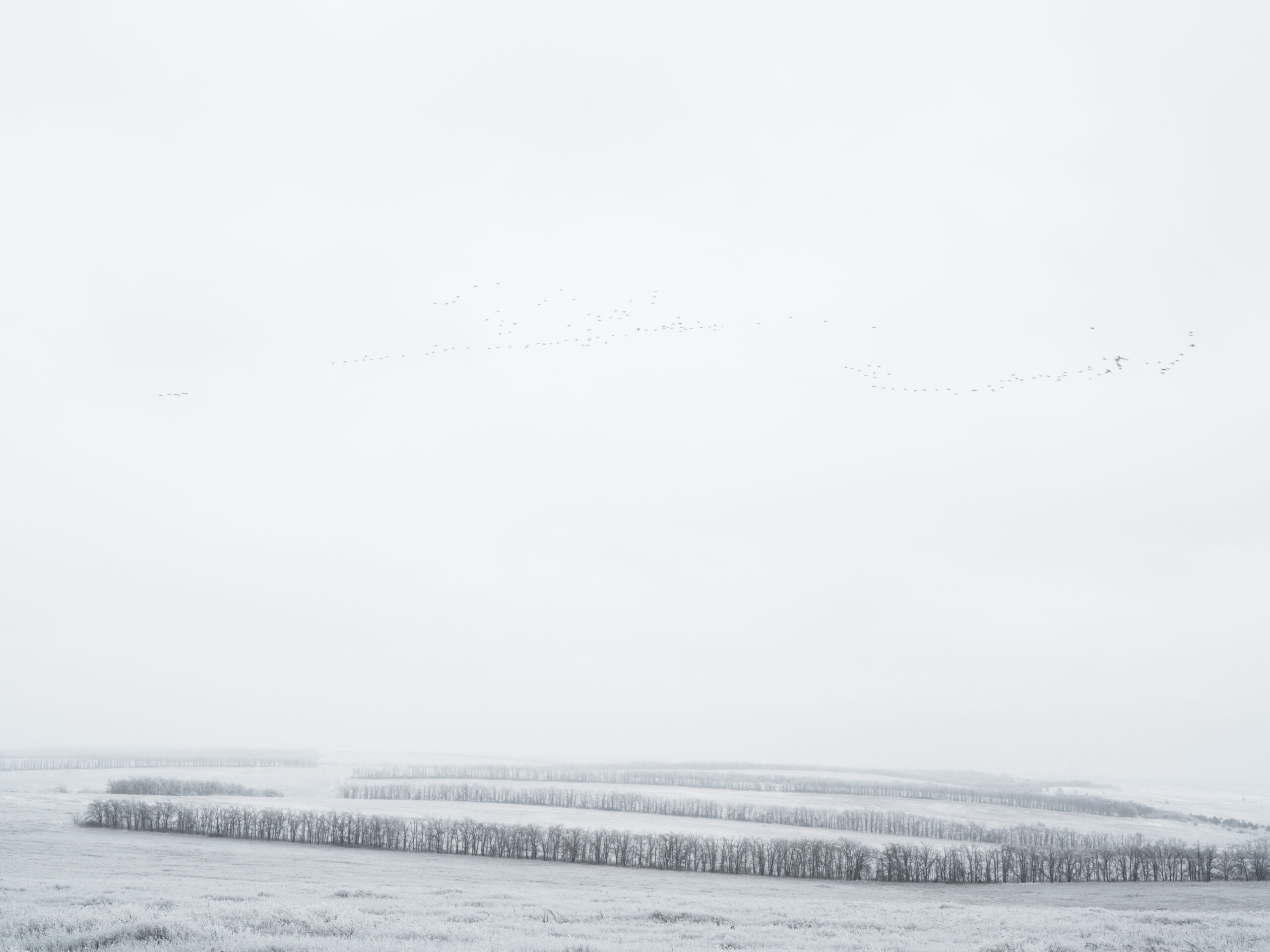
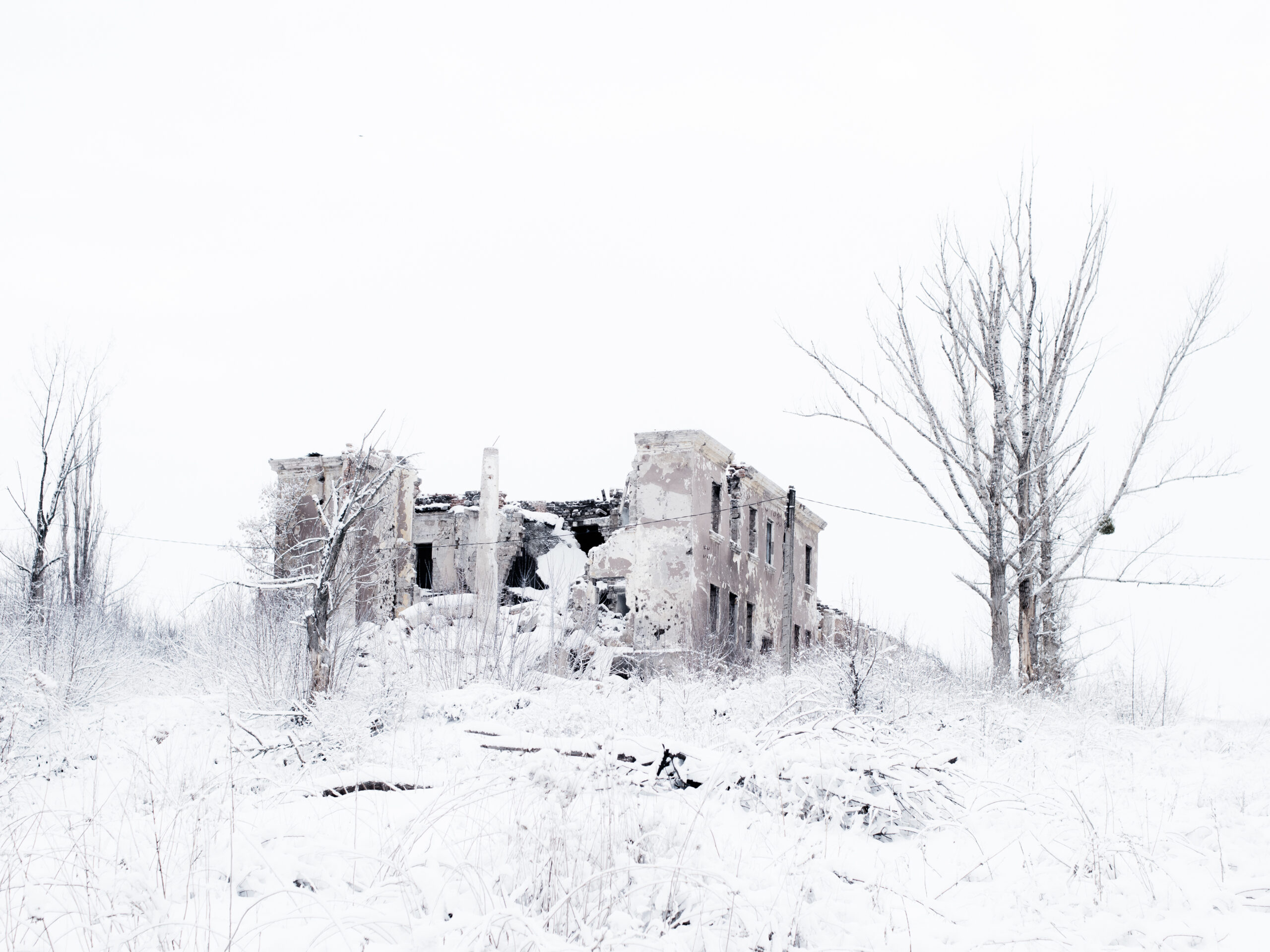
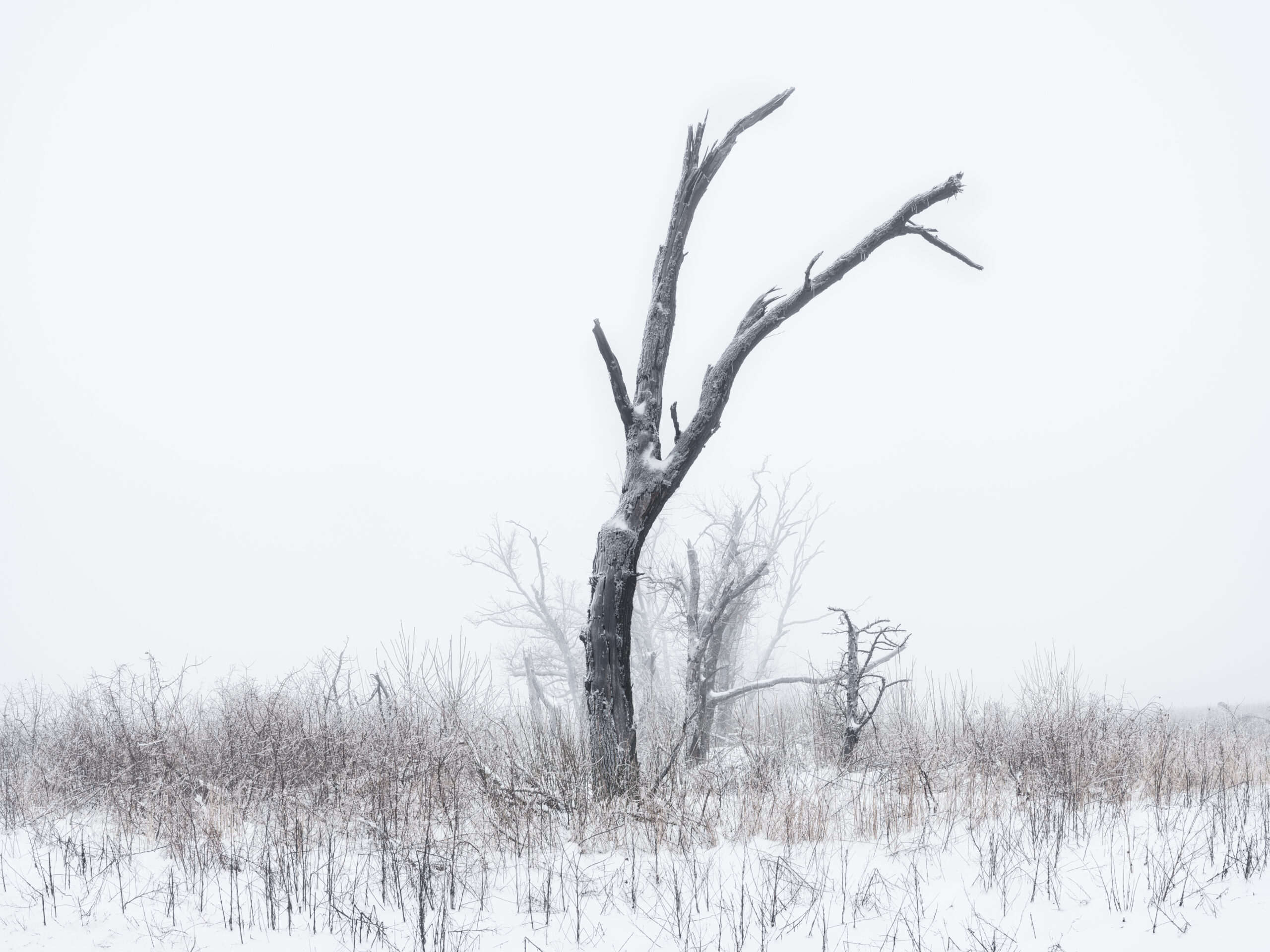
When he received the W. Eugene Smith Grant in 2022 for his work on Ukraine, Dondyuk transcended the status of photojournalist. Inspired by philosophies such as Taoism (whence the references to Lao Tzu’s thought), he deliberately takes a viscerally humanist position: no ideology, national or religious, can take precedence over human life. White Series shows not war being waged but what it imprints on the land and on minds. These devastated landscapes become places of memory, haunted by invisible carnage. They invite us to consider, on moral and existential grounds, the fragility and the persistence of the wounds that conflicts leave behind them. Translated by Käthe Roth
Maxim Donduyk (born 1983) worked as a photojournalist before devoting himself to an art practice. Since then, he has turned to photography, video, archives, and text to retrace the consequences of events such as the Maidan revolution and the nuclear catastrophe at Chernobyl. His work has been published in globally distributed magazines, recognized with international awards, and shown in major institutions, such as the Musée d’art moderne de Paris and MAXXI in Rome. He lives and works in Ukraine, France, and Asia.
Érika Nimis is a photographer, historian, and publisher, specializing in the history of photography in West Africa, and a researcher affiliated with the Art History Department at UQAM. In 2020, she began a photographic project on Ukraine, the home country of her paternal grandmother.
NOTES
1 maximdondyuk.com/projects/white-series.
2 Presented for the first time at CONTACT Gallery in Toronto in fall 2025: contactphoto.com/festival/2025/contact-gallery/maxim-dondyuk-white-series-meditations-on-war.
3 Referring to the book by the historian Timothy Snyder, Bloodlands: Europe between Hitler and Stalin (2010).
4 Since 2016, Dondyuk has been highlighting a collection of family photographic archives that he gathered in the Chernobyl exclusion zone. See maximdondyuk.com/projects/chornobyl-archive.