
[October 14, 2026]
Worlds in View
The 57th Rencontres d’Arles
6.07.2026 — 04.10.2026
By Carol Payne
The 57th annual edition of Les Rencontres de la photographie, the revered French photography festival, spread across the city of Arles in southern France. It brought photography exhibitions from the Croisière to the Parc des Atelier, throughout the city’s historic centre, and extended to a local Monoprix supermarket and beyond, filling the lived space of the city.
Titled “Worlds in View,” the 2026 edition of Les Rencontres proposed a new cultural geography of photography. The organizers characterized this year’s festival as a series of photographic narratives from various regions, but prominently featuring Africa and the Mediterranean region. The festival’s director, Christoph Wiesner, evoked Edward Said’s concept of “imaginative geographies” in his characterization of the overall program: “Photography makes it possible to see the world differently. … A new map of the world emerges from a focus on movement, routes, passages and lines of tension across these territories. Between Africa and the Mediterranean, between inherited borders and movements toward emancipation, artists reimagine geographies.” The global reach and cartographic metaphors driving this edition aptly capture the decolonial perspectives at the heart of much of the work displayed.
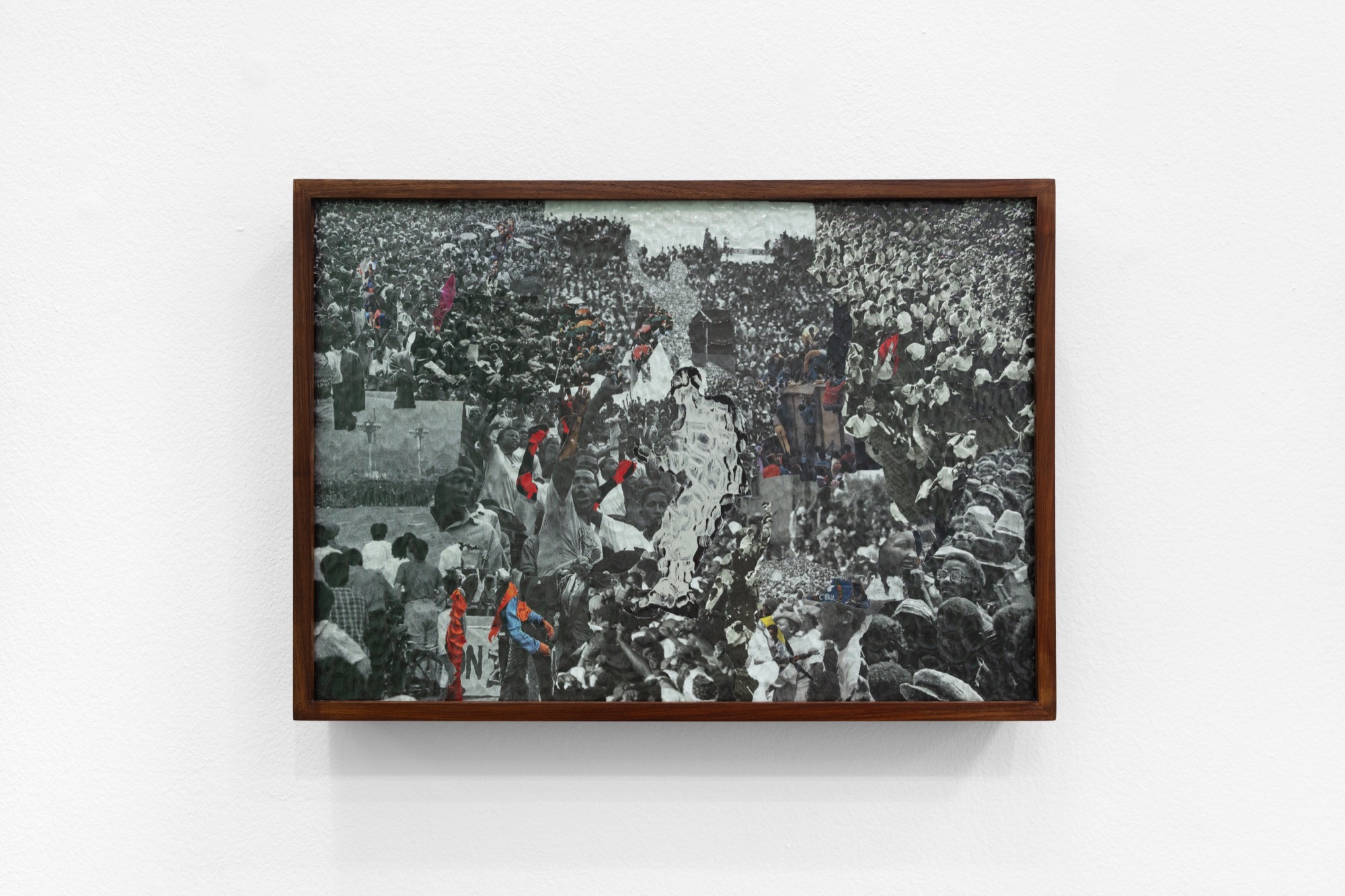
Thato Toeba, civilians I, 2025, collage, verre, bois / collage, glass, wood, permission de / courtesy of Thato Toeba et / and Stevenson, Cape Town, Amsterdam, photo : Mario Todeschini
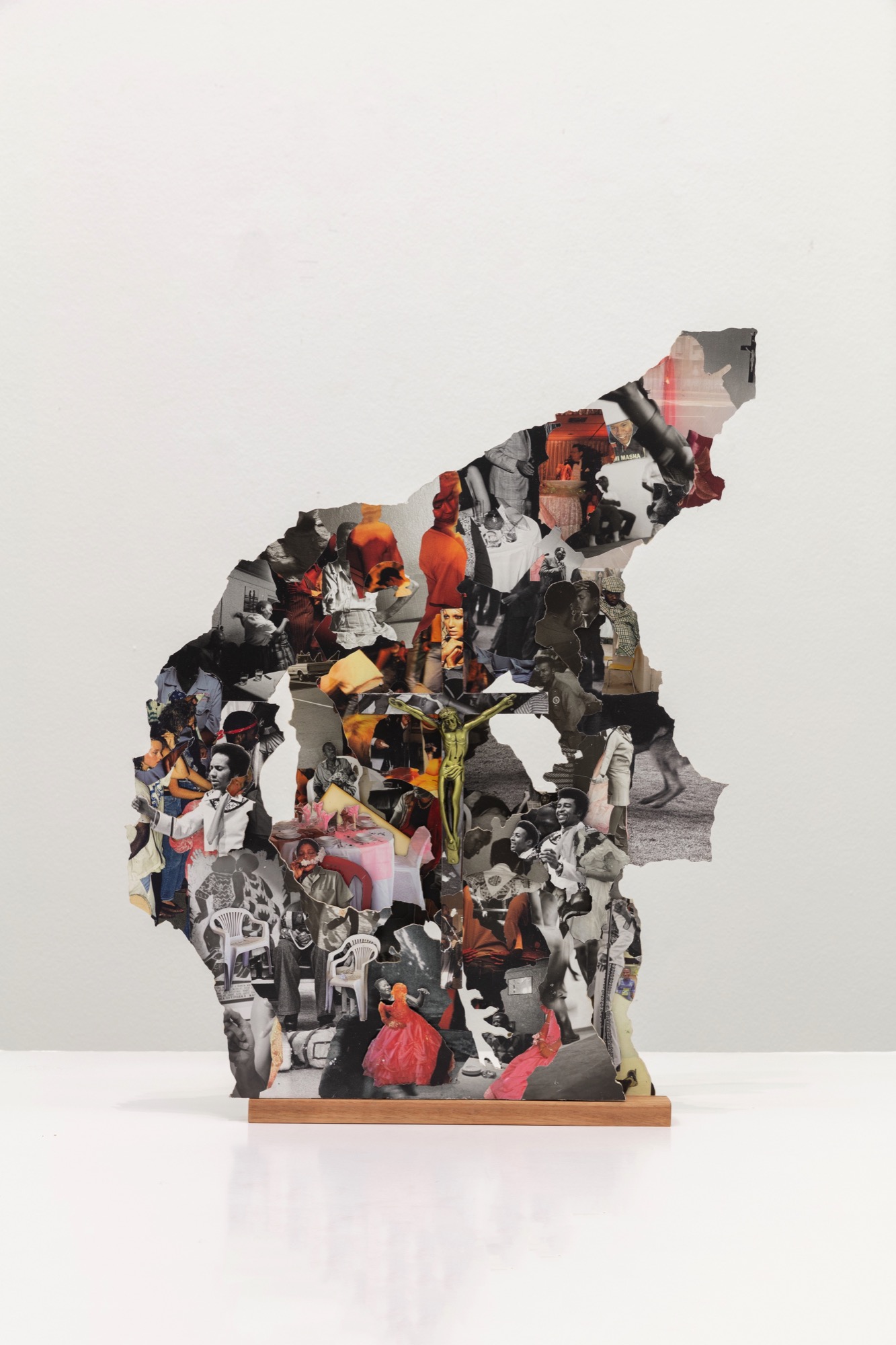
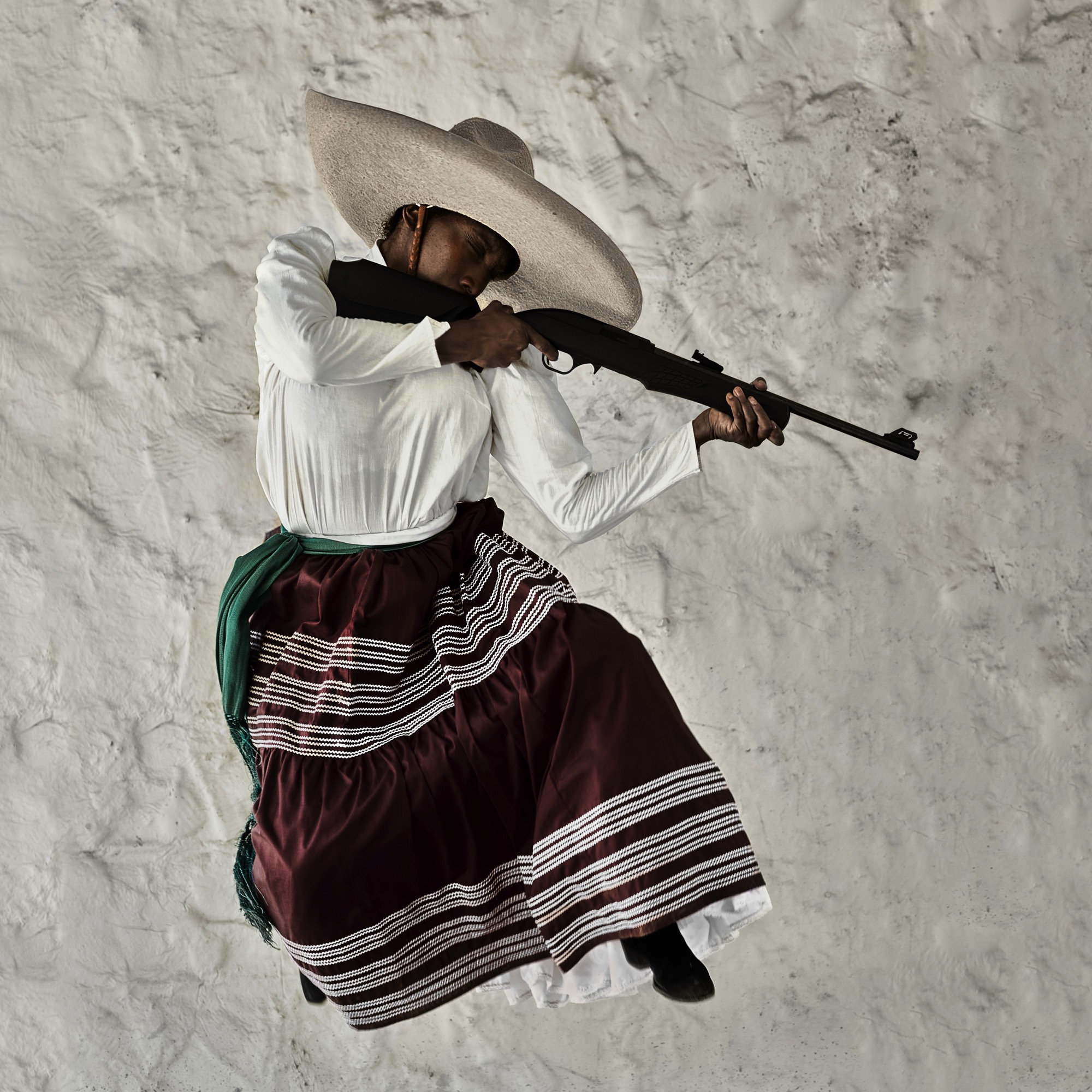
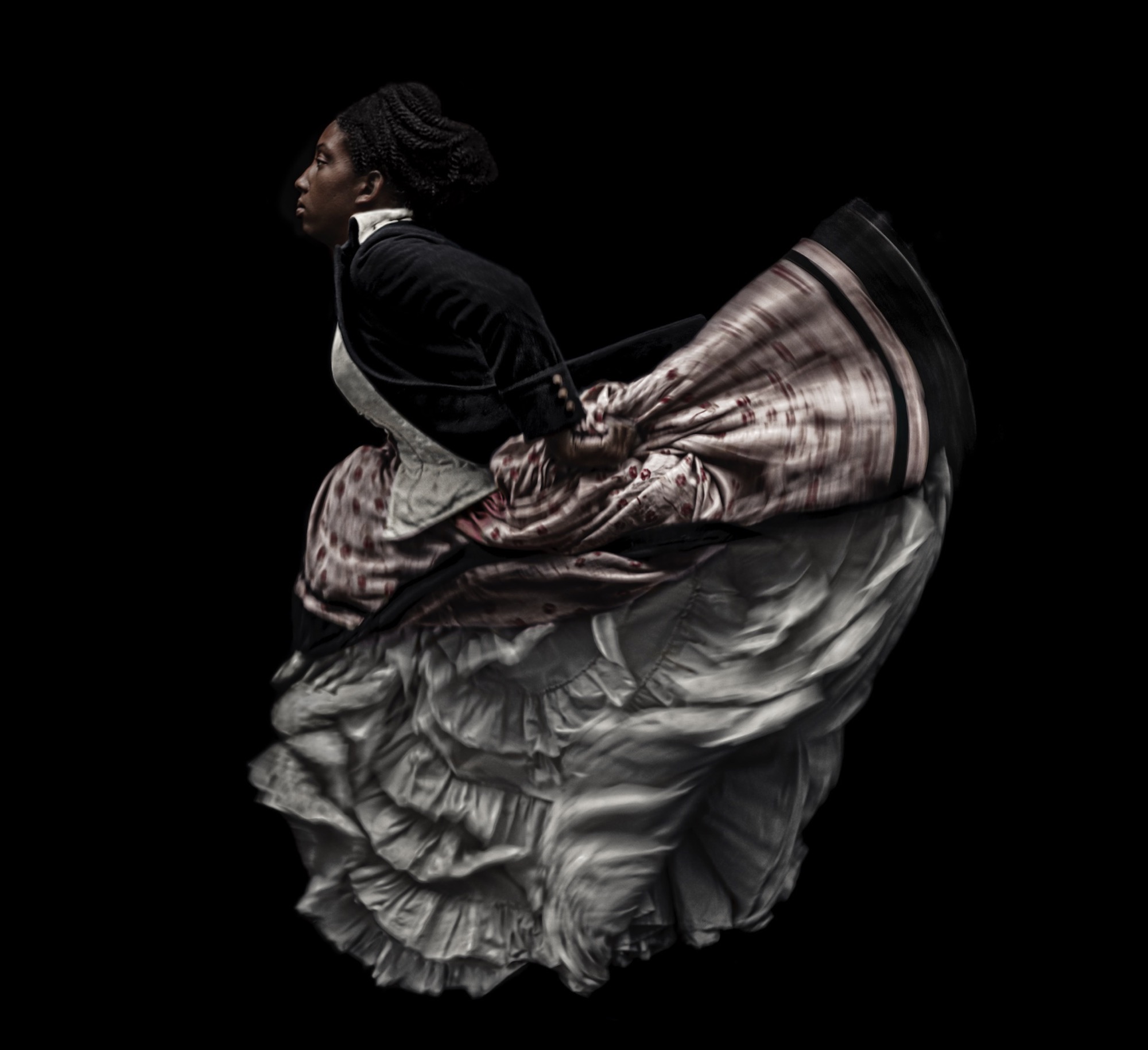
Worlds in View was organized into six themes: “Independence,” “Journeys,” “Forms of Life,” “Revisits,” “The Uncertain Archive,” and “Emerging Voices,” with additional associated exhibitions (in Arles and throughout Provence), photobook exhibitions, and awards, along with a series of conferences and workshops. Contemporary photography was highlighted and included the Rencontres’s long-standing promotion of new photographers (principally in the “Emerging Voices” exhibitions). Worlds in View also extended its reach temporally to include historical photography (particularly under the “Revisits” and “Independence” themes) and a re-examination of the work of prominent photographers (Stan Douglas, William Klein, Marie-Claude Deffarge and Gordian Troeller, Ming Smith, Martine Barrat, Edward Steichen, and others). Yet in the present moment of exacerbated global tensions, many of the retrospective exhibitions, too, spoke to today’s fractious global environment and the desire to reimagine a more humane world. The range and sheer number of exhibitions, featuring dozens of photographers and crafted by over twenty curators, was a feast for viewers. A comprehensive discussion of all the exhibitions is well beyond the scope of a single review; instead, I offer a few selected highlights.
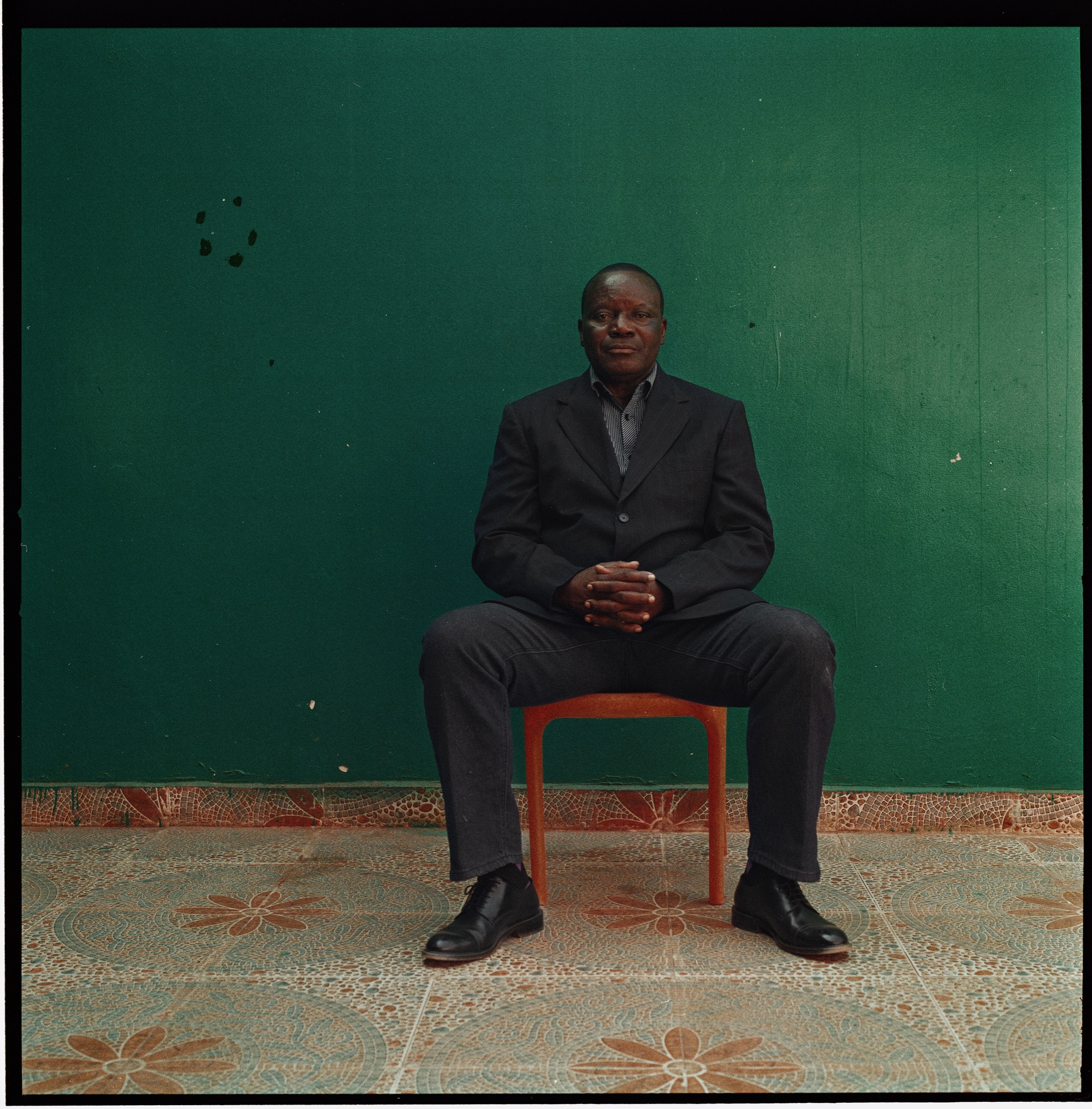
Sammy Baloji, Jean-Marie Kayombo, Luanda, Angola, 2019, permission de / courtesy of Sammy Baloji et / and galerie / gallery Imane Farès, Paris
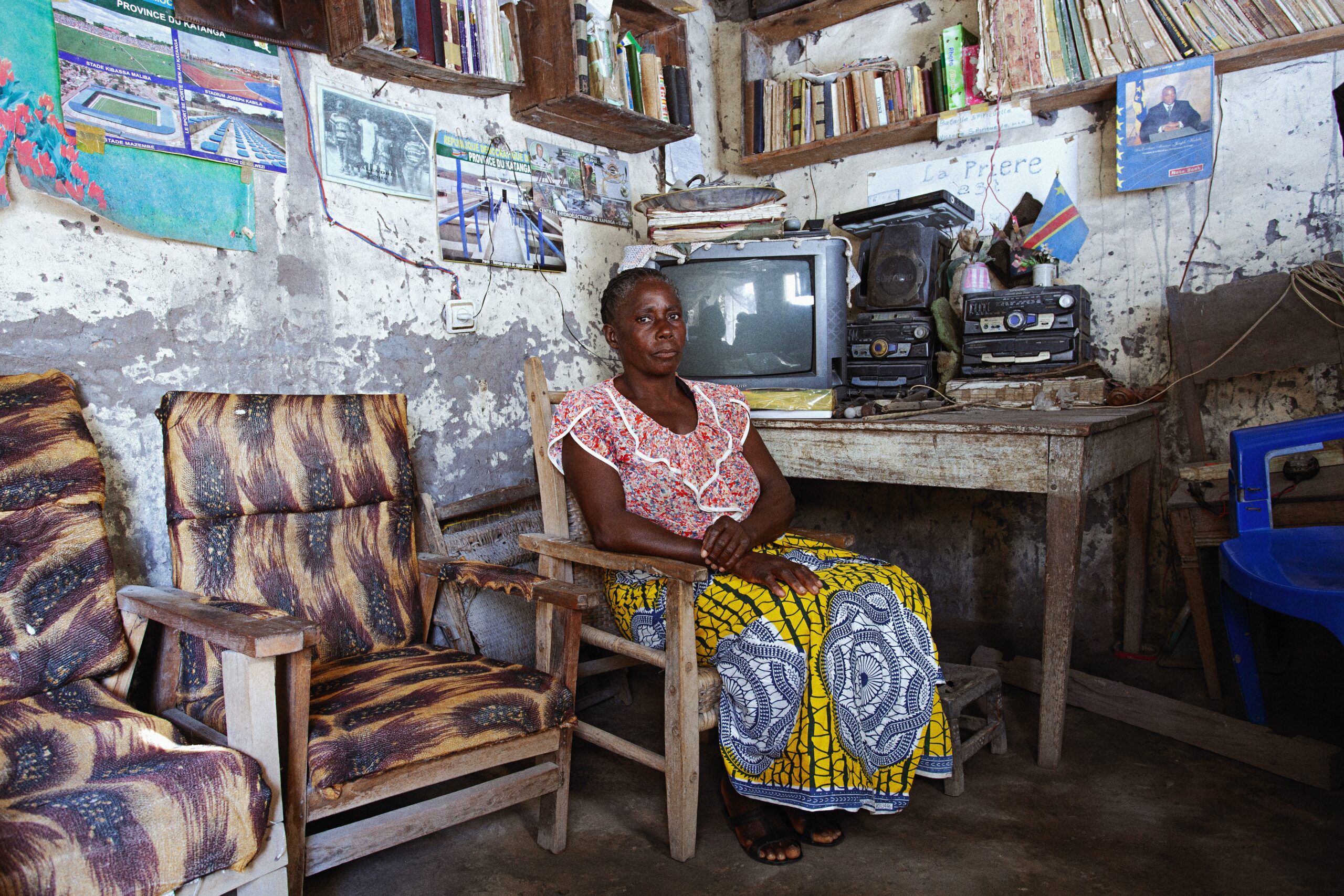
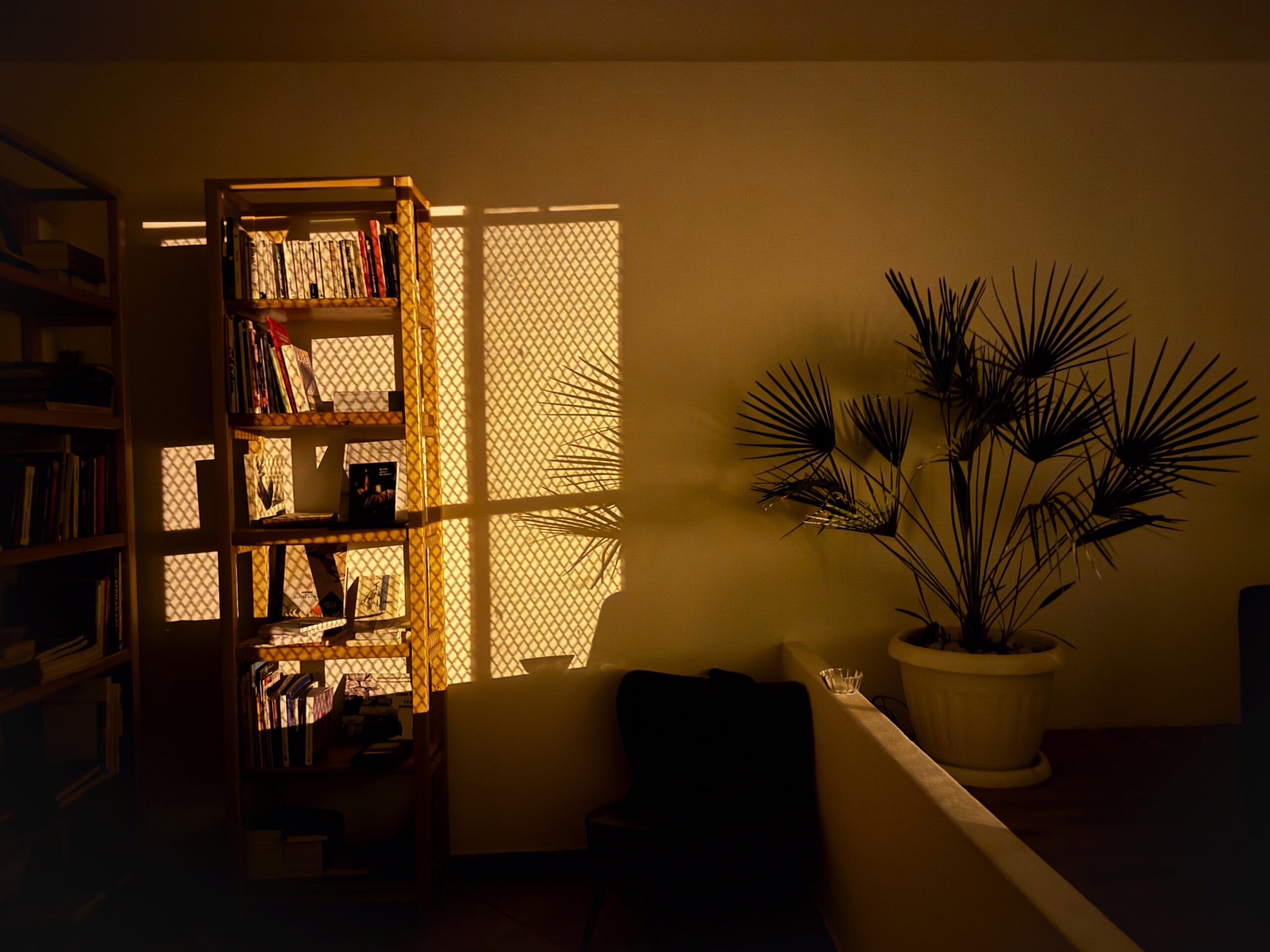
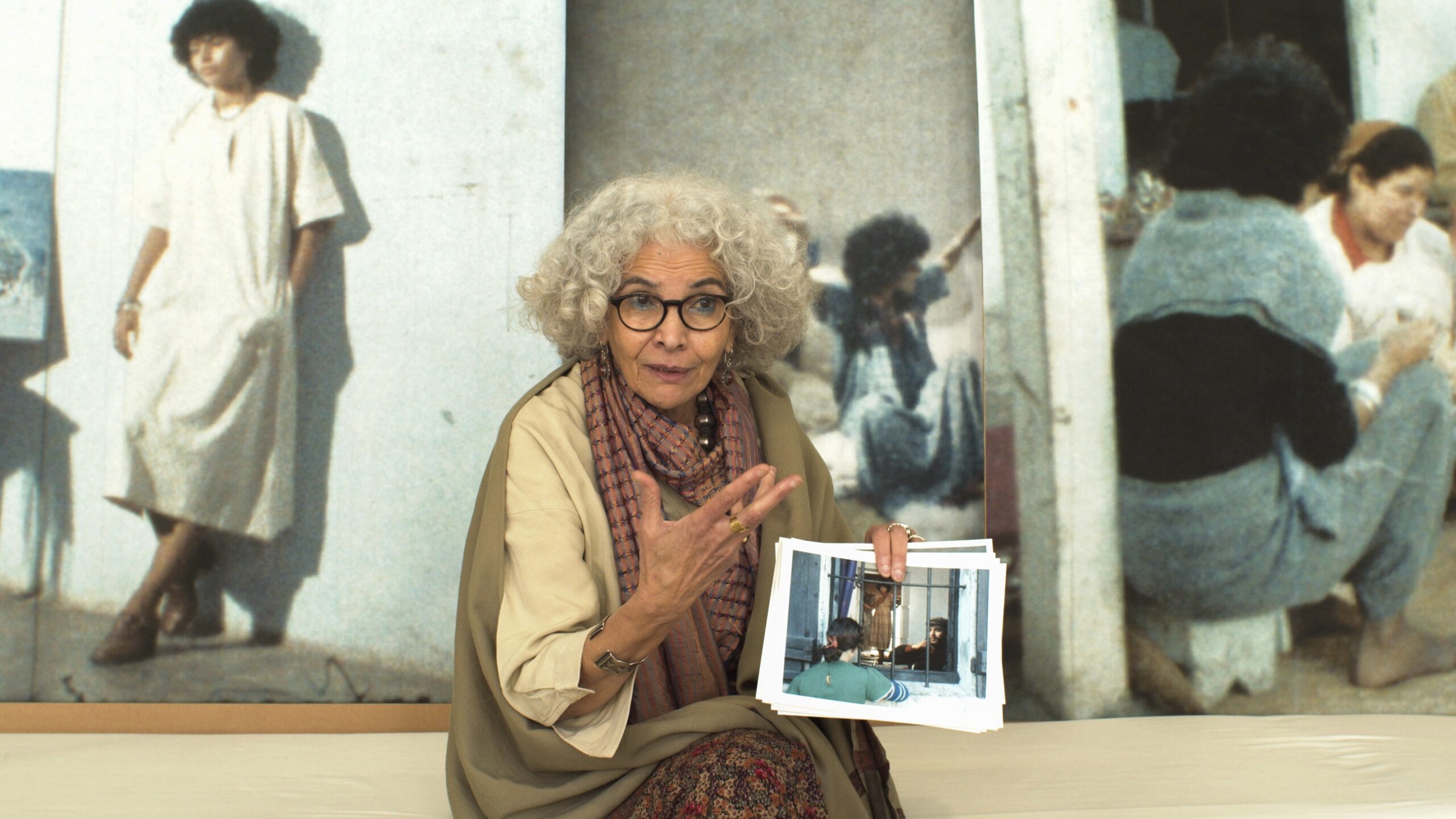
Much of this edition focused on photographic work often neglected in Western histories and photography events. This was most evident in the six exhibitions grouped together under “Independence,” which included the two shows briefly discussed below as well as those by Sammy Baloji, Katia Kameli, Thato Toeba, and Ayana V. Jackson. Ghana! Dreaming Independence, 1957–1976, curated by Damarice Amao, was a dynamic statement about role of photography at Ghana’s independence and for the following two decades. Amao combined artworks and numerous photo-illustrated publications with historical information; the show was installed with appropriate gravitas at Arles’s Palais de l’Archevêché. Paul Kodjo: Photoromance, curated by Amandine Nana at the Croisière, marks the first significant solo exhibition by the Ivorian photographer and filmmaker in France. Reflecting the festival’s overall emphasis on narrative, the exhibition featured Kodjo’s trailblazing photonovels, many of them set in Abidjan, transforming the small exhibition space into immersive three-dimensional magazine layouts depicting stories of intimate drama and personal connections.
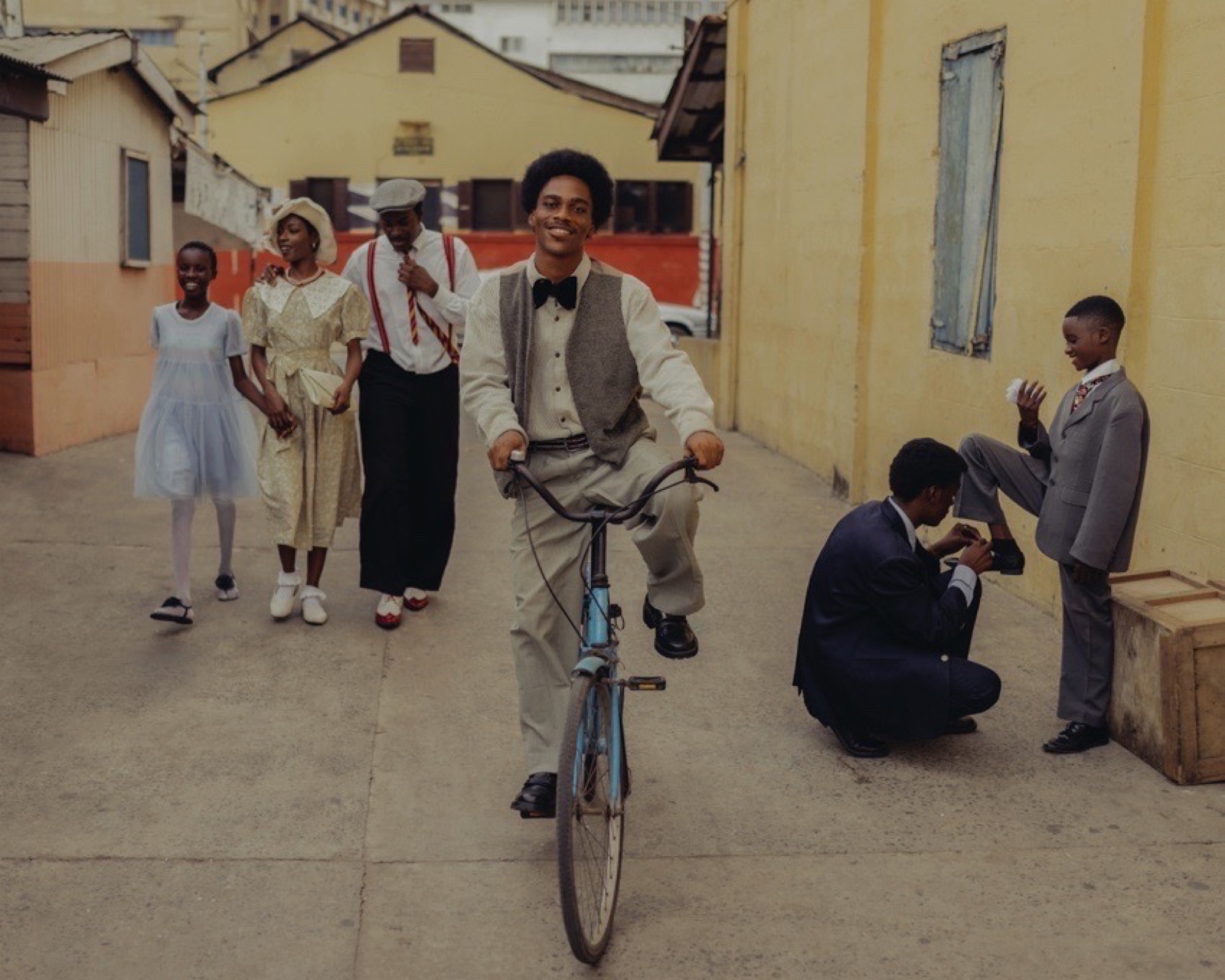
Carlos Idun-Tawiah, Many Reasons to Live Again, 2022, permission de / courtesy of Carlos Idun-Tawiah et / and Galería Alta
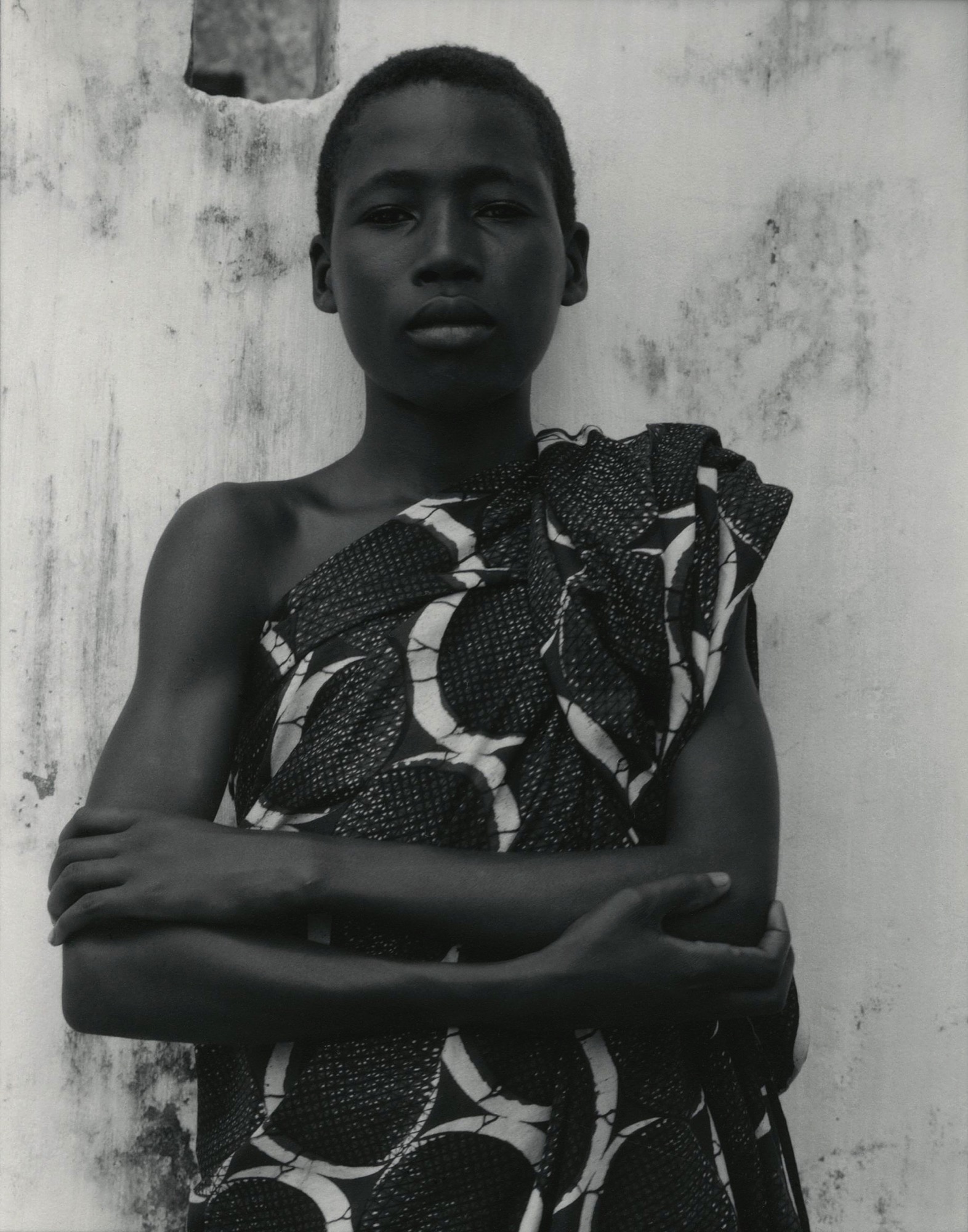
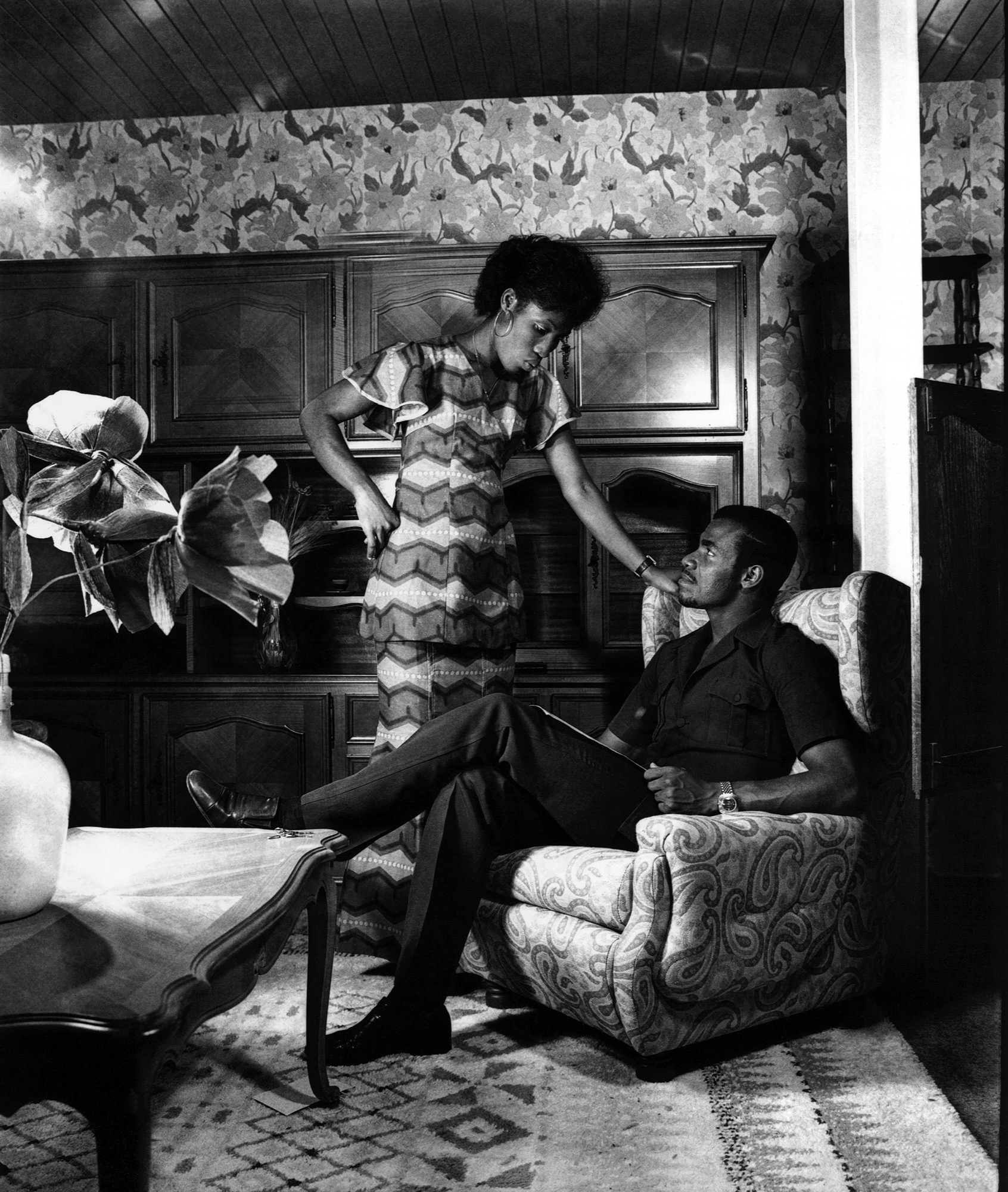
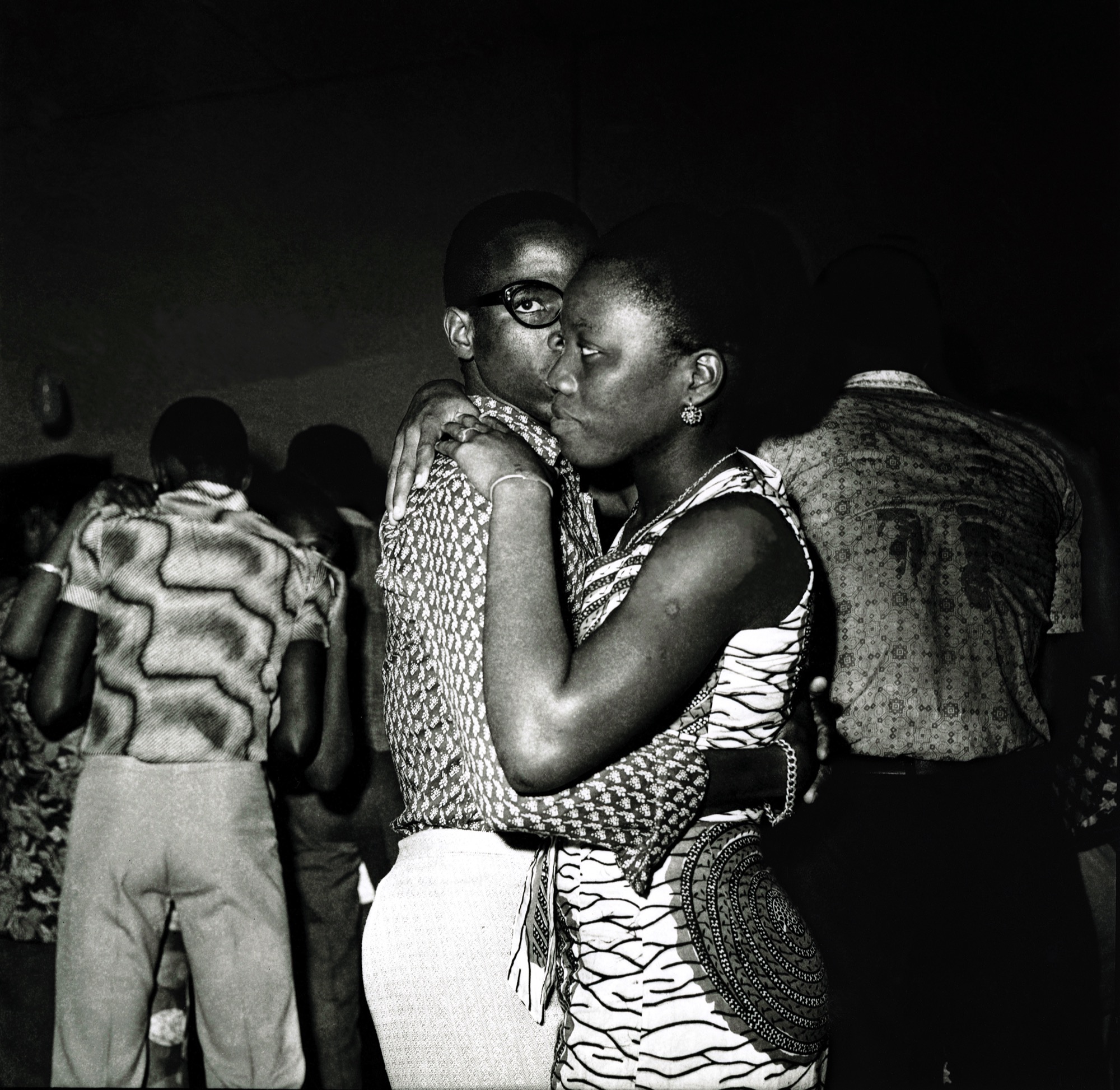
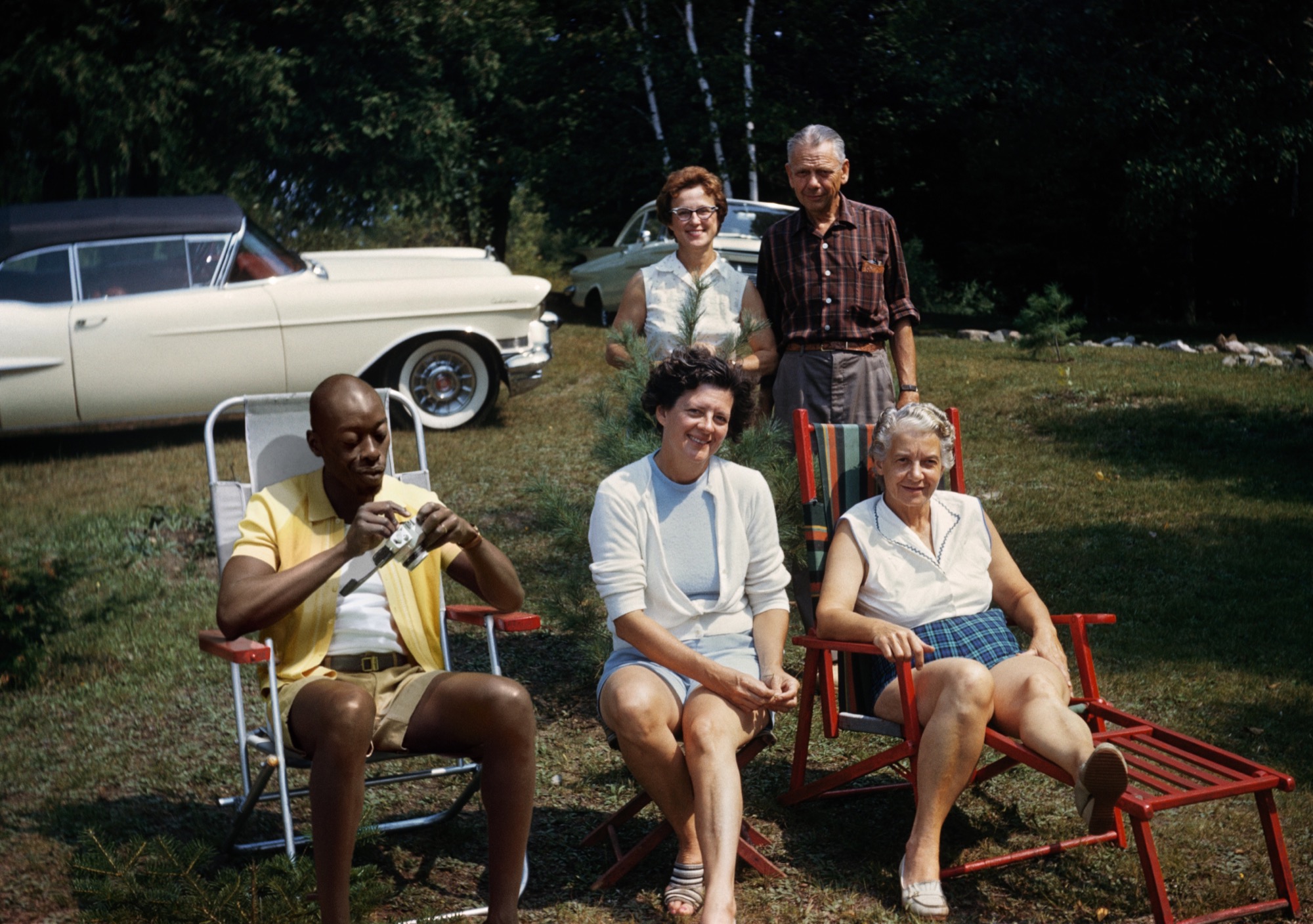
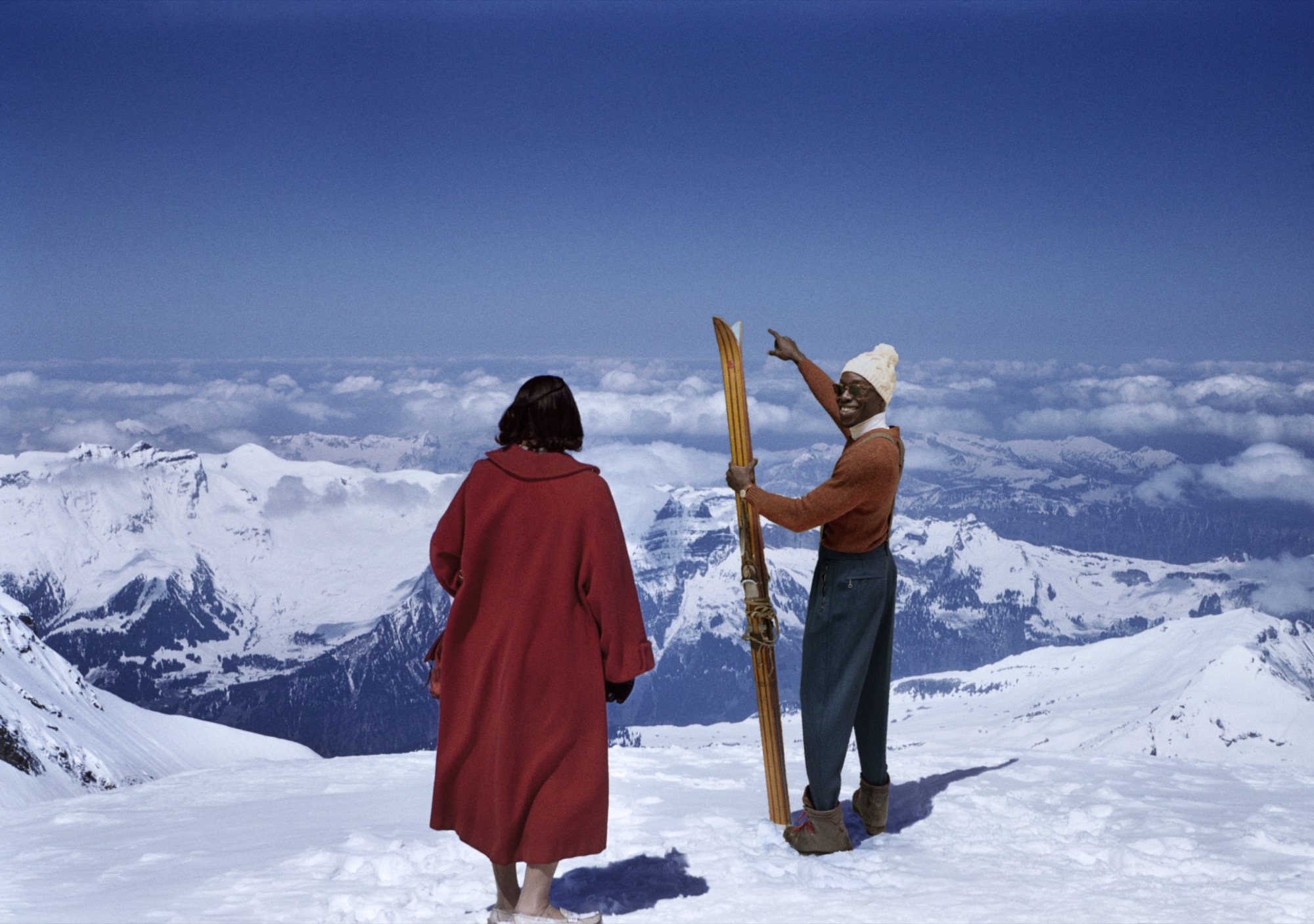
The artists Lee Shulman and Omar Victor Diop delve into the archive to “reimagine geographies” in the exhibition Being There, a cutting satire of white hegemony in the West during the Cold War era. Presented under the theme “The Uncertain Archive,” Being There is a component of The Anonymous Project, which Shulman initiated in 2017 to preserve colour slides made by amateurs since the mid-twentieth century and as the basis of a range of artworks. Here, Shulman’s interventions are undertaken in collaboration with the well-known Senegalese French artist Omar Victor Diop. The two remediate a series of colour snapshots from the 1950s and 1960s that are, ironically, very monochrome in cultural terms: most celebrate moments in the lives of white middle-class Westerners. By introducing Diop, a lone Black figure, seamlessly into each enlarged image (in a feat of visual editing), the artists expose the racial homogeneity of the original photographs and the glaring cultural absences resting under the surface of hegemonic culture. This is trenchant critique leavened with humour, calling to mind Jordan Peele’s great 2017 comic horror film Get Out.
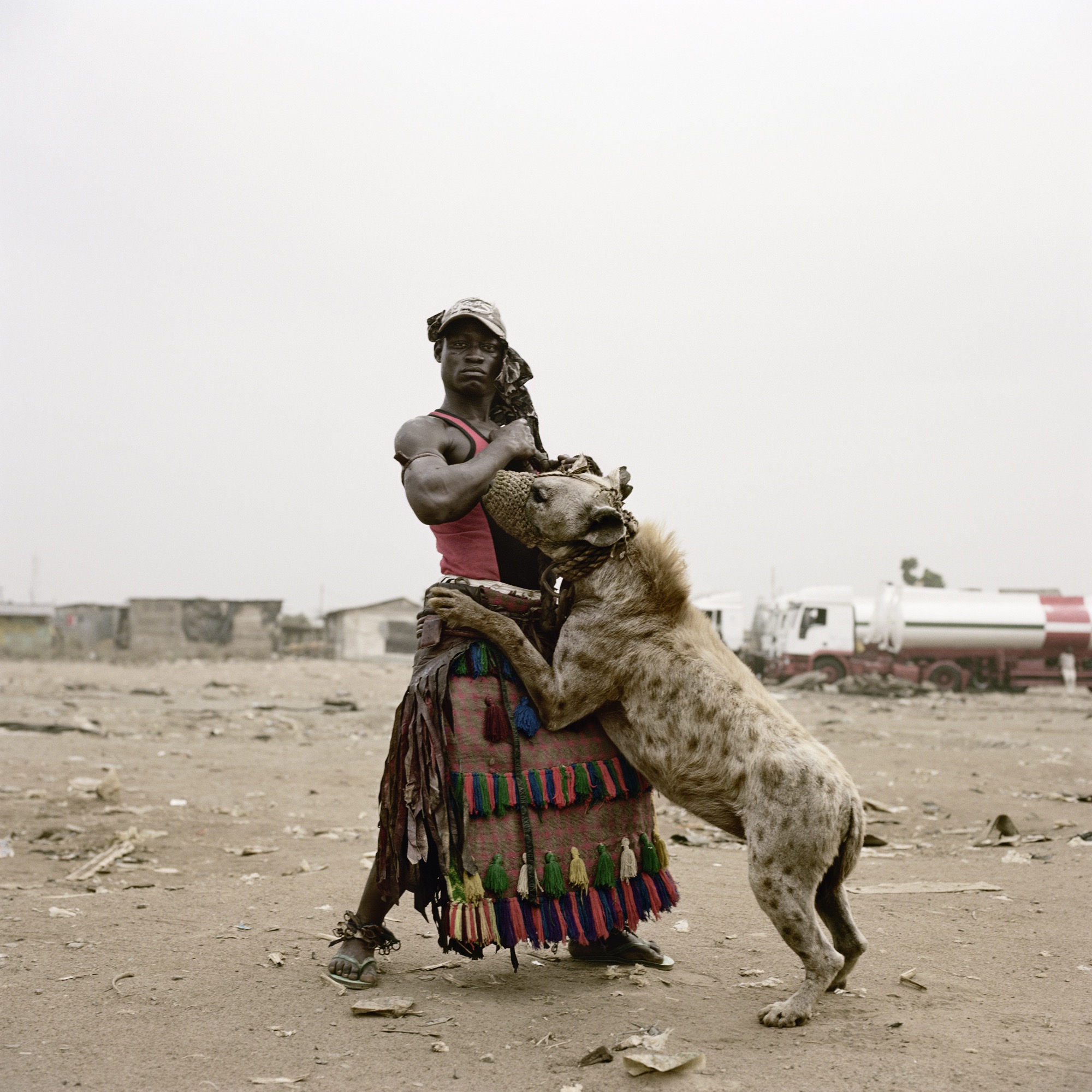
Pieter Hugo, Abdullahi Mohammed with Mainasara, Ogere-Remo, Nigeria, 2007, permission de / courtesy of Pieter Hugo et / and de Stevenson, Cape Town, Amsterdam
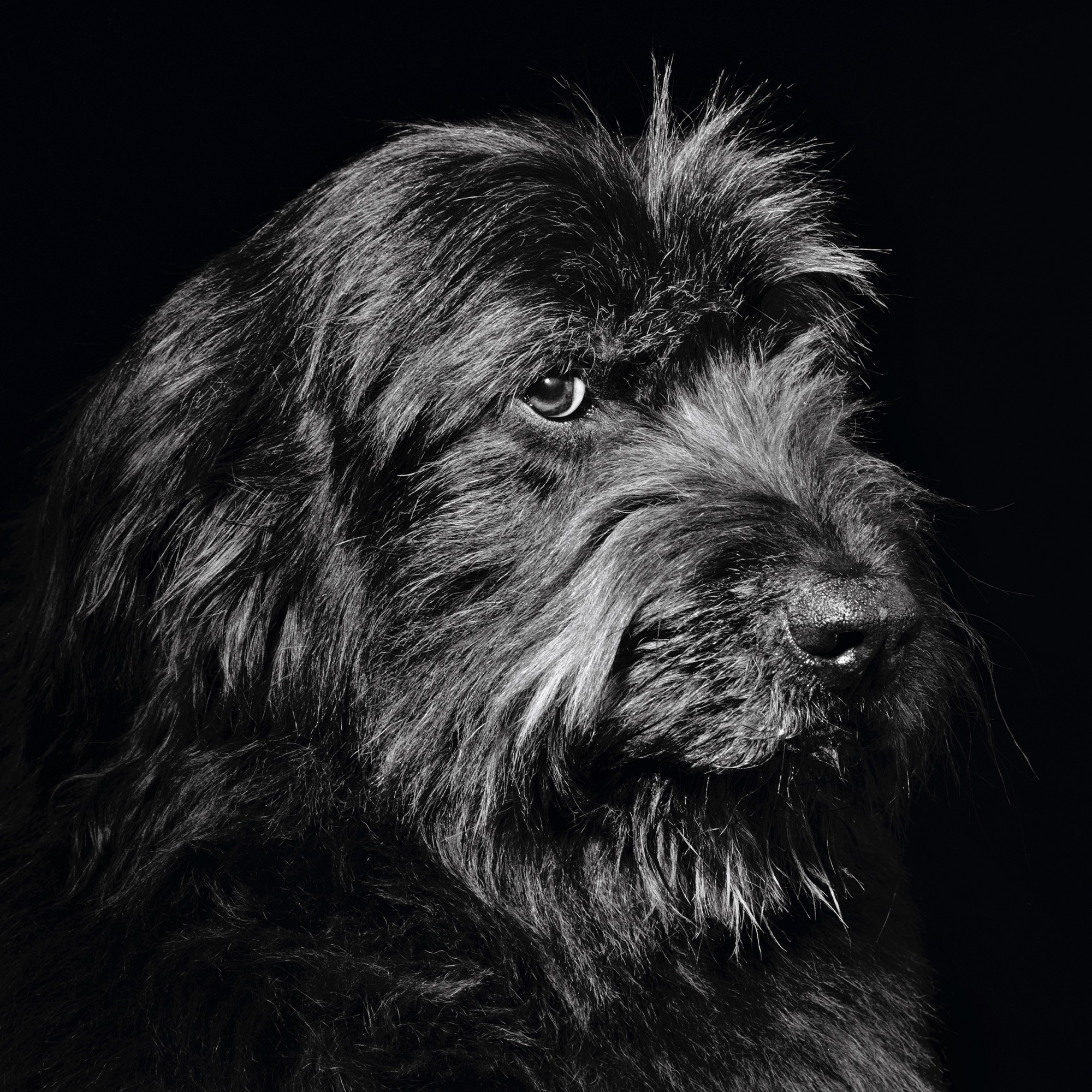
One of the most ambitious exhibitions was Animal Model: 200 Years of Photography, at La Mécanique générale. Curated by Nathalie Herschdorfer with Vincent Lavoie (of UQAM) as scientific advisor, Animal Model thematically surveyed photography’s encounters with the animal world. I can imagine viewers shrugging off the exhibition as an extended Instagram account of cute animals and pondering the connection to “reimagined geographies,” but it would be a mistake to dismiss this curatorial presentation. Animal Model presented a richly compelling and multivalent historical statement about human–animal relations. Organized thematically around the various photographic gazes (anatomical, performative, affective, fascinated, ethical, creative, viral) through which animals are seen and engaged with, Animal Model brought together hundreds of diverse pictures dating from the medium’s inception to contemporary practice. For the most part, the exhibition featured the work of canonical photographers, from the predictable (William Wegman, Eadweard Muybridge, Jacques-Henri Lartigue) to the more surprising (Louis Daguerre, Émile Zola, Roni Horn, Sebastião Salgado, Taryn Simon). And although the show featured some iconic works (Daido Moriyama’s indelible Stray Dog), it expanded the range of photographic history to include little-known images associated with biology, natural history, mass media (including a memorable collection of album covers featuring musicians’ pets), and online culture. Ultimately, it illustrated how our relationships with animals mirror human values and shortcomings. It closed with a 2006 quotation by Jacques Derrida that crystallizes its experience: “The gaze called ‘animal’ offers to my sight the abyssal limit of the human.”
The 2026 edition of Les Rencontres de la photographie reimagined geographies past and present, human and animal, to explore the potential and the “limit of the human” at a moment of global tensions.
Carol Payne is a professor of art history at Carleton University. Her latest book is The Hunter, the Crown, and the Cameras: Joseph Idlout and the Image of Sangussaqtauliqtilluta (McGill-Queen’s University Press, October, 2026).