
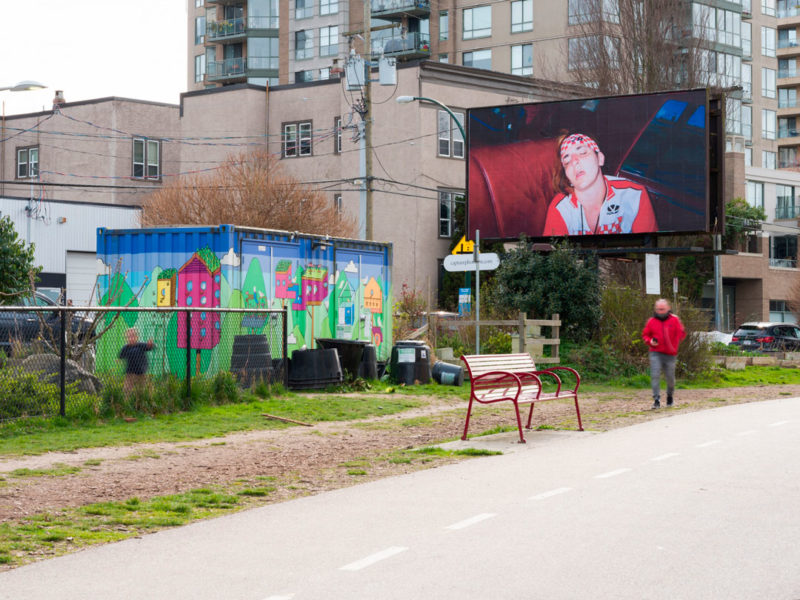
Steven Shearer, Untitled, 2020, photo : Dennis Ha
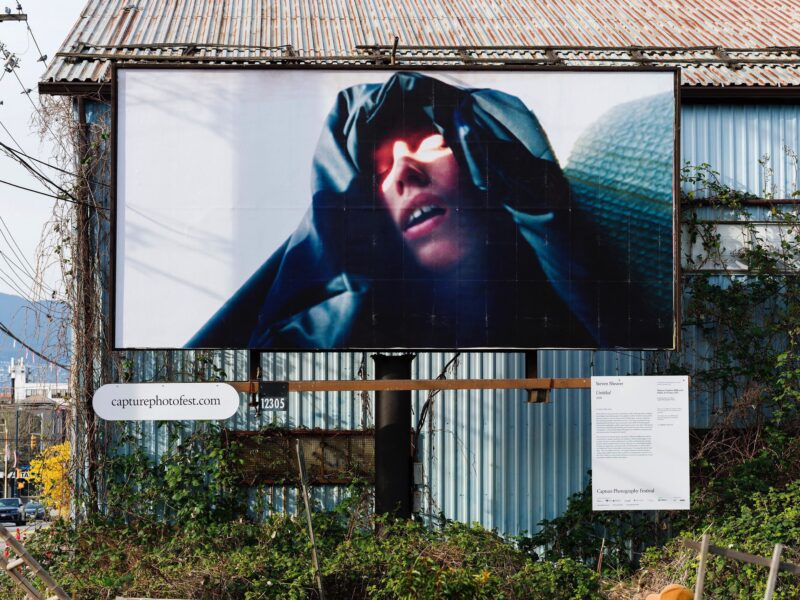
Anique Jordan, série / series Work from the Darkie, 2018, photo : Jocelyne Junker ; Steven Shearer, Untitled, 2020, photo : Dennis Ha
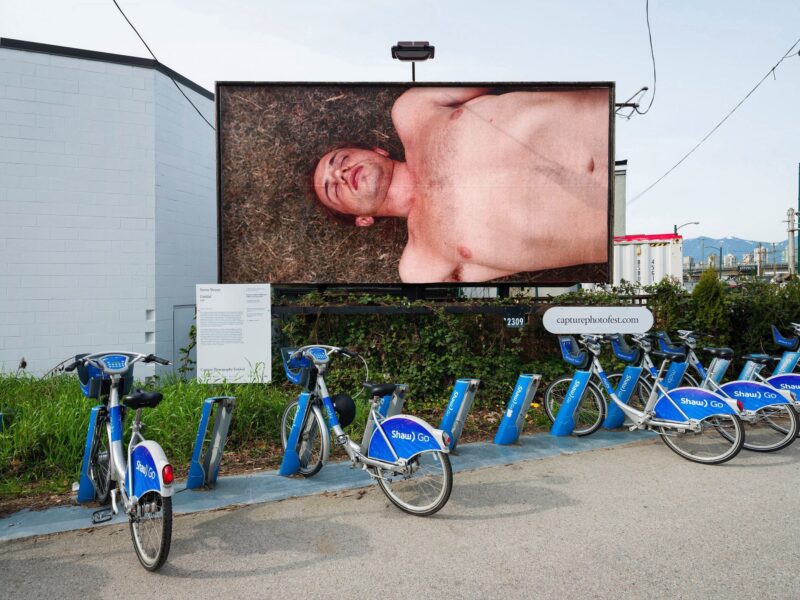
Steven Shearer, Untitled, 2020, photo : Dennis Ha
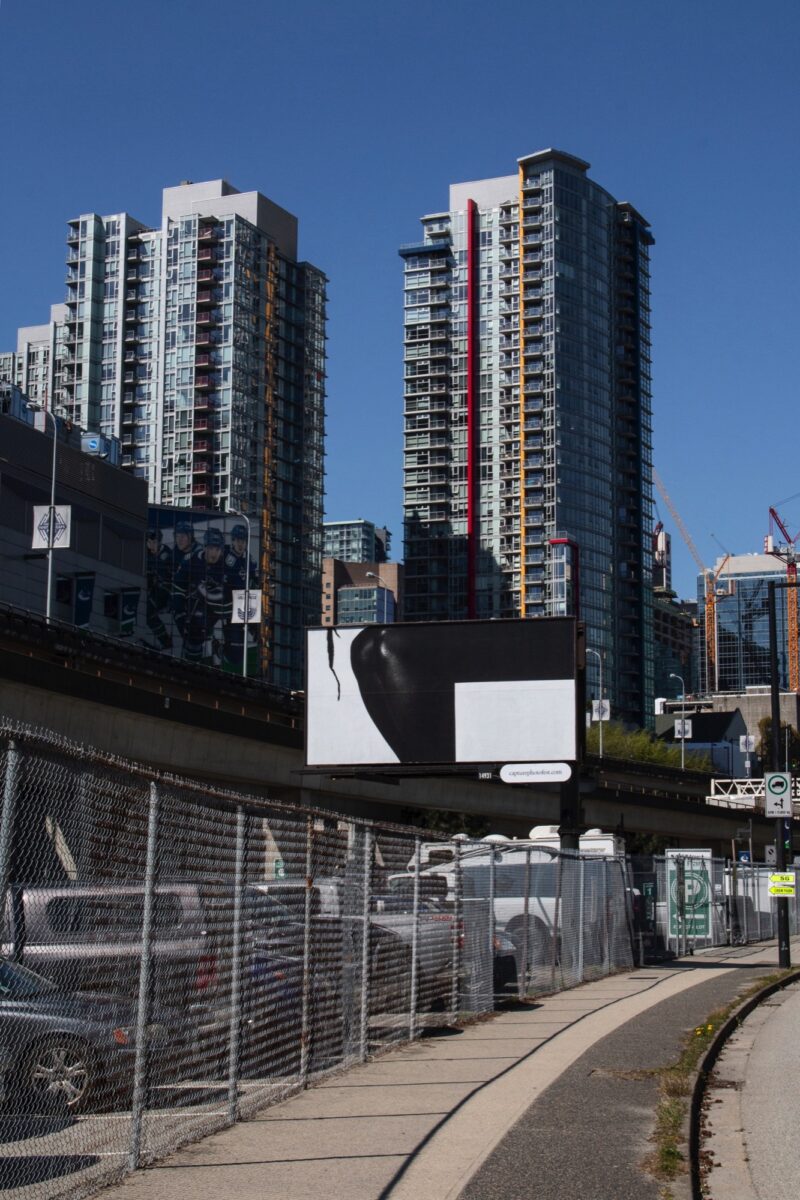
Anique Jordan, série / series Work from the Darkie, 2018, photo : Jocelyne Junker ; Steven Shearer, Untitled, 2020, photo : Dennis Ha
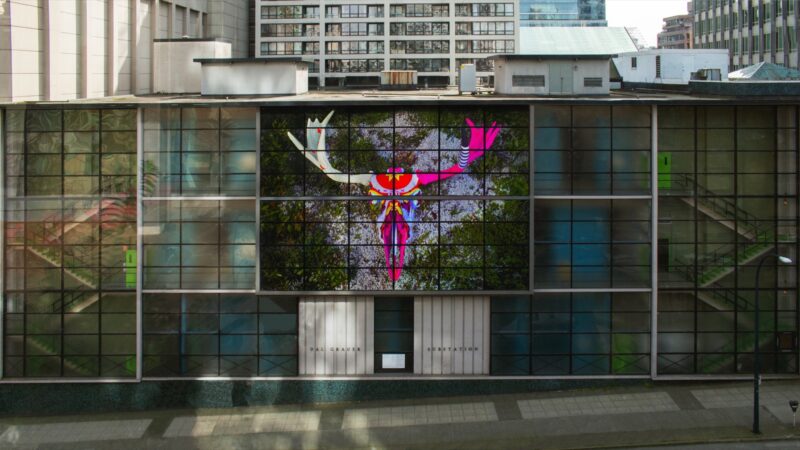
Jordan Bennett, al’taqiaq: it spirals, 2020, photo: Jocelyne Junker

[Fall 2021]
Capture Photography Festival 2021
By Karen Henry
Vancouver
April 1–30, 2021
It’s impossible to review the Capture festival, a rambling aggregation of events in Vancouver that celebrate photography, as a whole. Here, I focus on public art billboards and the major festival commission.
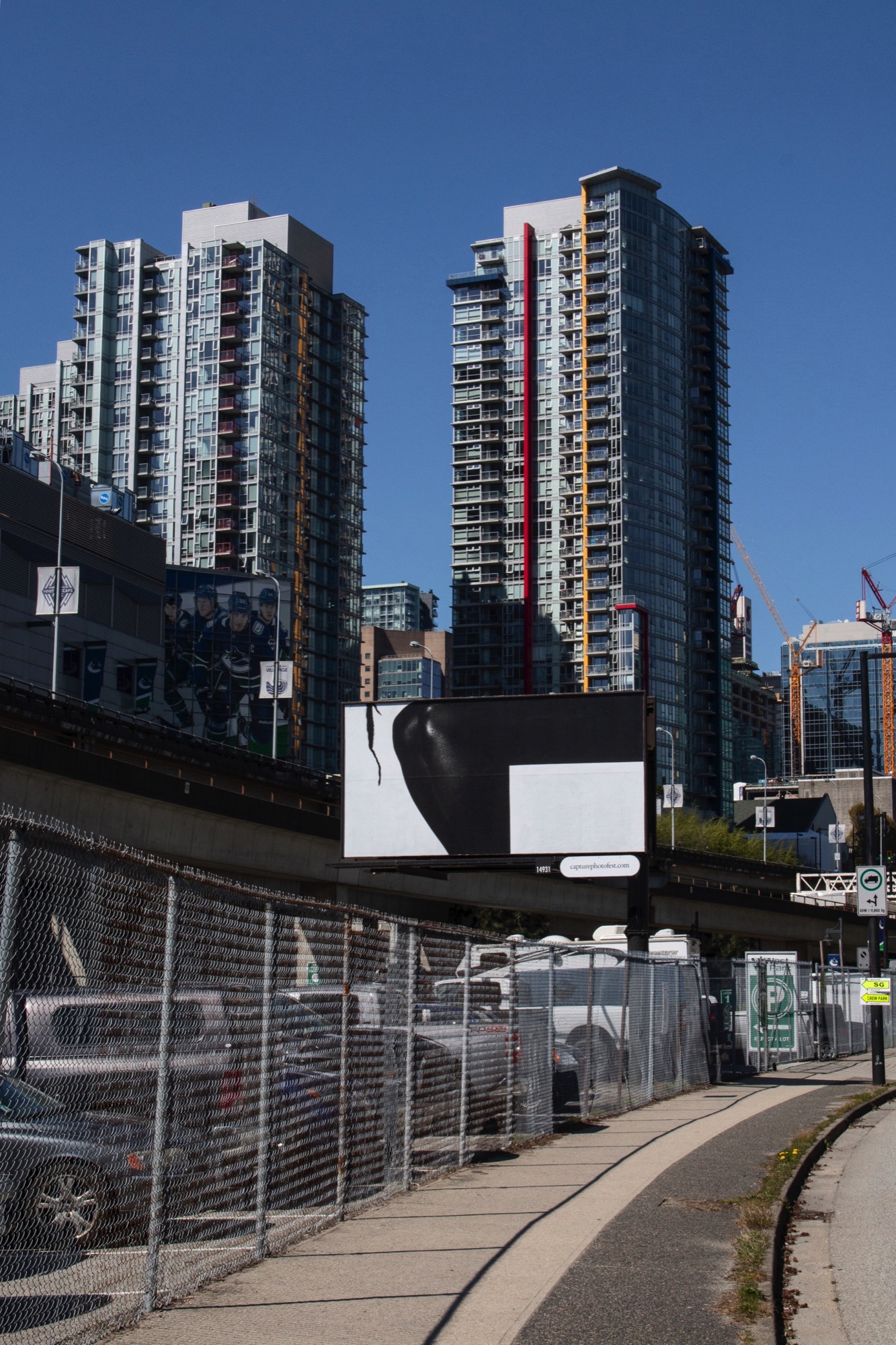
Billboards are of a scale to command attention in the urban landscape. Works by Anique Jordan are located on Expo Boulevard along the Northeast False Creek inlet, set in the hardscape of viaducts and concrete towers. The two images, on the front and back of a single billboard, first appear as blackandwhite abstractions. But if you’re walking or stopped at the light, you can see the highlights and contours of dark skin and a wisp of tightly coiled hair. These images are the most understated of the 2018 Darkie series pairing stark white planes and a black female body. The works are defined by contrasts – white, hard, unyielding/black, organic, vulnerable – and so unsettle the abstraction they evoke. Jordan talks about her artwork as haunted, “patronized by what cannot be represented.” In this time and place, the billboards quietly both indict loss and proclaim presence in relation to the patriarchal space of development, the history of art, and the imperative of Black Lives Matter.
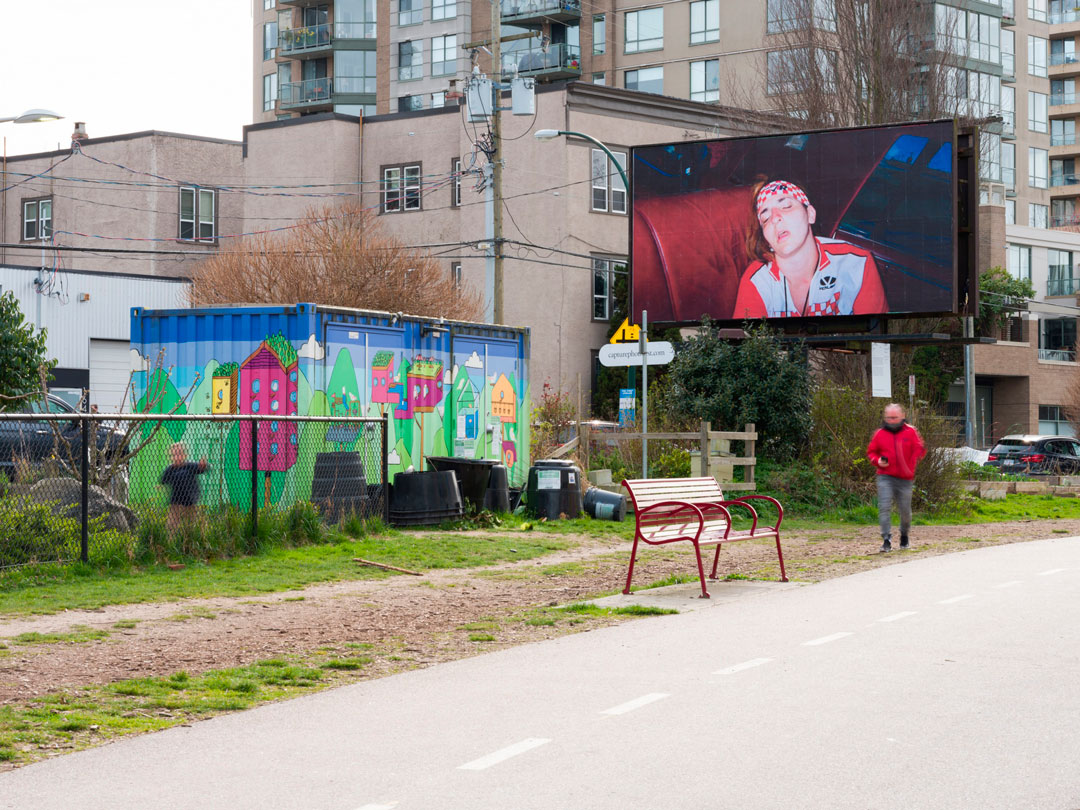
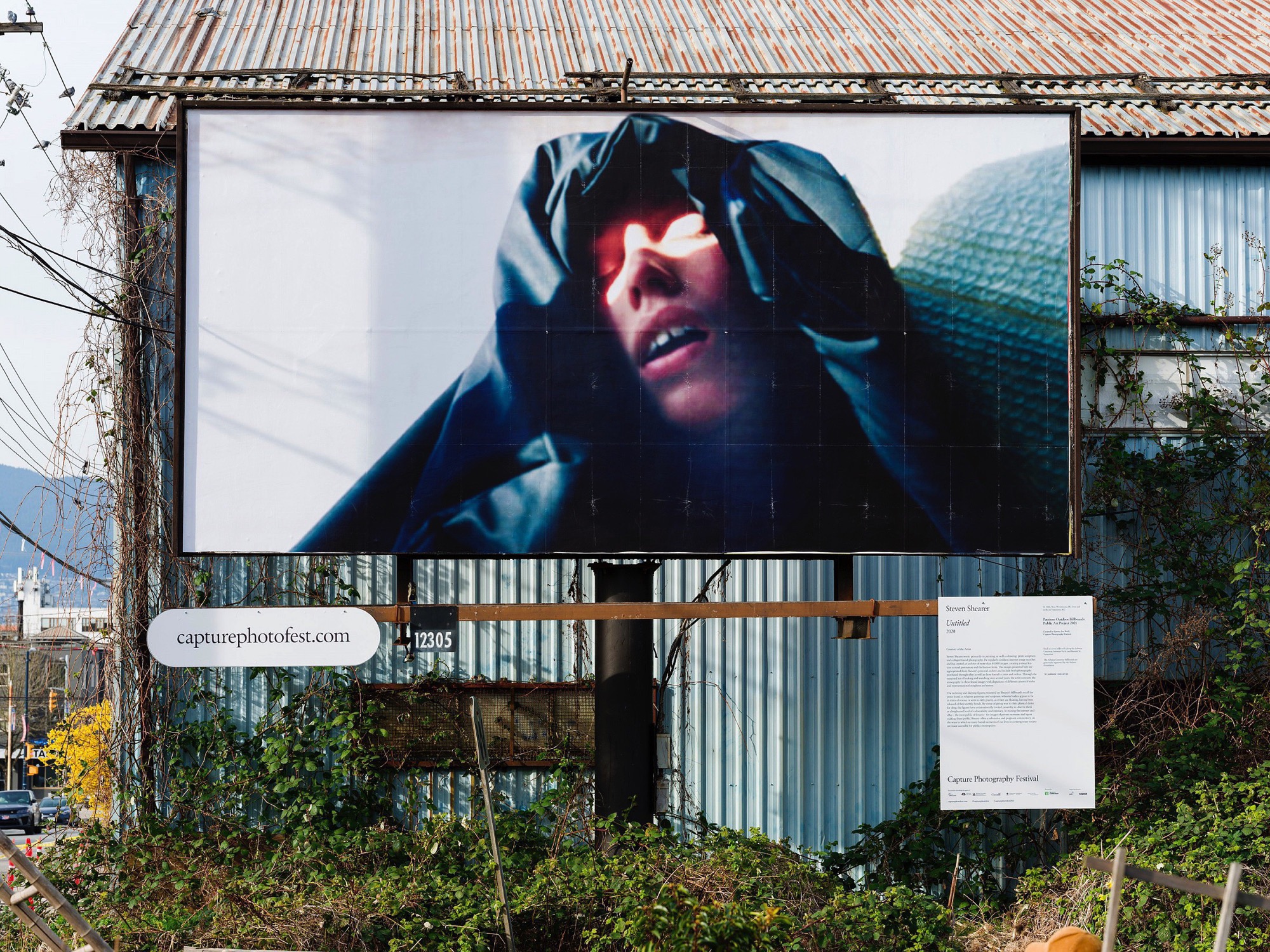
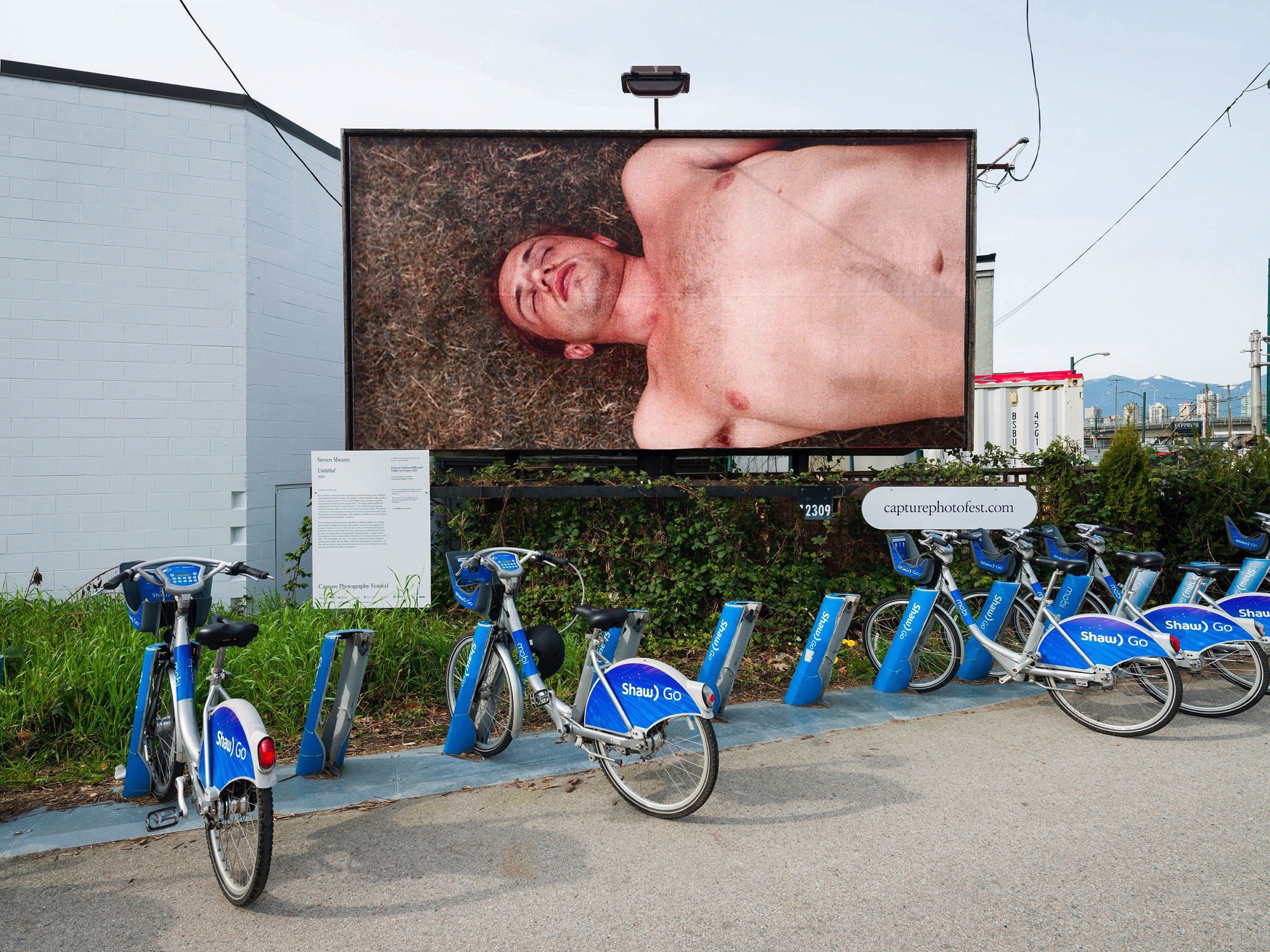
The most notorious of the Capture billboards this year were a series of seven images by Vancouver artist Steven Shearer situated on a walking and bike path along the old CP Rail tracks. These images were on display for a day and a half before the Pattison billboard company, which donates the space to Capture, ordered them taken down due to a vocal public response. The images, gathered from the internet, are of people sleeping and are seen by Shearer in the context of canonical and ecstatic religious imagery and of “the ways in which so many banal moments of our lives in contemporary society are made accessible for public consumption.” The sleeping subjects are inherently vulnerable, and they made a number of people uneasy. This degree of unease is part of the work – projecting the most unmediated private images into public space at a scale that cannot be ignored.
Though there was didactic signage on site, a number of people interpreted the images as people drugged or dead. The debacle raised a number of questions. Did the curators consider the current fentanyl crisis in Vancouver before deciding to show these images at this time? Were public billboards the appropriate place for these images? Why is an advertising company in the position of deciding what the public can and can’t see? If they had been paid for, would the company have jumped to remove them? Shearer was notably, and wisely, silent. Capture zoomed together an impressive panel of Vancouver and international public art people in response. As the panel noted, curators and producers need to anticipate issues and make a safe place for the art and the public. In public art, relationships are important, understanding the context is important, and pursuing all avenues of communication to build understanding with partners and the public is important.
In contrast, the third billboard project, featuring three consecutive images that explore the power of seduction in advertising from Vikky Alexander’s 1985 series Between Dreaming and Living, seems well positioned in Mt. Pleasant, an area of artist centres and trendy restaurants. The fourth project is situated near new developments in the southeast part of the city. Sarah Anne Johnson painted watery coloured fireworks onto the sky of an image of frozen northern ice fields, evoking the wonder of her experience of the landscape, the beauty of which is belied by the realities of global warming.
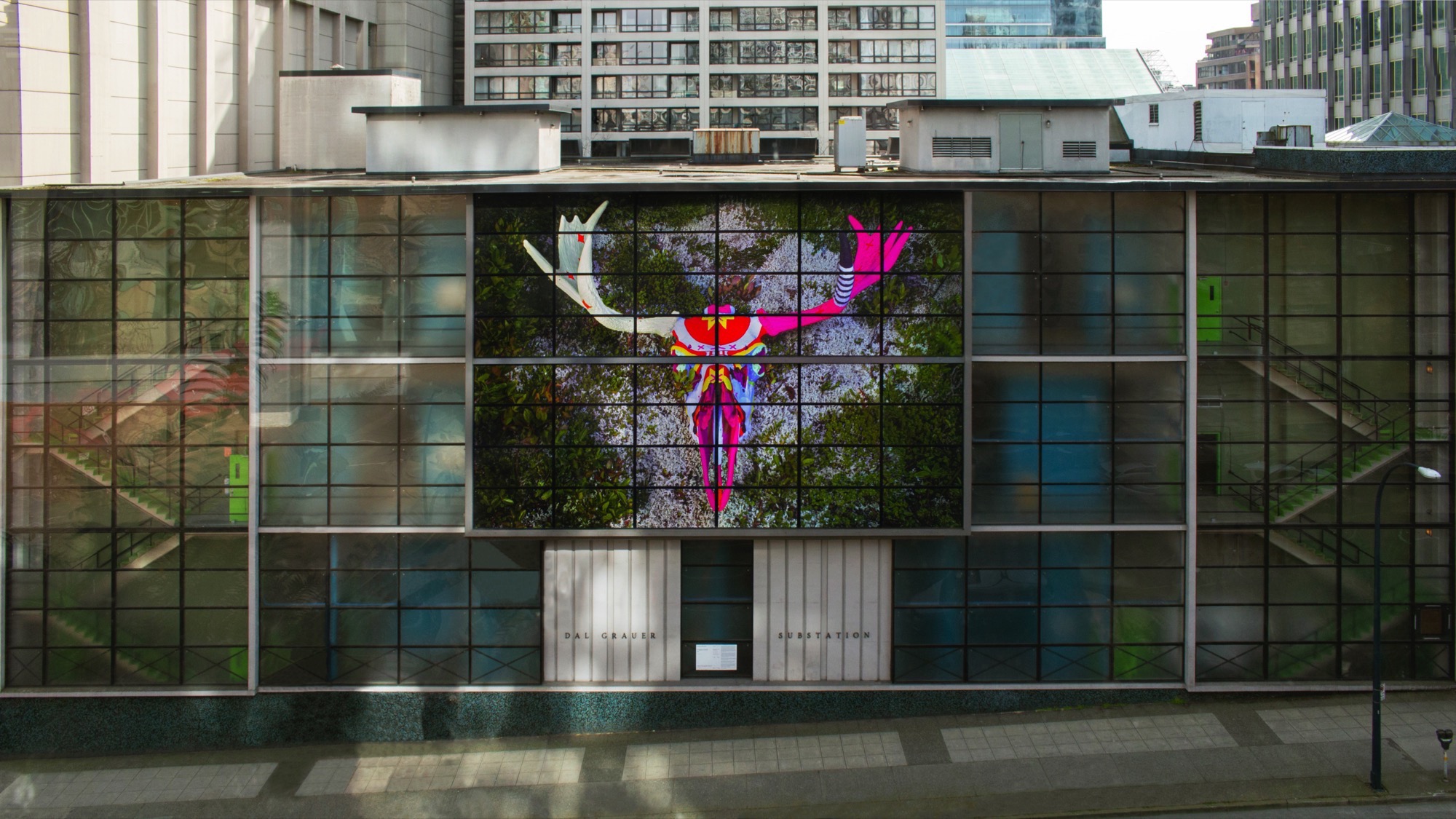
The major commissioned work for the festival is al’taqiaq: it spirals by Mi’kmaq artist Jordan Bennett. The two-storey-high image is located on the windowgridded side of the mid-century modern Dal Grauer Hydro Electric Substation downtown. Bennett painted a moose skull with an impressive rack of antlers, using designs and colours from the traditional porcupine quill basketry of his people. (He notes that hot-pink dye came via settlers in the mid-1800s.) The brightly painted skull is elegantly photographed on a field of moss and low vegetation in Nova Scotia. Bennett left the skull on the land in this spot for a couple of months prior to painting it. The quill design is adapted from a basket in the collection of the Museum of Vancouver. Because of travel restrictions, he had to rely on a photograph of the work. Although the basket resides on the traditional territories of the (Musqueam), Skwxwú7mesh (Squamish), and (Tsleil-Waututh) peoples, a long way from the people who created it, Bennett symbolically brought it home by reincorporating the designs into the living history of the place it came from. He then renewed its presence in Vancouver through the photograph. The basket itself may have been made for the tourist market, but it is still displaced from the context of its making and lives among artefacts collected from many Indigenous cultures. The image is also a traveller, a visitor through digital space and the time of experience and cultural memory. The distinction between tourist and visitor is significant, the one being based on consumption and the other implying the possibility of connection.
Bennett identifies being a visitor as a major part of his practice, recognizing his responsibility to acknowledge relationships with the people of each place while affirming his own identity and the power of material culture and images to carry meaning. The visitor relationship is acknowledged in a thoughtful essay by scholar Jordan Wilson, who grounds the work in the artist’s practice, in the basket in the museum collection, in the work of Indigenous women, and in the contemporary amplification of Indigenous knowledge. Like Anique Jordan’s images, Bennett’s work bears the ongoing experience of loss, but also holds the promise (and challenge) of so much more to be said.
Karen Henry is a curator and writer working in public art in Vancouver.
[ Complete issue, in print and digital version, available here: Ciel variable 118 – Exhibiting Photography ]