

[Fall 2021]
Chuck Samuels, Becoming Photography
By Sylvain Campeau
Expression, centre d’exposition de Saint-Hyacinthe
27.02.2021 — 25.04.2021
Plein sud, centre d’exposition en art actuel à Longueuil
13.03.2021 — 24.04.2021
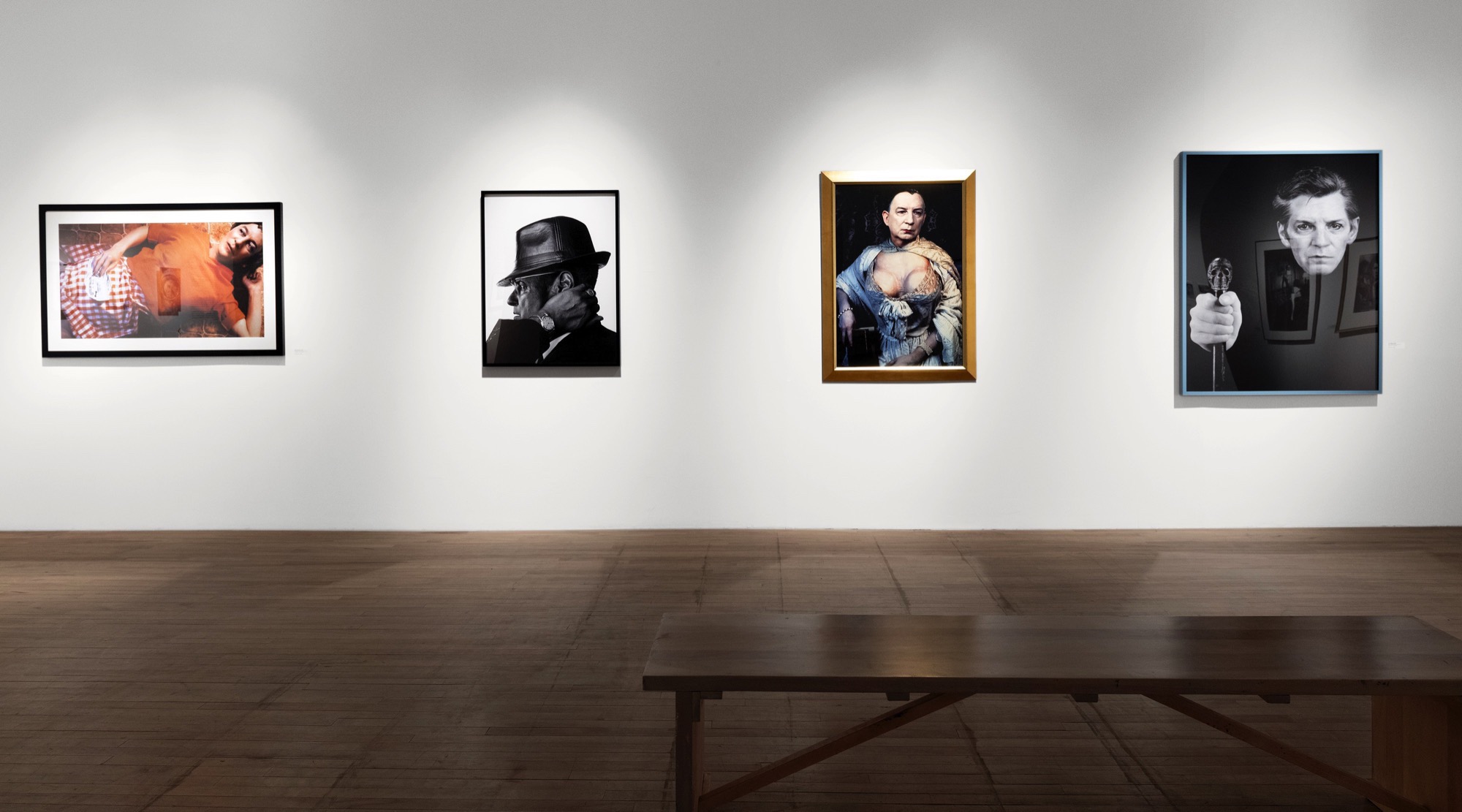
A project deployed in two venues and one monograph, Becoming Photography brings together corpuses produced between 1991 and 2020. At Plein sud are series that have been exhibited before, among the least recent of all the works on display. They therefore hold no surprises, but it’s interesting to take a look at them, as they make it easier to understand Chuck Samuels’s position. Furthermore, we can see the extent to which this photographic mise en abyme, performed in concert with the device of the self-portrait, has evolved over time, for the images at Plein sud were produced, one could say, in another paradigm. It was the era when Cindy Sherman had just shaken us out of our complacency by showing reconstructions of well-known images from film and photography that highlighted the stereo- typed nature of female presences in the media. Sherman led us to wonder about the originality of the artwork when that artwork – a photograph in this case – could be duplicated infinitely and with impunity.
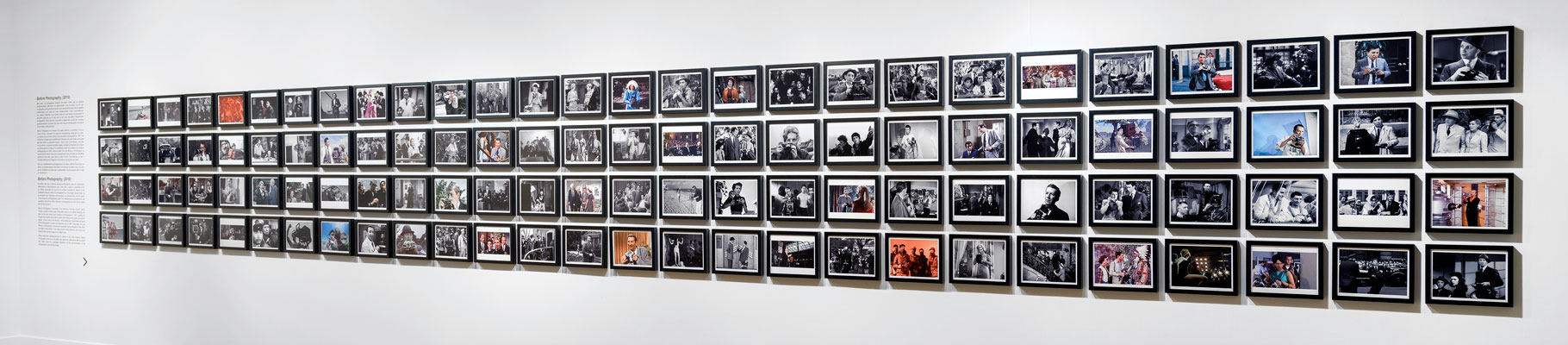
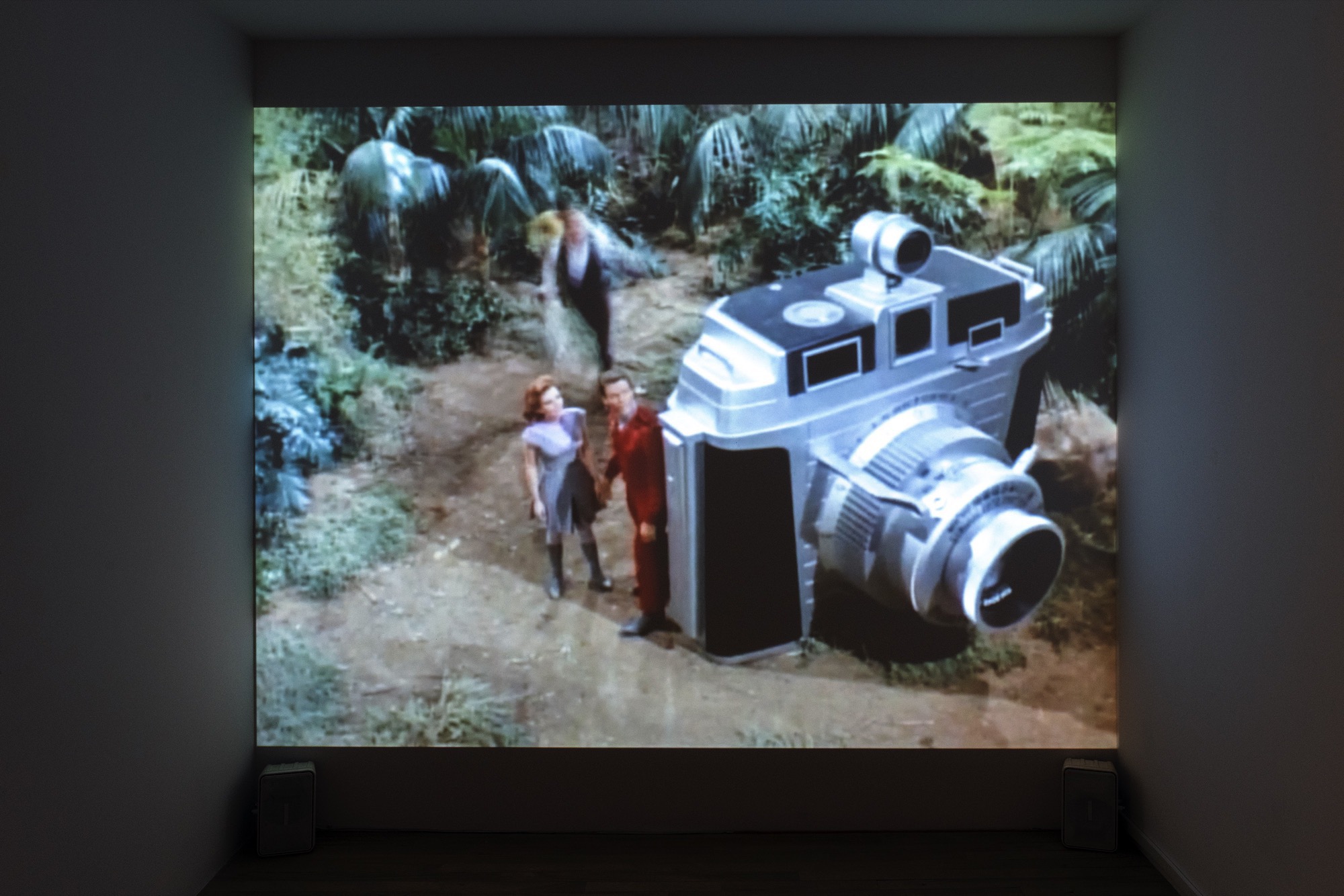
As Samuels built his series and developed his approach, he chose to venture elsewhere. Drawing on references from related media – television and movies – from his childhood, he began to compose a sort of anthology of images of photographers, of the figure of the photographer. As times changed, he gradually drew away from questions about the originality of the artwork. This could happen only within the universe of infinite resonances and perpetual references existing in the empire of the web and its many and various acolytes known as social media. The world in which we now live involves unending ramifications, as images respond to images and erase the initial referent from which every photograph comes.
Indeed, the images that Samuels chooses to call upon are somewhat distanced, in time and in nature. When he turns his attention to photographers of various periods, as in the series The Photographer, it’s one thing. He grafts his face onto known and revered self-portraits of Nadar, Bayard, Beaton, Molinier, Mapplethorpe. Taking on the features of photography is now a game in which he grants himself the bodies of his illustrious forebears, thus appropriating a bit of their reputation.
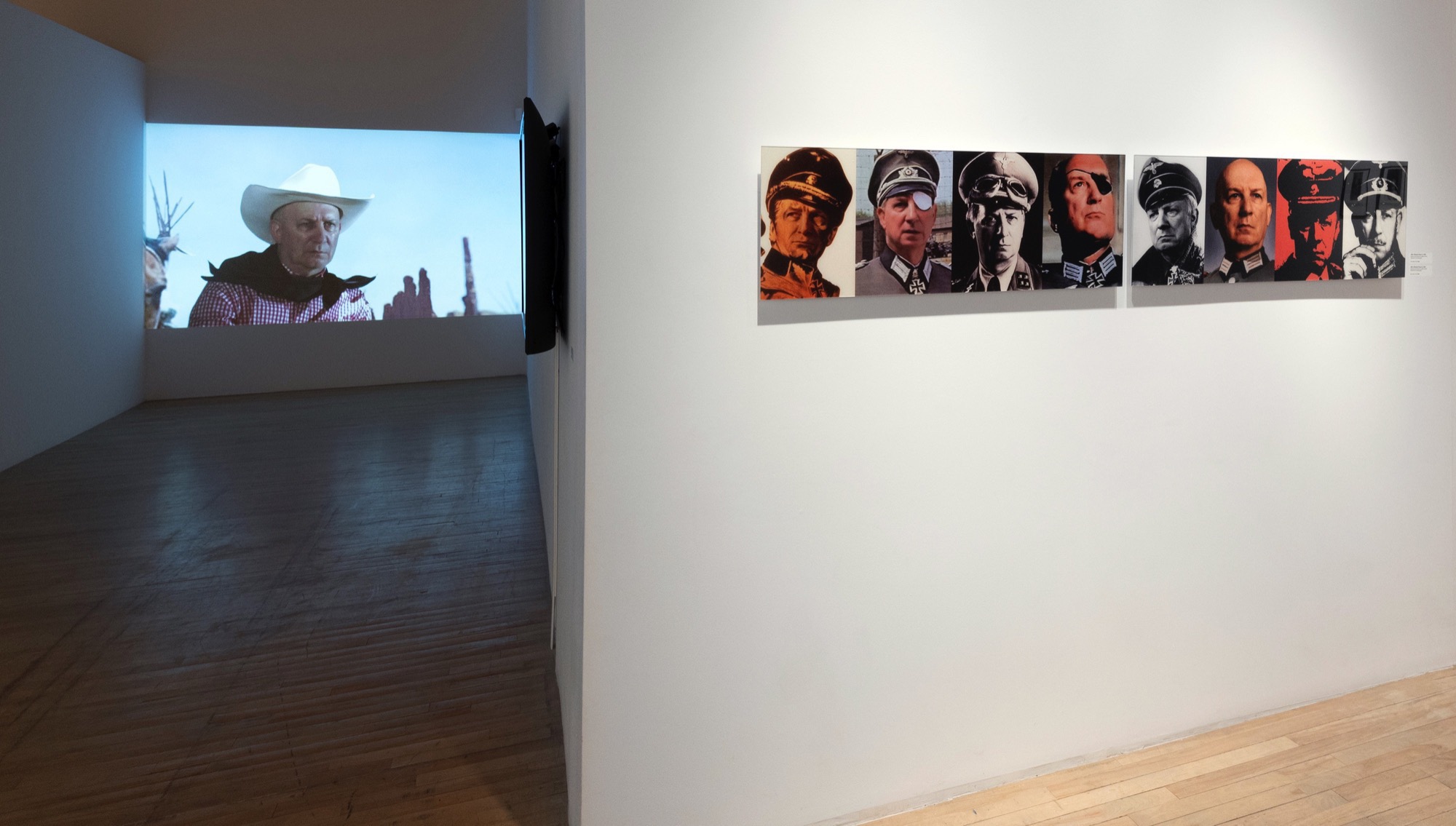
It’s another thing when he takes up, in video, Eve Sussman’s performance, itself videographic, produced from Diego Velázquez’s painting Las Meninas. He copies the copy, reprises the reprise. He repeats this exercise in After Van Sant, in which he embodies Anne Heche and Vince Vaugh starring in the remake of Alfred Hitchcock’s Psycho, directed maniacally by Gus Van Sant. Everything is, in a sense, brought to the same level: images from films and TV series, photographers’ self-portraits. Seemingly disrespectful and dishonourable, these works in fact contest the hierarchy of people and genres, especially because Samuels embeds himself in the critical and theoretical current by “becoming” eminent thinkers of photography: Barthes, Sontag, Foucault, Benjamin, Szarkowski. His enterprise seems limitless. He even reproduces pages from The Complete Photographer, a 1940s magazine, in which he ensconces his face everywhere, including representing himself as a chubby baby.
In the book that accompanies the double exhibition, there are responses to our bafflement. Joan Fontcuberta, himself one of Samuels’s “targets,” recalls that the artist’s early works coincided with the arrival on the market of Photoshop – which would forever change our relationship with things photographic – as well as the fall of the Berlin wall and, as Francis Fukuyama suggested, the end of history and ideologies. That explains why this adventure, which started with questioning of the originality of the artwork and the nature of the photograph’s veracity, concluded with a frenzied exploration of everything that photography has generated in terms of content and effects. It also illustrates the dissolution of barriers among media: today, because they’re digital, they’re all the same.
Samuels clearly manifested his intention: becoming photography. He did so by integrating himself into images that others produced, introducing into them. It was a step, a necessary one. Then, he pushed the experiment further: his entire critical, pedagogical, and philosophical apparatus also became involved in film, a close relative, issuing from the same analogic function of production of the real. But, even more, this desire to become photography, which endured over three decades, was deployed at the very moment when it could provoke only out-and-out rejection.
The previous specificity of the photograph was doomed to a sort of drowning in digital media. The “becoming” was put in abeyance, as the indicial interlude ended; today, we can no longer – or barely – tell the different media apart. In her essay in the book, Mona Hakim reminds us of what Philippe Dubois said about the self-portrait, the making of the doubled double: in the end it fails, attesting to the fact that the image cannot fully account for the person being shown. It plays out the “convulsion of representation.” Yet, the issue confronted by Samuel’s very specific undertaking belongs, rather, to a regime that sanctions representation and its excesses. As he surveys the possibilities of photography and its domain, circumscribed to a bygone era of the image as we had known it up to now, Samuels explodes and smashes it. Translated by Käthe Roth
Sylvain Campeau contributes to many Canadian and European magazines. He is also the author of the essays Chambres obscures : photographie et installation, Chantiers de l’image, and Imago Lexis, as well as seven collections of poetry. He has also edited books on visual arts and literature. As a curator, he has organized some forty exhibitions.
[ Complete issue, in print and digital version, available here: Ciel variable 118 – Exhibiting Photography ]