
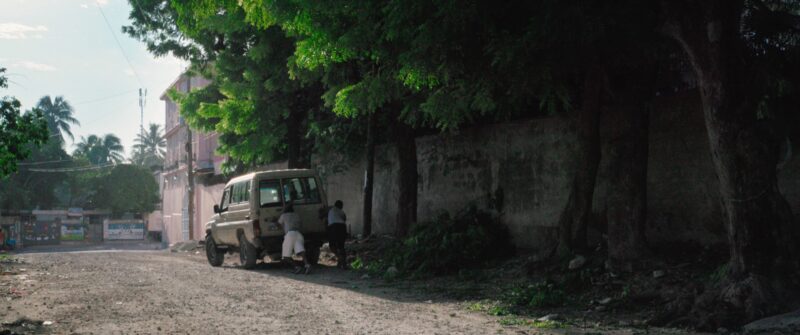
TOUTES LES PHOTOS / ALL PHOTOS: Les Films de l’Autre, Les Films du 3 Mars
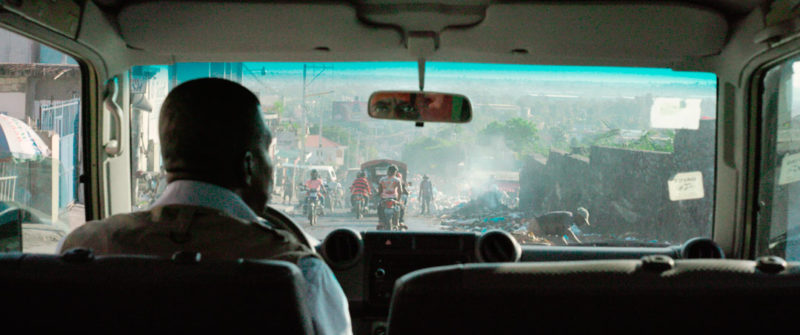
Emanuel Licha, zo reken, Film documentaire, 2021 85 minutes, français et créole haïtien. Toutes les photos / All photos: Les Films de l’Autre, Les Films du 3 Mars.
Requiem pour un glacier / Requiem for a Glacier, 2013, vidéo HD à deux canaux / two-channel HD video, 40 min, MBAM / MMFA
Requiem pour un glacier / Requiem for a Glacier, 2013, vidéo HD à deux canaux / two-channel HD video, 40 min, MBAM / MMFA

[Fall 2021]
Emanuel Licha, zo reken
By André Lavoie
Film documentaire, 2021, 85 minutes, français et créole haïtien
It is said that truth is the first casualty of war. That seems inevitable, as those who wage war often base their actions on lies and feed on propaganda to justify its necessity.
War is also staged – hence the expression “theatre of operations.” Montreal artist Emanuel Licha has been exploring this aspect for some time, but in an approach that is neither ostentatious nor spectacular. Whether through photography, video, installation, or – more and more – documentary film, Licha examines mainly the representations of war: through the filter of the media (War Tourist, 2004–08), in its architectural forms (R for Real, 2008), or through aseptic interiors seeking to paper over the horrors of the past (Hotel Machine, 2016).
He seems to distance himself from these preoccupations and from a formalist practice, opting for the linearity of film, in zo reken, which plunges us into a country prey to the upheavals of history and to those of the literally unstable ground of an earthquake zone. In fact, never do the many speakers in this film speak of Haiti poetically. For them, the “pearl of the Antilles” is mainly a symbol of ambient chaos, and they are all exhausted from living in this “stressful country” – especially in its capital, Port-au-Prince.
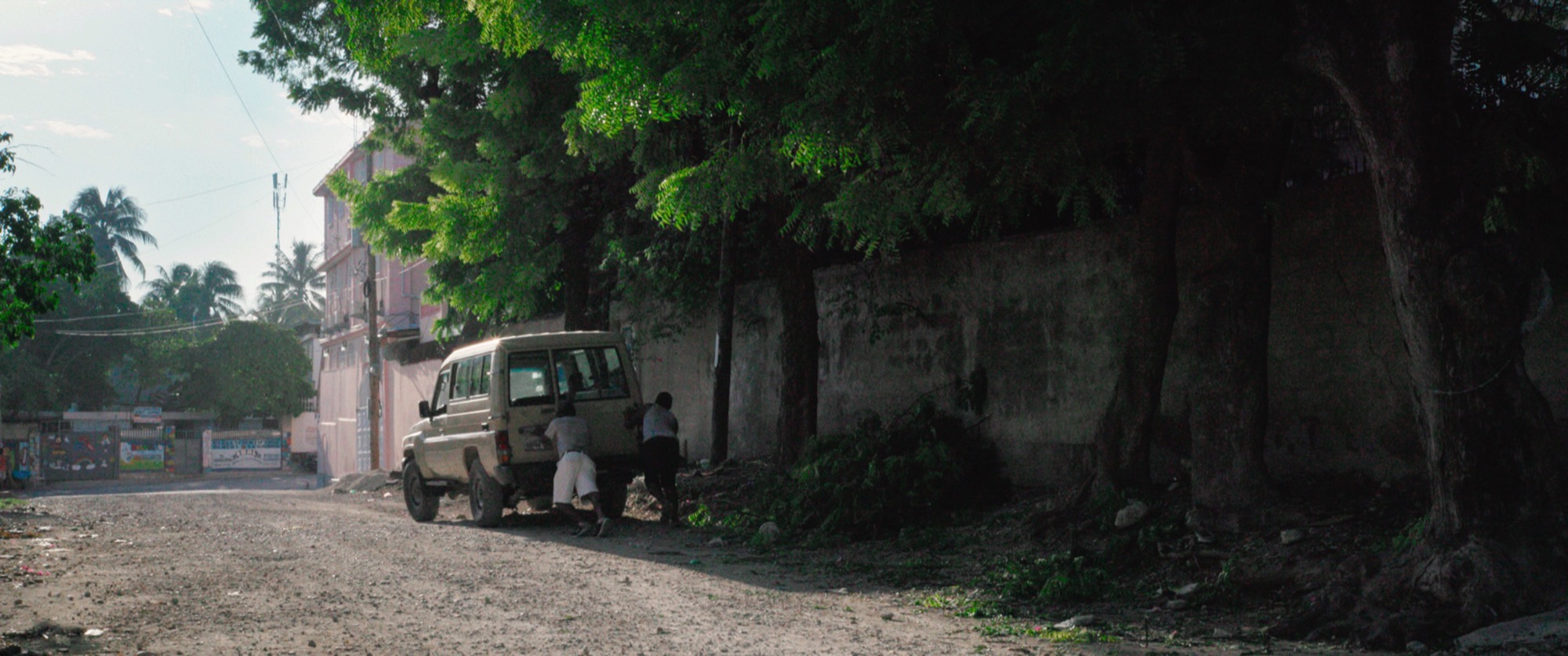
Haiti was not, in the true sense of the term, at war when Licha decided to set foot there. And he ventured not frontally but by numerous detours, as attentive to what he was filming as to what he relegated off screen. This is a habitual posture for him, as he probes the subjective nature of our gaze, formatted by media companies that want to make us believe they are presenting us with reality. He has long been making this demonstration, with images of pillages in R for Real – on sets fabricated from scratch for French police training exercises – or ones that are resolutely exotic, like the Iraqi village faithfully reproduced in the California desert for the U.S. army in Mirages (2010). There was no war declared, certainly, but there was a climate of insurrection in Haiti, sometimes boiling over, in 2019; as Licha was filming the streets of Port-au-Prince, the name of the president, Jovenel Moïse, was often scrawled on walls accompanied by insults. This panorama was deployed before Licha’s camera – but at a distance, and doubly framed: first by the image, and then by the windows of one of the numerous and sturdy 4×4s that rolled through the city, vehicles coveted by humanitarian organizations and, more and more, by the local police.
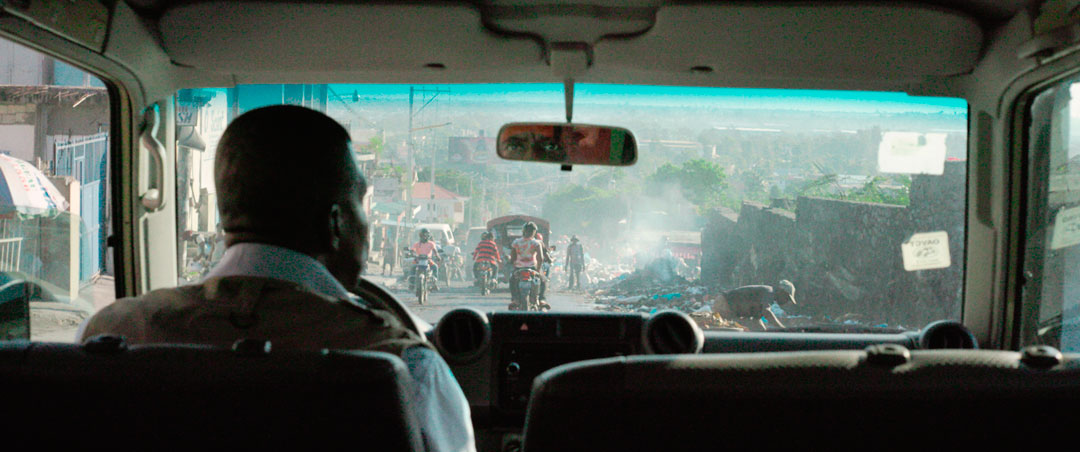
The expression “zo reken” means, literally, “shark bone,” but it is also used for the local cane liquor and, now, for this vehicle closely associated with the international community on Haitian soil – a presence deemed vampiric, hypocritical, and devastating. But don’t ask Pascal Antoine what he thinks of them. He is Licha’s designated driver, carefully steering the behemoth as it is constantly targeted by projectiles and the muffled anger of passersby.
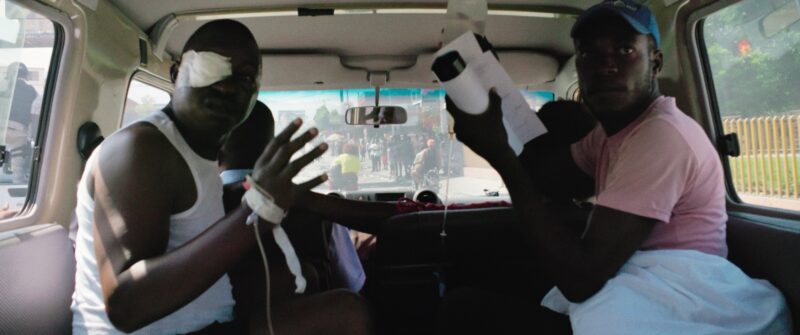
From within this vehicle, Haiti is revealed in a perfectly defined aesthetic offering, a gaze delineated as if the spectator were also shut into this closed space. Aside from a few stops, pretexts for songs or fragmented political conversations, the city awash in unrest is seen only from the backseat of this gleaming symbol of foreign power.
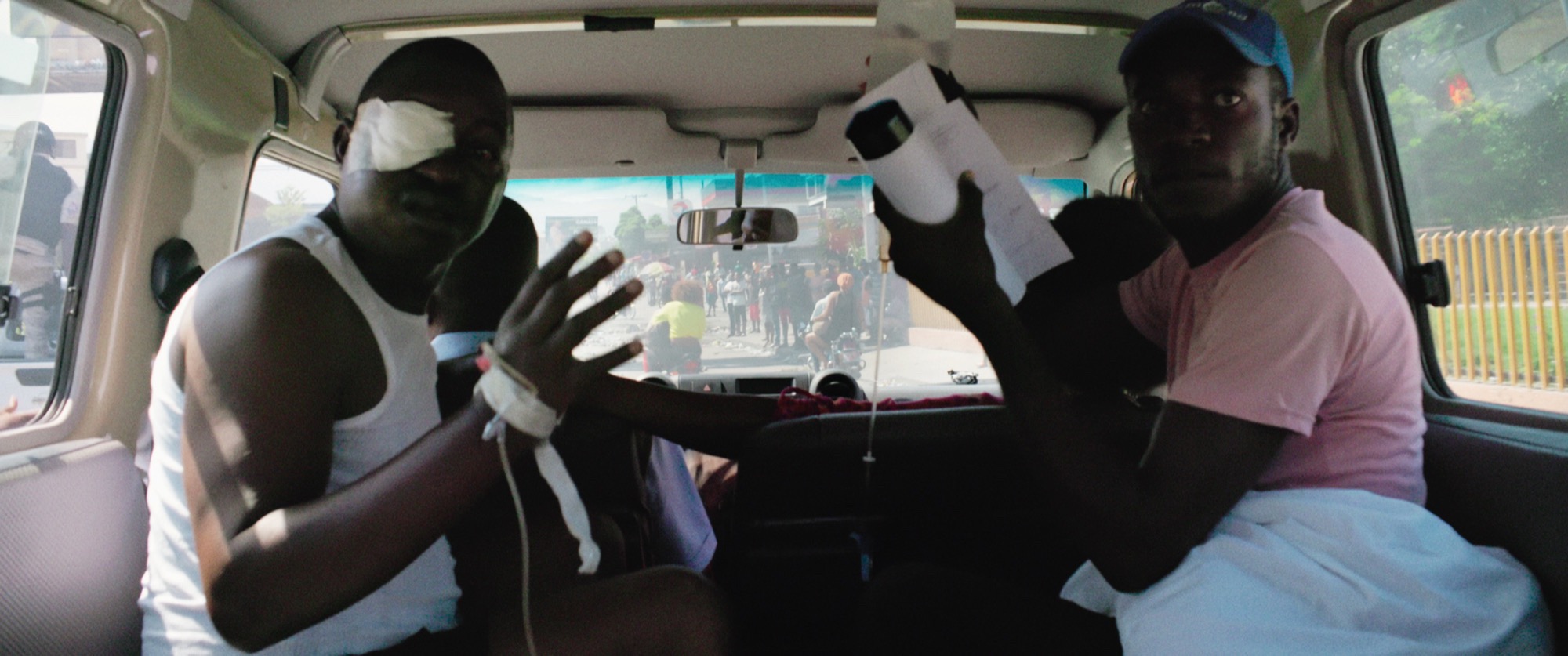
It is also from this position that passengers of various ages, social conditions, and professional backgrounds, some bedridden and others in good health, comment on the popular uprising, the disrepair of the hospital system, and especially the destabilizing presence of the non-governmental organizations. “Two short tours and two little cheques, and then they’re gone,” one of them says about the humanitarian workers, and he isn’t the only one who believes that these “charities” are built “on the misery of countries like Haiti.”
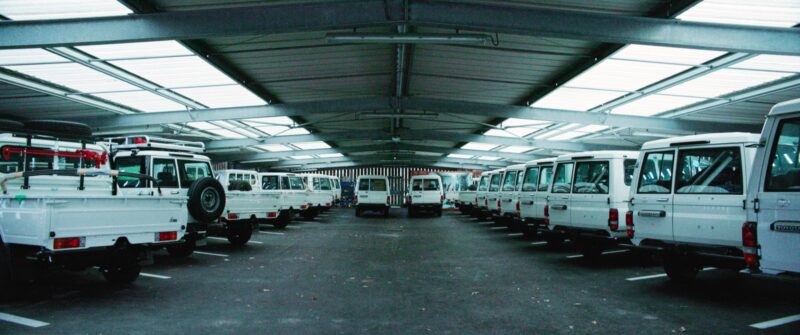
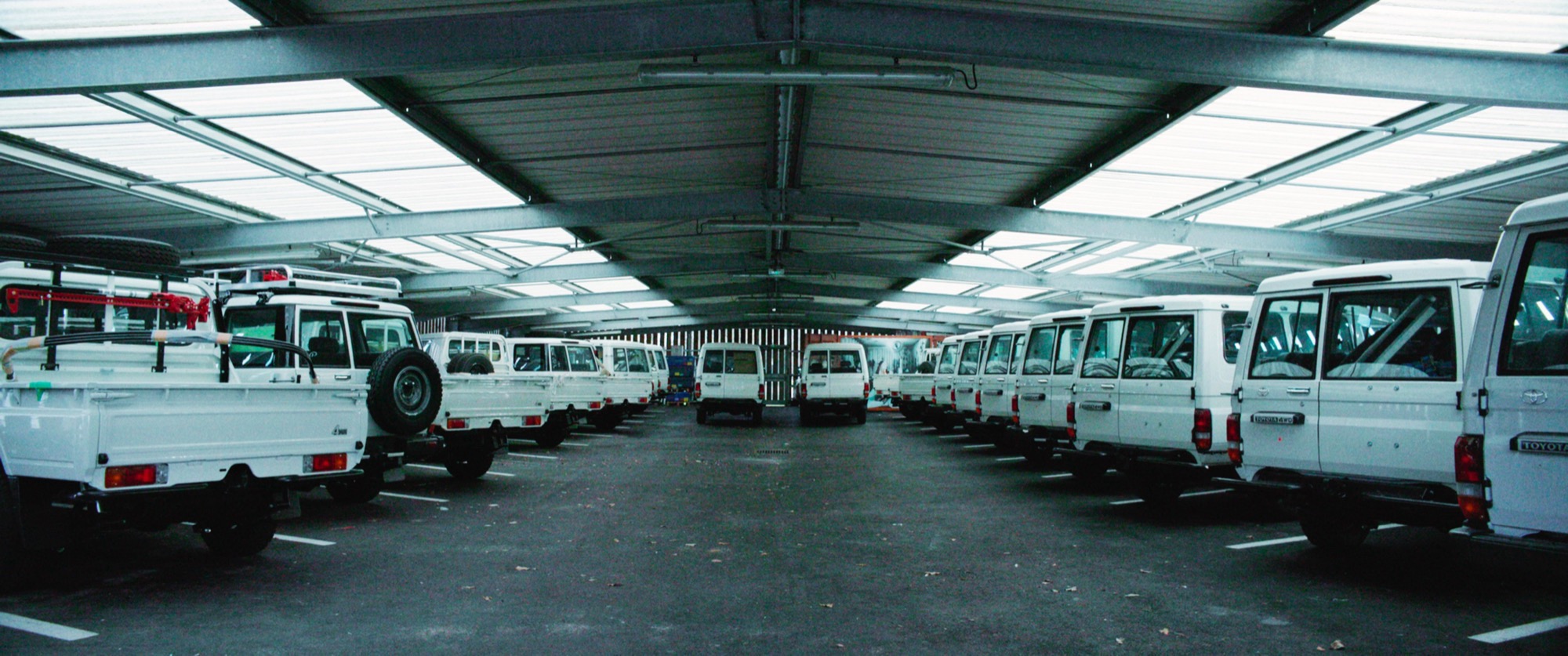
Licha captures this destitution from inside the vehicle, which is forced to zigzag between barricades and demonstrations. His journey is intercut with ironic counterpoints: a few slow travelling shots taken in the middle of a huge Médecins sans frontières warehouse in Mérignac, France, as sterile and structured as if the place were run by Amazon.
With an uncluttered, coherent approach, Licha delivers his report in the form of an urban chronicle, giving centre stage to his protagonists, none of whom are identified and all of whom have a unique viewpoint. Even their silences, sometimes heavy, say much about the courage and nobility of Haiti. Not necessarily at war, but always struggling. Translated by Käthe Roth
André Lavoie is an independent film critic and journalist. He holds a master’s degree in film studies from the Université de Montréal and has been a contributor to the newspaper Le Devoir since 1998, as well as to the magazines Sélection du Reader’s Digest and L’actualité. He has been awarded two Grands Prix du journalisme indépendant, including for best cultural critic, and is a speaker and debate moderator.
[ Complete issue, in print and digital version, available here: Ciel variable 118 – Exhibiting Photography ]