
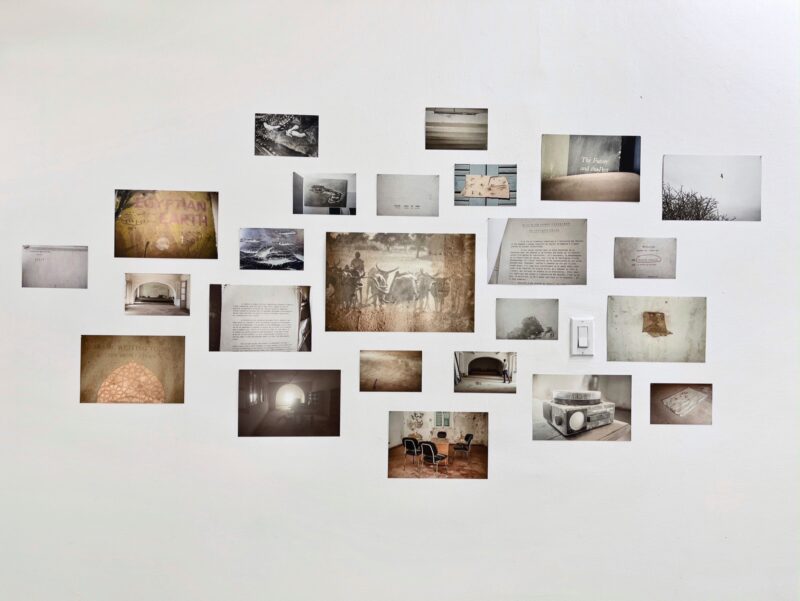
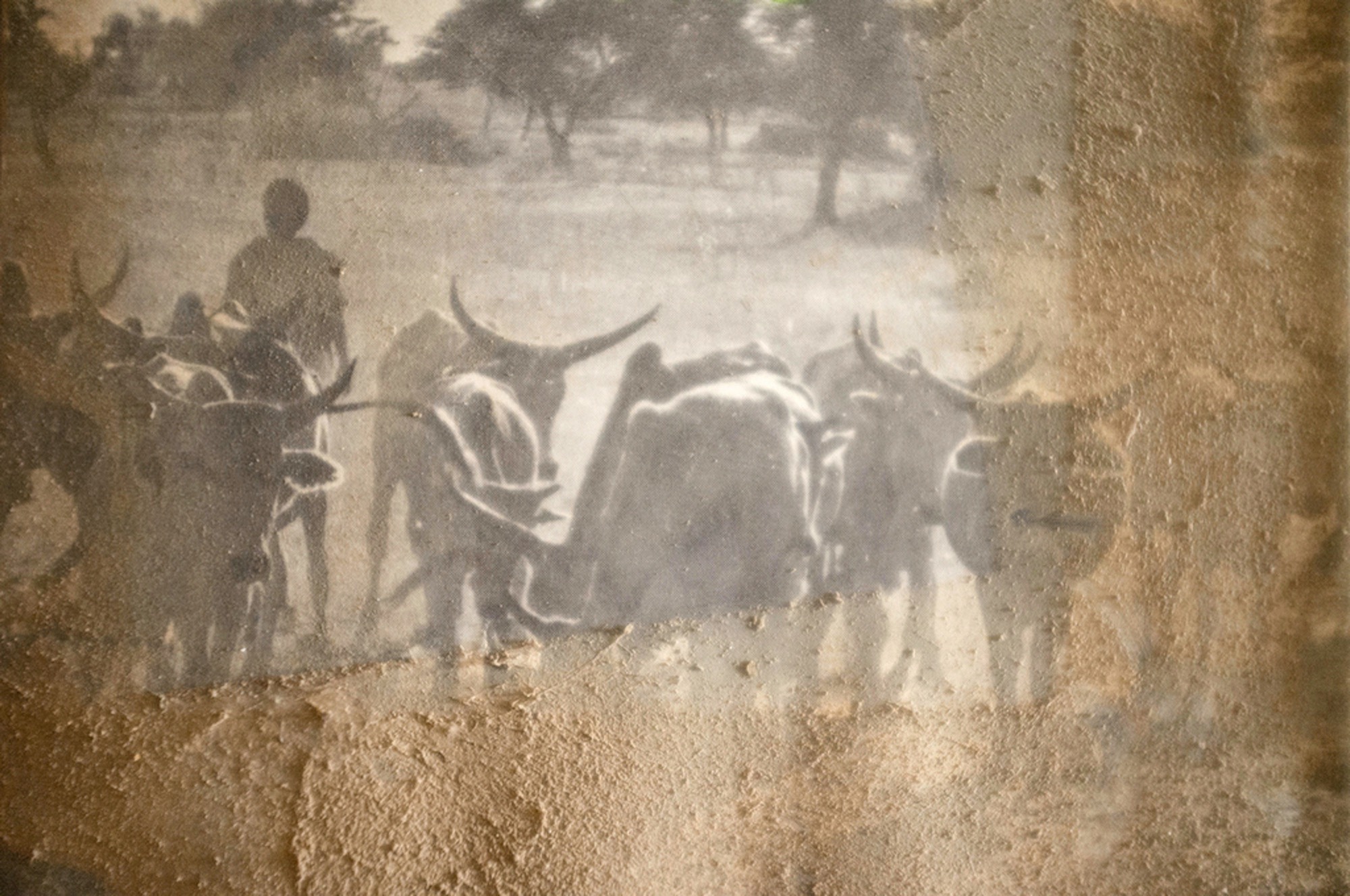
De la série / from series Mutants, 2018, impression sur papier Hahnemühle / print on Hahnemühle paper, photo : Judith Bellavance
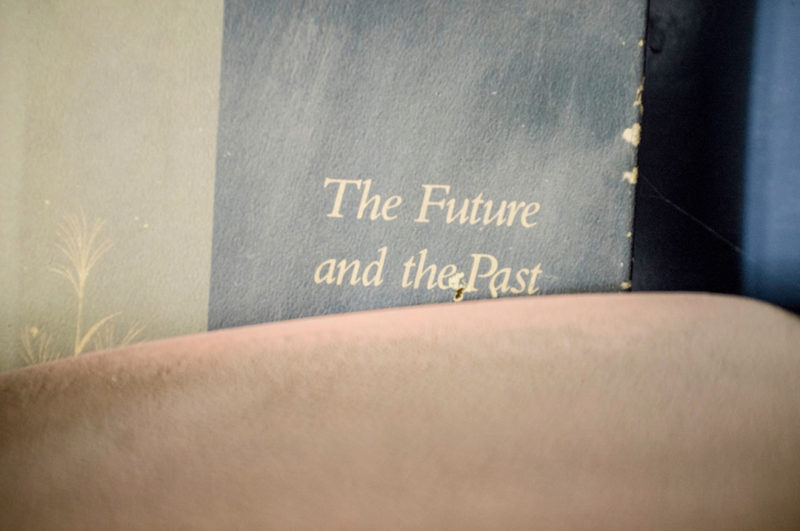
Érika Nimis, De la série / from series Mutants, 2018, impression sur papier Hahnemühle / print on Hahnemühle paper
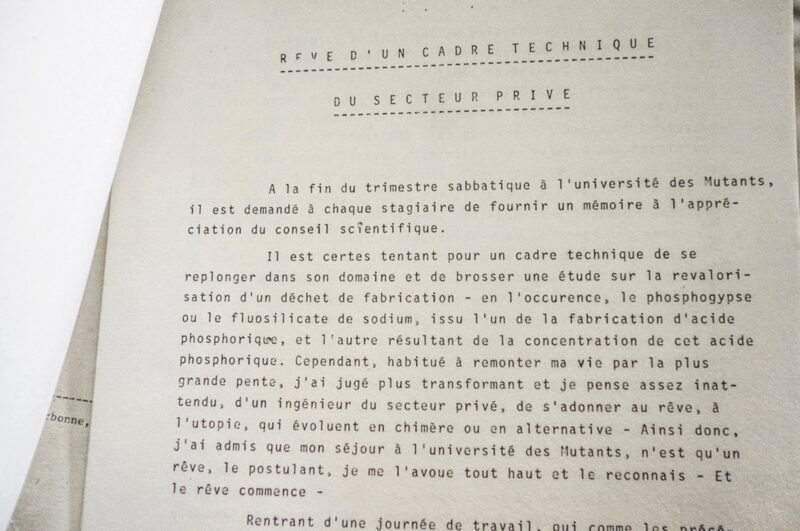
De la série / from series Mutants, 2018, impression sur papier Hahnemühle / print on Hahnemühle paper, photo : Judith Bellavance
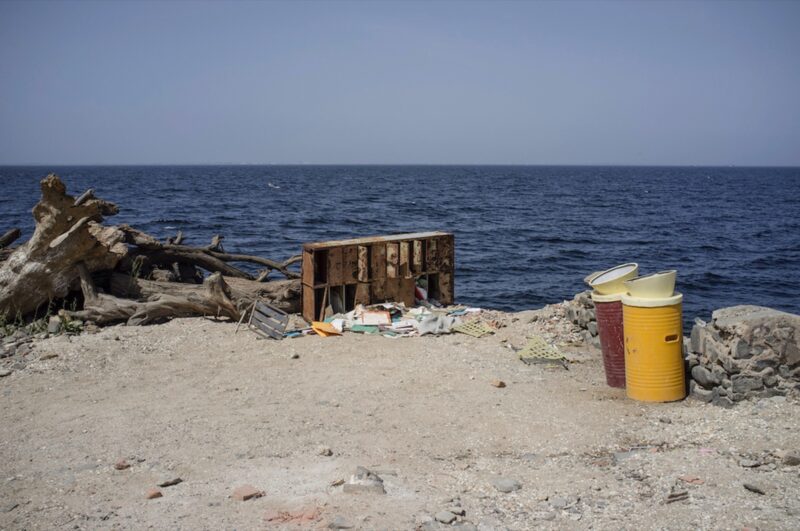
De la série / from series Mutants, 2018, impression sur papier Hahnemühle / print on Hahnemühle paper, photo : Judith Bellavance
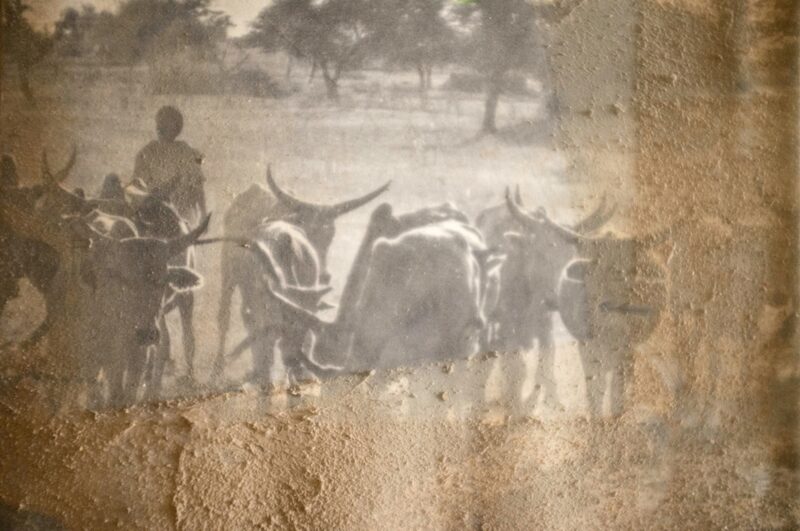
De la série / from series Mutants, 2018, impression sur papier Hahnemühle / print on Hahnemühle paper, photo : Judith Bellavance


[Fall 2021]
Érika Nimis, Mutants
By Christian Roy
Centre des arts actuels Skol
6.03.2021 — 10.04.2021
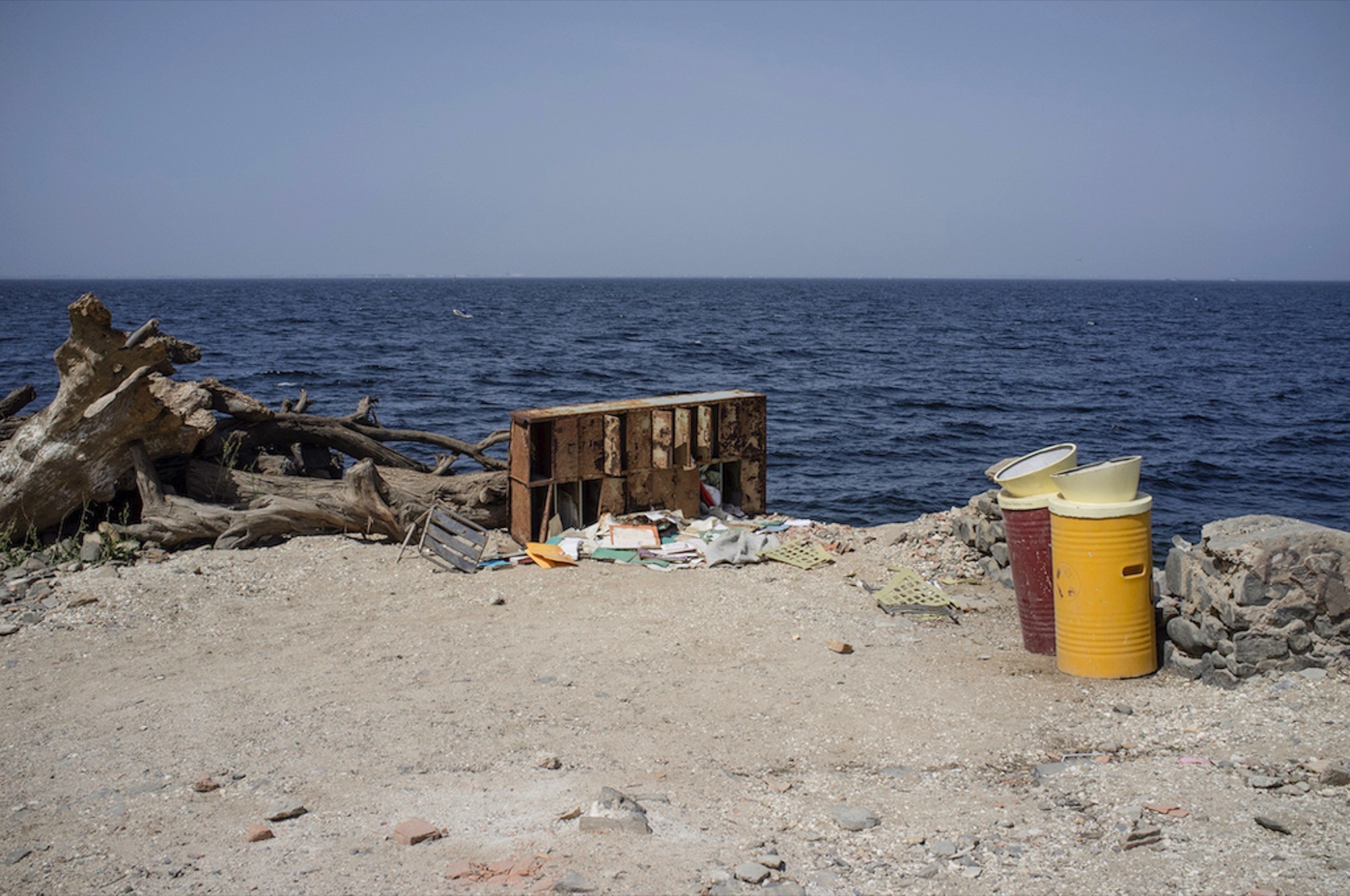
Érika Nimis, a historian of Africa and its photographic tradition, which she has often covered in Ciel variable, also produces photographic essays about traces of places and abandoned objects. The body of work exhibited at Centre Skol results from an overlapping of these two approaches – documentary and artistic – ancillary to her study of the urban palimpsests of Senegal’s capital, Dakar. In 2017, strolling on the island of Gorée, offshore of Dakar, she found an overturned bookcase on the shore, filled with old administrative documents bearing the surrealistic letterhead “Université des Mutants.”
This science-fiction-sounding name launched Nimis in search of a very real institution, whose former buildings have remained abandoned since its dissolution in 2005. Founded in 1979 by Léopold Sédar Senghor and Roger Garaudy, and supported by the UN, the University of Mutants was intended to transmute the memory of the site, listed the previous year as a UNESCO world heritage site for being a stopover point in the slave trade. It was meant as an intercontinental meeting place for research on endogenous alternatives to the alienating development championed by the West.
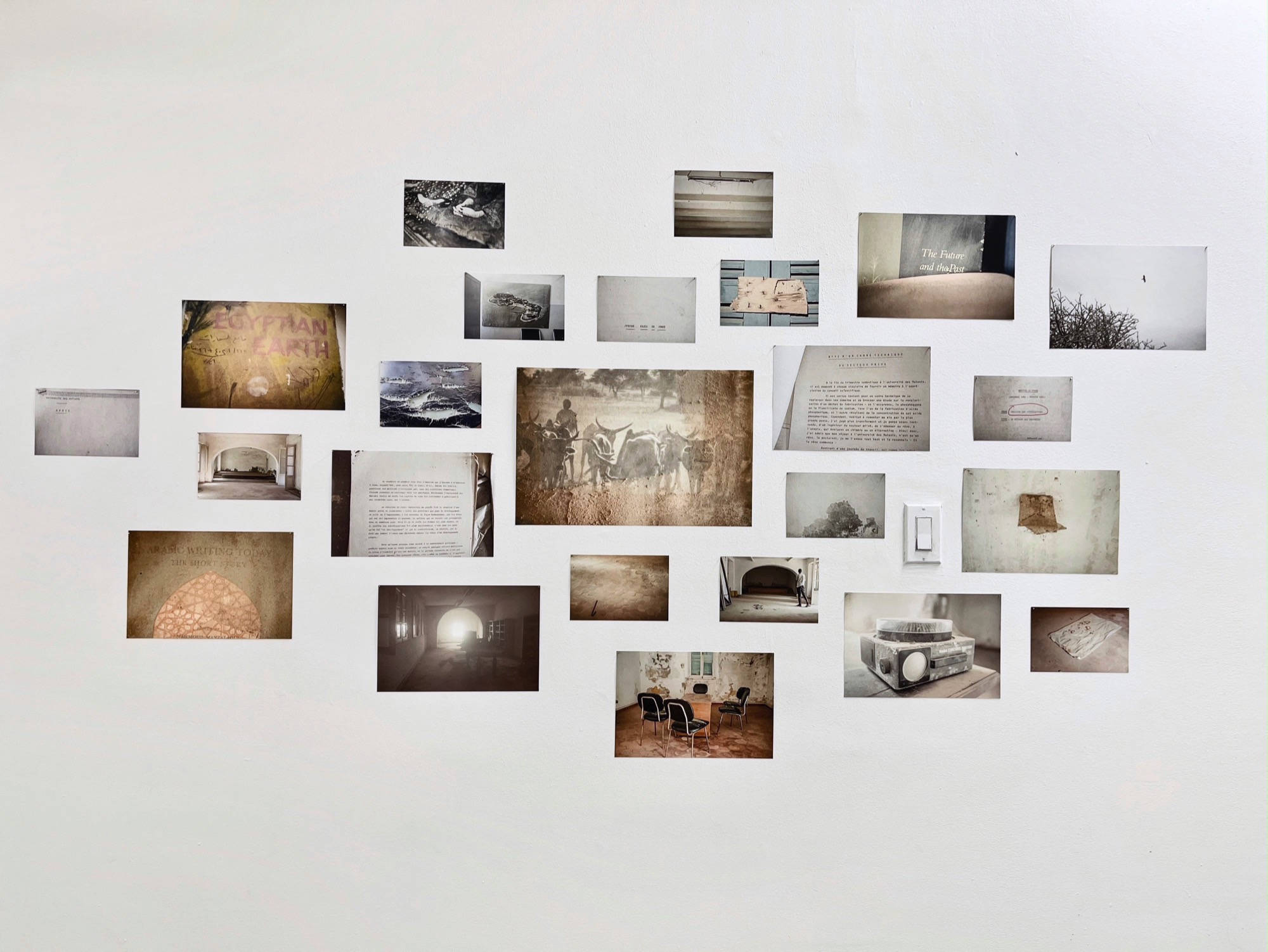
Interspersing reproductions of documents, close-ups of excerpts, and images of the site, people, and objects, Nimis arranges, on two open-angled walls, pictures of her investigation of the abandoned site. A sense that this was a uchronic utopia is left by texts that invoked the urgency of undertaking a pluralistic and techno-critical reorientation of civilization, even before ecological issues emerged with neoliberal globalization. The documents make it possible to dream of what might have been a form of development thought in the Global South by those who gathered on Gorée in 1980.
At the same time, newly arrived in the White House, Ronald Reagan made a symbolic gesture to confirm a fateful turning point by having the solar panels installed on the building by his predecessor removed. There was a choice to be made between “mutating or perishing” – the title of a manifesto published by the University of Mutants. The great historian of Africa Joseph Ki-Zerbo distanced the institution from the image evoked today by “mutants”: supermen or monsters produced by perverted biology. Fearing a “total suicide of the species” by passive mutation under the impact of technoscience and the consumer society, Ki-Zerbo called for active mutation, initiated by agents aware of the changes required.
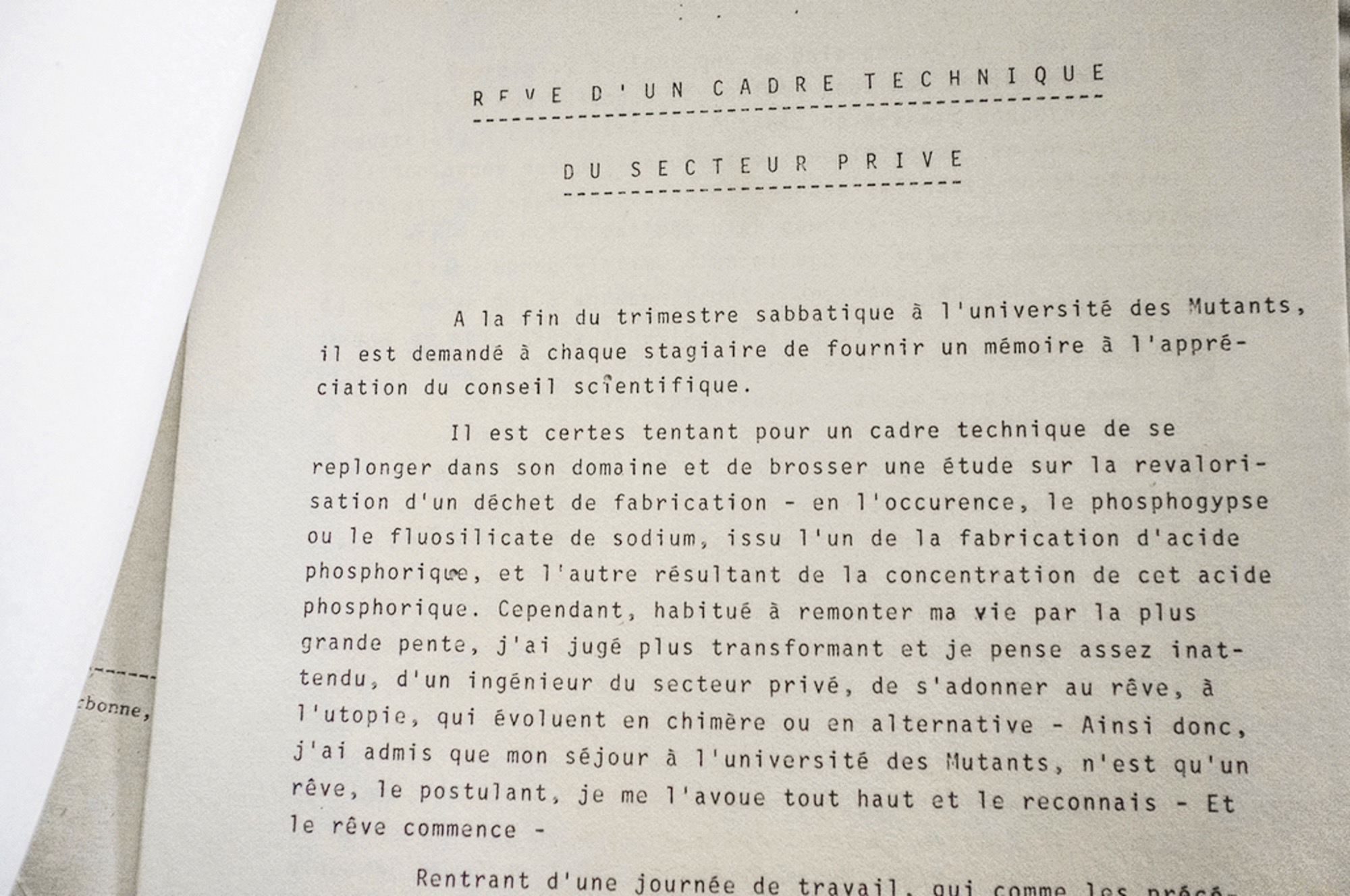
Such were the Mutants of Gorée, an “island open” to the oppressive past but rich with promise, with “vital idea-forces,” seeded by a new order intended to replace the “cannibalistic order” of the global village. As the “North Star of a time to come” – ours – that it wanted to divert from its path, the University of Mutants believed that it could contribute to this future by spreading its works into each region of each continent, by the humble means of the analogue printshop, in the form of typescripts and brochures, which figure among the images in the exhibition. This ambition of local and global transmission is touching when we think of the ease with which digital telecommunications induce disinformation, confuse minds, unleash passions, become an addiction. What remains of the Rêve d’un cadre technique du secteur privé (Dream of a technical framework for the private sector), a thesis typed by one of the participants? An aptitude for change, demonstrated in the field of real life, was the main criterion for admission for an internship in this Aeropagus.
Combining Afrofuturism and retrofuturism, Mutants offers an archaeological immersion in this site left in the planning stage. The forlorn state of the place is described in a piece of an interview with its former steward; the exhibition dwells on the patina of lost years, deposited in multi-coloured sedimentation on walls, furniture, books, and papers. In an image that dominates the mosaic of pictures, we catch a glimpse of the Sahel in the background of a tight shot of a zebubreeding operation, streaked with “dust breeding,” recalling the celebrated photograph by Man Ray. Similarly, the Sahara seems to have silted over the covers of books in the abandoned library, from which emerge titles such as Egyptian Earth and The Future and the Past, as well as volumes on Arabic writing, all veiled under the powdery grime that also covers a cobweb-laden slide carousel.
To the ghostly alcoves of disused spaces respond the prosaic walls of a gallery nook, including the functional switchboard facing an electrical outlet on the crumbling wall of a distant continent. Above all, the subtle formal and thematic arrangements among the images displayed encourage us to meditate on the falling into oblivion of avant-garde ideas and the obsolescence of new technologies, on a historical, or even geological, scale, in which all human projects end up fading to a muted grey. Nimis skilfully renders the nuances of the grain directly through the textures and streaks that illuminate the mystery of a distanced and imperilled institutional memory, here reanimated as something precious, reminding us of our own Anthropocene challenges. Reverberating in dissertation titles such as Afrique enjeu du monde (Africa: An issue for the world) and Dialogue des civilisations : Le Message des Prophètes (Dialogue of civilizations: The message of the prophets), the visionary experiment of this submerged utopia emerges from the materiality of pictorial traces, released from their gangue into a photographic research project that is both inspiring and poetic. Translated by Käthe Roth
1 On the concept of utopia as uchronia and the inspiration that it reveals through possible histories that never happened, see Christian Roy, “De l’utopie à l’uchronie,” in Les idées mènent le Québec. Essais sur une sensibilité historique, ed. Stéphane Kelly (Quebec City: Presses de l’Université Laval, 2003), 197–219.
1 See the newsletter Le Mutant, of which Nimis reads an excerpt at https://skol.ca/galeriepassagedesmembres/erika-nimis-mutants/.
Christian Roy, a historian of culture who holds a PhD from McGill University, a translator, and an art and film critic, is the author of Traditional Festivals: A Multicultural Encyclopedia (ABC-Clio, 2005) and numerous scholarly articles. A regular contributor to the magazines Vice Versa (1983–97) and Vie des arts, he has also published in Ciel variable, Esse, and ETC.
[ Complete issue, in print and digital version, available here: Ciel variable 118 – Exhibiting Photography ]