
[Summer 2022]
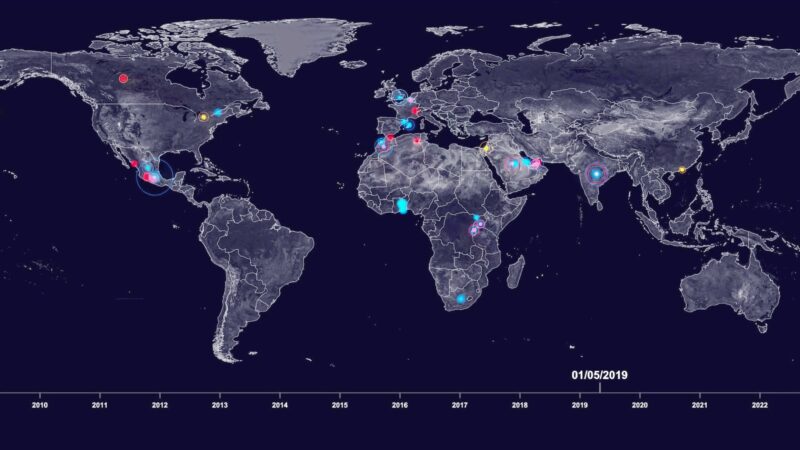
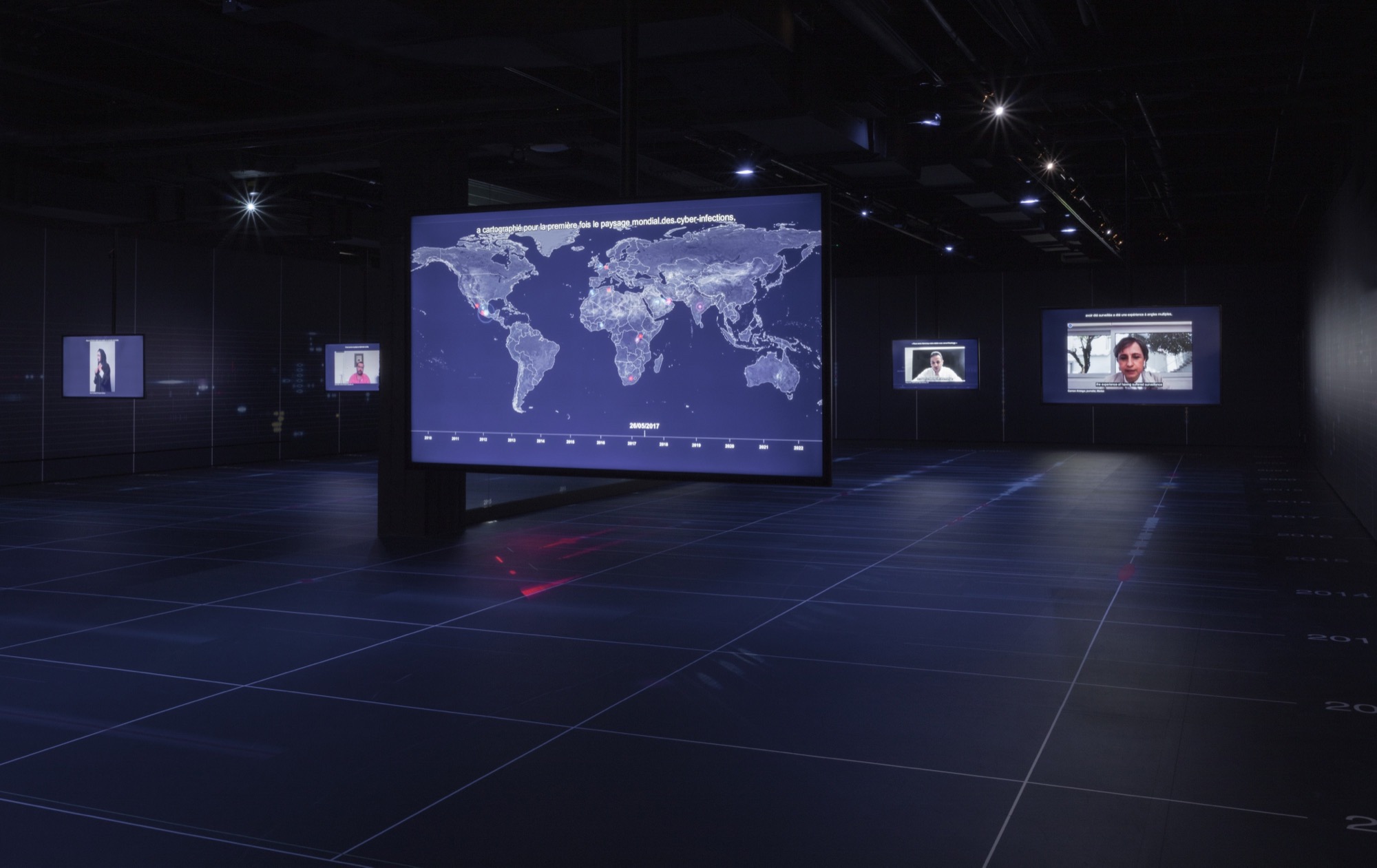
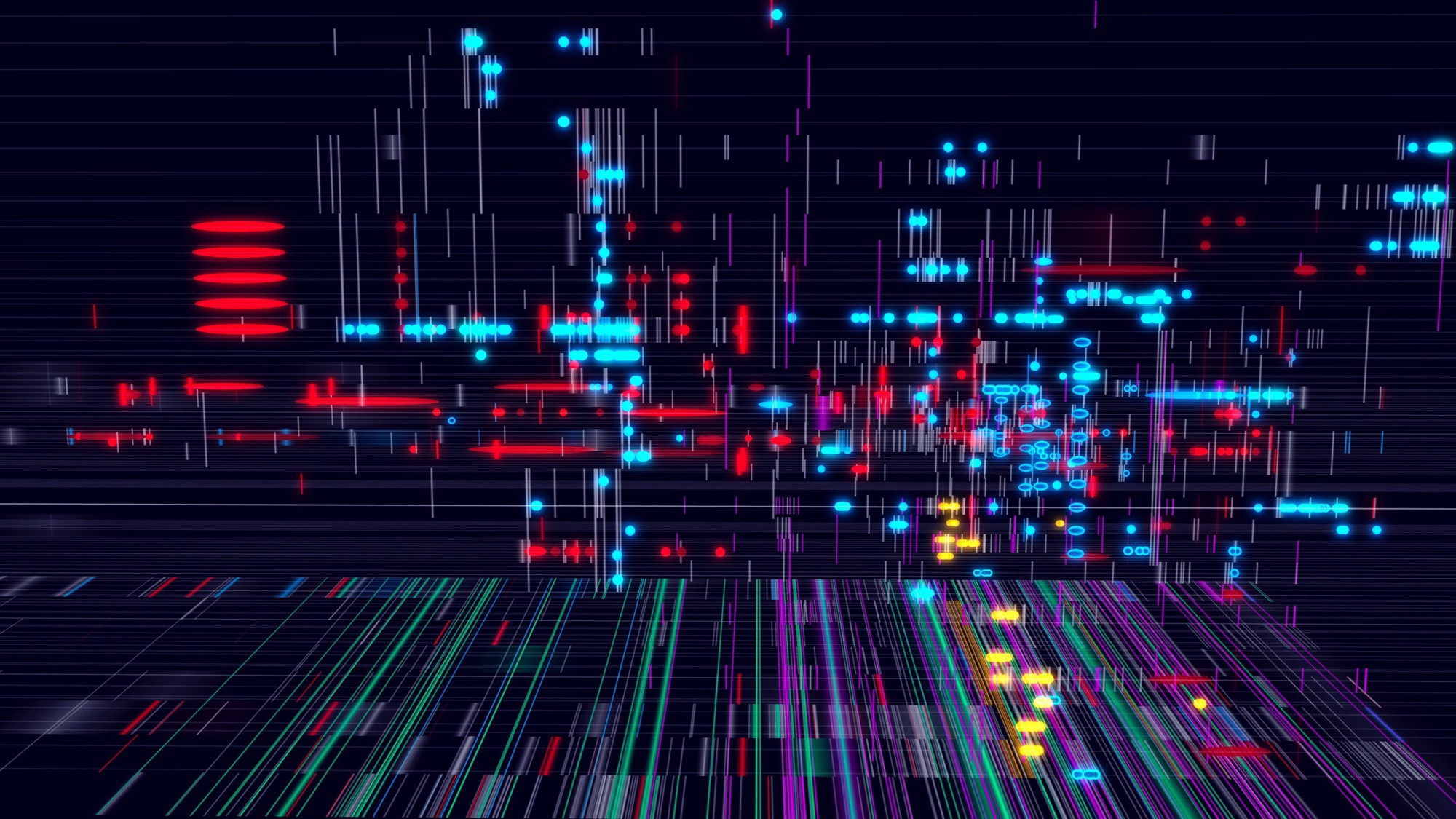
Digital Violence: The Spatial Database, installation immersive qui inclut / immersive installation that includes The Pegasus Stories, six vidéos / videos photo : © Forensic Architecture, 2021

Digital Violence: The Spatial Database, installation immersive qui inclut / immersive installation that includes The Pegasus Stories, six vidéos / videos photo : © Forensic Architecture, 2021.
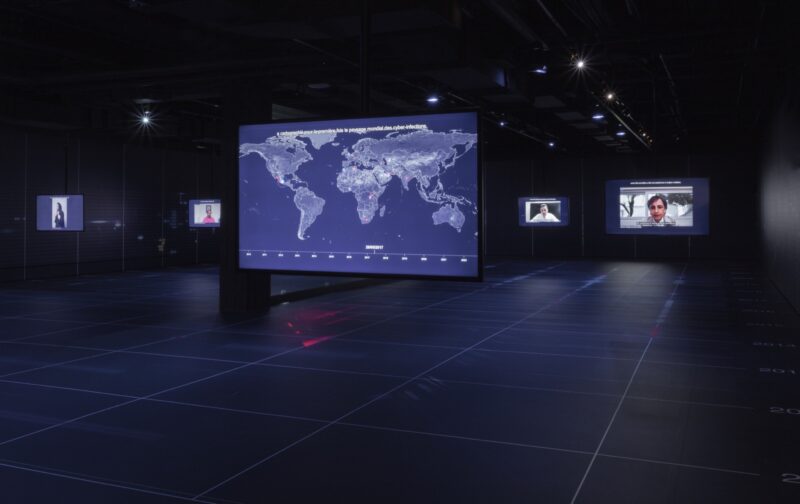
Photo : Musée d’art contemporain de Montréal, 2022
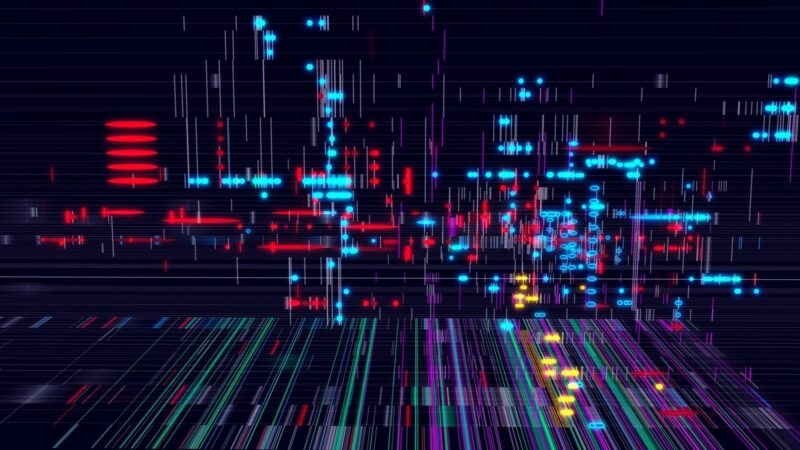
Digital Violence: The Spatial Database, installation immersive qui inclut / immersive installation that includes The Pegasus Stories, six vidéos / videos photo : © Forensic Architecture, 2021


By Edward Pérez-González
It was with my head full of the rave reviews I’d read in the local press – “a show that sends shivers down your spine,” “a blood-curdling exhibition” – that I went to the temporary site of the Musée d’art contemporain de Montréal (MAC), in Place Ville Marie, to see Terror Contagion.1 Throughout my visit, I wavered between curiosity and skepticism.
Organized by John Zeppetelli, executive director and chief curator of the MAC, with curators Lesley Johnstone, Geneviève Senécal, and Denis Labelle, the exhibition brought together a visual installation and several audiovisual documents produced by the research collective Forensic Architecture (FA). It provided a space for consideration and denunciation of the complex enterprise of mass surveillance, human rights violations, and state violence. As the presentation text puts it, “Terror Contagion tells the story of a complex form of digital targeting that aims to silence and eliminate collaboration networks formed by individuals who are the subject of surveillance.”
The exhibition is presented in three sections. The visit starts with a modest gallery right in the lobby of the “museum,” where two animation videos produced by FA are presented in alternation. Despite the obvious good intentions of the “scenography” and the use of headsets, the ambient noise in the reception area interfered with the experience of the projections.
The first video, The Enforced Disappearance of the Ayotzinapa Students, shows the results of an investigation conducted in 2014 in the town of Iguala, Mexico, where a group of students was attacked by the local police, in collusion with criminal organizations and other branches of the Mexican security forces. The incident caused six deaths, forty people injured, and the disappearance of forty-three students, whose fate is unknown to this day. Using 3D modelling and other technologies, FA produced an interactive mapping platform that makes it possible to locate and explore the relationships among events, people’s movements, communications, killings, and how the incident developed.
The second video, The Extrajudicial Execution of Ahmad Erekat, retraces the fate of a Palestinian man who was shot by the Israeli occupation forces in the West Bank in 2020. Using 3D modelling, shadow analysis, and open-source investigation, the research team reconstructed the circumstances of the event: Erekat’s car accident, the use of deadly force, the absence of medical assistance, and the degrading treatment of the body.
In a second gallery was a screening of Terror Contagion, from which the exhibition’s title was taken. This eighteen-minute documentary by filmmaker Laura Poitras shows how the Pegasus malware contaminates the phones of the people it targets and gives access to their data. This digital surveillance led to arrests, murders, and physical surveillance. Poitras – who won the Pulitzer Prize for her reports on Edward Snowden and whose film Citizenfour won the Oscar in 2015 for best documentary – was herself the subject of surveillance by various American intelligence agencies.
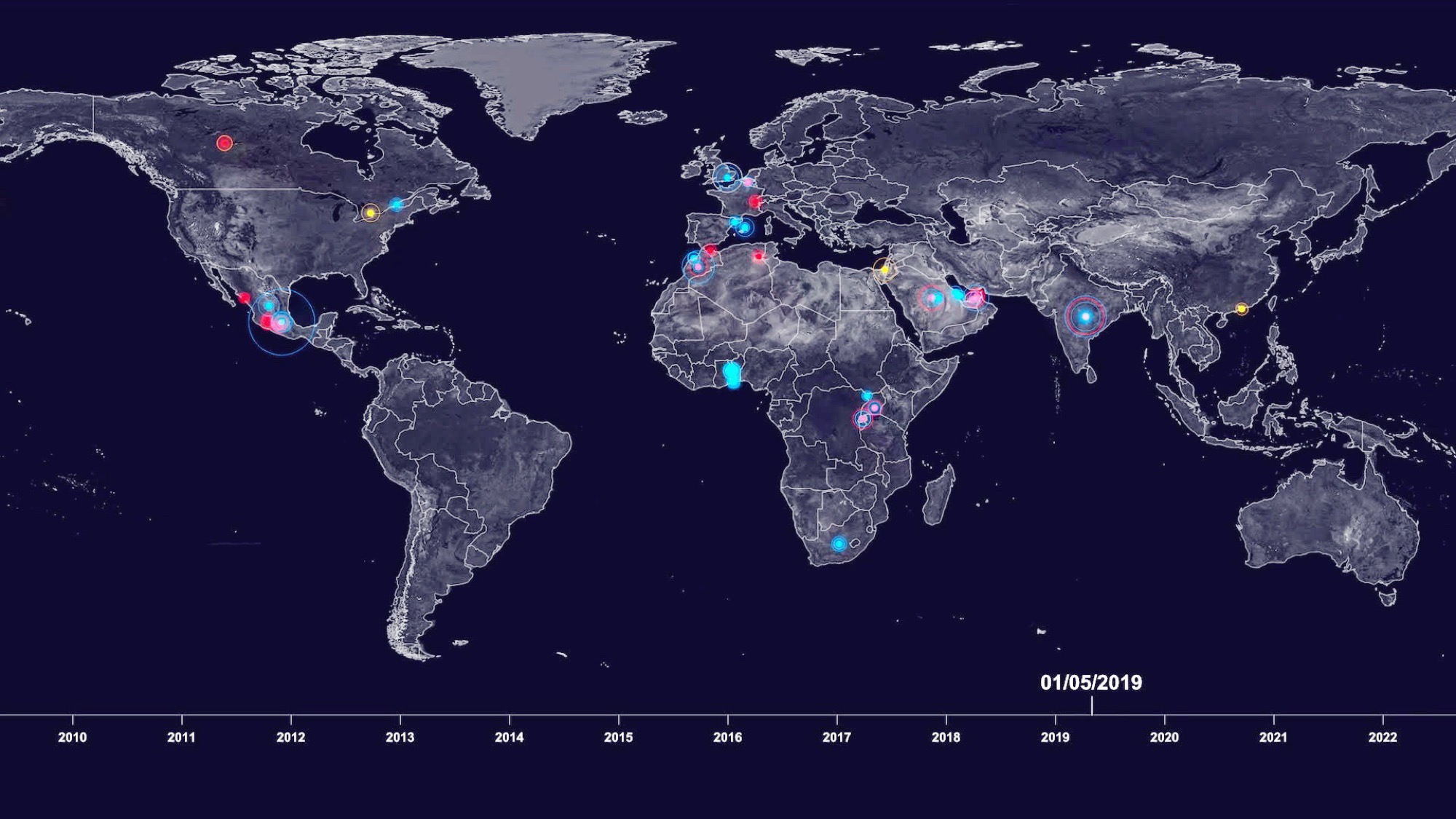
Finally, in the main gallery, an immersive installation takes spectators within a life-size three-dimensional matrix. Created by FA, it maps all the events related to the Pegasus surveillance software. The matrix represents almost two thousand data points that concern “export licenses, alleged purchases, digital infections and events in the physical world, such as the intimidation, assault, defamation and murder of individuals reportedly targeted.”
The digital platform, projected onto the central glass wall, is structured like a gunsight’s cross-hairs: the horizontal axis presents a timeline, along which the data corresponding to individuals targeted are stacked vertically. The light beam that tracks the deployment of the data is extended by lines on the gallery’s floor and walls. The sound environment, composed by the musician Brian Eno, dynamically translates the data into modulated sounds, accentuating the sense of an omnipresent threat. The accompanying narration is by Edward Snowden.
To highlight the virtual aspect of the issues addressed in the installation, the gallery is swathed in a dark purplish-blue ambience. Plays of shadow and light, reminiscent of the aesthetic of German expressionist film, give an illusion of three dimensions, with the effect of depth amplified by the reddish lighting. Small screens hung from the ceiling and placed around the digital model show Pegasus Stories, investigative videos in which activists, human rights defenders, and investigators targeted by the malware speak out.
This installation may trigger a sense of involvement among spectators, as they themselves become data points in the matrix. The result is recognition of and empathy toward the very real people who were victims of digital infection, intimidation, assault, defamation, or murder. The use of this science-fiction-like aesthetic seems to mitigate the feelings of discomfort and vulnerability provoked by the disturbing information contained in the exhibition.
One might wonder about the relevance of this exhibition and why the MAC chose to associate itself with a so radical a project. Zeppetelli gave his opinion on this subject, noting that the exhibition is part of “a new trend” observed in the art world, and also the result of a political turn in museums. Terror Contagion is nevertheless a strong statement. In considering the document and the documentary as entire visual works on their own, the exhibition extends the conceptual boundaries of the museum, turning it into a space that expresses social denunciation and incites fissures in the power that be.
During his talk at the exhibition’s opening conference, Eyal Weizman, founder and director of FA, provided avenues for justifying the relevance of the exhibition. Among other things, he explained that although the collective’s members hesitate to identify themselves as artists, they see their presence in art spaces as a means of self-criticism. He noted that the exhibition of their projects in art spaces is a source of funding, but in the same breath he underlined that, in his opinion, the collective’s members produce “visually interesting things” and make aesthetics a means of research.
Weizman added that his work team contains scientists, lawyers, and artists, and he noted that the artists are there not to make the work beautiful but to give it meaning. One could think that using artists in this sense responds to the “roles and functions” attributed to contemporary art: to inconvenience, transgress, break through the limits of ideas and ways of being, to resist and build resistance. As Félix Guattari said, “Art is the field that resists. . . . It is where one finds a proliferation of parasitic fungi, the kernels of resistance.”
Weizman gave another justification when he said that putting something in an art space makes people listen. Thus, the museum is used to provide a statement of intent with validation, visibility, and prestige. Appropriating the authority to overstep what is expected of it in order to take part in the action, inscribe itself directly in reality, the museum becomes a place where things resonate, a “theatre” that enforces the idea that we are all, profoundly, political actors.
In a society of post-truth, surveillance, and uncontrolled controls, stripped of laws governing digital security and the right to privacy, the present is both utopian and dystopian. Gilles Deleuze analyzed the advent of digital technologies as that of tools of domination belonging to control societies, and he warned us that we don’t need “science fiction to find a control mechanism that can fix the position of any element at any given moment.”
Although surveillance techniques are very sophisticated, the ideas underlying the mechanism of control based on terror inexorably bring us back to Michel Foucault and his analysis of the panopticon as a model of power, in what he called “the disciplinary society”: “The exercise of discipline presupposes a mechanism that coerces by means of observation; an apparatus in which the techniques that make it possible to see induce effects of power, and in which, conversely, the means of coercion make those on whom they are applied clearly visible.” In a visionary sentence he proposed, “The perfect disciplinary apparatus would make it possible for a single gaze to see everything constantly.”
Foucault also insisted on the psychological dimension of surveillance: “The major effect of the Panopticon: to induce in the inmate a state of conscious and permanent visibility that assures the automatic functioning of power. So to arrange things that the surveillance is permanent in its effects, even if it is discontinuous in its action.” Foucault’s idea of the panopticon was inscribed in the domains of the physical world, but it is easily transposable to the contemporary digital world.
It is this very digital war, with its tactics of surveillance and cyberviolence, that the exhibition maps out, using a mechanism similar to the one it is denouncing. We may pause for a moment to wonder whether this attitude, which consists of surveilling the surveillance, leads us into an unending spiral. But quickly, we reconsider. By offering the time to examine a subject in greater depth, the exhibition takes on the appearance, rather – as the major media outlets falter – of the new fourth estate. Translated by Käthe Roth
2 Taken from the gallery wall text.
3 Oliver Zahn, “Félix Guattari et l’art contemporain,” interview, Texte Zur Kunst, no. 8 (1992): 5 (our translation).
4 Gilles Deleuze, “Postscript on Control Societies,” in Negotiations: 1972–1990, trans. Martin Joughin (New York: Columbia University Press, 1995), 181.
5 Michel Foucault, Discipline and Punish: The Birth of the Prison, trans. Alan Sheridan (New York: Vintage Books, 1977), 170–71.
6 Michel Foucault, Surveiller et punir. Naissance de la prison (Paris: Gallimard, 1975), 176 (our translation).
7 Foucault, Discipline and Punish, 201.
Edward Pérez-González has a doctorate in architecture based on a postmodern conception of museums and, more specifically, on Deleuzian philosophy. He is a critic and exhibition curator. He is a member of the curator laboratory in the Leopoldo Gotuzzo Art Museum, associated with the Universidade Federal de Pelotas, in Brazil, where he is a guest researcher. He researches contemporary painting, architectural theory, and exhibition curating. He lives in Montreal, where he works as an architect.
[ Complete issue, in print and digital version, available here: Ciel variable 120 – FIGURES OF AFFIRMATION ]