
[Fall 2026]
Watery Rewilding
By Jill Glessing
[EXCERPT]
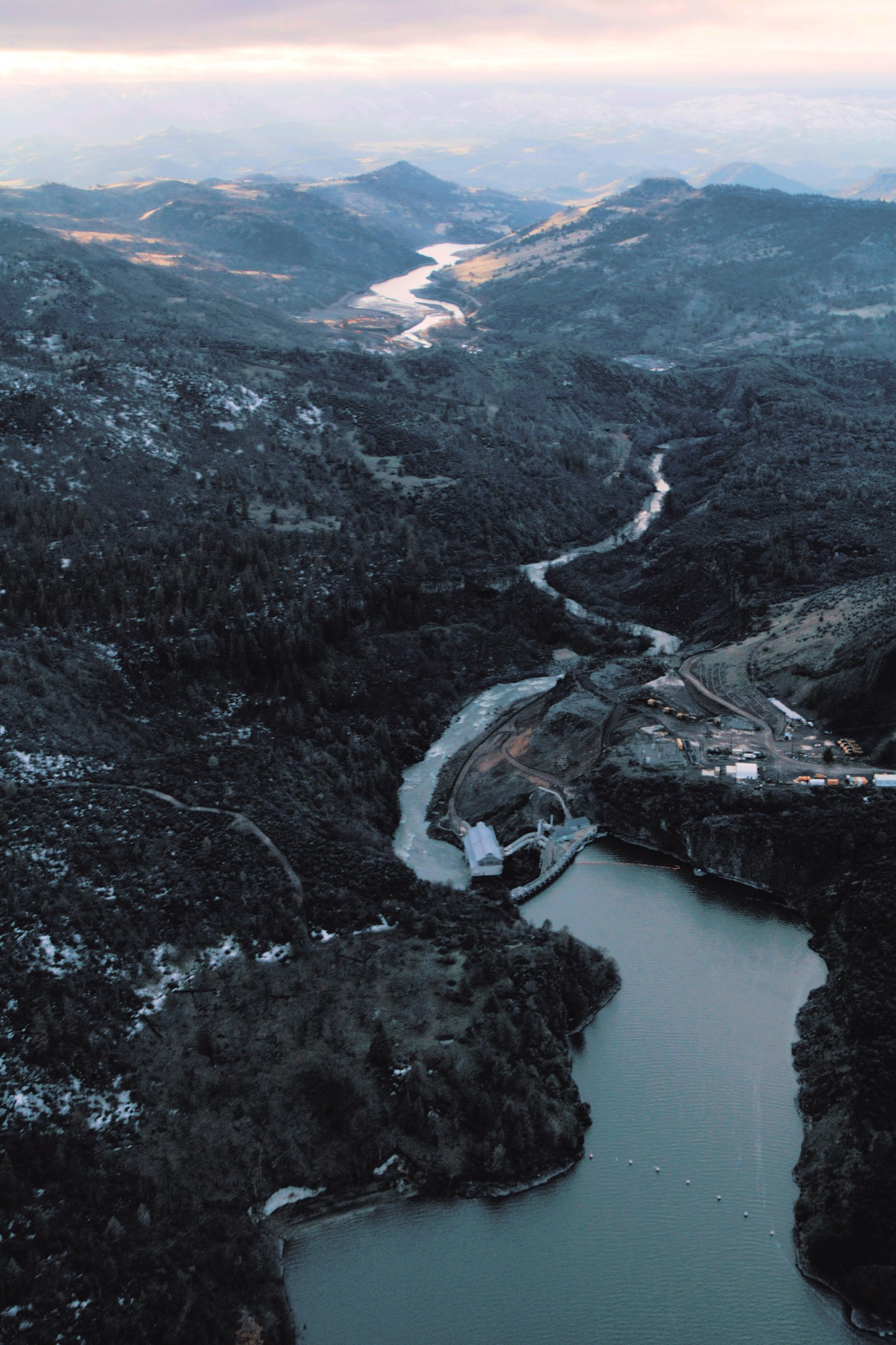
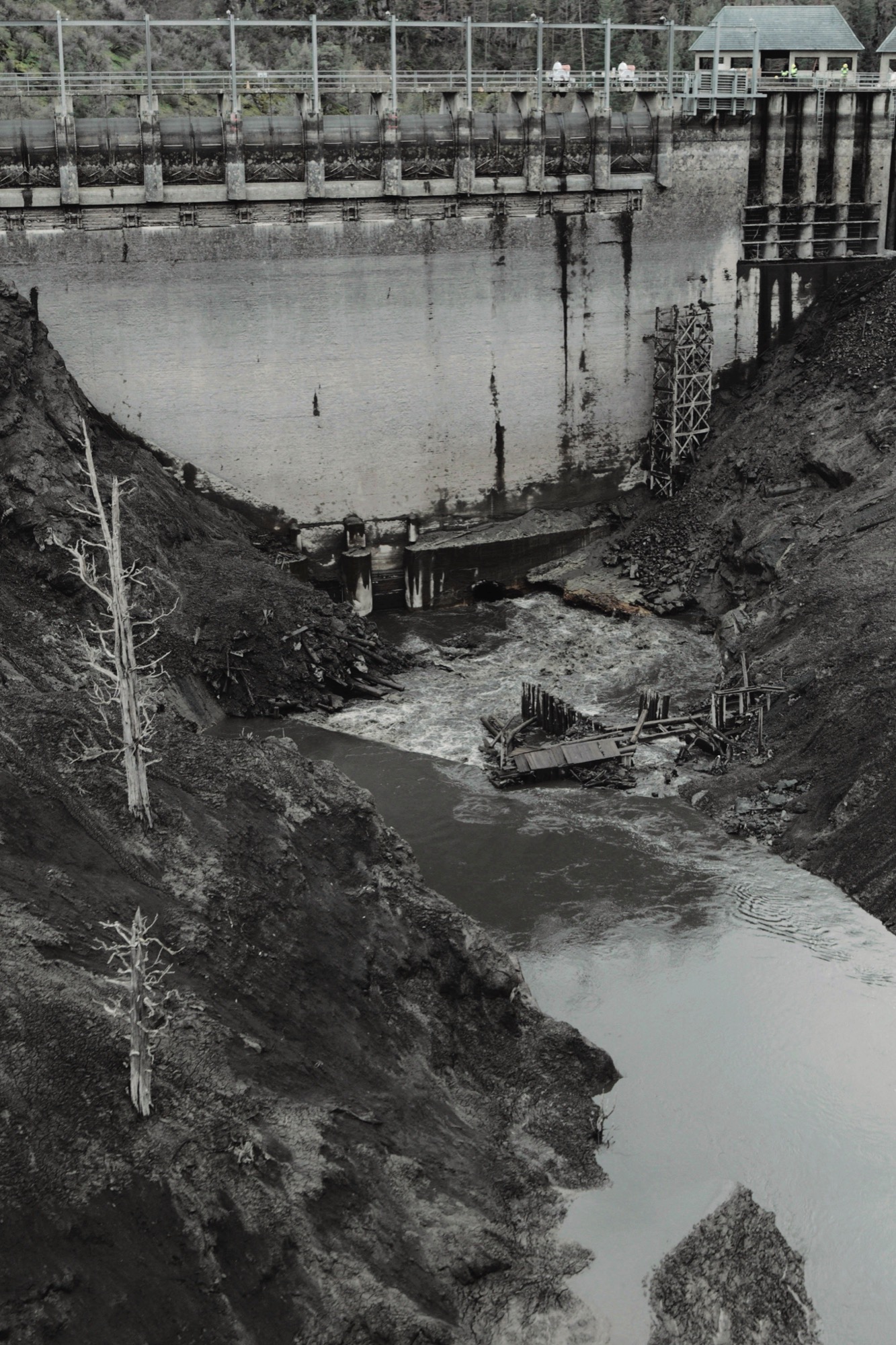
Water can be restorative, especially when it moves freely in oceans or runs wild through river beds. It was for me as I sat in front of a lively Lake Ontario before entering, steps away, the gallery hosting Lucy Raven’s exhibition Murderers Bar. Her video installation tells the story, through diverse moving-image technologies, of the setting free of a once troubled body of water, the Klamath River in the western United States, from its incarceration behind the massive concrete infrastructure that blocked its flow. Murderers Bar – about the dam’s demolition and the river’s renewal – was shown, suitably, at The Power Plant; once a coal-burning “powerhouse,” the original building was erected around the same time as the Klamath dams and for the same purpose: to supply energy for growing colonial towns.
Raven, a New York–based multidisciplinary artist, is wide ranging in her aesthetic and imaging experiments. Her explorations in historical and contemporary photographic and film technologies cross through the realms of popular entertainment, avant-garde art, and scientific and military research. For Raven, these engagements aren’t random dabbling but, rather, deeply connected with her thematic concerns – “material state change, pressure, force, and cycles of violence” – particularly in relation to colonization of the western United States, where she grew up.
[…]
[ Complete issue, in print and digital version, available here: Ciel variable 133 – INTIMACIES ]
[ Complete article in digital version available here : Watery Rewilding ]
Jill Glessing écrit sur l’art et la politique et vit à Toronto.