
[Summer 2022]

Sarah Moon, La robe à pois, impression sur papier Fine Art texturé / print on Fine Art textured paper
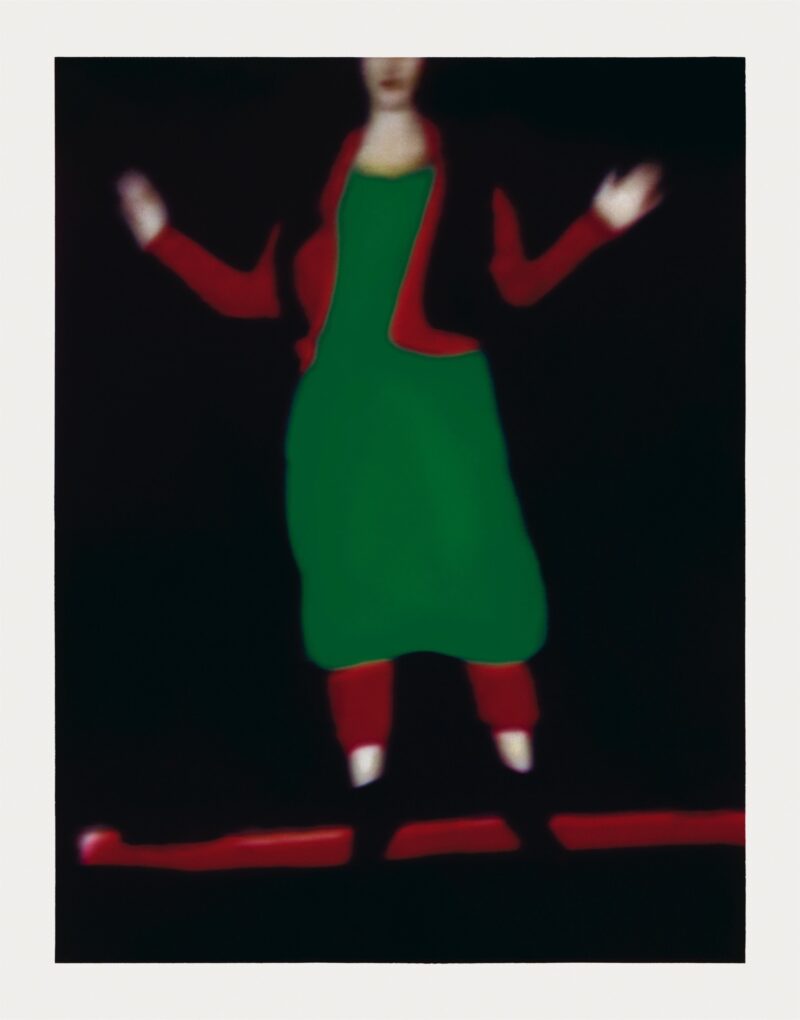
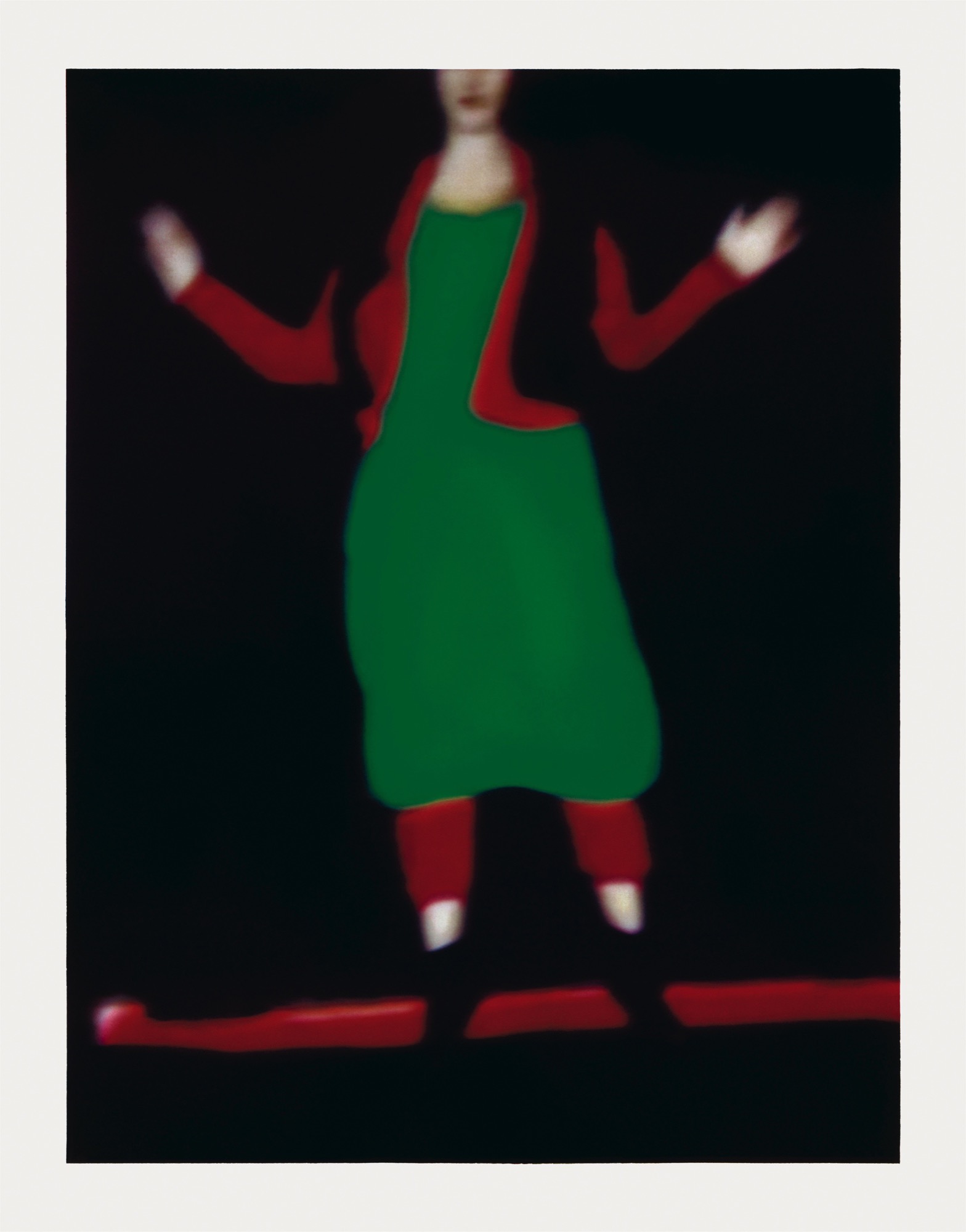
Sarah Moon, Fashion 01, Issey Miyake, 1995, impression sur papier Fine Art texturé / print on Fine Art textured paper
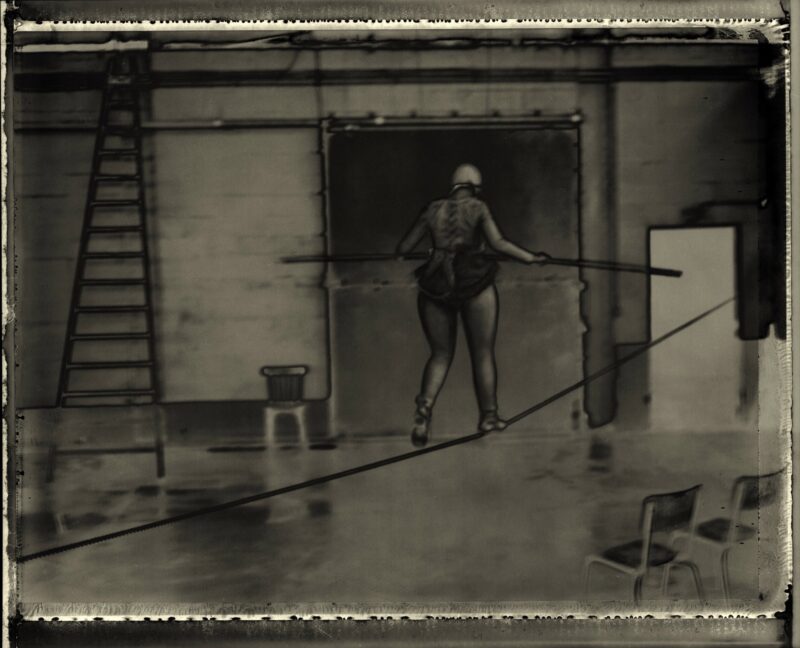
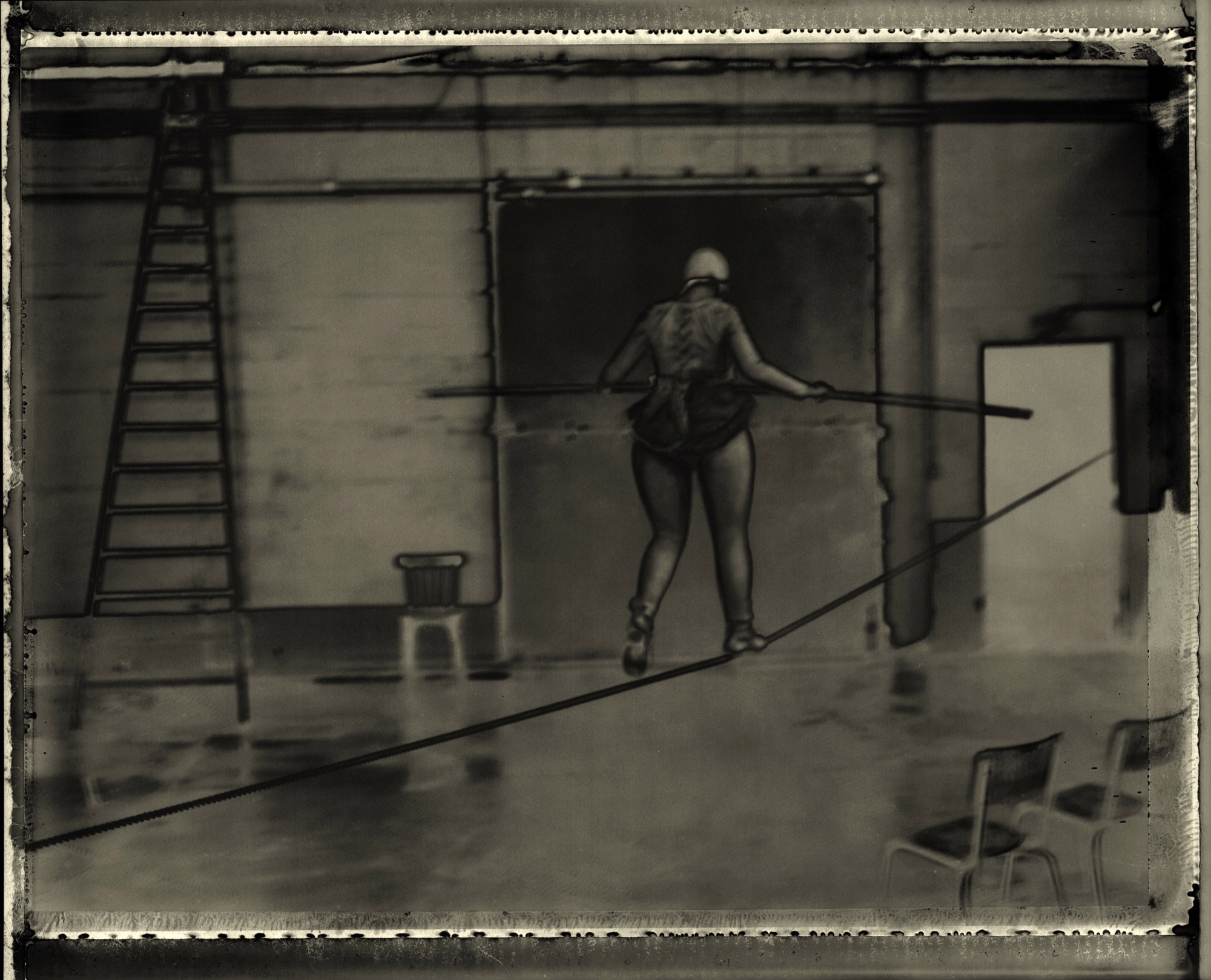
La Funambule, 2003, tirage argentique / silver gelatin print
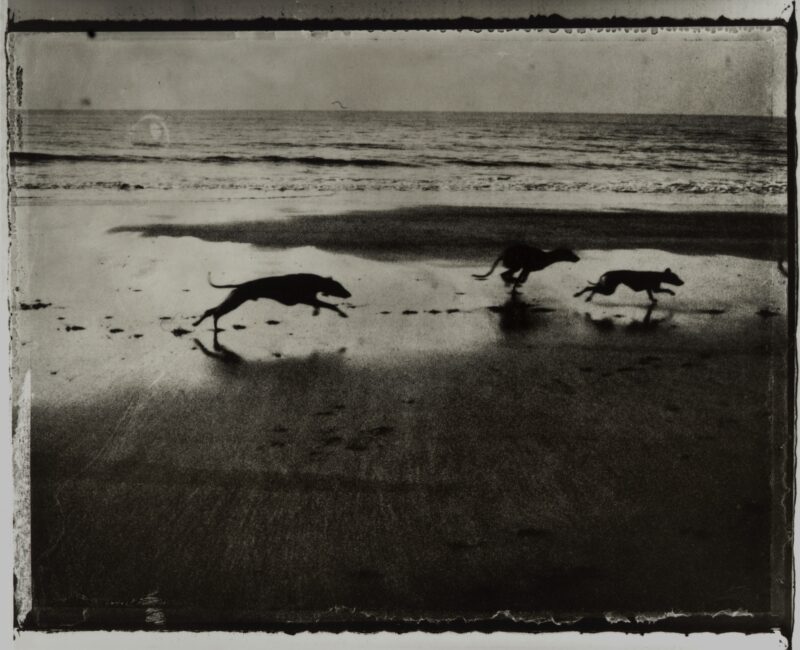
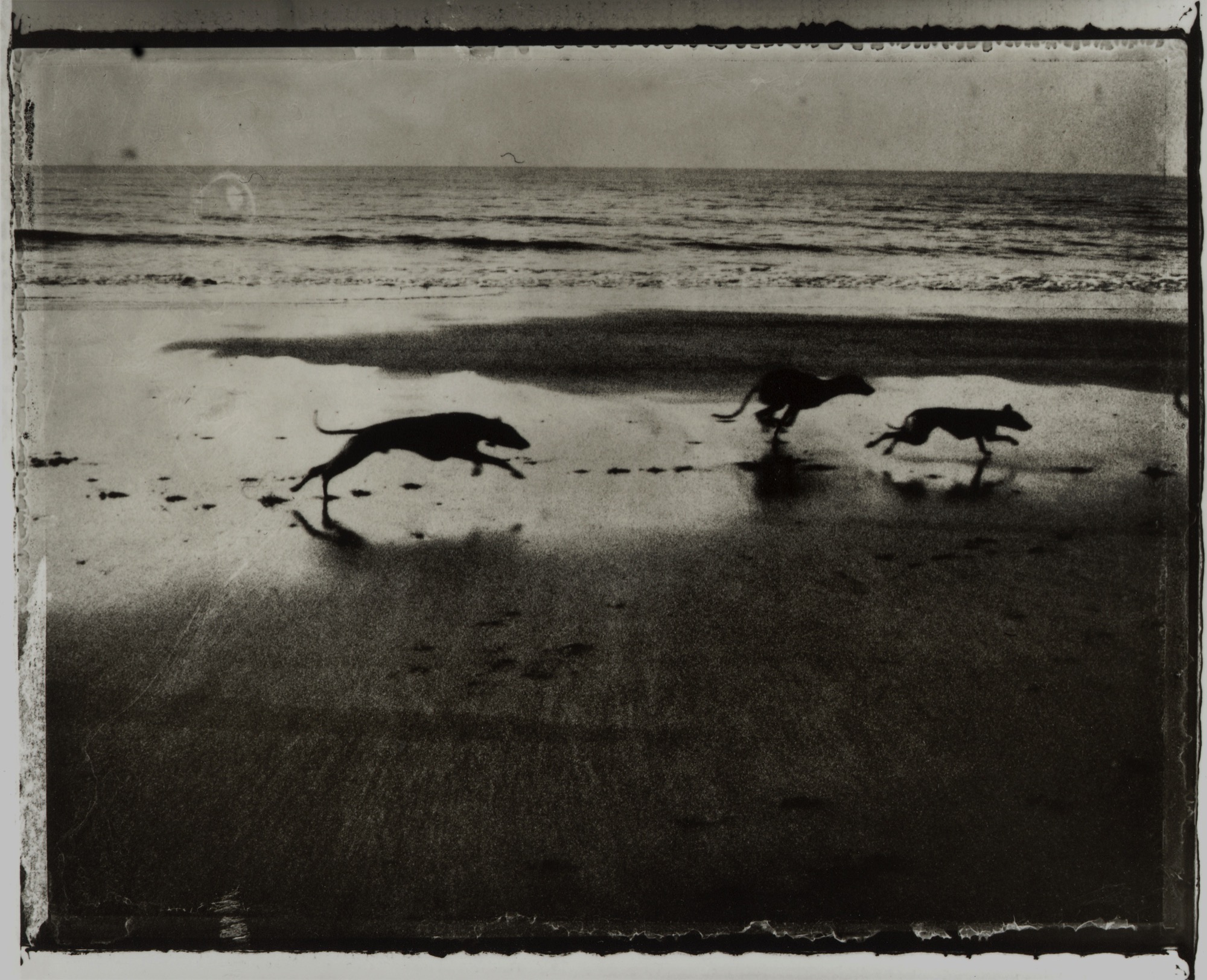
Sarah Moon, Les chiens de Maria, 2000, tirage argentique / silver gelatin print


By Ariane Noël de Tilly
Fotografiska, New York
15.10.2021— 6.02.2022
It was La robe à pois (1996), a large-format photograph placed at the entrance to the exhibition, that invited visitors to immerse themselves in the enigmatic universe, sometimes in colour but usually in black and white, of French photographer Sarah Moon. In this image, a standing woman, her head tilted forward, covers her eyes with her hands. The size of the photograph, the low angle of the shot, and the tight framing monumentalize the woman and her dress. The light is soft, the background a desaturated blue, and the photograph out of focus, because it was taken at very slow speed. By creating such images, with a granular texture that, as a consequence, lack details, Moon invites us to imagine them, to ask ourselves what pictures are not showing. The exhibition Sarah Moon: At the Still Point brought together an impressive selection of photographs, films, and books dating, with a few exceptions, from the last thirty years.
Moon, who also curated the exhibition, hung the works very close together and didn’t follow a chronological or thematic organization; on most of the walls, she juxtaposed photographs from different series and periods. Moon has the gift of transforming a scene that could be interpreted as banal, such as the one of three dogs running on a beach (Les chiens de Maria, 2000), into an enigmatic and visually sublime event. The subtitle At the Still Point reminded visitors that these are moments fixed in time, that each is about to tip into motion, and that it is up to us, the public, to imagine what preceded it and what will follow. Moon has often called her works one-second fictions. Given that she has also produced short and feature-length films, it was difficult not to read this deployment of photographs, hung cheek by jowl, as a series of film frames. The lighting of the different pieces was subdued, giving the impression that we were in a movie theatre just before the screening begins. What emanated from this tight-set hanging was a succession of mysterious scenes, or perhaps a series of dreams.
If we were ready to interpret this unreeling of images as a film, was it possible to draw out a plot from them? Probably, although the narratives perceived by each visitor didn’t necessarily correspond – but this is where the beauty of the gesture resides: Moon offers the freedom to create one’s own film, the first scene of which would take place in a circus. However, what we were shown are not grandiose moments of a public show but warm-up periods, rehearsals – in short, backstage scenes. We saw, among others, La funambule (2003), L’anneau (2002), and L’éléphante du Cirque Drurova (1999) – the tightrope walker, the ring, and the elephant of the Drurova circus. Between these black-and-white photographs taken from unusual angles, Moon inserted colour images, including Teresa Stewart pour Issey Miyake (1996). The effect was rich in meaning, for it invited us to make parallels between different worlds – here, the circus and the fashion world, in both of which performance and boldness play an important role.
From gallery to gallery, the exhibition brought to light the range of Moon’s practice: we saw photographs of taxidermied animals (a project that Moon produced at the Muséum national d’Histoire naturelle in Paris), portraits, street scenes, and industrial landscapes. Although some characteristics are shared – out-of-focus images, granular texture, mysterious ambience – it remains that each photograph was an invitation to imagine a story and that, over her long career, Moon’s style has evolved. We can think, for example, of the two photographs C’est à Hambourg (2008), taken through a raindrop-covered window, a procedure that adds texture to the images. Moon transforms an industrial landscape into an atmospheric scene in which the cranes and a windmill become the main characters in a story to be imagined. Thus, visitors left Sarah Moon: At the Still Point with their heads filled not just with enigmatic dream images, but also with little stories to develop. Translated by Käthe Roth
Ariane Noël de Tilly is a professor in the Department of Art History at the Savannah College of Art and Design. She holds a PhD in art history from the University of Amsterdam and has completed postdoctoral studies at the University of British Columbia. In her research, she examines the exhibition and preservation of contemporary art, the history of exhibitions, and engaged art.
[ Complete issue, in print and digital version, available here: Ciel variable 120 – FIGURES OF AFFIRMATION ]