
[Summer 2022]

Myriam Yates, Parcs. Playgrounds, 2018–2021, 33 épreuves / prints, impression numérique sur papier Hahnemühle / digital print on Hahnemühle paper, aimants et barres d’acier / magnets and steel bars, 43 × 61 cm, photo : Paul Litherland
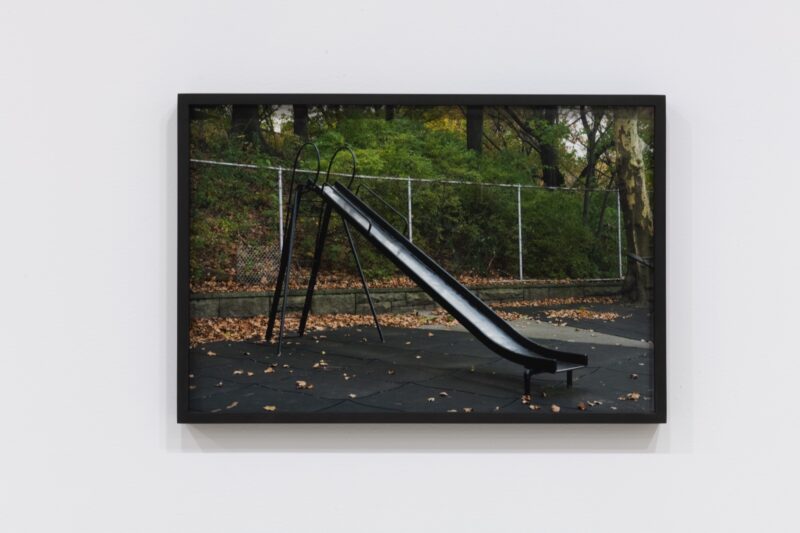
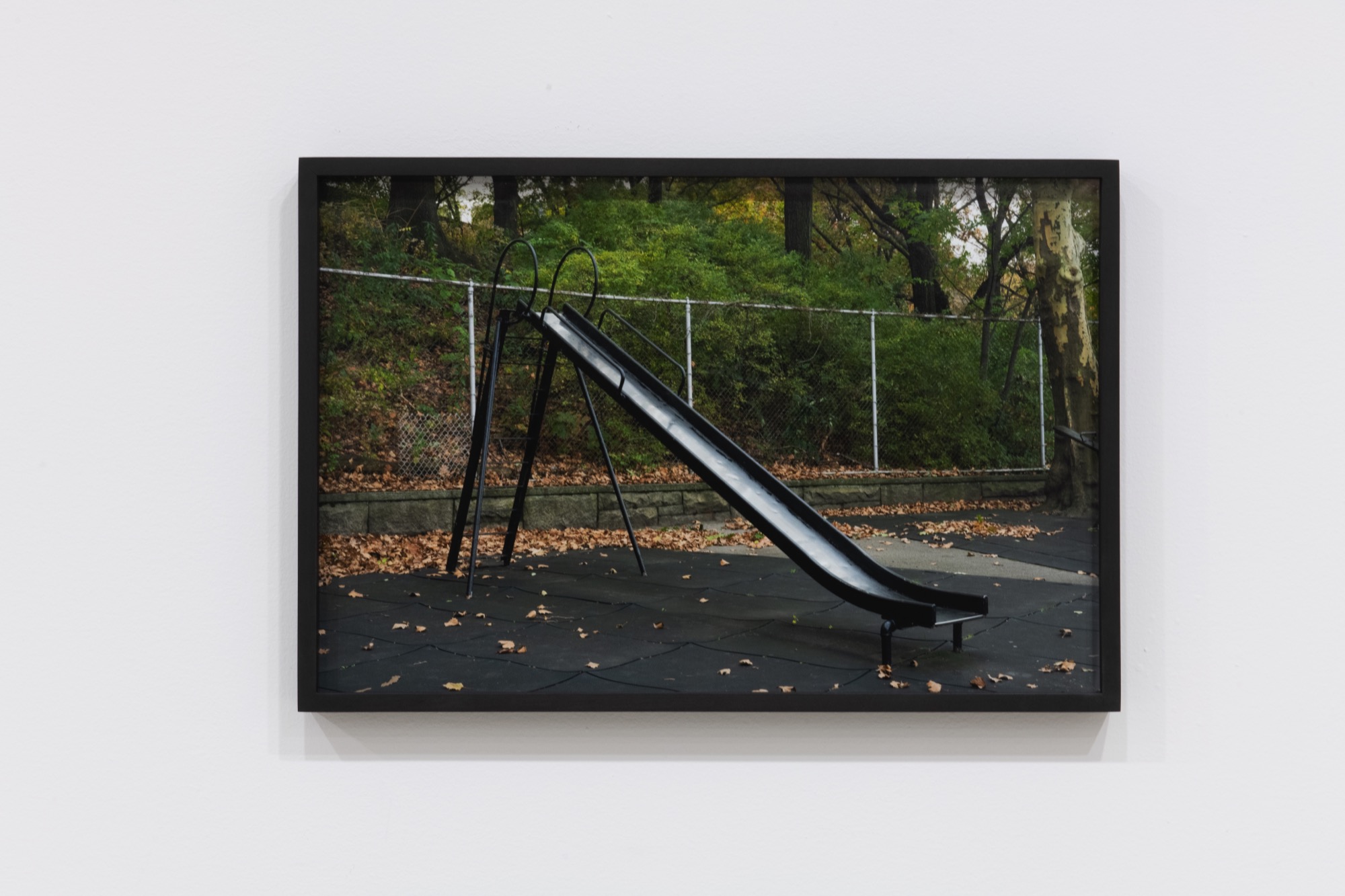
Myriam Yates, Classic Playground, Manhattan, New York, 2018, impression numérique sur papier Hahnemühle / digital print on Hahnemühle paper, cadre en érable teint / stained maple wood frame, 36 × 53 cm, photo : Paul Litherland
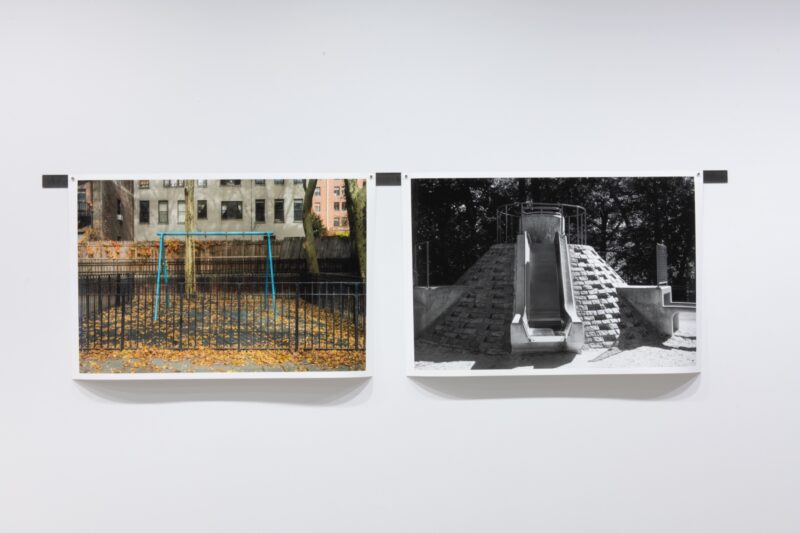
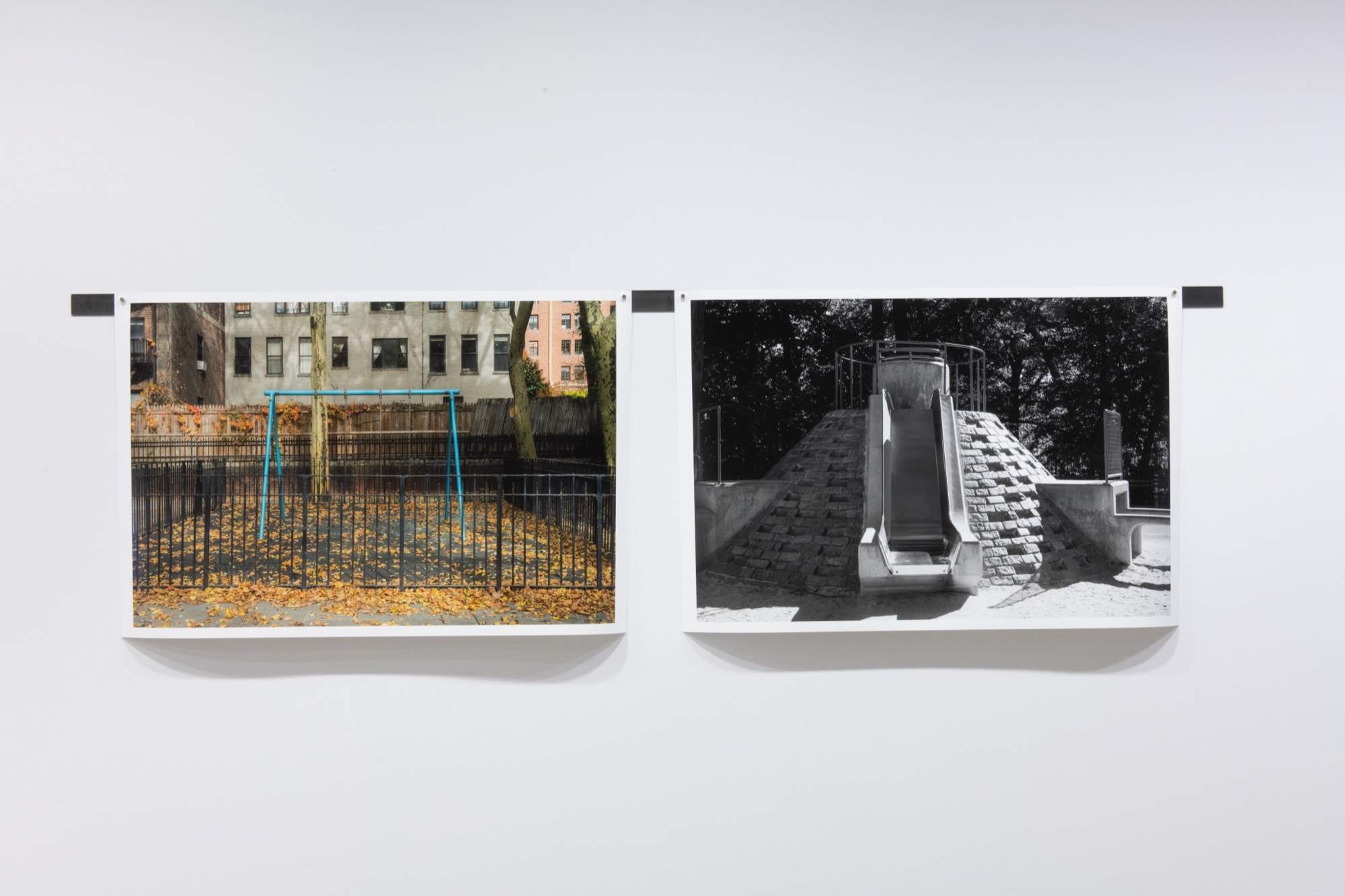
Myriam Yates, À GAUCHE / LEFT : Mary O’Connor Playground, Midtown, Manhattan (New York), À DROITE / RIGHT : Adventure Playground, Central Park, Manhattan (New York), impression numérique sur papier Hahnemühle / digital print on Hahnemühle paper, aimants et barres d’acier / magnets and steel bars, 81 × 122 cm, photo : Paul Litherland


By Josianne Poirier
Optica, Montréal
6.11.2021 — 18.12.2021
For the series of photographs and videos comprising the exhibition Parcs. Playgrounds, Myriam Yates aimed her camera at deserted playgrounds. The facilities that she documented in different New York neighbourhoods in 2018 nevertheless bear the traces of past use and suggest bodies in gymnastic motion. They also bear witness to an era when child development was envisaged differently than it is today: it is not the recent generation of theme parks, with their soft surfaces, that have drawn Yates’s attention.
The heritage of artistic and architectural modernity is a strong current throughout this body of work, in both the materials (concrete, steel, fibreglass) and the minimalist forms shown. One of the climbing structures, photographed frontally, could be a sculpture by Sol LeWitt. In this world of geometric abstraction are hidden a few animal statues, however – little elephants, a whale, a frog – that remind us that these environments, as cold as they are when uninhabited, were intended to be fun for kids. Threaded through the observation of these parks is one of the most important critiques of the design of the modern city: that it does not take sufficient account of the emotional and psychological needs of the people who live in it. In fact, in the background of some of these play modules rise towering housing projects associated with functionalist urban design, now sad emblems of urban blight. They contrast with the style of the buildings surrounding other sites visited by Yates, which we imagine are in better-off neighbourhoods.
The mosaic of thirty-three photographs – some in colour, others in black and white – that cover the south wall of the gallery also highlight a surprising characteristic of these scenes: the large number of fences that surround and divide the apparatuses. Whether they limit access to the facilities or are barriers to prevent falls, they hamper free circulation, encouraging certain movements and modes of appropriation to the detriment of others. Of course, Michel de Certeau showed, in his book L’invention du quotidien, how urban populations do not passively submit to the “law of space” and develop tactics to circumvent it. It remains that all of these bars are disturbing in view of the recreational function of the parks. The rule of three, which Yates more or less reproduces, is another reminder of the norms that govern their use. Finally, the hanging system and arrangement of works on this wall reinforce the presence of the grid in the images before us.
At the very back of the gallery, two works depart from the others. On a screen, the video Cache-cache features shots of long grass, and the grey-tinted images cross-fade slowly into one another. There are still no human figures, and the built environment has also disappeared. There are no clues to where this fragment of unruly nature is located. Pinned beside the screen, a digital print shows large steel cylinders from the replica produced in 2000 of Alexander Liberman’s work Adonai. Unlike all the other structures featured in the exhibition, this one is not intended for appropriation, as the “Do not climb” sign unambiguously informs us. Also the only official representative of the art world depicted in the exhibition, the sculpture sits in one of the vast valleys at the Storm King Art Center, outside of New York.
These two last works introduce a reflection on landscape and the integration of nature into the environments examined. They also underline how Yates’s research concerns the resonance between modern art and the layout of parks contemporaneous with the period. In fact, although some of the apparatuses may seem austere without a child exploring them, their formal qualities, magnified by Yates’s immaculate images, are likely to please an art-savvy public and attest to an era marked by the overflowing of art avant-garde concerns into the spaces of daily life. It is therefore fortunate that some of the playgrounds in Central Park typical of 1960s and 1970s New York and photographed by Yates, including the celebrated Adventure Playground, have been saved from demolition. Considered heritage structures, they have benefited from restorations that make it possible today to capture their spirit through concrete experience. Translated by Käthe Roth
Art historian, author, and curator Josianne Poirier situates her research at the intersection of art, culture, and the public space. In February 2022, her essay Montréal fantasmagorique was published by Éditions Lux. She is also a lecturer at the Université du Québec à Montréal and at the Université de Montréal, where her teaching is concerned with forms of community life.
[ Complete issue, in print and digital version, available here: Ciel variable 120 – FIGURES OF AFFIRMATION ]