
[July 9, 2026]
In Minor Keys
La 61. Esposizione Internazionale d’Arte della Biennale di Venezia
9.05.2026 — 22.11.2026
By Érika Nimis
Far from the debates that surrounded the opening of the 61st edition of the Venice Biennale de Venise – including the resignation of the international jury in an extremely tense geopolitical context – here I take a look at the international exhibition In Minor Keys, which had originated with Koyo Kouoh (1967–2025). By entrusting the curatorial work to a collective formed of Gabe Beckhurst Feijoo, Marie Hélène Pereira, Rasha Salti, Siddhartha Mitter, and Rory Tsapayi, the Biennale intended to pay homage to Kouoh, who died of cancer one year before the event was inaugurated, and to underscore the deep intellectual and human connections that she made throughout her professional life.
Kouoh, the founder of the Raw Material Company art centre in Dakar in 2011 and appointed director of the Zeitz Museum of Contemporary Art Africa in Cape Town in 2019, was known as one of the most influential curators of her generation. Her approach, bolstered by her decolonial thought, involved creating spaces for dialogue in which experiences, geographies, and imaginations could be linked; this conceptual framework is found in both of the Biennale’s sites, the Giardini and the Arsenale.
A dense exhibition, without a real through-line but also incredibly rich, In Minor Keys brings together 111 artists and collectives, as well as foundations such as the Guest Artists Space. Kouoh’s “family” includes both major figures such as Kader Attia and Alfredo Jaar (who was participating for the fifth time since 1986) and artists making their debut at the Biennale. The curators’ approach was sensitive to reality, based on listening, emotion, and sensory experience rather than a strictly documentary reading of contemporary crises.
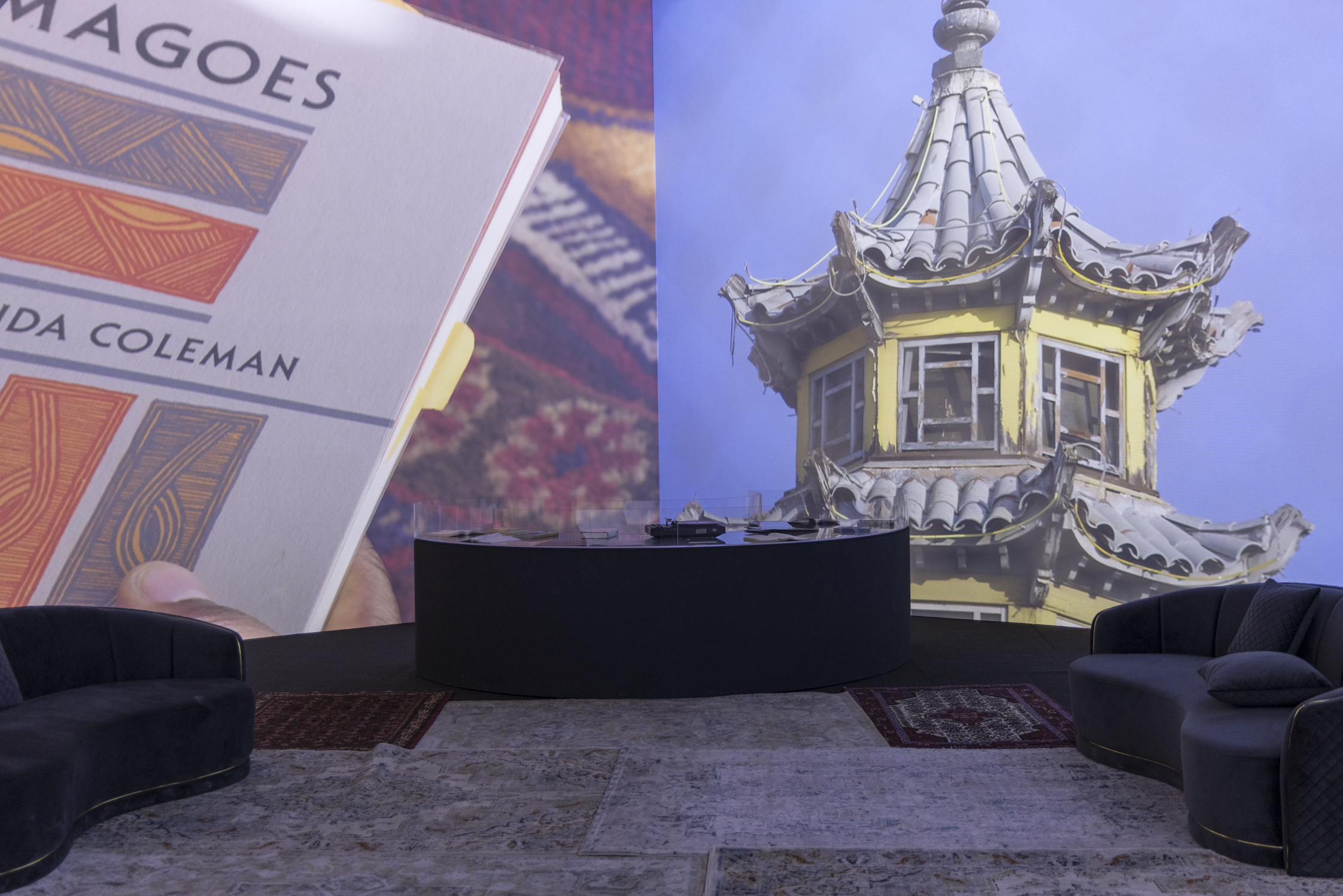 Cauleen Smith, The Wanda Coleman Songbook, 2024, vidéo à quatre canaux, disque vinyle, parfum, console, livres, tapis, sieges / four channel video, vinyl EP, scent, console, books, carpets, seating, photo : Marco Zorzanello
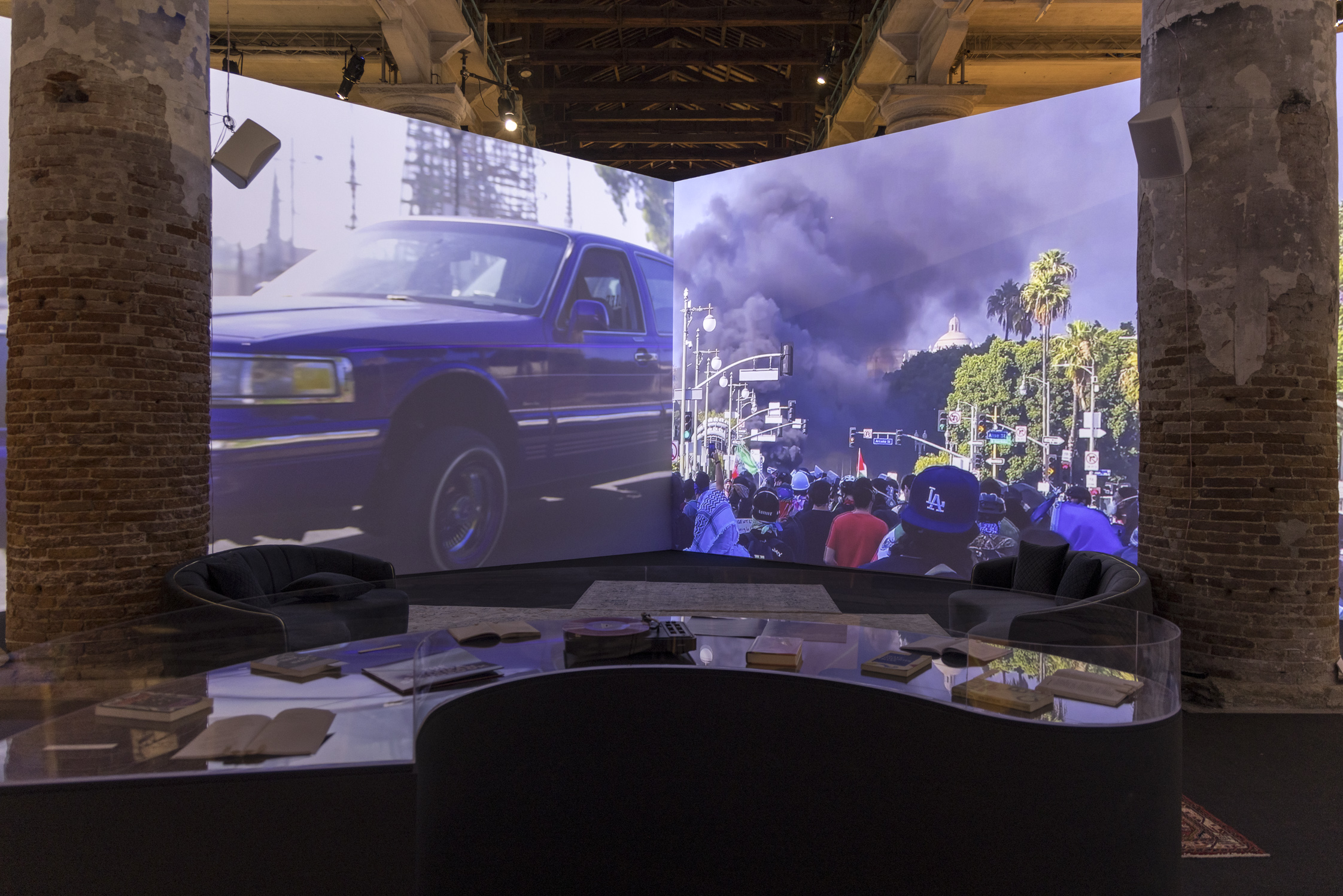
Memory, spirituality, vernacular knowledge, colonial heritages, relations with the living world, and forms of collective resistance run through an exhibition path designed as a polyphonic score. Inspired by the rhythms of jazz, poetry, and Afro-diasporic cultures, it unfolds in a succession of “sanctuaries” in which art becomes a space of healing, relationships, and transformation. At the Arsenale, where I spent most of my time, visitors are greeted by the Palestinian poet Refaat Alareer’s verses, written a few weeks before he and his family were killed by an Israeli strike in 2023.
Cauleen Smith’s The Wanda Coleman Songbook (2024), an immersive installation in remembrance of the poet Wanda Coleman, forms a sensitive portrait of Los Angeles, revealing the city’s beauty, mythologies, and social fractures. Videos, music, projected silhouettes, and fragrances – an attempt by the Biennale to live up to its multi-sensorial ambition – come together to engage visitors’ bodies and imaginations.
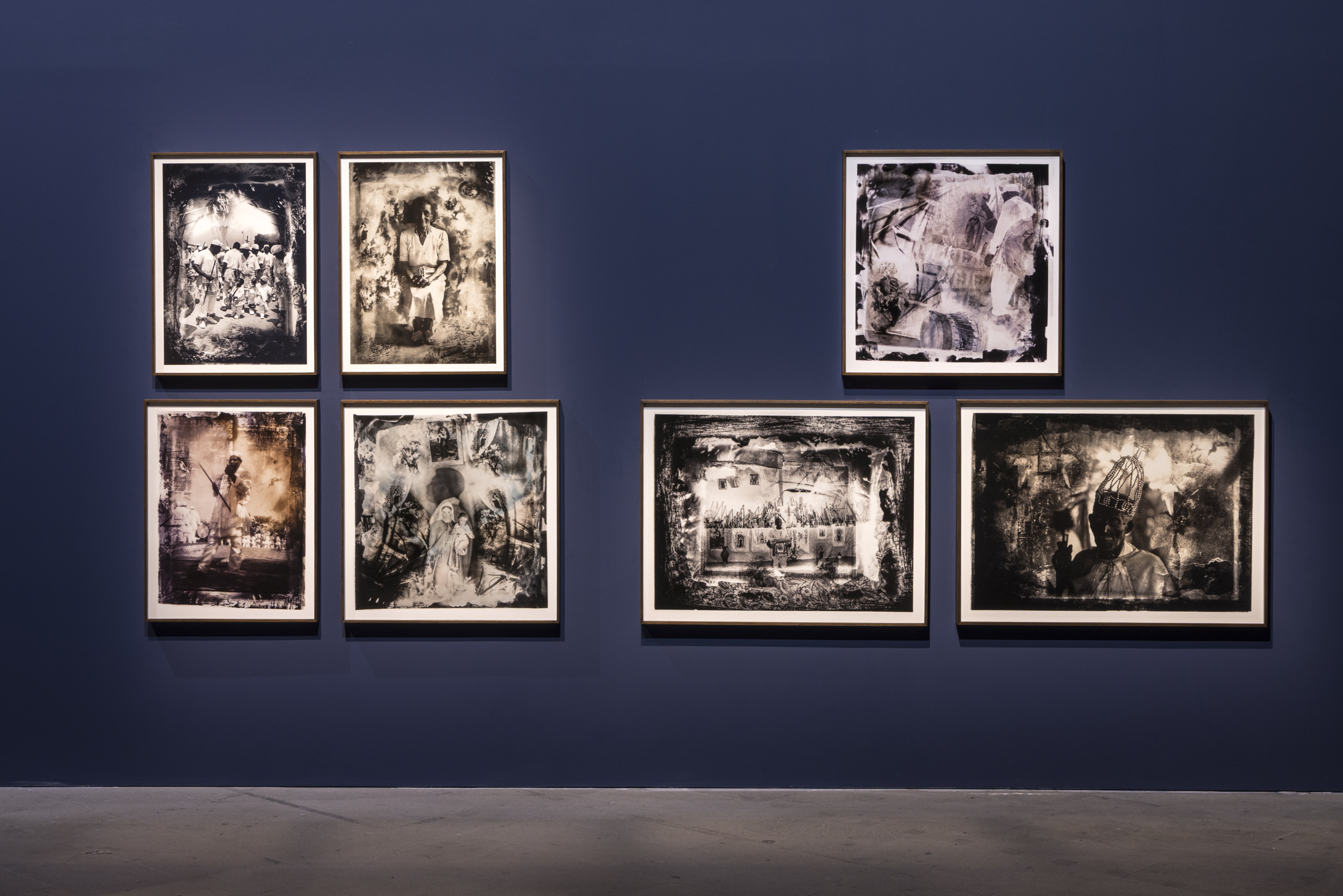 Eustáquio Neves, Arturos, 1993–1995, sept photographies, technoques mixgtes / seven photographic prints, mixed technique, photo : Marco Zorzanello
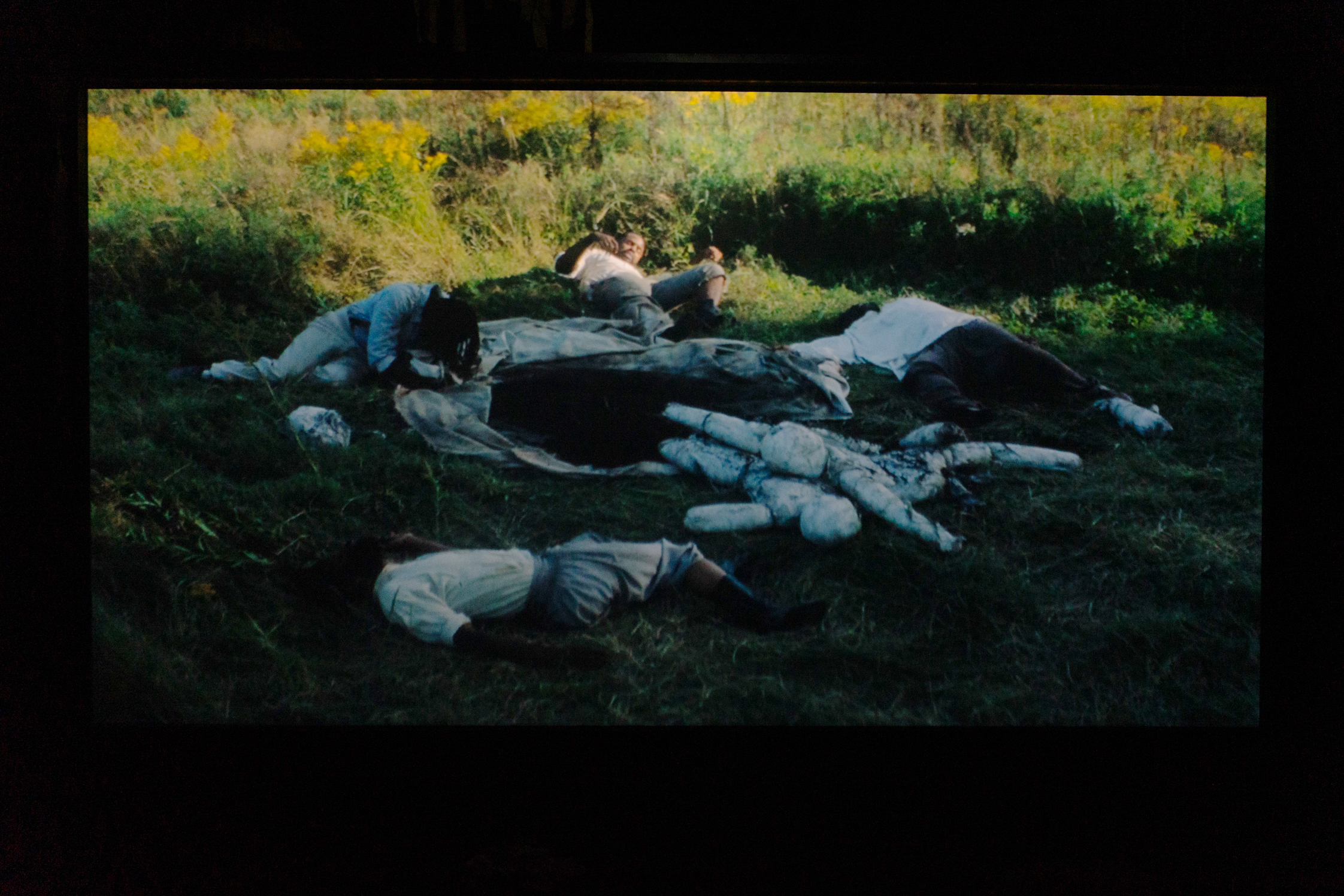
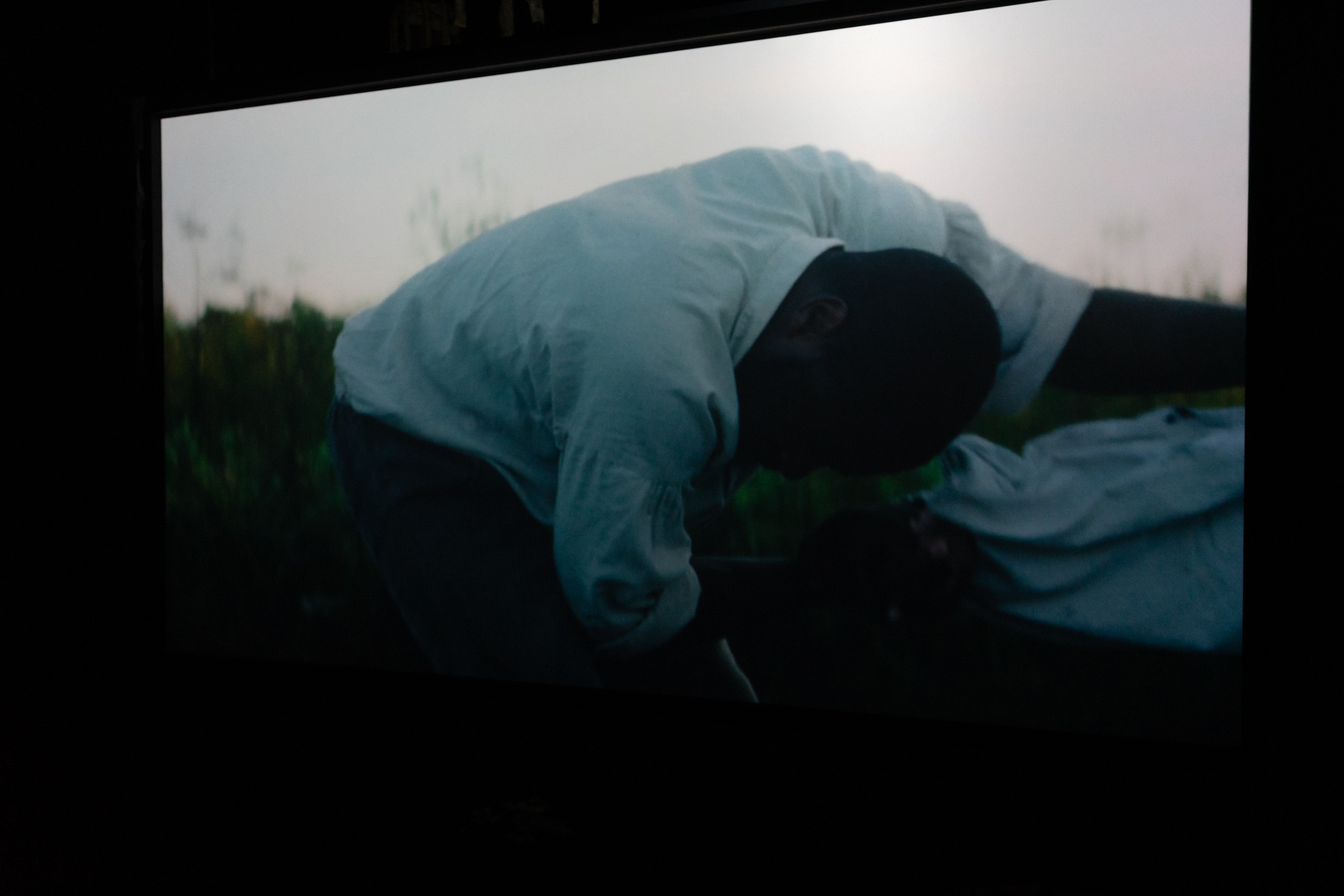
In a different, but equally immersive, register, combining a two-screen projection with sculptural and olfactory elements, Manuel Mathieu’s installation, hidden behind thick curtains, is built around his short film Pendulum. In that work, which earned him an award at the International Festival of Films on Art in 2023, Mathieu probes what happens after emancipation: how to live with the freedom achieved, which recollections to preserve, and which futures to imagine.
Photography, the medium to which Koyo Kouoh was always deeply attached, has an important place in this edition. Sometimes discreet, sometimes monumental, it is featured in the exhibition in multiple forms.
The Brazilian artist Eustáquio Neves presents a grouping of works that point out the historical and social fractures inherent to the Afro-descendant presence in Brazil. The series Arturos (1993–95), devoted to a long-standing Black community in the state of Minas Gerais, brings together documentation, collective memory, and experiments produced in the darkroom. Through his highly textured palimpsest images, Neves explores questions of identity, transmission, and resistance.
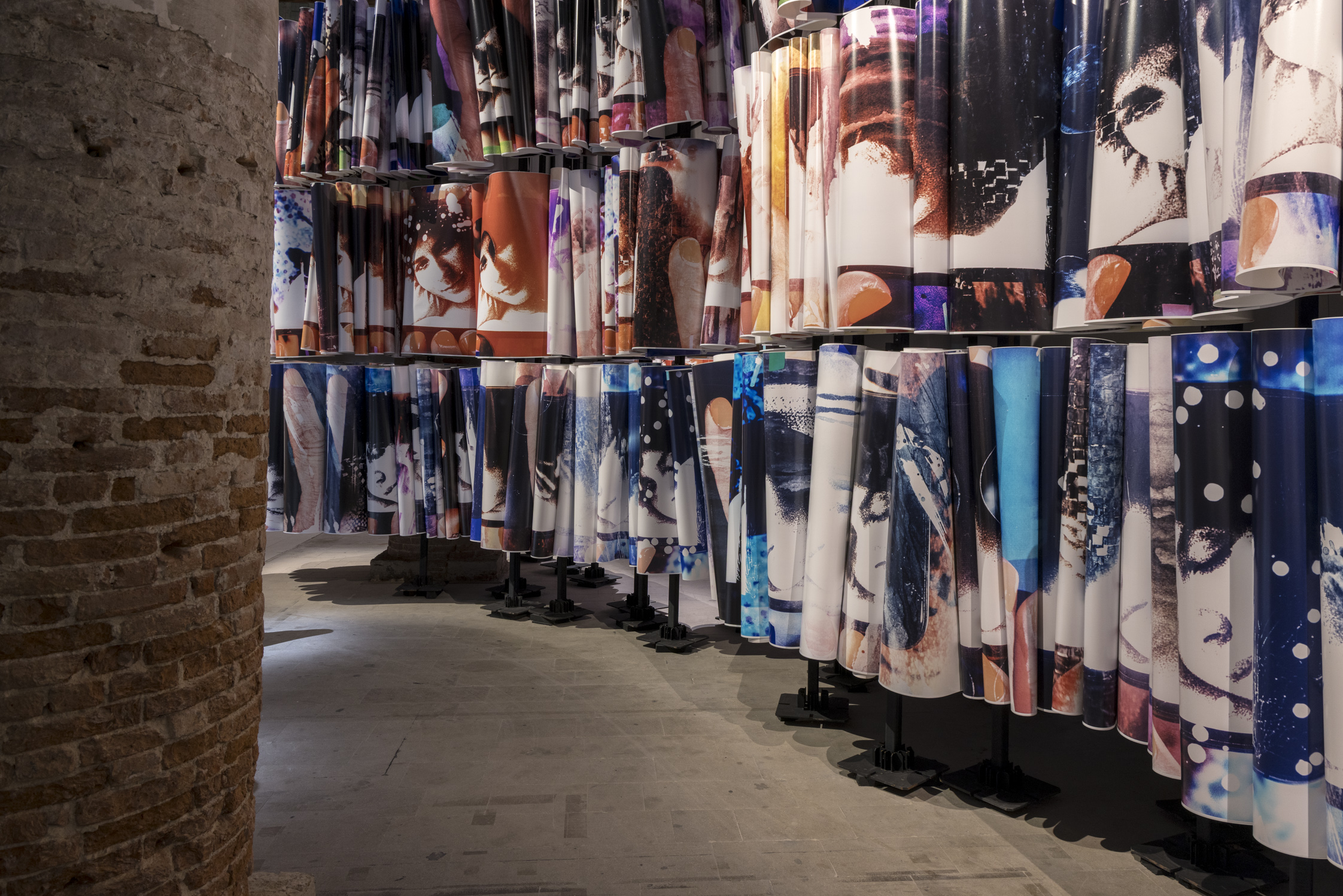 Carrie Schneider, First Living Woman, 2026, photographie à tirage unique, acier, rares aimants de terre single unique chromogenic photograph made in camera, steel, rare earth magnets, photo : Marco Zorzanello
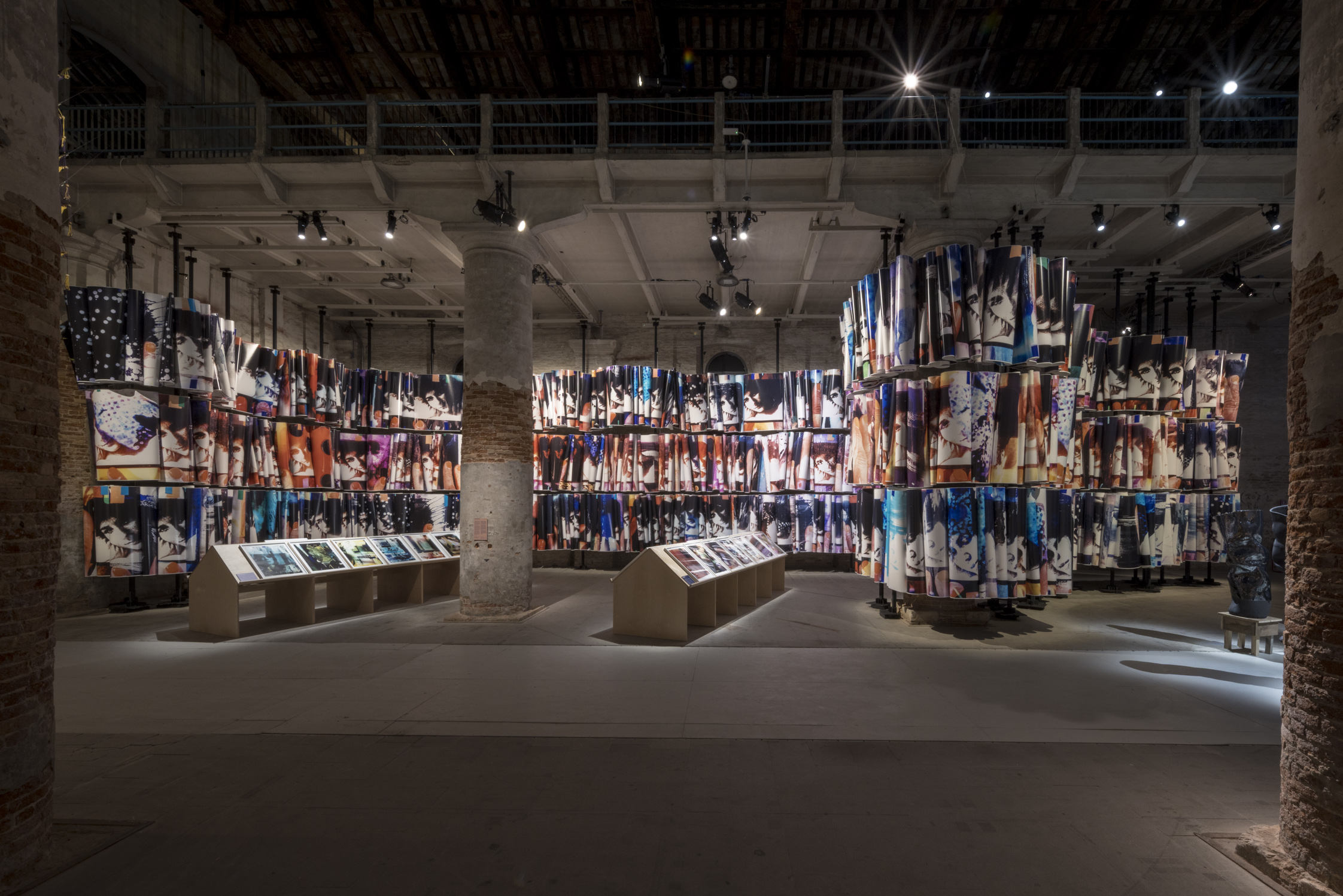
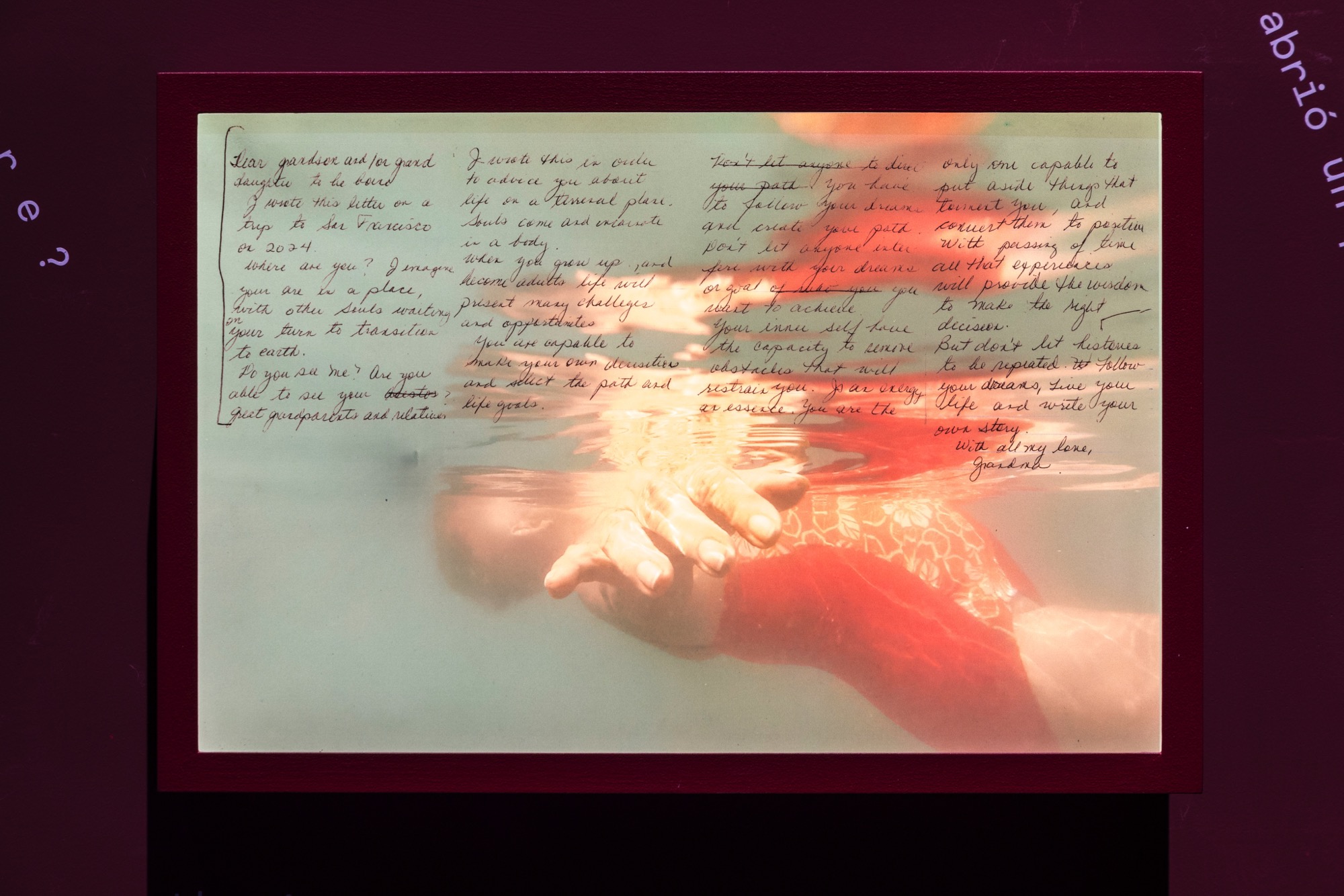
In a completely different genre, in First Living Woman (2026), Carrie Schneider offers a monumental photographic installation built from an eight-second fragment of Chris Marker’s film La Jetée (1962). Schneider revisits, image by image, the face of the actor Hélène Châtelain on a one-kilometre-long roll of photographic paper. This patiently constructed work transforms a fleeting instant of the film into a meditation on remembering, time, and the persistence of images. Schneider thus probes our relationship with archives and the visual proliferation that characterizes the contemporary world.
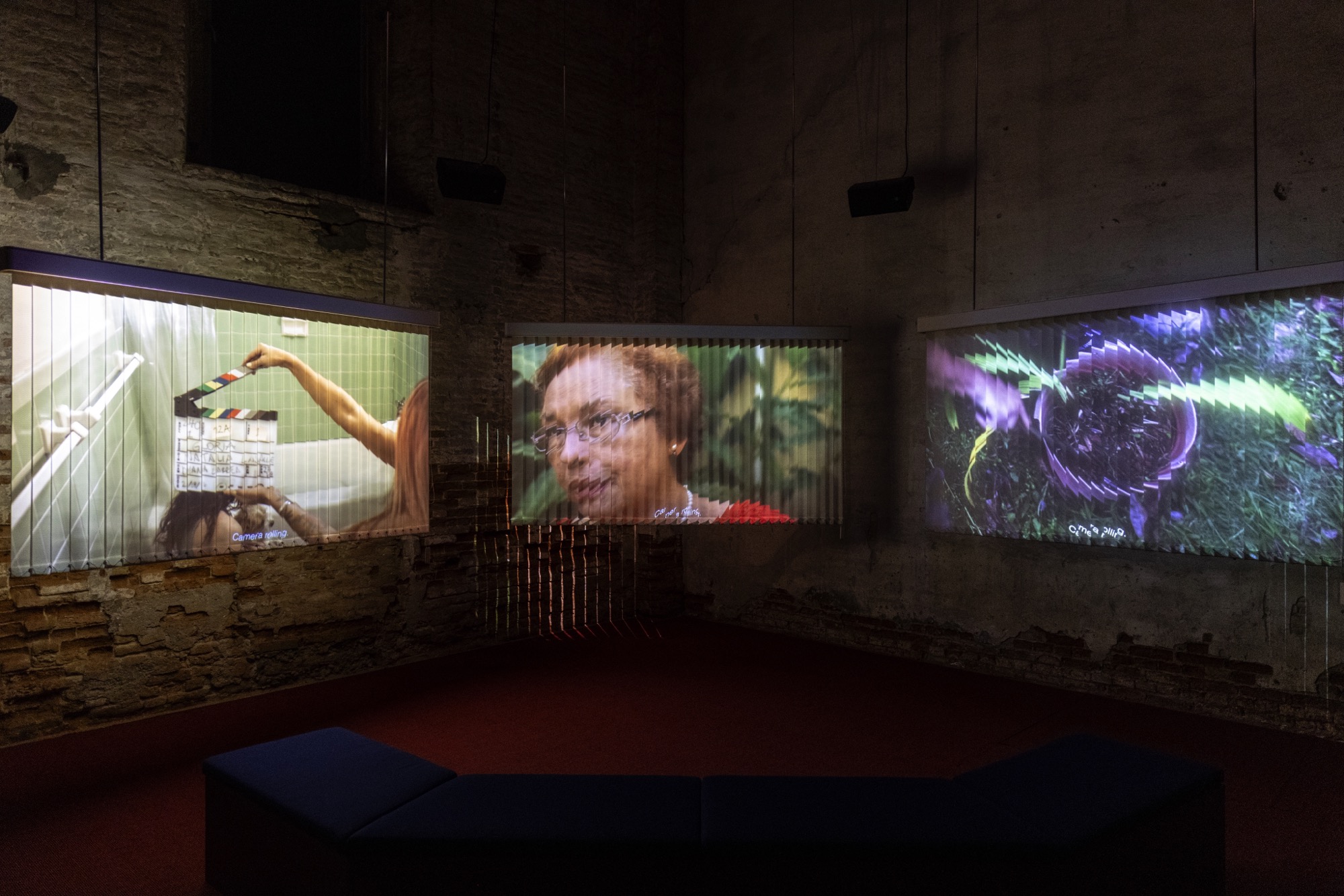
The questions of memory and transmission are also key to Natalia Lassalle-Morillo’s three-channel film and installation Retiro (2015–19). Produced in collaboration with her mother, Gloria Morillo, the work, set in Puerto Rico, mixes writing and images in the form of an intimate dialogue in which family stories are replayed, reinterpreted, and sometimes contradicted. Lassalle-Morillo’s work explores grief, intergenerational transmission, and the fragility of recollections. The fragmented projection mechanism visually conveys this instability of narratives and reminiscence.
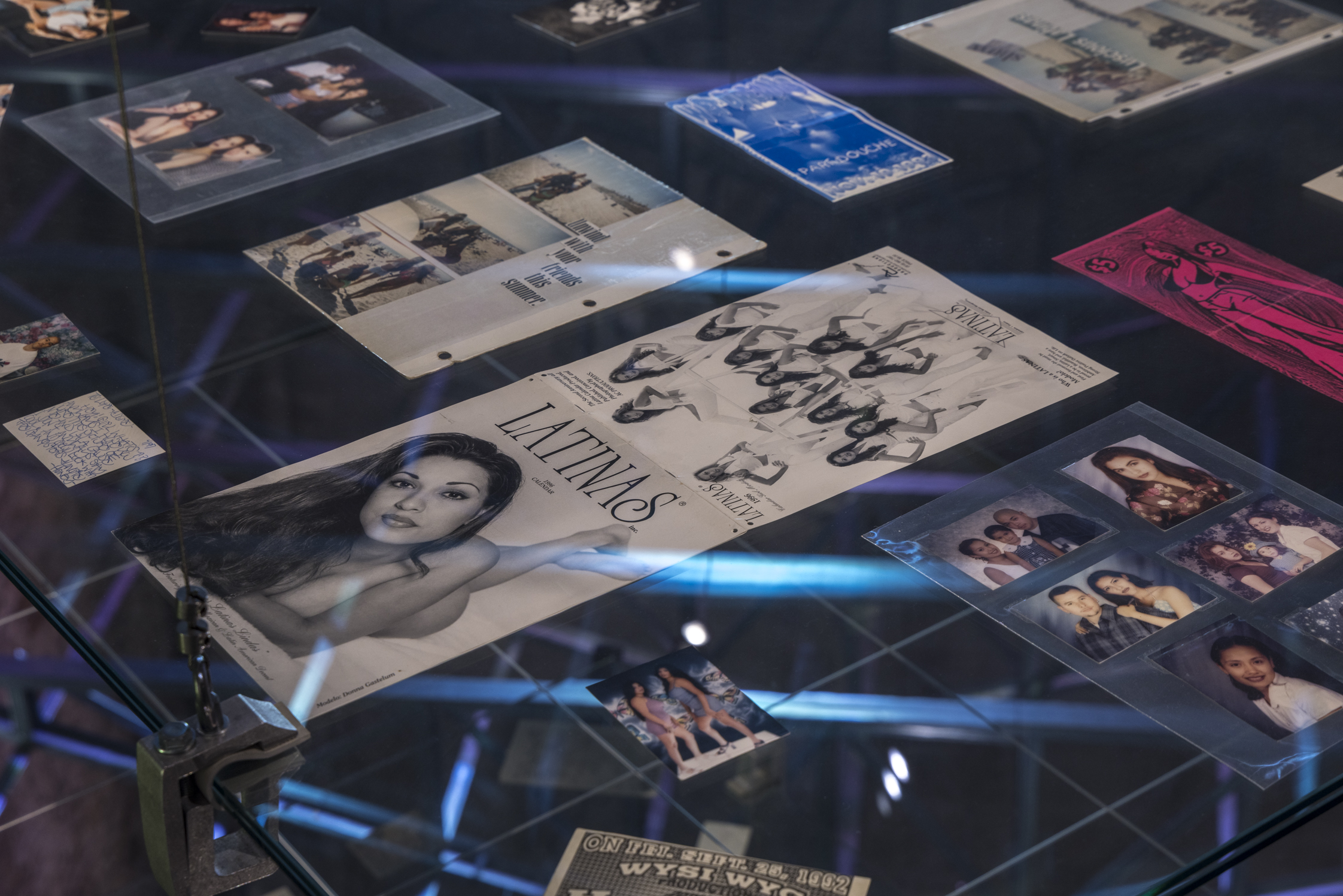
Archives appear as a tool of resistance in Guadalupe Rosales’s work. From photographs, handouts announcing events, and images from her digital projects, Rosales builds a historiography of 1990s Los Angeles Latina cultures. Her immersive installation containing several works (2022–26) transforms these documents into fragments of memories and proposes a counter-history to dominant representations of Latin American diasporas.
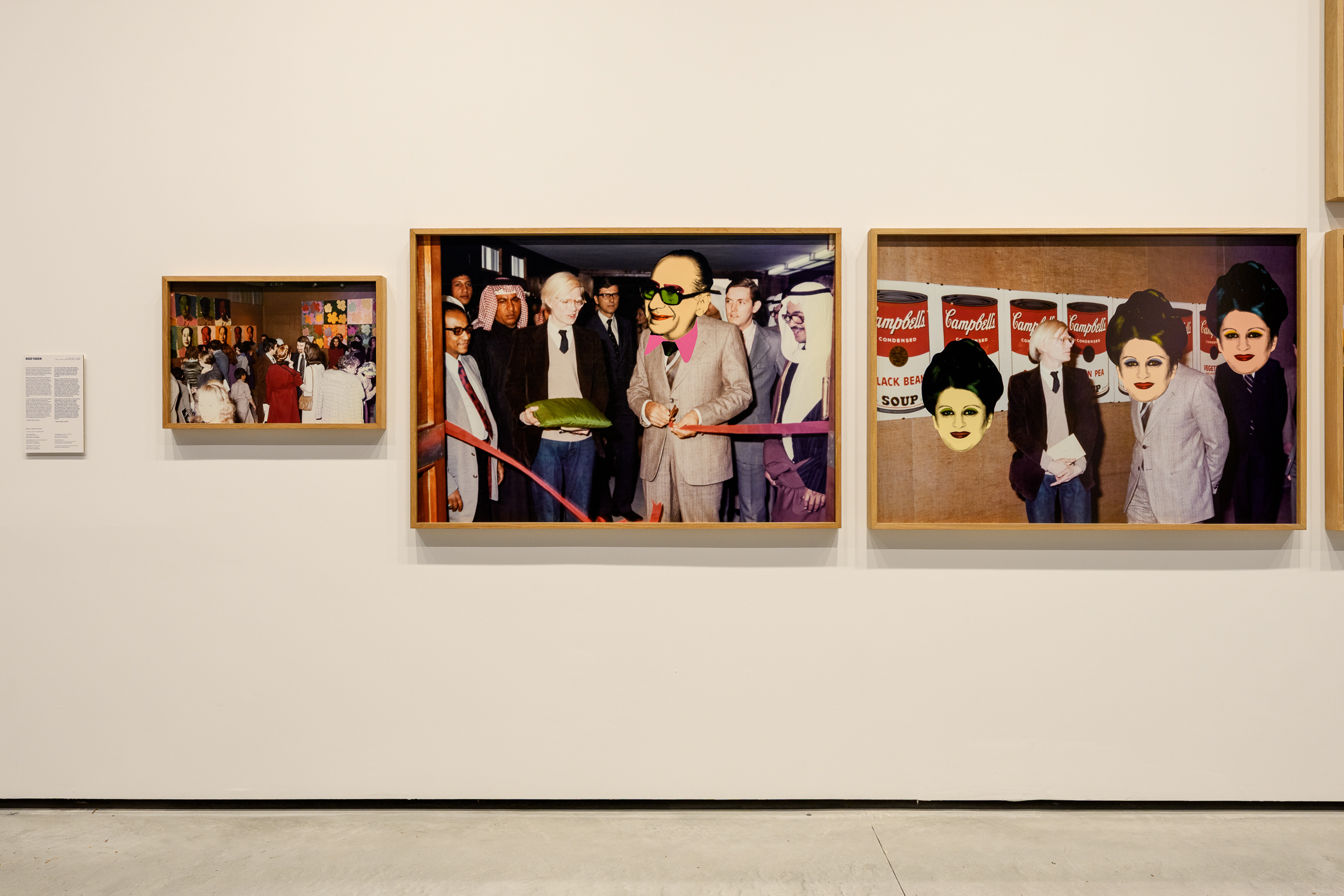 Raed Yassin, de la série / from de series Warhol of Arabia, 2016–2018, medias mixtes sur photographie / mixed media on photography, photo: Andrea Avezzù
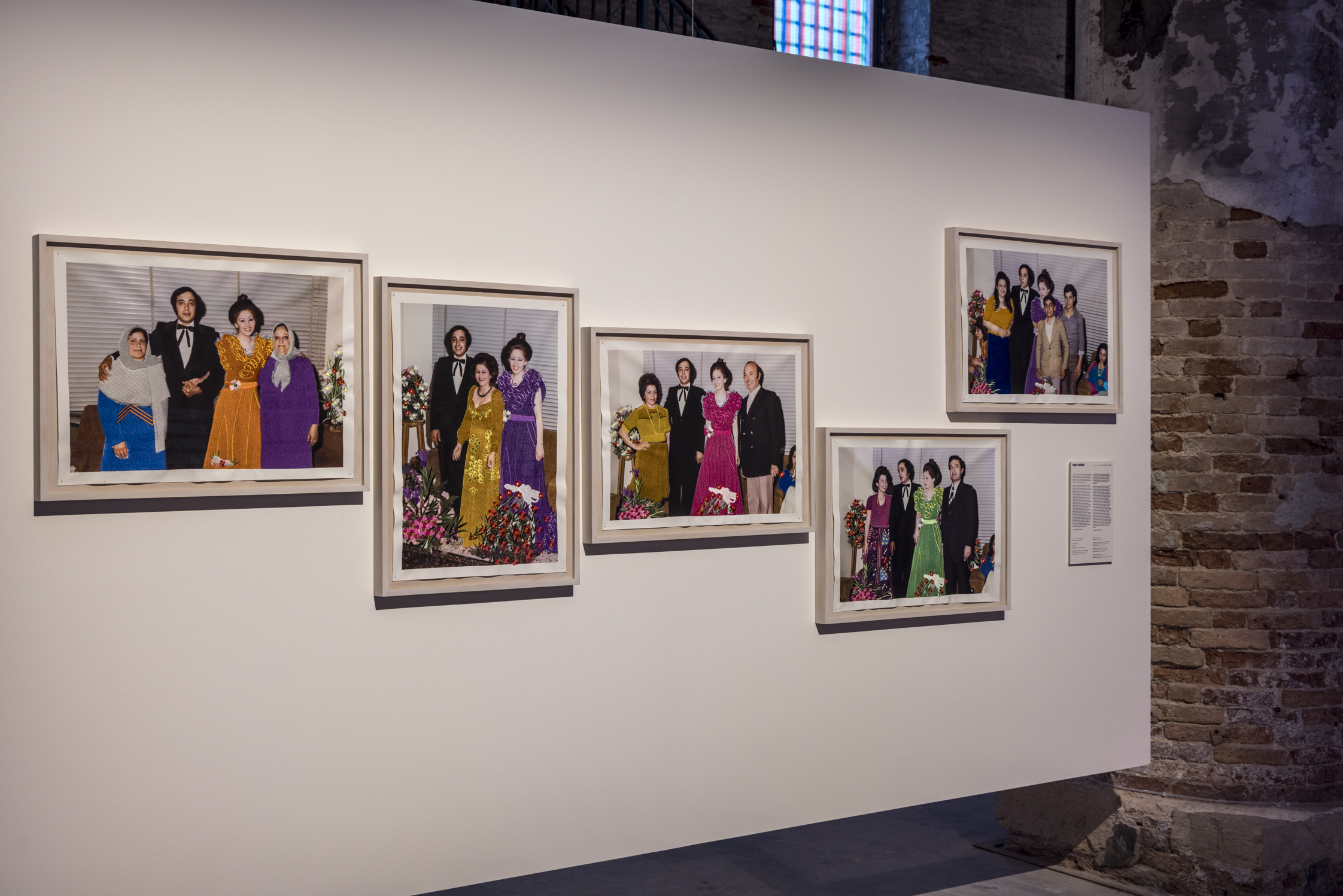
Archives are also central to the work of the Lebanese artist Raed Yassin. For more than twenty years, Yassin has been exploring areas of friction between history and fiction by drawing on materials from Egyptian film, Lebanese radio, and pan-Arab popular culture. In Warhol of Arabia (2016–18), he imagines a fictional visit by Andy Warhol to the Middle East in the 1970s. From authentic archives, he builds an alternative narrative in which Western art is interspersed with Arab popular stories. This rewriting strategy is extended in Haute couture (2018), a more personal work inspired by the story of his father, a fashion designer murdered during the Lebanese civil war. By literally embroidering family photographs and images from popular magazines, Yassin reactivates and poetically idealizes these archival images.
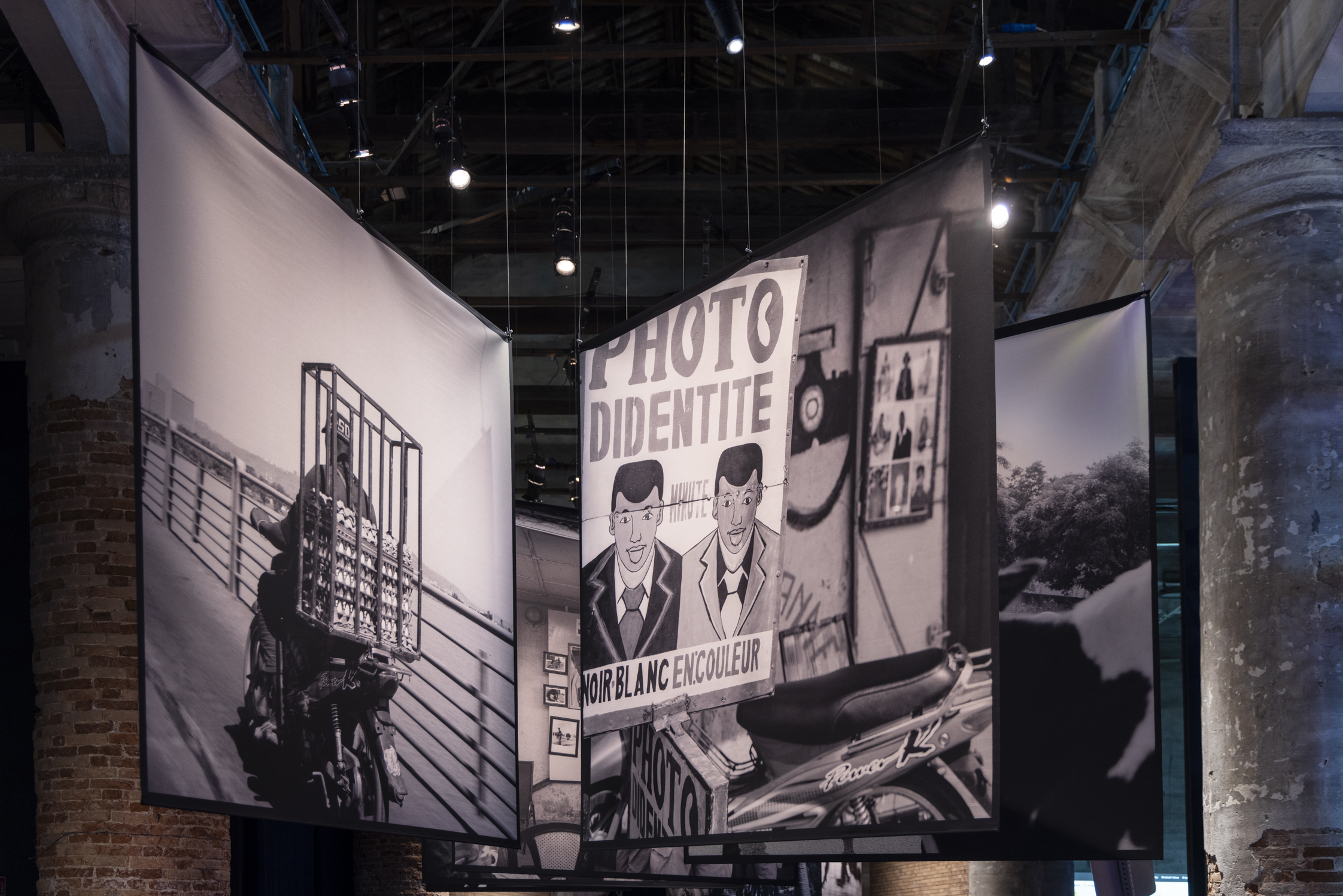
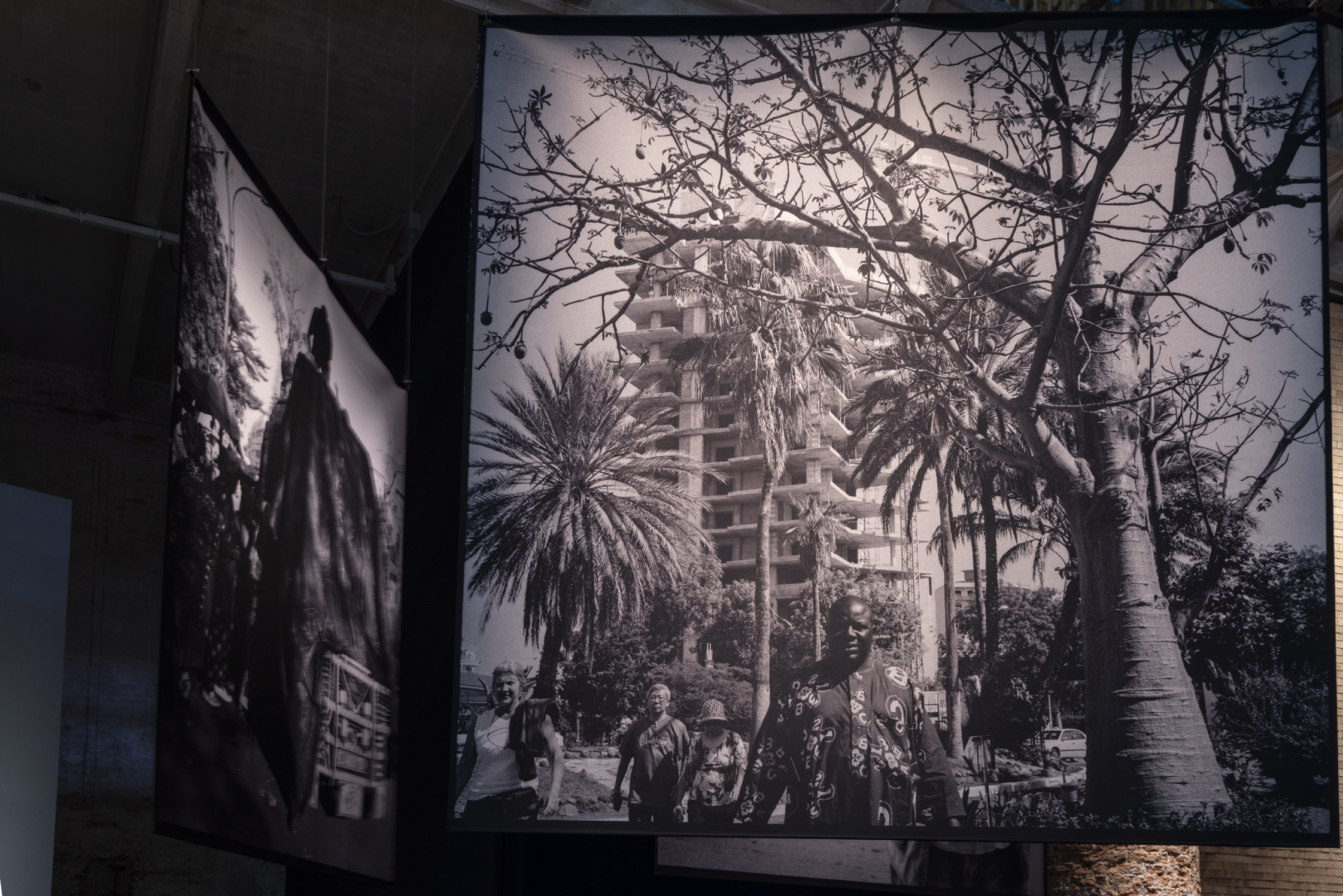
Visitors have to tilt their heads up to admire the large black-and-white prints by Akinbode Akinbiyi, who offers a perceptual mapping of the contemporary city. For several decades, Akinbiyi has developed a practice based on walking and attentive observation of urban spaces, mainly in Africa and Europe. Printed in a medium-size format throughout his career, whether in Dakar, Bamako, or Berlin, where he has been based since 1991, his images pick out details, movements, and anonymous presences. In the spirit of the Biennale’s theme, they invite visitors to slow down and pay attention to all the details that shape how we live in the world.
In Minor Keys is a bountiful exhibition, attentive to engaged practices and aesthetics of the Global South and its diasporas. It can also be read as the curatorial last will of Kouoh, as it is faithful to her attention to marginalized voices, long-buried stories, and sensibilities that have remained outside of dominant systems. Translated by Käthe Roth
Érika Nimis is a photographer, historian, and publisher, specializing in the history of photography in West Africa, and a researcher affiliated with the Art History Department at UQAM. In 2020, she began a photographic project on Ukraine, the home country of her paternal grandmother.