


[Fall 2021]
Alexis Desgagnés, Ammoniaque
By Ève Dorais
Montréal, Les Éditions du Renard, 2021, non paginé
In an article in an issue of the magazine Elephant devoted to photography,1 Robert Shore notes that in recent decades photography has striven to assert its own materiality. Indeed, artists have found all sorts of ploys to highlight the medium’s materiality by intervening on the surface of the film, or by painting, drawing, poking holes in, or embroidering the surface of the sheet of paper bearing the printed image, thus affirming the primacy of the photographer’s artistic signature over the subject from the world captured by the camera. This, apparently, is a reaction to the glut of photographic images in the mediasphere.2 Given all of this, is a resolutely documentary approach to photography still relevant? Alexis Desgagné’s photobook Ammoniaque elegantly brings the two approaches together. He reiterates the importance of the subject and the picture taking while affirming the materiality of the photograph, notably by the use of analogue cameras and photosensitive film3 and by reifying his images in the form of a book rather than in an exhibition. What emerges is an intimate, palpable object that people can have by their side to read and look at in their daily life.
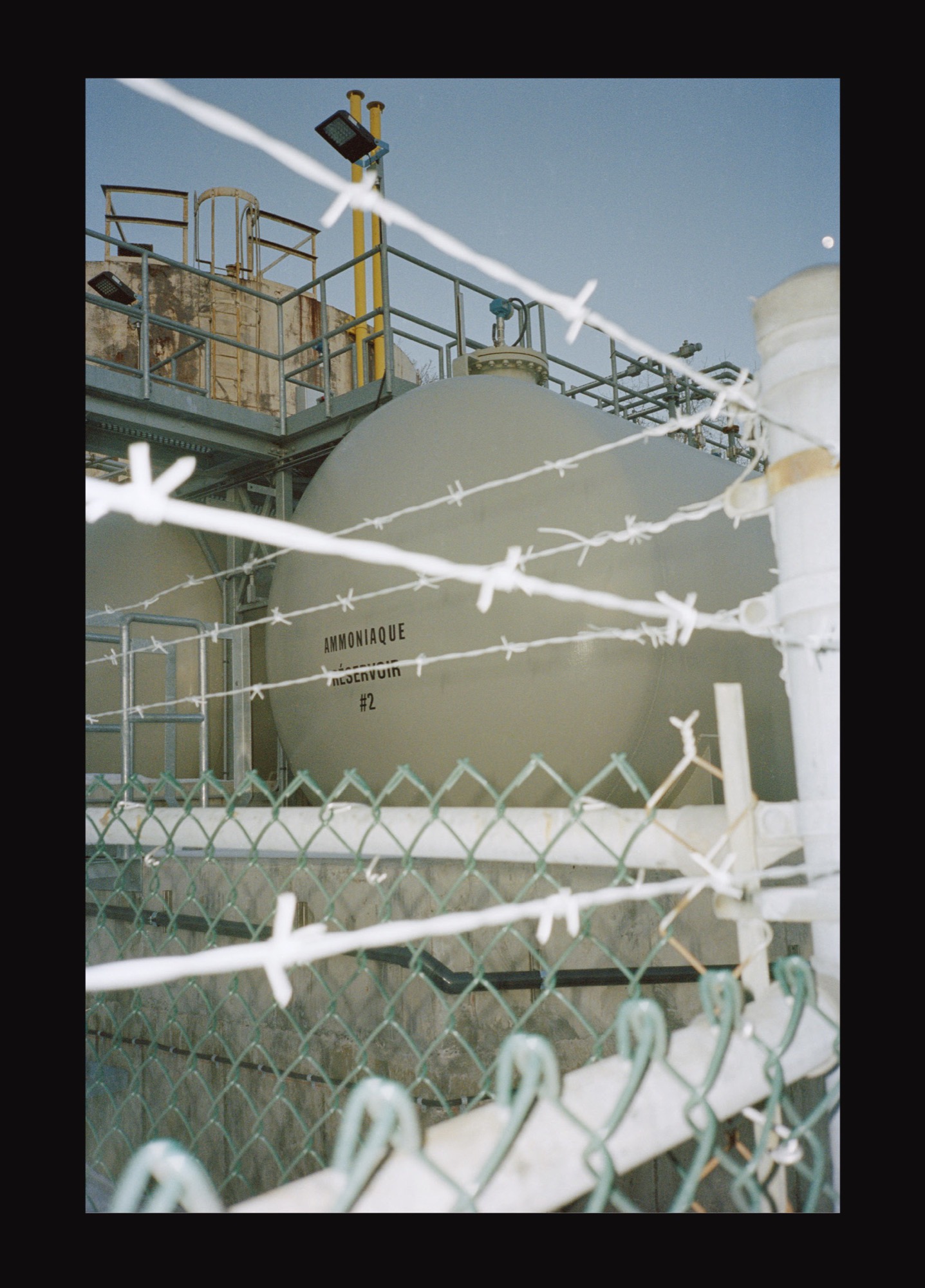
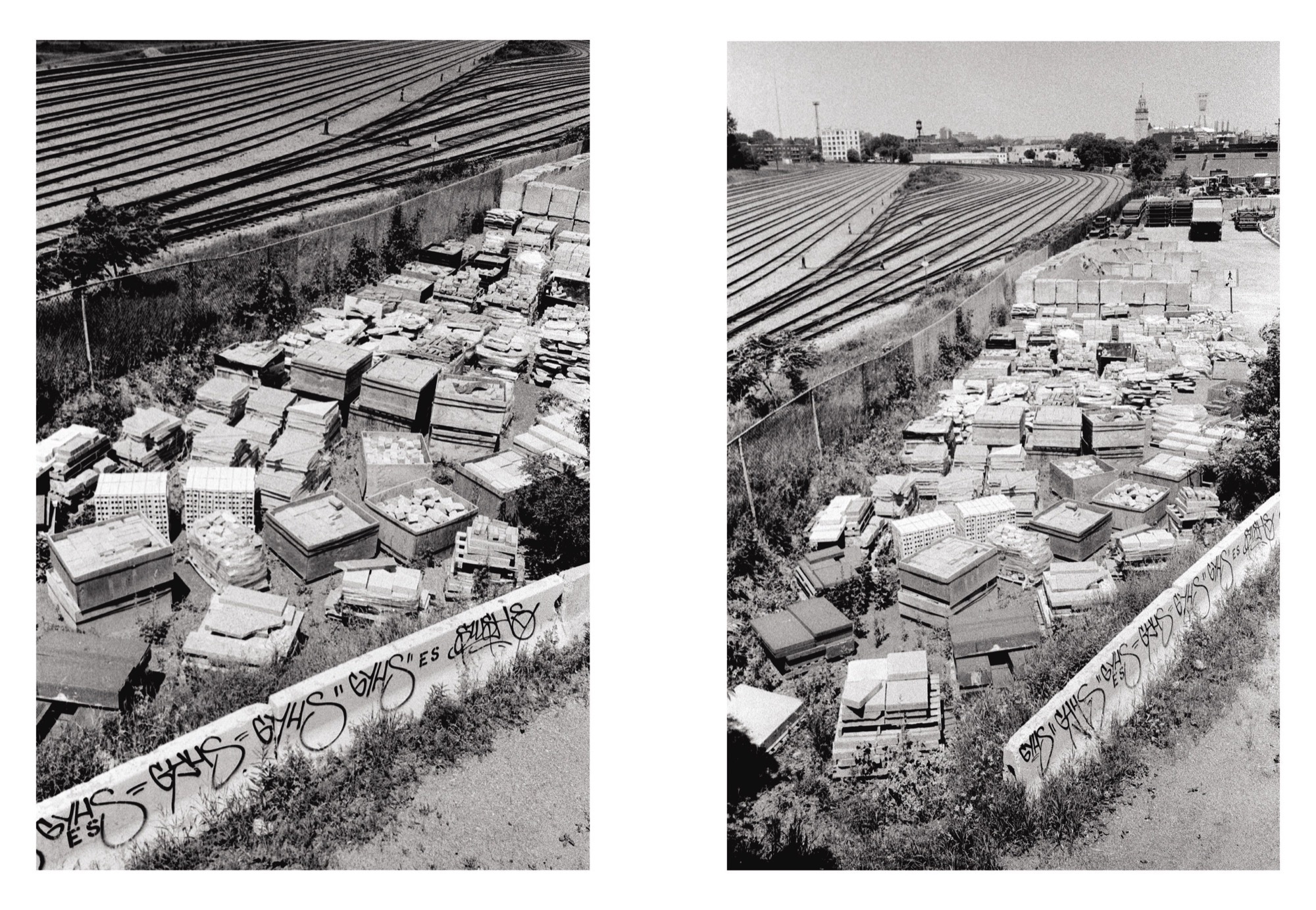
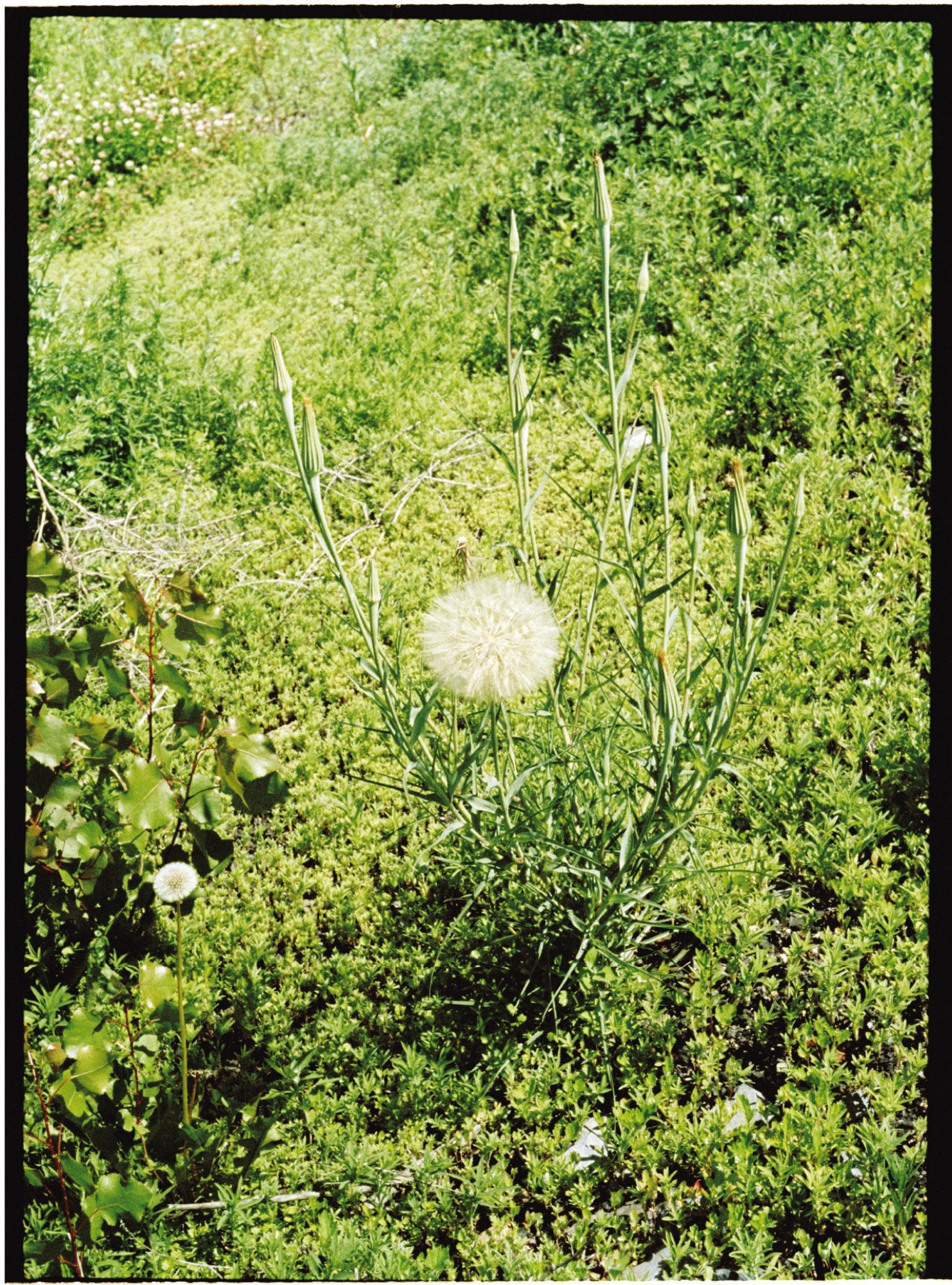
From 2014 to 2018, Desgagné, who is an artist, art historian, curator, and poet, photographically documented the ambience of a still-active industrial sector in the Hochelaga district of Montreal – in particular Moreau Street, between St. Catherine and Ontario Streets, home to a bustling prostitution business. A putrid odour hangs over the neighbourhood due to emissions from the Lallemand yeast factory, founded in 1923. It is bounded to the west by a large network of train tracks, which offers an enviable visual opening to the sky. In the first part of the book, Desgagné’s off-axis photographic gaze dwells on small details that endow the apparently banal neighbourhood with an almost-spiritual dimension, celebrate nature, or show the raw uniqueness of the area. His lens focuses on milkweed and other grasses and wildflowers that sprout at will in front of Frost fences and in empty lots, rendering them graceful, imposing, powerful. Little by little, by way of the punctum, we enter the experience of this photographic literature. Although the images seem to repeat, slight visual differences reveal the sequence of shots. The repetition of subjects photographed and the variety of focal lengths create a cinematographic altered psyche effect just under the surface, where the gaze twitches in fits and starts before slowing and becoming still.
We then tumble into the heart of the book’s main subject, a criss-crossing of words written illicitly on a wall of corrugated iron. Words such as “Baby,” “Eli,” “Shark,” “Prions ensemble,” “bandeau,” “rouge,” “marche,” and “Monkey” form a complex lexical field, the valuable clues left by those – young or old, delinquent, distressed, in love, religious or rebellious – who visit the place. This anonymous urban poetry, a sort of Exploréen language tinted with pain, incongruity, and euphoria, is delivered by Desgagnés with almost maniacal, but always respectful, attention. With the presentation of a number of photographs of the same wall and the same words, an impression of repeated visits to the place emerges. The inclusion of numerous black-and-white photographs imbues the book with a sense of nostalgia and forces the gaze to operate at a historical distance from the portions of the world documented in this way.
The second-to-last part of the book is composed of blocks of typographic poetry inspired by the words on the corrugated-iron wall, geometric figures of graphs from which the meaning emerges only when read carefully. The texts and images of Ammoniaque both speak of and hold back their subject. Through clues, they unveil the feeling of the human presence in this tough neighbourhood. The book immerses us in the shady world of Moreau Street and awakens us to psychotropic world of the people who spend time there, and it encourages us to reconsider our conceptions of landscape and of beautiful photography. This book is an essential on our bookshelves, alongside those of William Burroughs. Translated by Käthe Roth
1 Elephant, no. 13, Post-Photography: The Unknown Image (winter 2012–13): 66–95.
2 Reread Régis Debray’s books, so relevant today, in a world in which media representation dominates. See, in particular, his Cours de médiologie générale (Paris: Gallimard, “Bibliothèque des idées” collection, 1991).
3 He uses several types of cameras, including 35 mm cameras, a Koni-Omega, and an Olympus Pen F, which allows double exposures. The book is the result of a creative residency
at Centre d’artistes Vu in 2017.
4 See Roland Barthes, La chambre Claire. Note sur la photographie (Paris: Gallimard, 1980), 42–50. Translated as Camera Lucida: Reflections on Photography, trans. Richard Howard (New York: Farrar Straus and Giroux, 2010).
5 A language invented by the poet Claude Gauvreau. See his Étal mixte et autres poèmes, 1948–1970 (Montreal: L’Hexagone, 1991) (first posthumous edition of his complete works in 1977).
Ève Dorais is a cultural development consultant for visual arts and public art for the Ville de Longueuil. She was the curator of Ras le bol (2014), Projet Homa II (2014), and Orange, Les Mangeurs (2012). Her essays have been published in Espace art actuel, Spirale, Esse, and Inter, as well as in the atypical book Spunkt, edited by Sébastien Pesot. She was born in Alma and lives in Montreal.
[ Complete issue, in print and digital version, available here: Ciel variable 118 – Exhibiting Photography ]