
[Summer 2022]


By Mona Hakim
Metamorphosis of the real
Expression, Centre d’exposition de Saint-Hyacinthe/Plein sud, centre d’exposition en art actuel à Longueuil/Éditions Loco, 2021, 204 p.
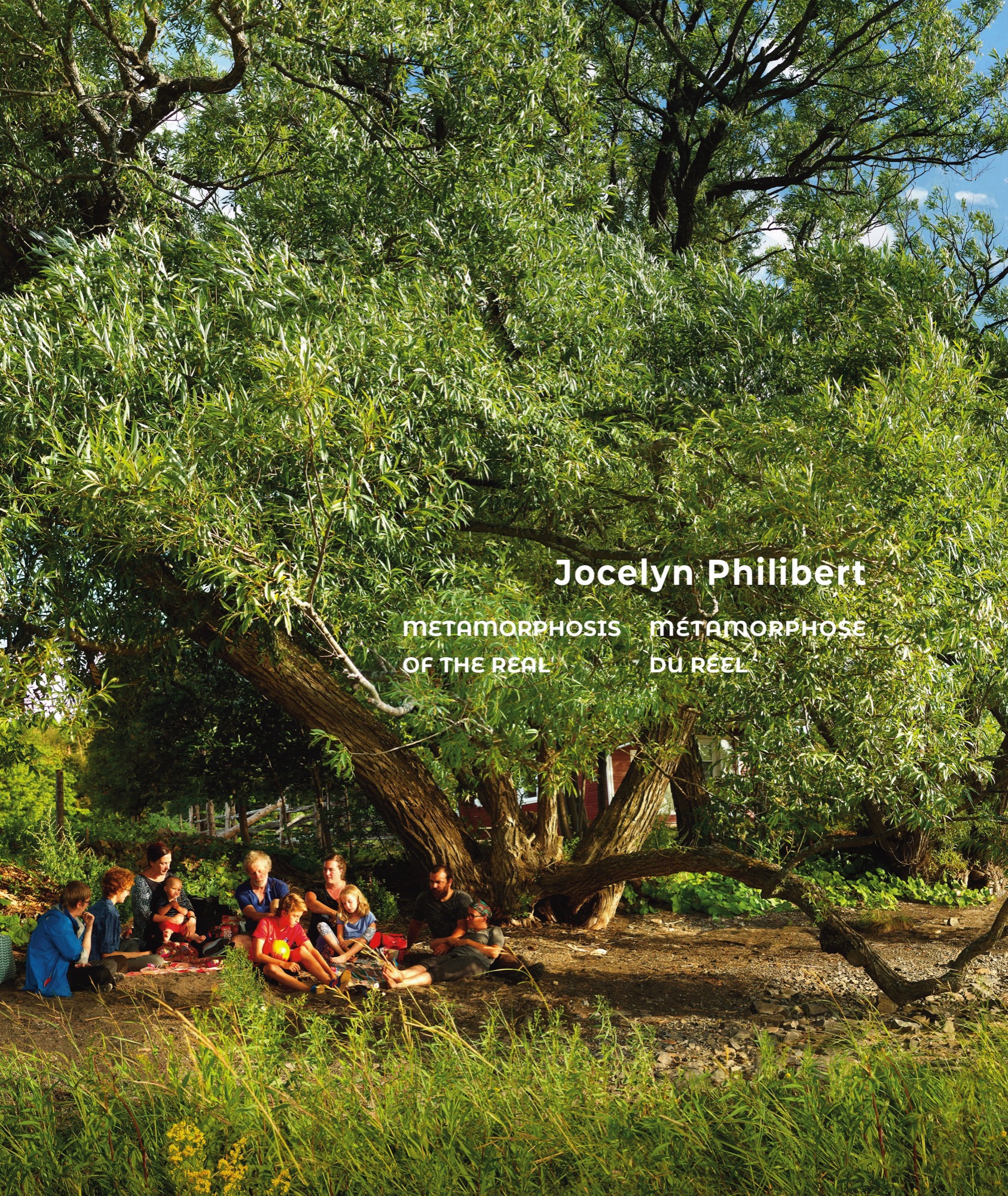
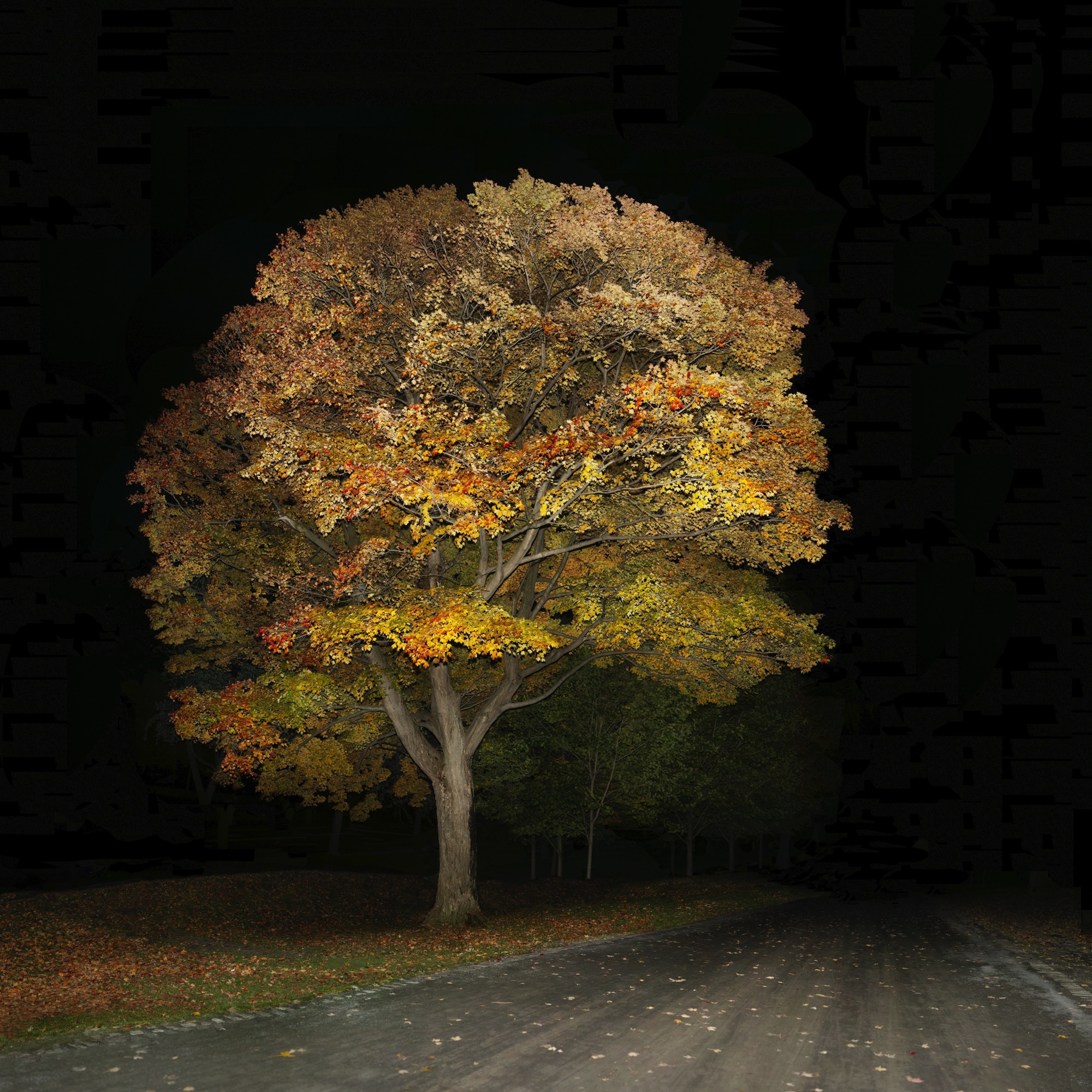
This major monograph on the photographer Jocelyn Philibert covers his production over more than thirty years. We know Philibert for his nocturnal landscapes focusing essentially – one might say obsessively – on the figure of the tree. The landscapes, shot against an ebony background, are captured blindly with a flash after nightfall, and fragments of the digital images are then stitched together and reorganized without the sutures being revealed – whence the sensation of both realism and strangeness that emanates from his photographs. It is hardly surprising that this emblematic figure, captured over and over, occupies a central position in the book, including in landscapes captured during the day from his most recent series, Au jardin des possibles. And we mustn’t forget his sculptures and installations of the 1990s, as he turned to photography in 2006. In their respective essays, Marcel Blouin, Bernard Schütze, and Valérie Litalien conduct in-depth explorations of how these two disciplines interacted in Philibert’s career.
The works in this image-rich book, which both starts and ends with sculpture, are grouped for the most part by photographic series, though not in chronological order. Chronology, in fact, is of little import; after all, taken in darkness, apple trees, willows, firs, and other trees and thickets under overpasses or lining a highway or river seem to belong to a single space-time. It must be mentioned that for a number of years, Philibert has periodically spent time in the rural area around Saint-Jean-Port-Joli, prospecting potential trails during the day for his night-time captures. It is an introspective and risky nocturnal operation – before a subject slips from view under the dazzle produced by repeated use of the flash, before the pieces are later patched together on his monitor. It’s as if he has a constant thirst for attaining amazement, reaching revelation.
It is this magnetism, this spirit of exaltation, that the book seeks to re-create, at the very least. Despite a fairly uniform sequential arrangement, we willingly wander through these pages as we wander, moved, in the darkness of the forest. And so, in the surrounding deep darkness, the trees succeed each other and emerge, enhaloed by an apparent vibration produced by the impetus of the blinding light. The layout – on double pages or full pages – certainly helps to accentuate this coming into materiality. It is a vibration that occurs, moreover, in colour, such as the strong orange tones of the trees in the series Automne, but also in the pink, green, orange, and yellow pages that audaciously punctuate the reading of the book, connecting them to the temporal cycle of some works. And to add to the mystery of the night scenes, the landscapes captured in Au jardin des possibles inject contrast. These photographic stagings, which are reminiscent of historical (notably impressionist) paintings, are inhabited by people (absent from the earlier landscapes), settled under larger-than-life trees.
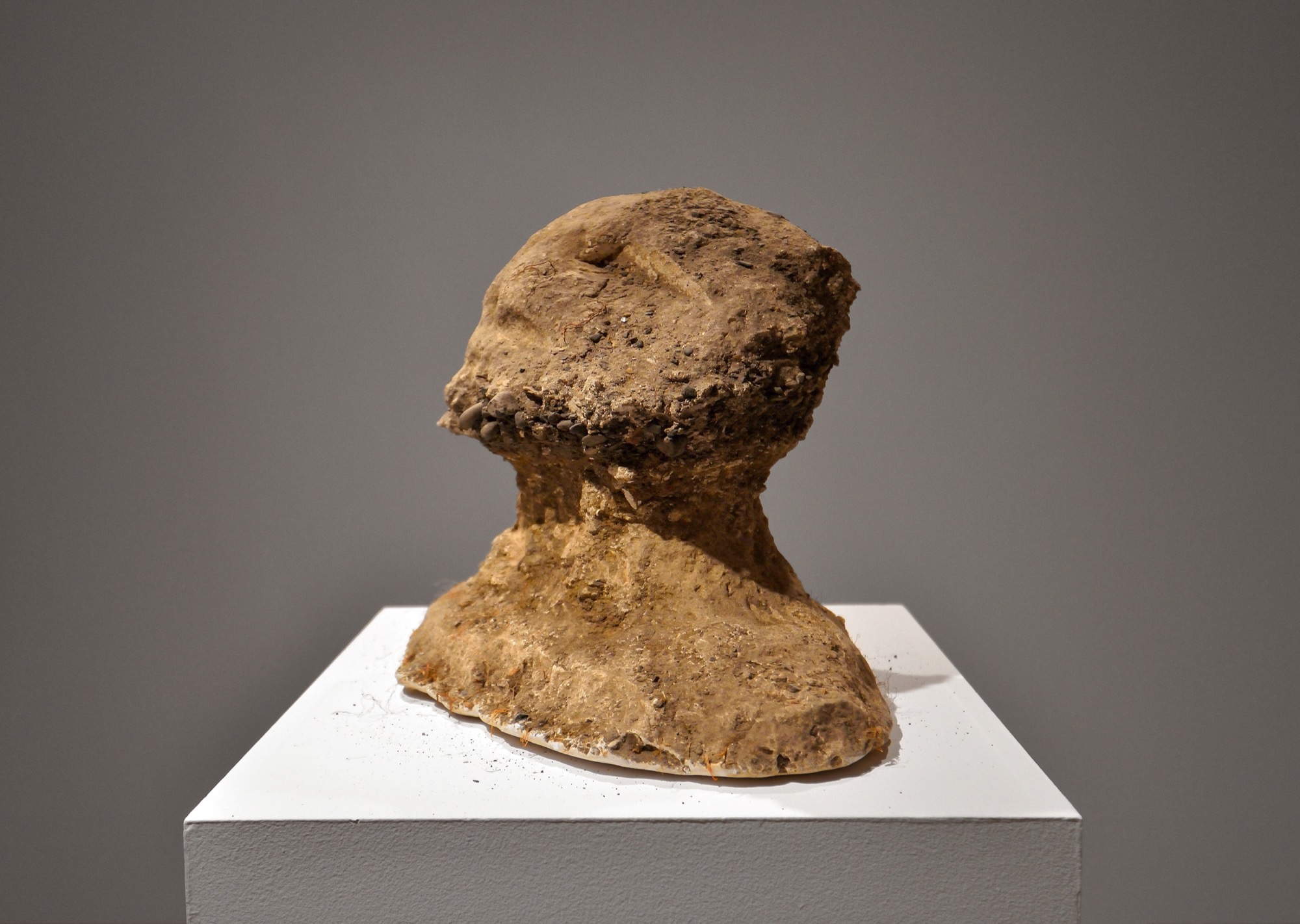
Letting oneself be guided by what will happen. Feeling things that are discovered well before they are rationalized, playing with the properties of matter in order to remodel reality and invent possible worlds. This, in short, is what runs through the three brilliant analytic essays on the nature of Philibert’s work: one on the revelatory power of the false (by Bernard Schütze), one on true lying (by Valérie Litalien), and one on the ambivalence of the term “landscape” in our perception of things (by Marcel Blouin). The authors also return to Philibert’s sculptures, composed of earth, tar, plaster, and allusions to scientific and archaeological prospecting, testifying to a quest for the absolute. It’s a quest that takes them through a return to sources, to the origin of the world, by the recurrence of universal concerns, as Blouin emphasizes, taking the example of the strange sculpture Tête no 7 – a formless ball emerging from the earth – and the just as unusual photograph Adam et Ève aux jardins des possibles.
And if Philibert’s trees have no equivalent in the real world, it is because of his skilful strategies of falsification, as Schütze notes in his scrupulous examination of the rudiments of these strategies through the allegorical and wise prism of the fox and the hedgehog. In her beautiful essay, Litalien traces Philibert’s career back to its beginnings, unfolding his body of work in view of its many tensions and ambiguities. Between erasure and emergence, veiling and deploying, definitive and intuitive, the given and the unverifiable, “something lives here in suspense.” Like “a fascination with the immensity that we can only brush up against.” Translated by Käthe Roth
Mona Hakim is a historian, art critic, and curator. Her research delves into various issues related to current photographic practices. Her recent writings have appeared in the monographs Chuck Samuels: Devenir la photographie (2021), Isabelle Hayeur (2020), and Bertrand Carrière: Solstice (2020). As a curator, she has organized more than twenty exhibitions.
[ Complete issue, in print and digital version, available here: Ciel variable 120 – FIGURES OF AFFIRMATION ]