
[Summer 2022]

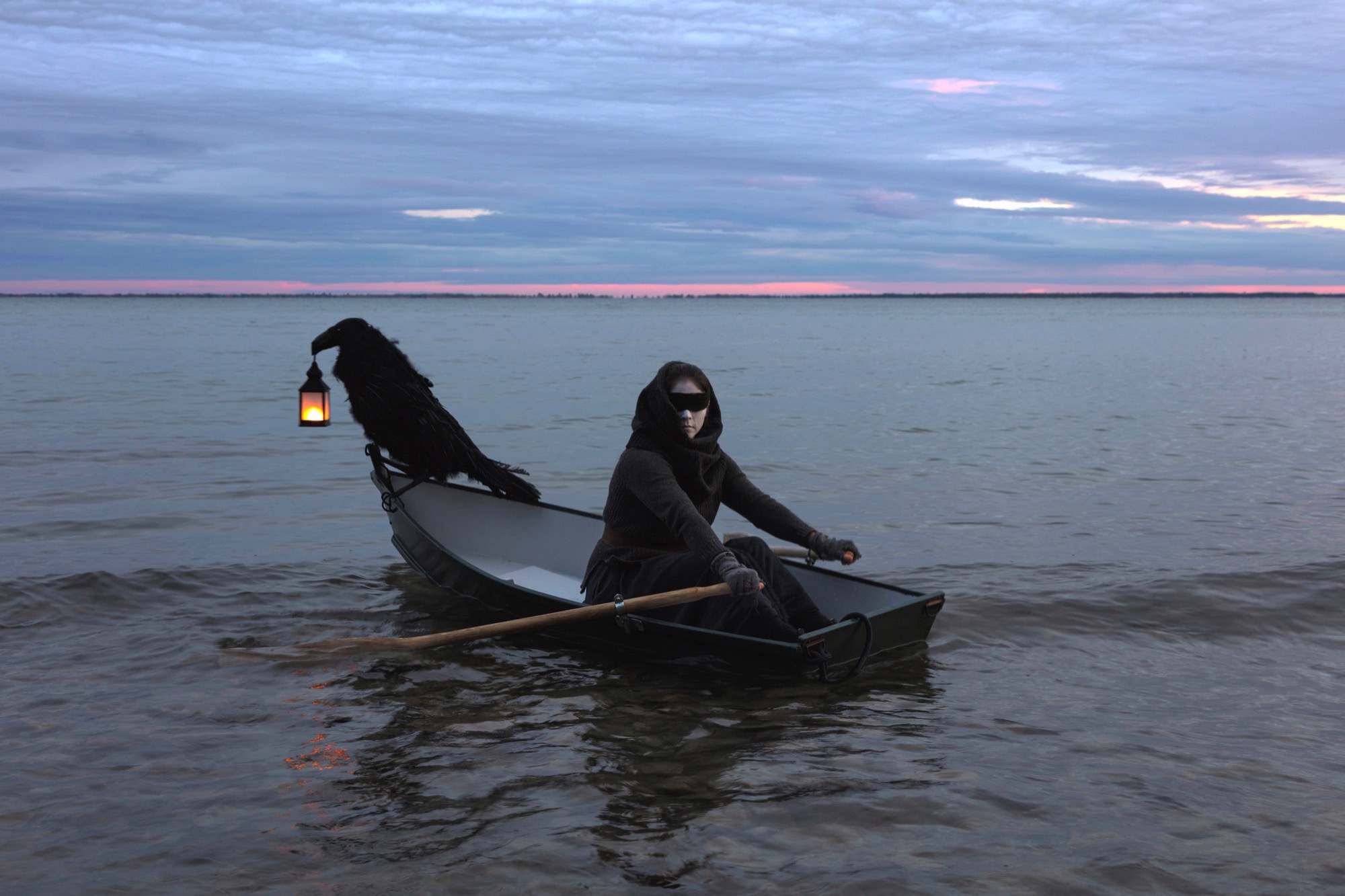
Meryl McMaster, From a Still Unquiet Place / osci ēta kīyapic mōy kā kāmwātahk 2019, épreuve à développement chromogène / chromogenic print 102 x 152 cm, permission de / courtesy of Meryl McMaster, Stephen Bulger Gallery et / and Pierre-François Ouellette art contemporain
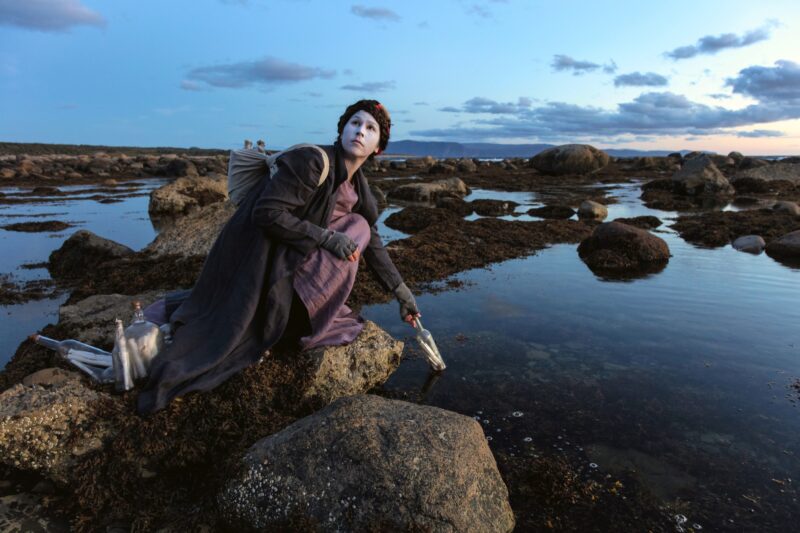
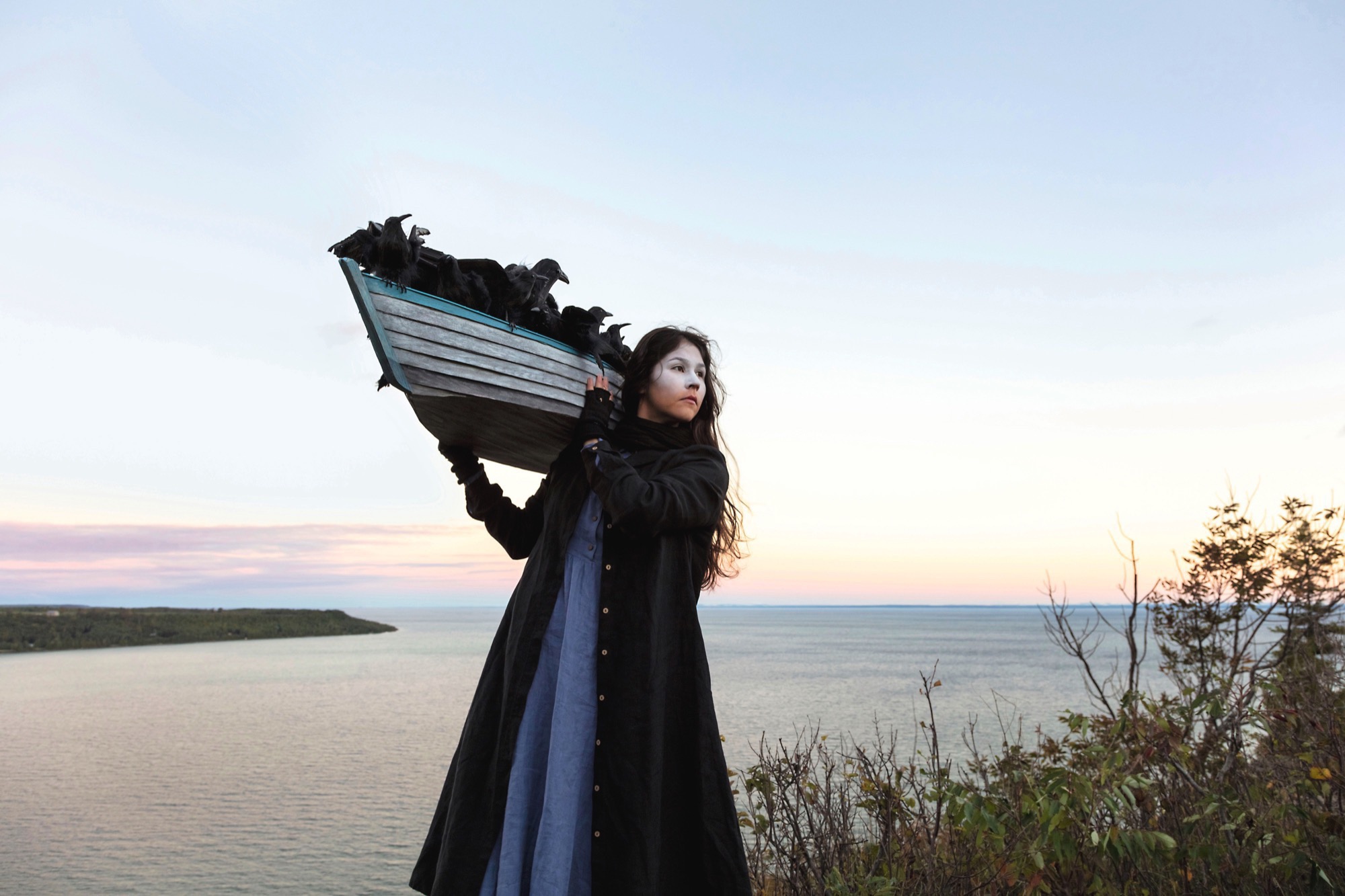
Meryl McMaster, Ordovician Tide I
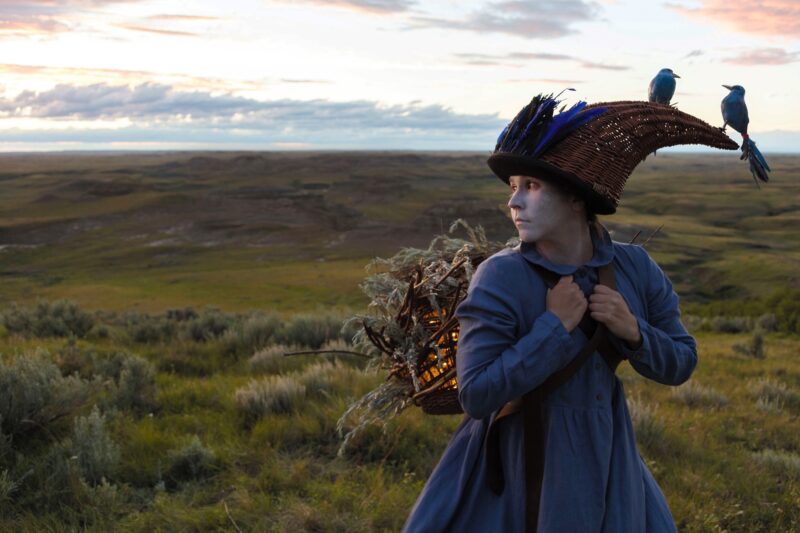
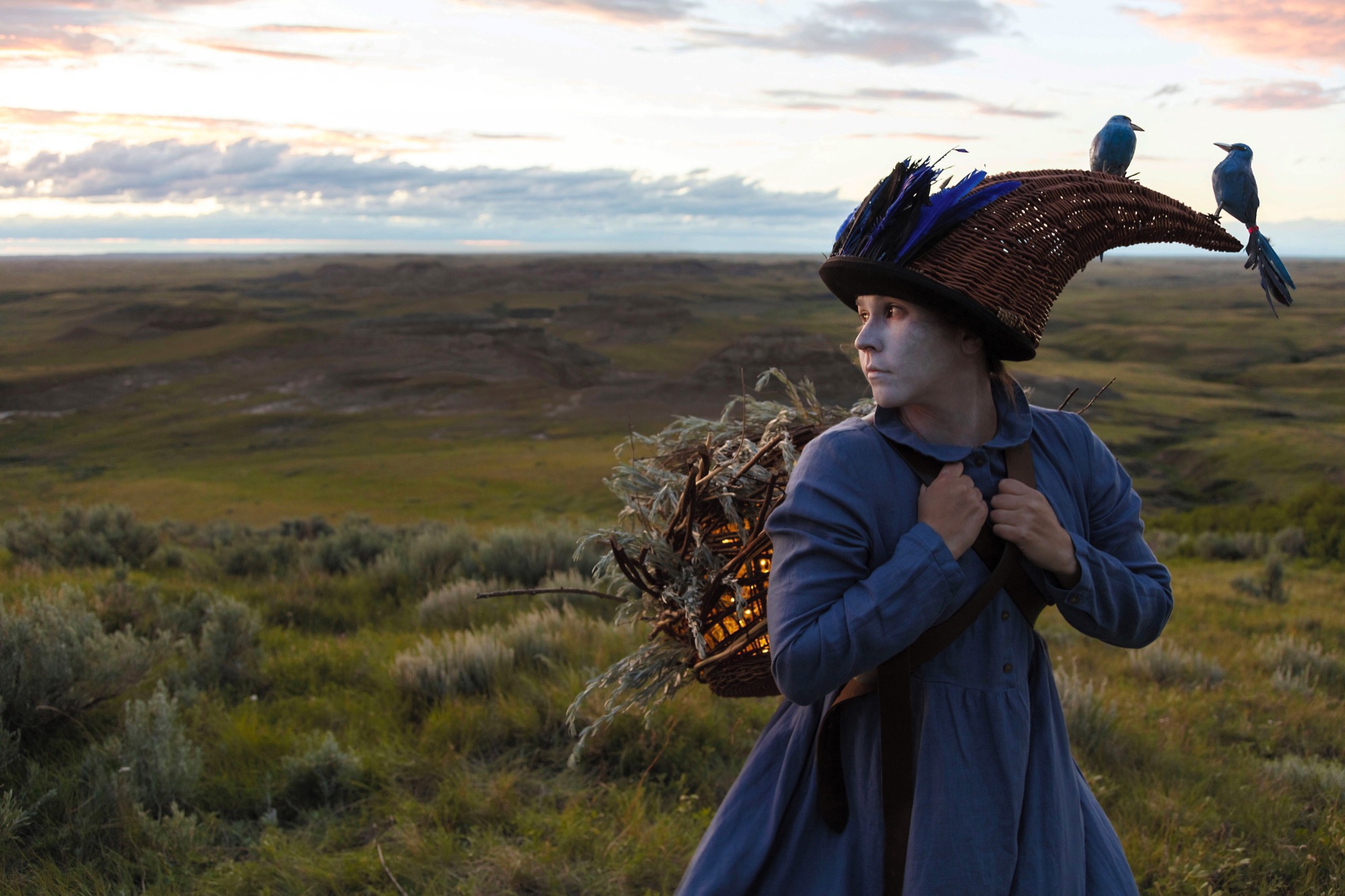
Meryl McMaster, Lead Me to Places | Could Never Find on My Own I / itohtahin êti namoya ka miskimän I
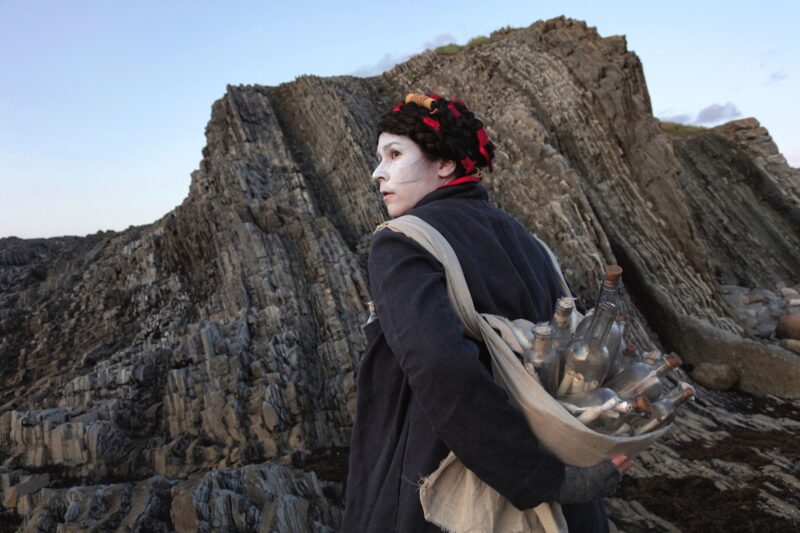
Meryl McMaster, Ordovician Tide Il
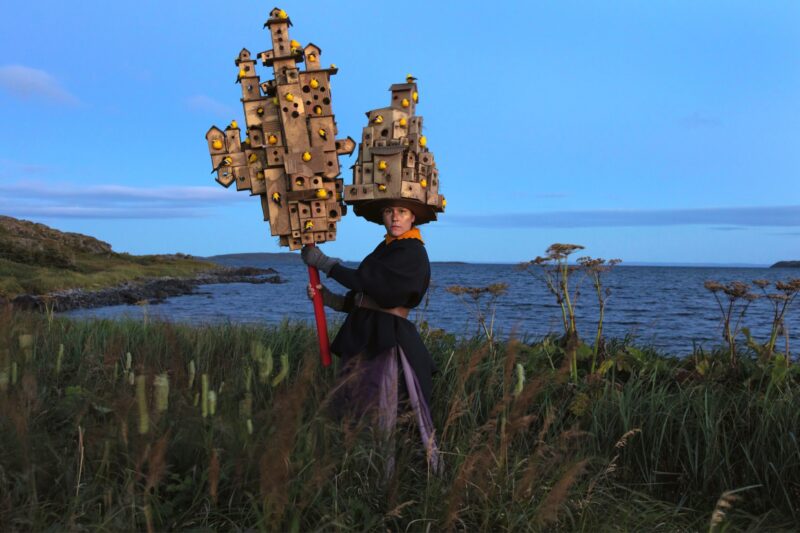
Meryl McMaster, Harbourage For A Song / wikamik osci nikamowin
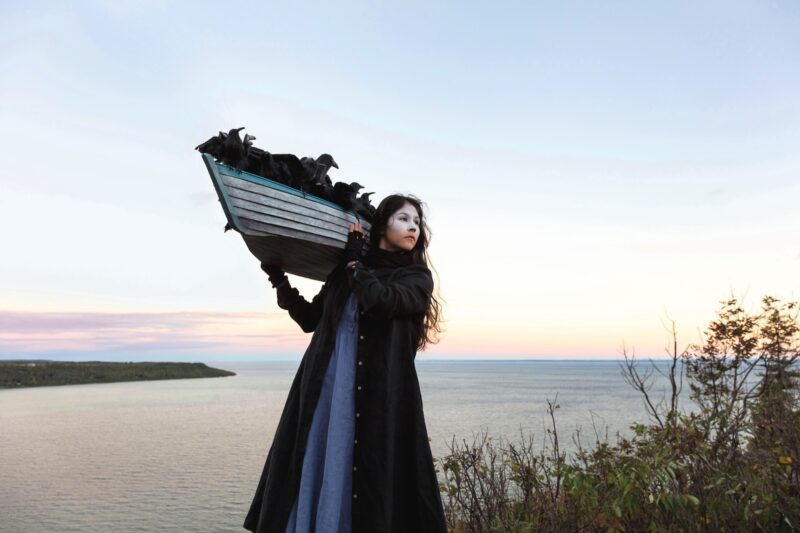
Meryl McMaster, On the Edge of This Immensity / kisipayihk ôta kä misäk
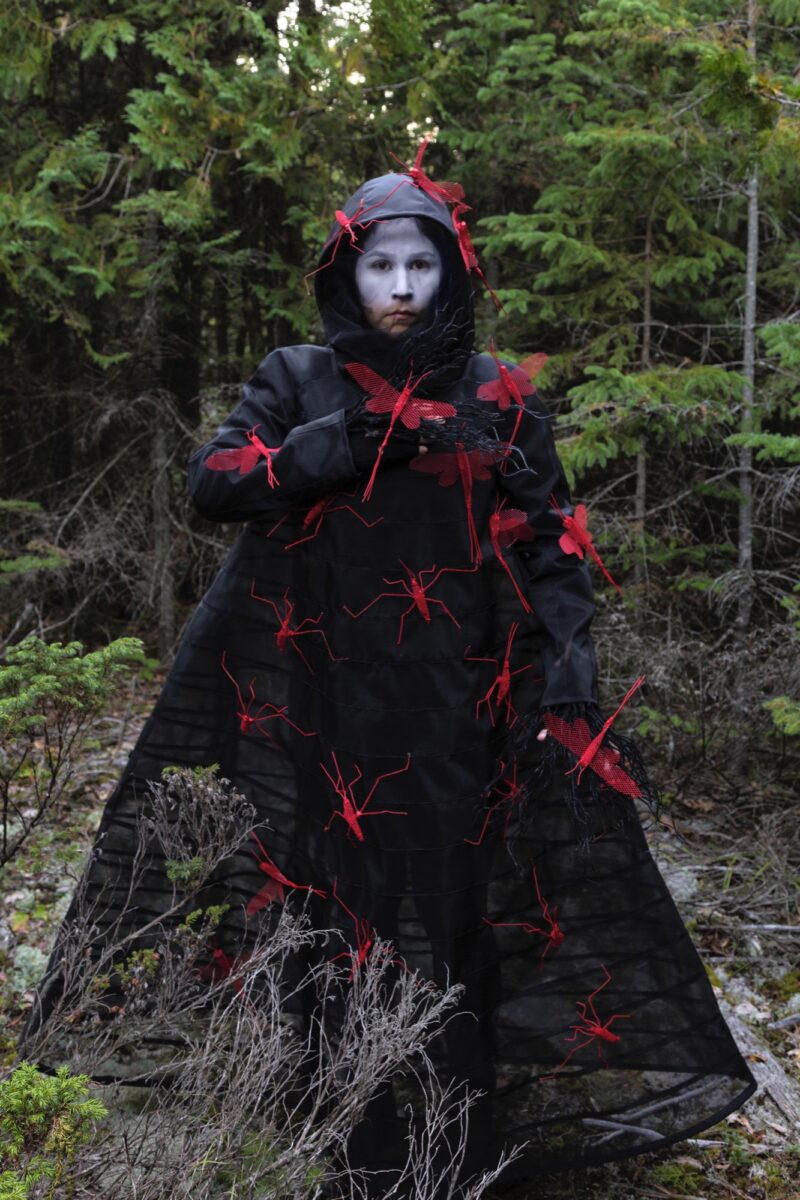
Meryl McMaster, What Will I Say to the Sky and the Earth I / kikway ta wihtamowawak kisik ekwa okawiymaw askiy I, 114 × 76 cm
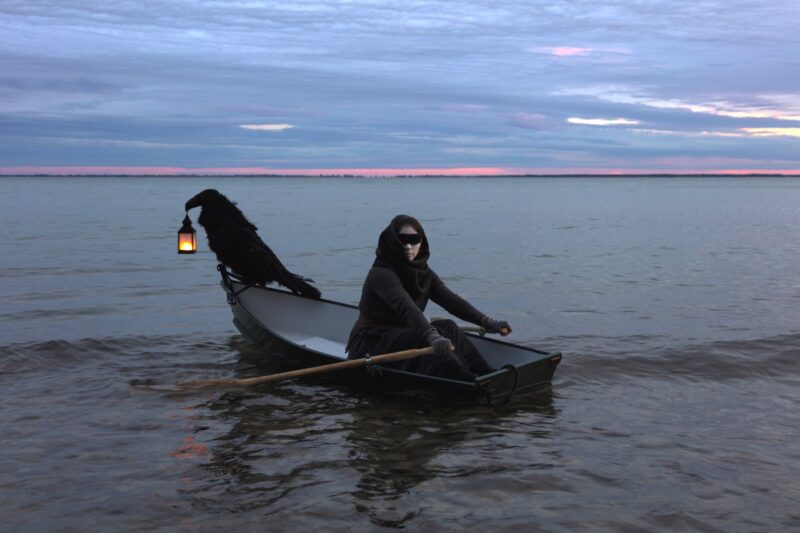
Meryl McMaster, There Are No Footprint Where I Go / makikway astew misit tahkiskäcikan eti ka itohteyān
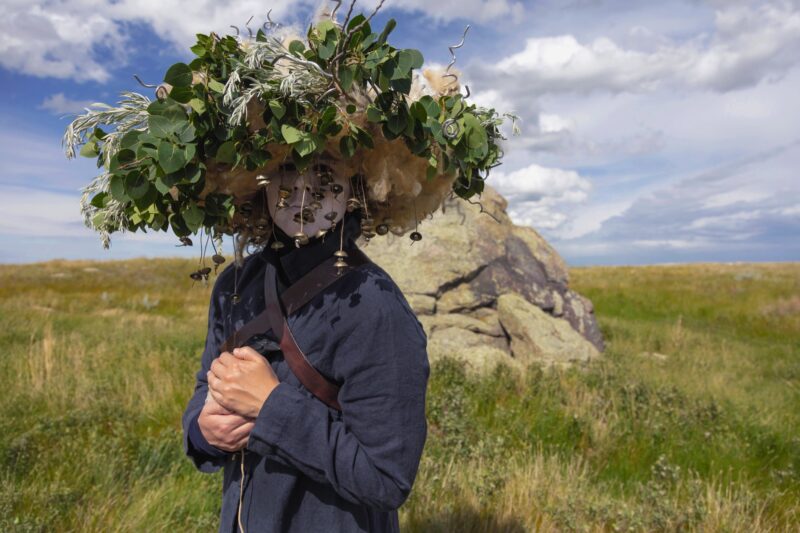
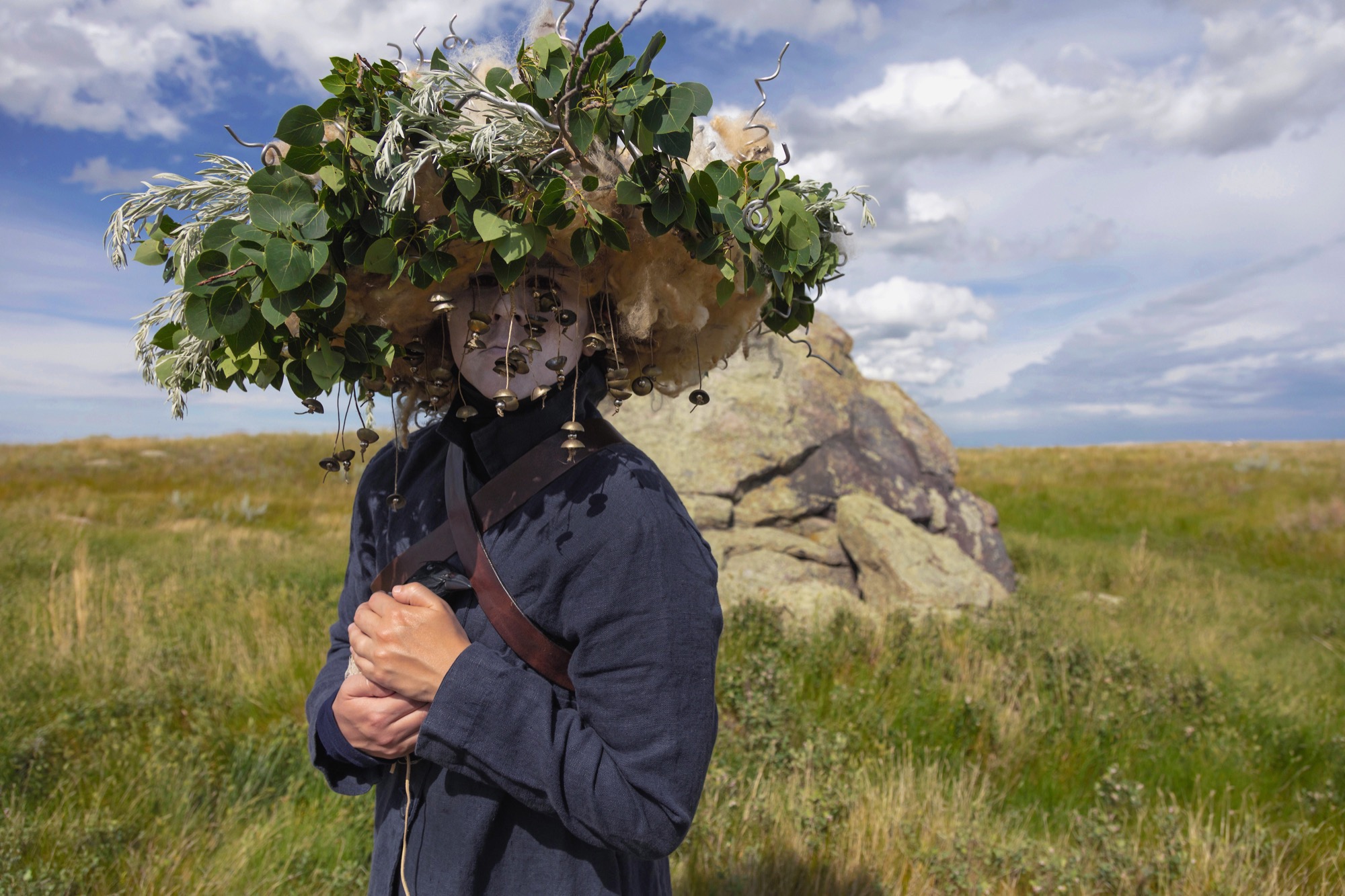
Meryl McMaster, Between the Start of Things and the End of Things III / sastowayihk kà mäcipayiki kikwaya ekwa kä ponipayik kikway III

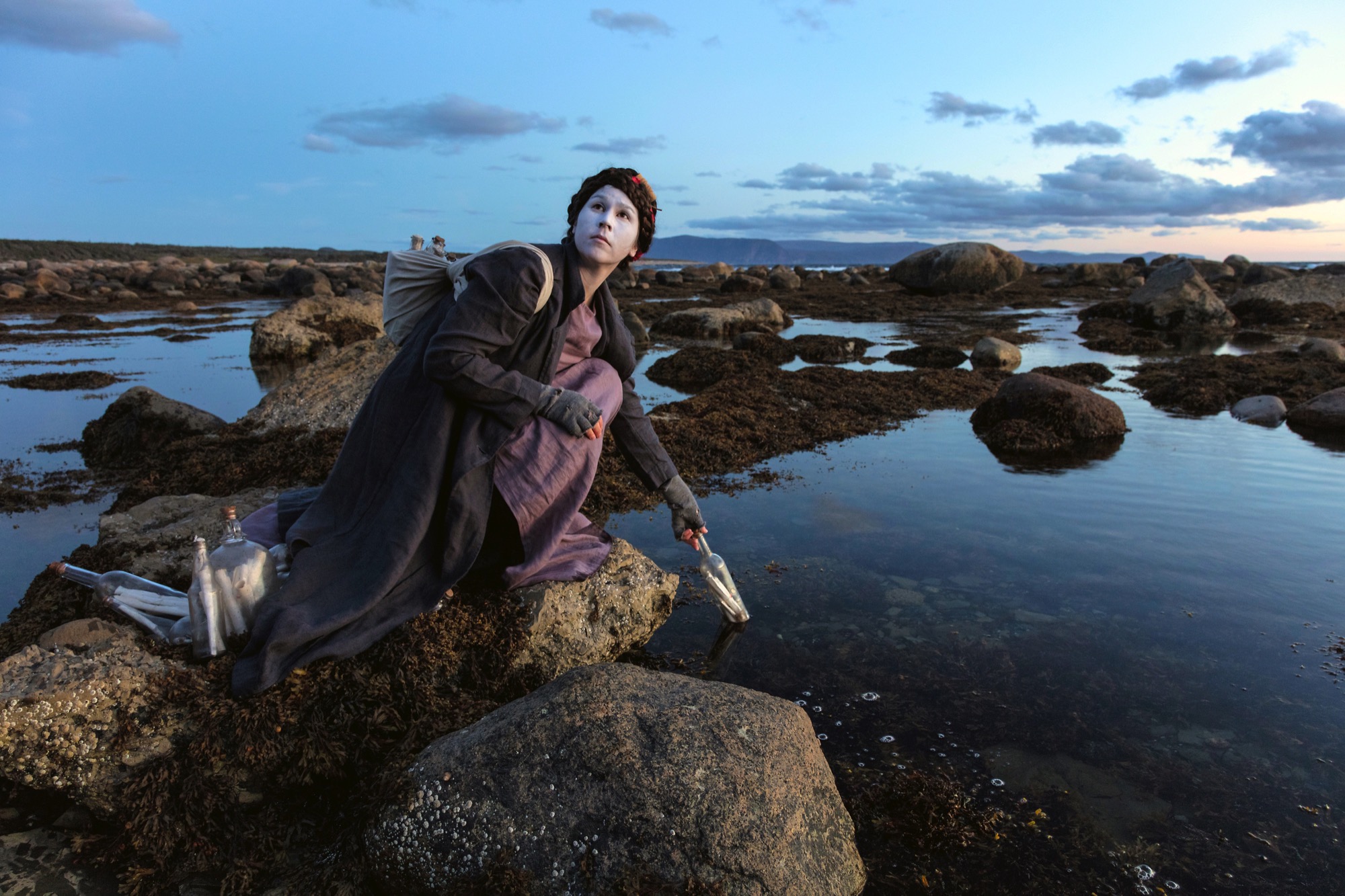
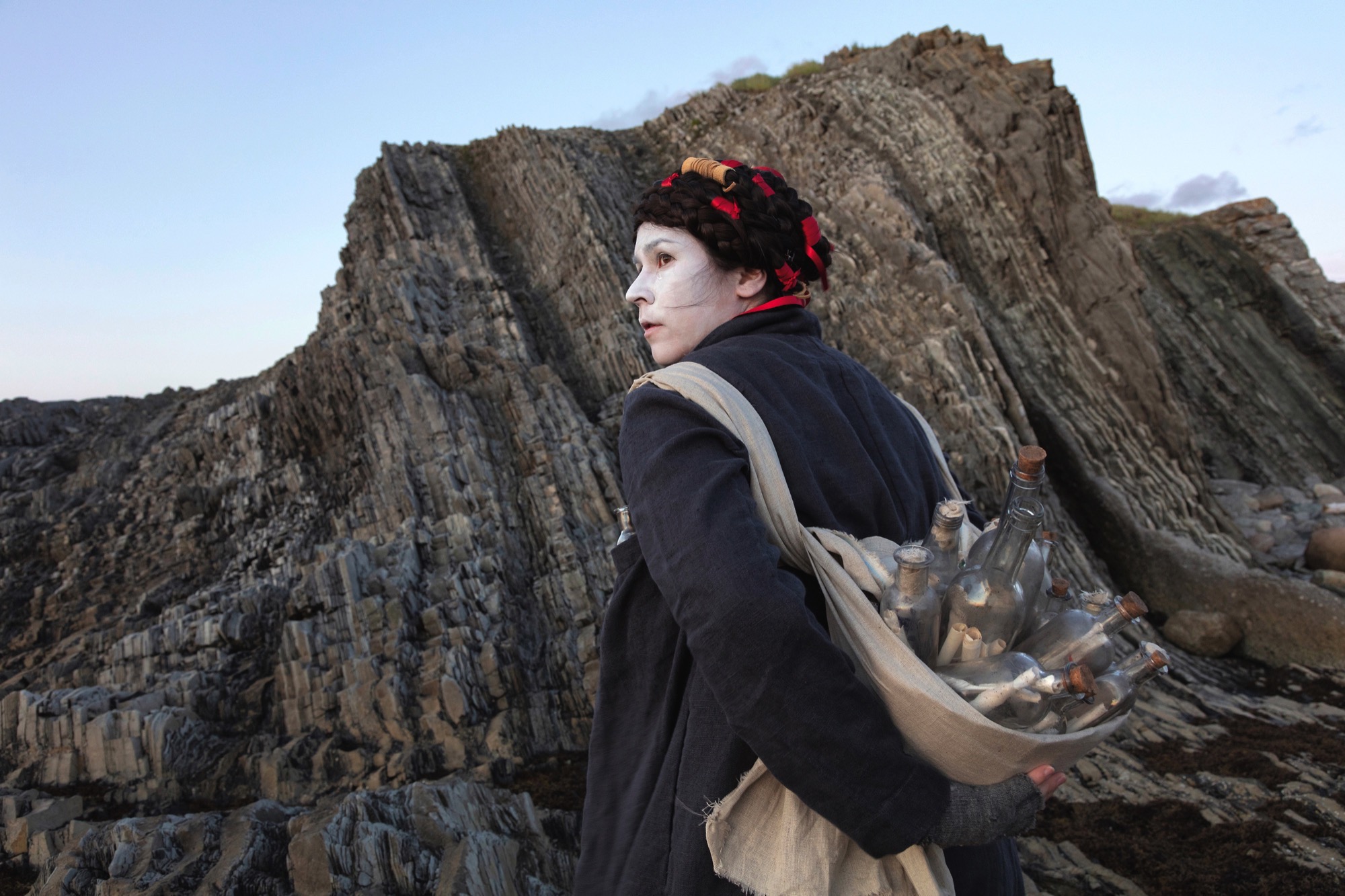
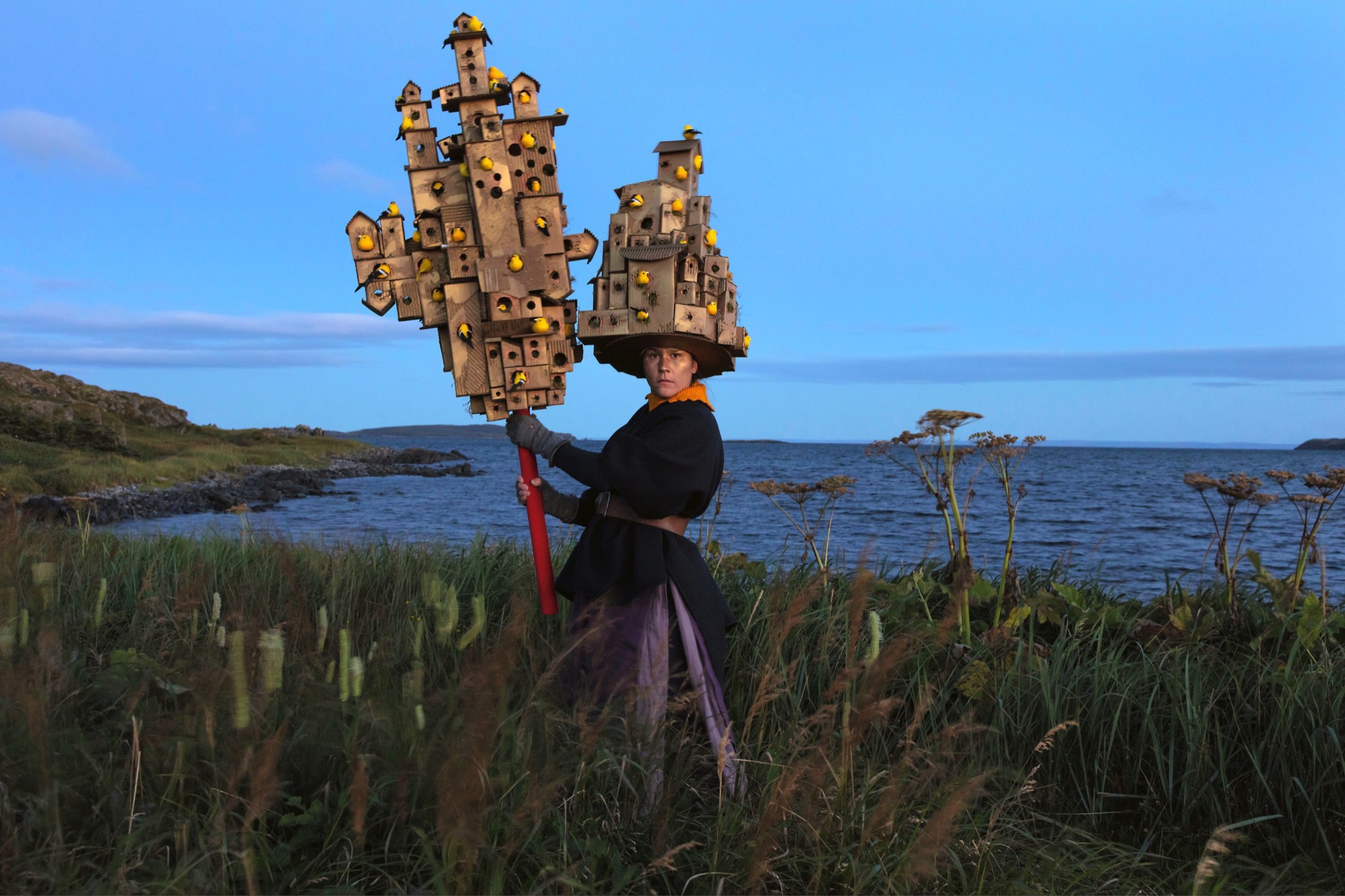

By Lori Beavis
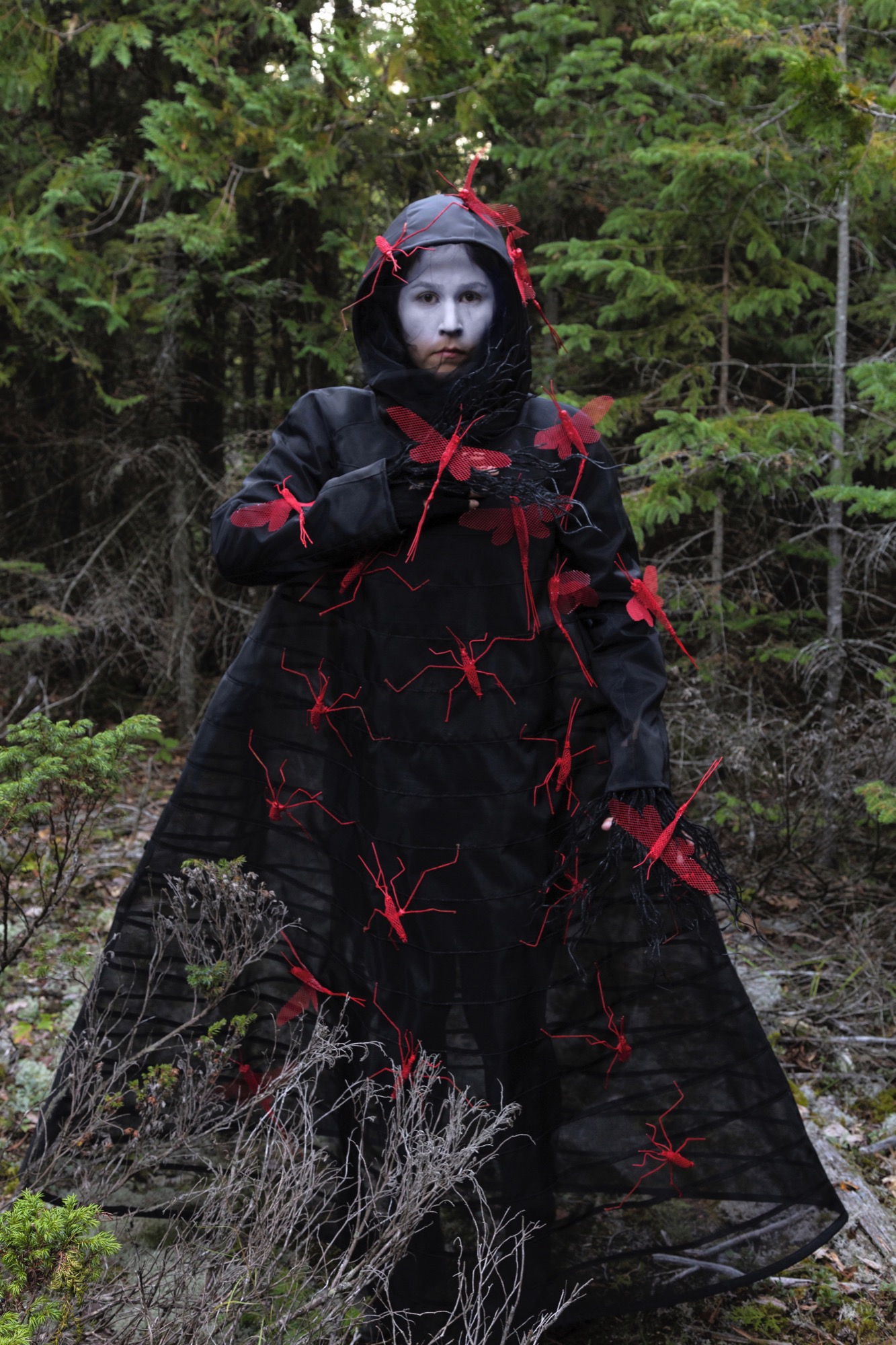
I want to plunge into the storage space where Meryl McMaster stores the habiliments that she has created for her performative photographic practice. While there I could closely investigate the cloaks, patterned coats, feathered armbands, hand wraps, plumed plant material, and bird-festooned headwear. Over the past fifteen years, McMaster has incorporated the assembled robes and crafted artefacts, such as bound books, a light-filled shoulder basket, and the boat filled with birds, to create a practice that boldly negotiates the edges between performance, sculpture, and photography.
I read these textiles and other materials as McMaster’s regalia, akin to the distinctive and often sacred clothing, ornaments, and artefacts worn or carried during ceremonies, pow-wows, celebrations, and gatherings. The individual pieces are constructed by hand over many hours, and with each stitch or thread they create a tie to family, clan, and place. In donning this regalia, she performs stories of identity, history, and territorial contact, and she guides us through the past, into the present, and on into the times to come.
From her earliest photographic series, Ancestral (2008–10), McMaster has used overlays – whether digital or textile – and turned the camera on herself to examine her own nêhiyaw (Plains Cree)/ British/Dutch heritage as her method of disputing the representation or disappearance of Indigenous peoples. For In-Between Worlds (2010–15) she began to “incorporate sculptures that took on the form of talismans” as a way to reference and begin to examine her mixed heritage and how we view the past from the perspective of the present.1 In Wanderings (2015), birds became a recurring motif as protectors and guides. The theme of wandering took her into different landscapes as she worked to make connections between past and present in terms of who we are and who we might become.
In the As Immense as the Sky (2019) series, many of these elements – the regalia and the sculptural artefacts – come together with landscapes that McMaster sought out as those that told of significant moments in her family history. These are – in the nêhiyaw language – the ancient mistassini (monolithic rocks), sputinas (buttes), wiyacahk (canyons), and ayeakow awacha (dunes) across Turtle Island. For this series, she travelled from central and southern Saskatchewan to early settlement shores in Ontario and Newfoundland, introducing herself to those who had come before her on those lands. This suite of nineteen photographs also opened a space for her to explore the intersection of worldviews that she has experienced throughout her life as the daughter of mixed heritages, through which she came to understand time as both linear, cyclical, and recurrent.
In Lead Me to Places I Could Never Find on My Own, I, II (2019) McMaster is clothed in blue – a colour that is considered, in general, to be the spiritual colour of communication among beings, wisdom, and awakening. The blue continues up and onto the woven wicker cornucopia fronted with intense indigo-dyed feathers that she wears on her head. Two indigo buntings perch at the end of her headwear. The blue-feathered birds are symbols of wisdom and spiritual realization. She is silhouetted against an immense landscape as she crosses isolated buttes, carrying “the universe” on her back. Her open-weave wicker basket, with an upper opening encircled with grasses, is lit from within – perhaps a medicine such as sage is being burned – embers and tiny lights giving off light and warmth.
For Between the Start of Things and the End of Things I, II, III (2019) McMaster climbed to the top or stands in front of the mistassini near Hazlet, Saskatchewan. This standing rock is one of six glacial erratics in the vicinity. Strangely, on the Wikipedia page for the town of Hazlet, the rock is identified as a landmark of the homesteaders’ presence rather than as a marker of Indigenous presence. This settler-based moniker speaks to McMaster’s investigations into the intersections of worldviews and to the naming or identification of places that, with settler colonialism, has meant the erasure of all traces and evidence of Indigenous peoples’ living presence. In this set of three images, McMaster describes the passage of time as it is etched onto the rock. For her, mistassini is many things: a guardian, a trail marker, scratching pad for bison, and perhaps most strongly a call to action.
While atop the stone, McMaster is in a firmly planted stance; in the next image, she is in front of the partially seen stone with her hands in a position of cradling; and in the third, her hands are in a gesture of holding close, with her body and headwear almost completely obscuring the monumental stone. She is deliberately layering her own image onto the rock and situating herself as the marker or evidence of her nêhiyaw and European ancestors. She looks at the viewer from under a chapeau made of materials both natural (sage, leaves, corkscrew branches and twigs) and manufactured (concave metal pieces, beads, wires) all of which are embedded into a naturallooking fluff that covers her head down to her eyes. The millinery overlays her face in the same way as her body shields the rock. There is also a tension between the protective, holding gestures of her hands and her straightforward gaze out from under the leaves and branches of her head covering. This is a gaze that remembers a time before colonialism.
McMaster’s complex images of ancestral relationships with the land are embedded in her experience as a contemporary Indigenous woman with an understanding of past histories. She also builds into these images her knowledge of the representation of Indigenous people that were beyond their control. These images were constructed or altered to tell the story that the colonizers wanted to be told. McMaster’s gaze both holds memory and is part of a continuum imbued with knowledge and power.
This continuum is at the essence of Between the Start of Things and the End of Things: the very title stops us and focuses our attention because it indicates that there is something we need to “get” to. What McMaster is suggesting, in this series of three and in the entire series of As Immense as the Sky, is that the start and the end are related to each other: they are not identical, but you cannot have one without the other. Both the start and the end are the beginning of something new.
2 Edgar Cayce, https://www.edgarcayce.org/about-us/blog/blog-posts/aura-charts/.
3 Meryl McMaster: As Immense as the Sky (Birmingham, UK: IKON Gallery, 2020), 35.
4 There are known large erratics located at six places in Saskatchewan (Cudworth, Hazlet, Hepburn, Outlook, and Rockhaven, along with a “young erratic” near Little Manitou Lake). https://www.tourismsaskatchewan.com/community/466/hazlet#sort=relevancy.
Lori Beavis is the executive director of Centre d’art daphne, the first Indigenous artist-run centre in Tiohtià:ke/Mooniyang/Montreal. Identifying as being of Michi Saagiig (Mississauga Anishinaabe) and Irish-Welsh descent, she is a citizen of Hiawatha First Nation at Rice Lake, Ontario. She is an independent curator, art educator, and art historian; in her work, art practice, and research she articulates narrative and memory in the context of family and cultural history and reflects on cultural identity, art education and self-representation
Meryl McMaster was born in Ottawa; she graduated from the Ontario School of Art and Design University in 2010. She draws on her nêhiyaw (Plains Cree), British, and Dutch origins to explore identity-related in her self-portraits and to explore the themes of territory, heritage, and culture. She has received the Reveal Indigenous Art Award (2017) and the New Generation Photography Award (2018), and has had solo exhibitions at museums, including the McCord Museum in 2021. McMaster is represented by Pierre-François Ouellette art contemporain (Montreal) and Stephen Bulger Gallery (Toronto).
merylmcmaster.com
[ Complete issue, in print and digital version, available here: Ciel variable 120 – FIGURES OF AFFIRMATION ]