
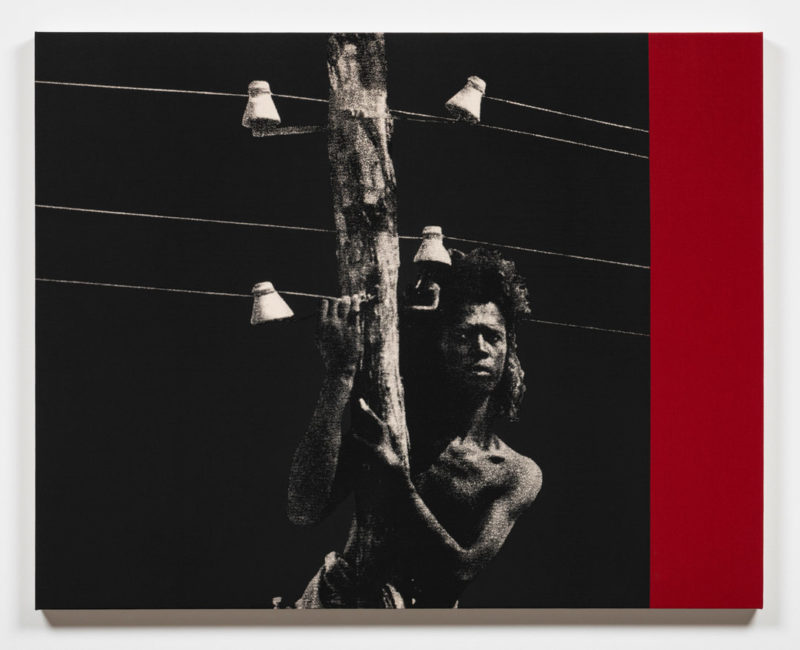
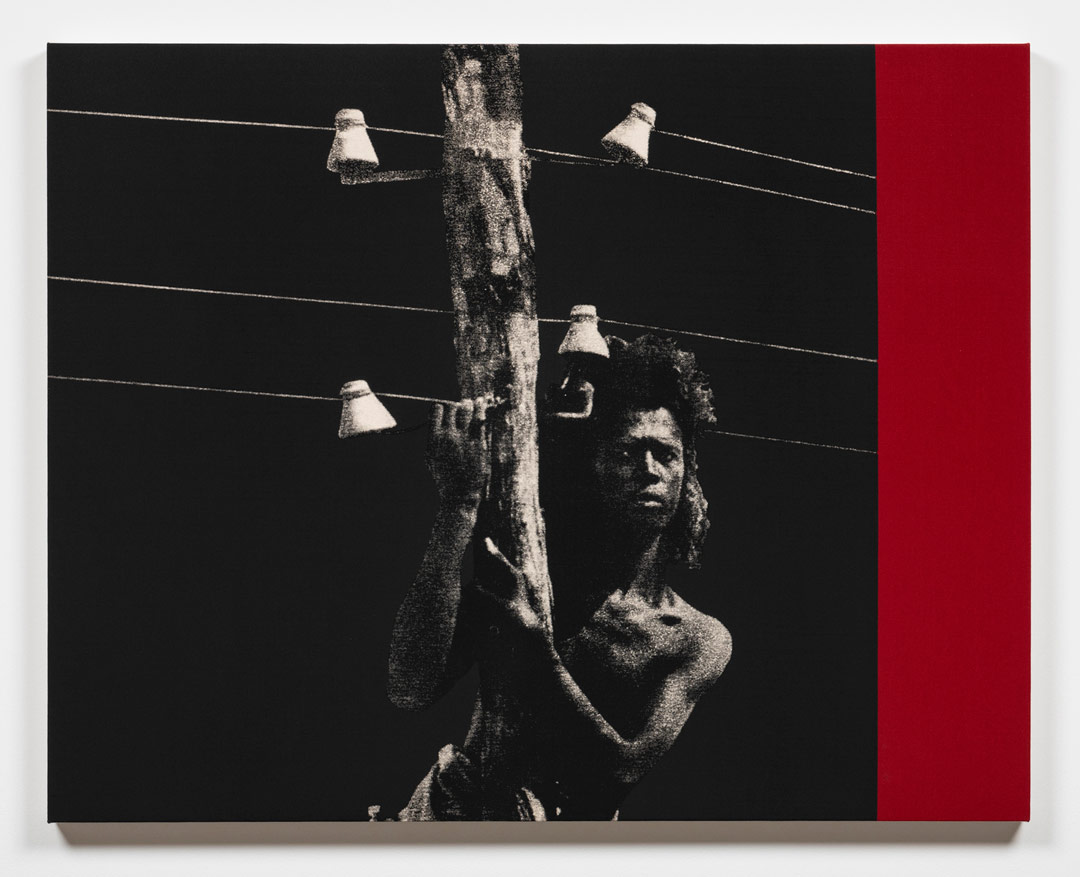
Dawit L. Petros, Between departures, returns and excesses of image, Part V, 2021, sérigraphie sur toile / serigraph on canvas, 89 × 112 cm
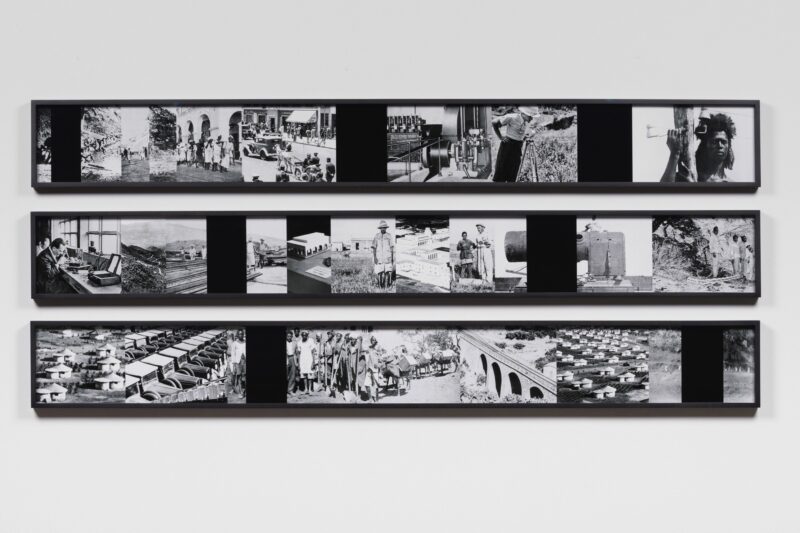
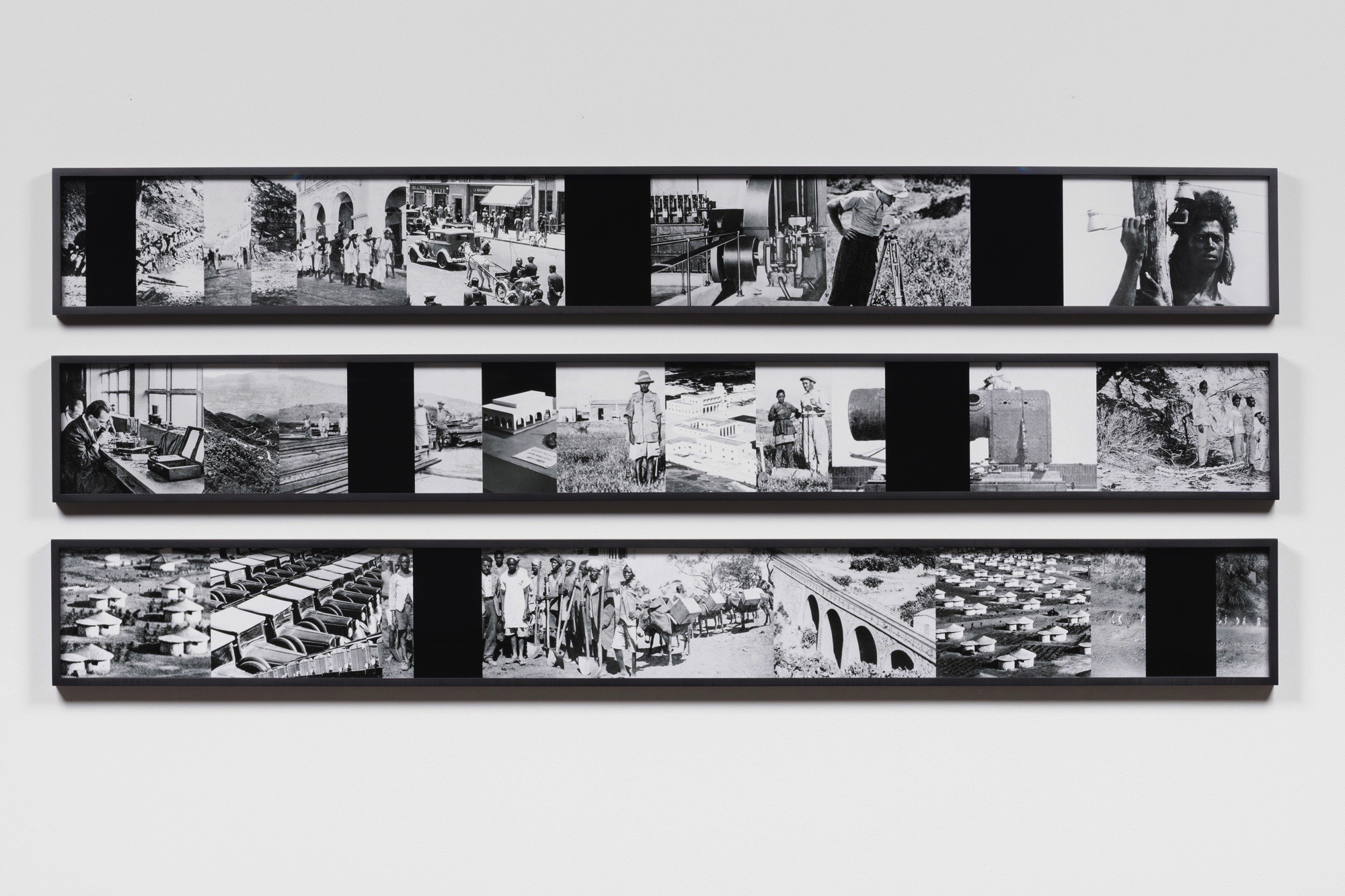
Dawit L. Petros, A Constant Re-telling of the Future in the Past (Part I), 2020, impression au jet d’encre / archival pigment print, 81 × 183 cm
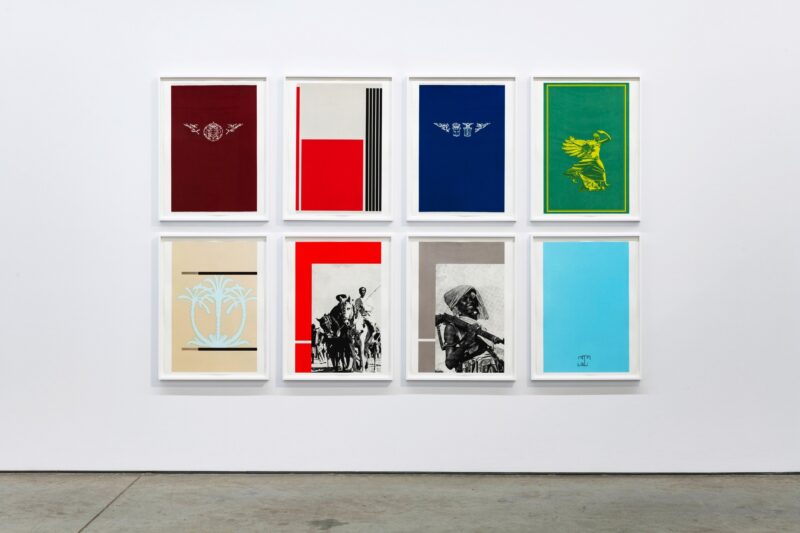
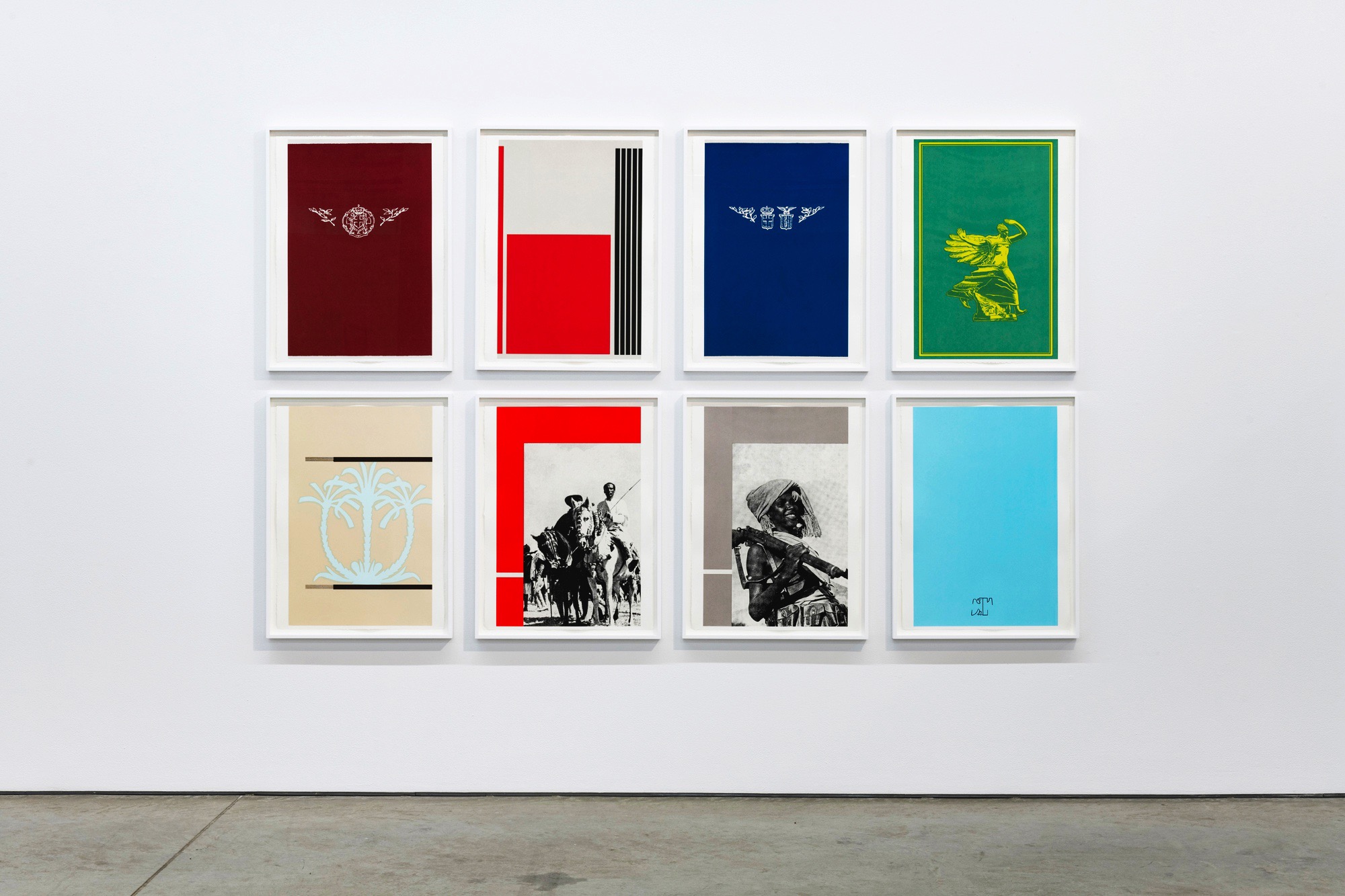
Dawit L. Petros, Série / series Preoccupations (Rivista Coloniale), 2020 / sérigraphie sur papier Arnhem / serigraph on Arnhem paper, 76 × 56 cm chacune / each
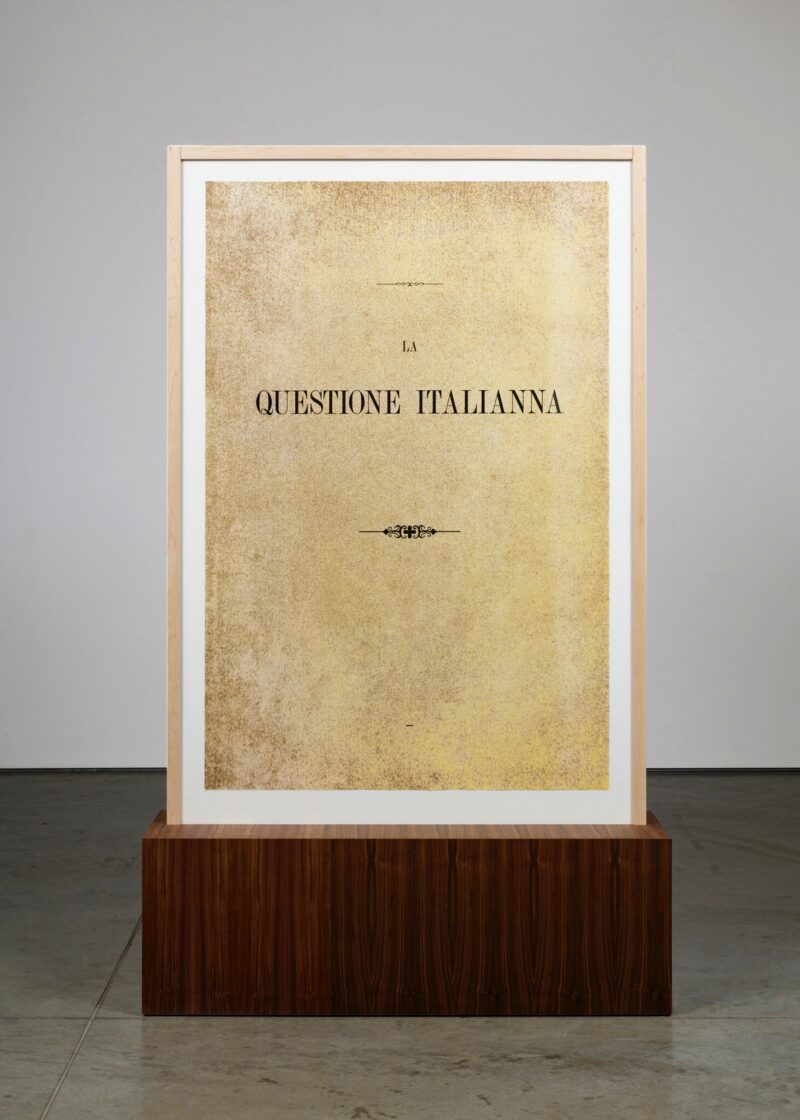
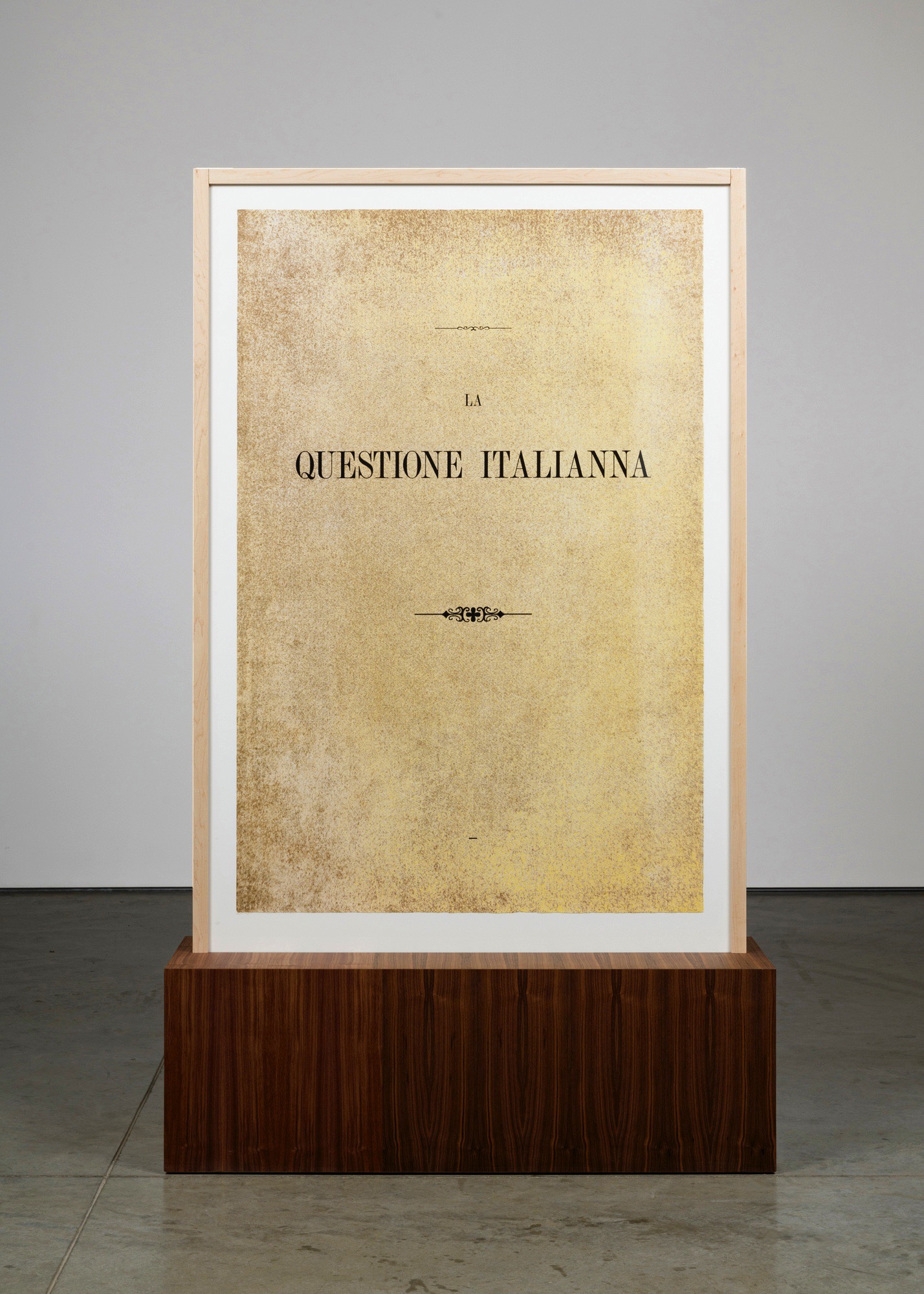
Dawit L. Petros, La questione Italianna / La questione Affricana, 2020, sérigraphie, papier Coventry Rag, plexiglas, pin, noyer, piédestal / serigraphy, Coventry Rag paper, plexiglass, pine, walnut, plinth, 76 × 56 cm chacune / each
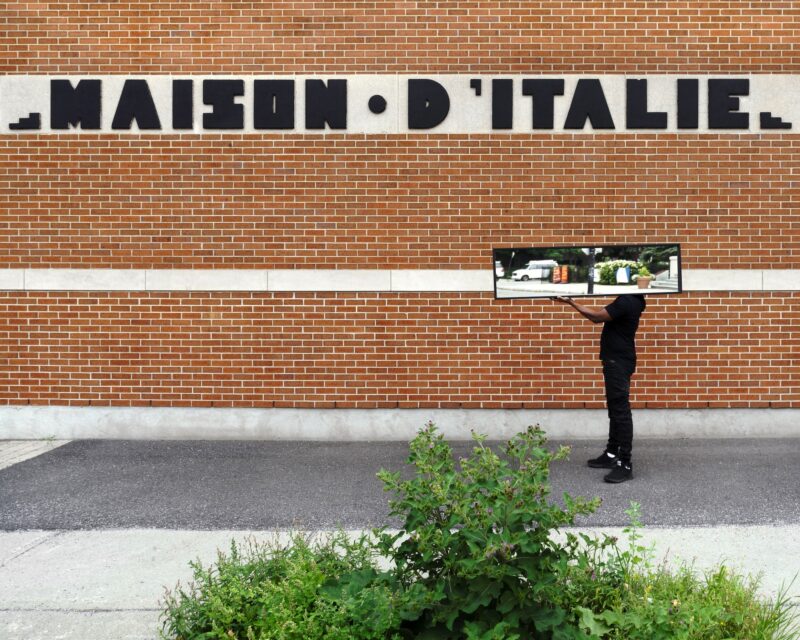
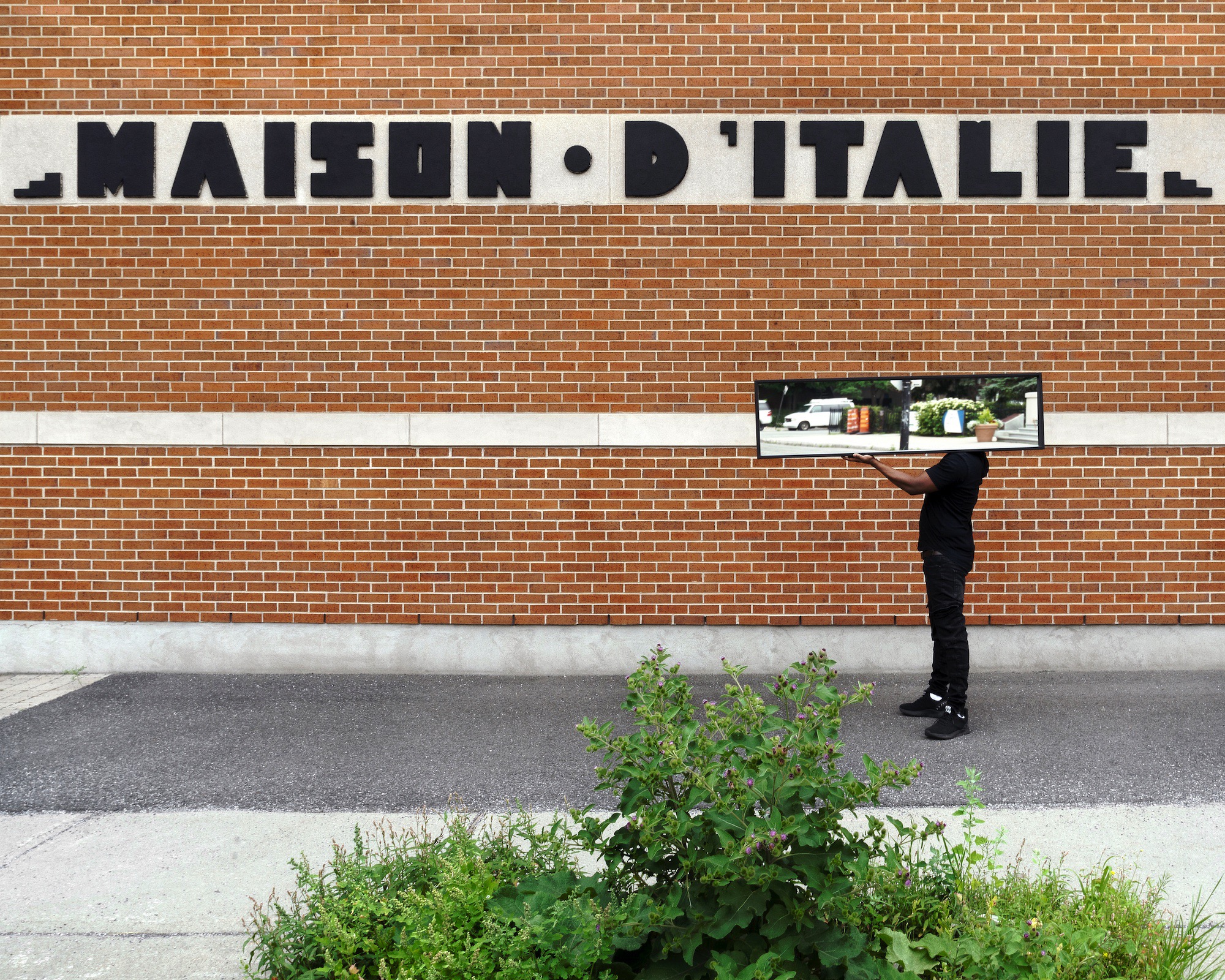
Dawit L. Petros, Untitled (Epilogue VII), Montreal, Quebec, 2021, impression au jet d’encre / archival pigment print, 76 × 95 cm
[Winter 2022]
Dawit L. Petros, Gaps, holes, fissures, and frictions
By Claudia Polledri
Galerie Bradley Ertaskiran, Montréal
3.09.2021 — 30.10.2021
Gaps, holes, fissures, and frictions – the title defines the perimeter of the exhibition by Eritrean artist Dawit L. Petros, presented as part of the Momenta 2021 satellite program. In this show, composed of photographs and serigraphs on paper and canvas, Petros, who now divides his time between Montreal and Chicago, continues his reflection on the heritage of colonial history previously addressed in Spazio disponibile, an installation presented in 2021 at University at Buffalo Art Galleries, and on immigration and emigration phenomena, past and present. To do this, he creates a visual itinerary that intersects with different historical temporalities and a variety of geographic spaces in Africa, Europe, and North America. To these elements is added a more abstract section concerning the role that technological progress has played in displacements, but also in the affirmation of the gaze at the other.
The core theme of the exhibition is the Italian colonization of Eritrea, a historical process instigated in the late nineteenth century and terminated in the wake of the Second World War, when Italy, defeated, was forced to give up its colonies. This history, long on the fringes of contemporary historiography, takes form through archival photographs and serigraphs created by Petros from images in Rivista coloniale (1906–43), published by the Italian Colonial Institute. His approach involves the creative use of archives, aiming to reactivate and appropriate history by the weaving of intellectual and emotional ties with events and people of previous eras.
However, dealing with this relationship with the past also involves considering the gaps that characterize this colonial history – absences that Petros makes visible by adding black bands between or on the pictures that compose A Constant Re-telling of the Future in the Past (Part I) (2020), a mosaic of images central to the exhibition. This almost-filmic montage takes the form of a series of “false splices” that lead spectators to question the meaningful effects, real and symbolic, produced by these holes in the representation. This first axis intersects, in the same composition, with the second theme in the exhibitions, which involves displacements and migrations. Here, Petros refers to Italian immigration to North America, again using archival photographs – A Constant Re-telling of the Future in the Past (Part II) (2021) – organized in series and alternating with similar black bands. The result is an incredibly rich vision, traversing different spaces and times, which forces visitors to reflect on the fabric of relationships among diverse experiences with suddenly tangible links.
Petros’s reflections on immigration and trans-border flows are not limited to references to the past. On the contrary: this theme is represented as transversal to a number of historical epochs and as reaching into the present. The contemporary era takes form in four images – the series Untitled (Epilogue) – in which Petros’s body and especially his head, thus his identity, are hidden by a mirror. Therefore, the face is inscribed in a space in which it “assumes” the image, symbolically and artificially, through the mirror. The articulation between these two themes, colonial history and migration, becomes particularly evident in the picture – Untitled (Epilogue VII) – of Petros’s body, the head still hidden by a mirror, in front of the Maison d’Italie. The Montreal public will recognize the walls of this building, whose date of construction (1936) illustrates, on the one hand, the link between ideology and the colonial frenzy of the fascist period to which Eritrea was subjected and, on the other hand, the indirect effects of the regime on the Italian community in Canada. Inscribed in this space, Petros’s body symbolizes the frictions inherent to history transposed into a different geographic context. In its apparent simplicity, the image brings together a set of references that make it possible to perceive the depth and complexity of identities shaped by the immigration experience, as well as the mirror effects provoked by these trajectories. Nevertheless, by placing the panel reproducing the cover of a pamphlet titled “La questione Affricana” face to face with its double, “La questione Italianna,” Petros goes beyond strict allusion to Italian colonial history and indirectly evokes the vicissitudes involved in creating the Italian state.
The third part of the exhibition consists of an abstract and formal reference to the technological progress often evoked by colonial rhetoric, as well as to Italy’s participation in the Chicago World Fair in 1933. Built in the form of an airplane, the Italian pavilion, displaying the symbol of the lictors, was inspired by rationalist style and aimed to celebrate the connection between tradition and modernity. Petros evokes this event and its visual and symbolic echoes with the series of serigraphs on paper Istruzioni (Transit, Trajectoires, Invisibles Networks), which show, among other things, an aerial map and the design of an airplane part. Petros’s clearly drawn reference to the modernist aesthetic and the visual rhetoric of fascist symbols constitutes a preferred approach for his body of work on archival documents. Gaps, holes, fissures, and frictions is a striking exhibition, whose formal simplicity encompasses great aesthetic richness and a dense reflection on the links between past and present and the trajectories that form them. Translated by Käthe Roth.
Claudia Polledri is a postdoctoral researcher in the Department of Art History and Film Studies at the Université de Montréal, where she earned a doctorate in comparative literature devoted to photographic representations of Beirut (1982–2011). An expert in contemporary photography in the Middle East, she was curator of the exhibition Iran. Poésies visuelles, presented in Quebec in 2019.