
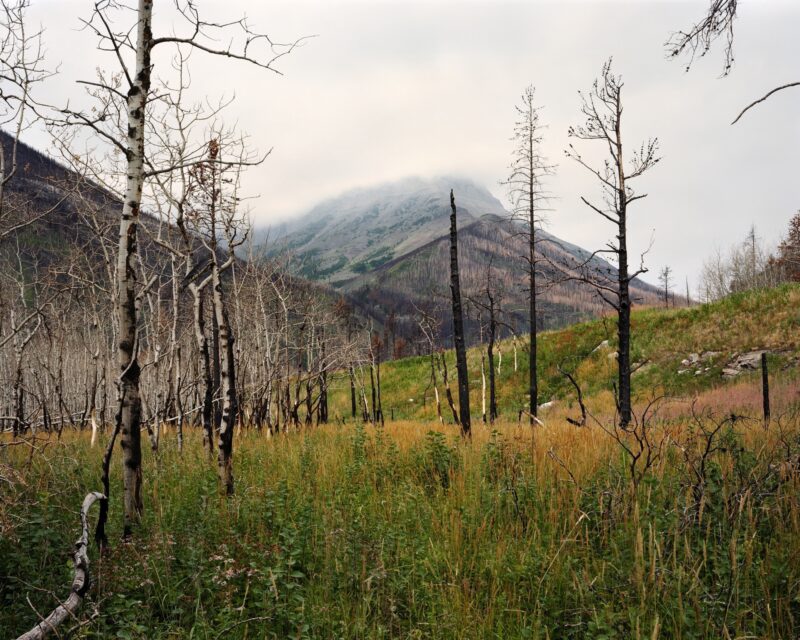
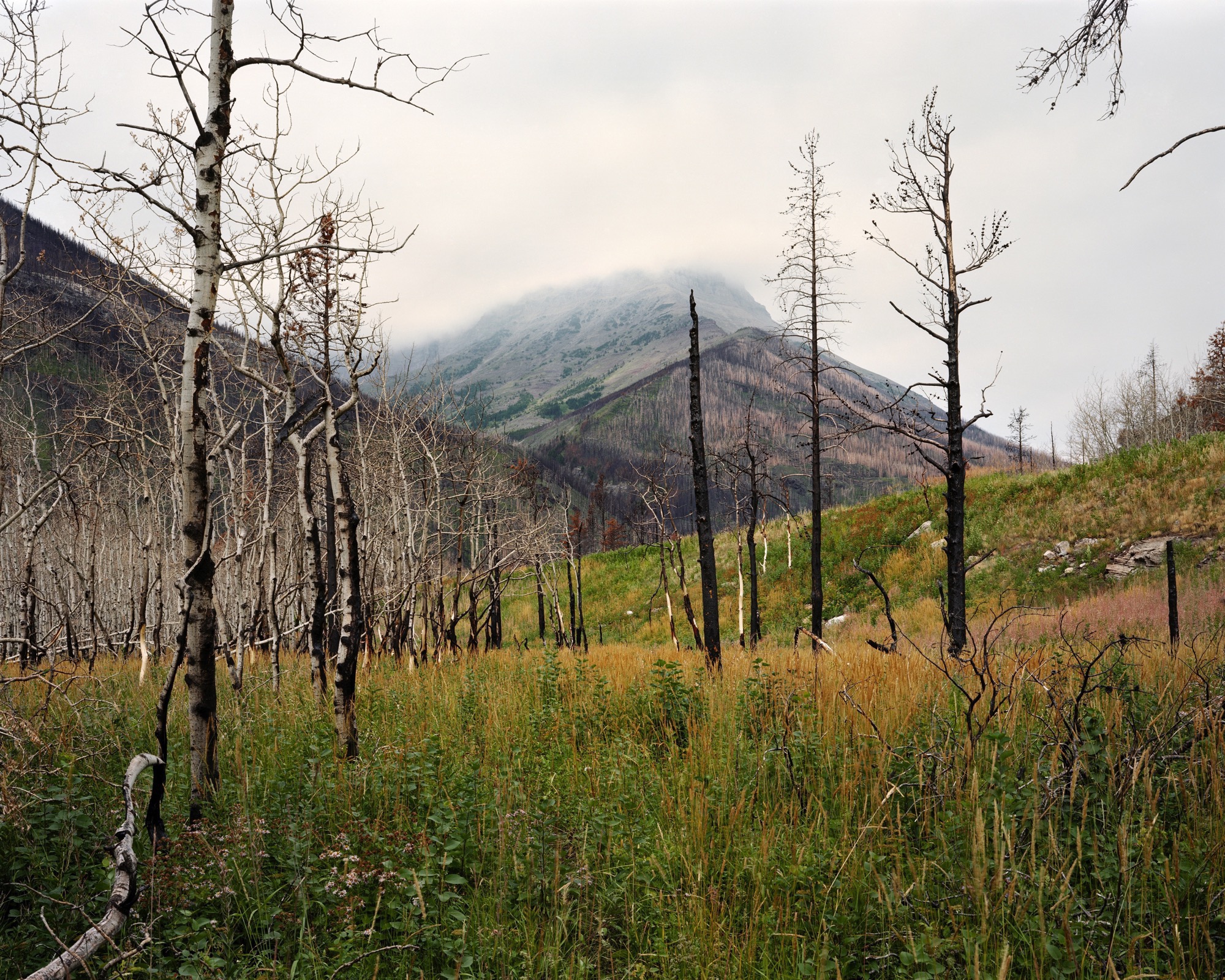
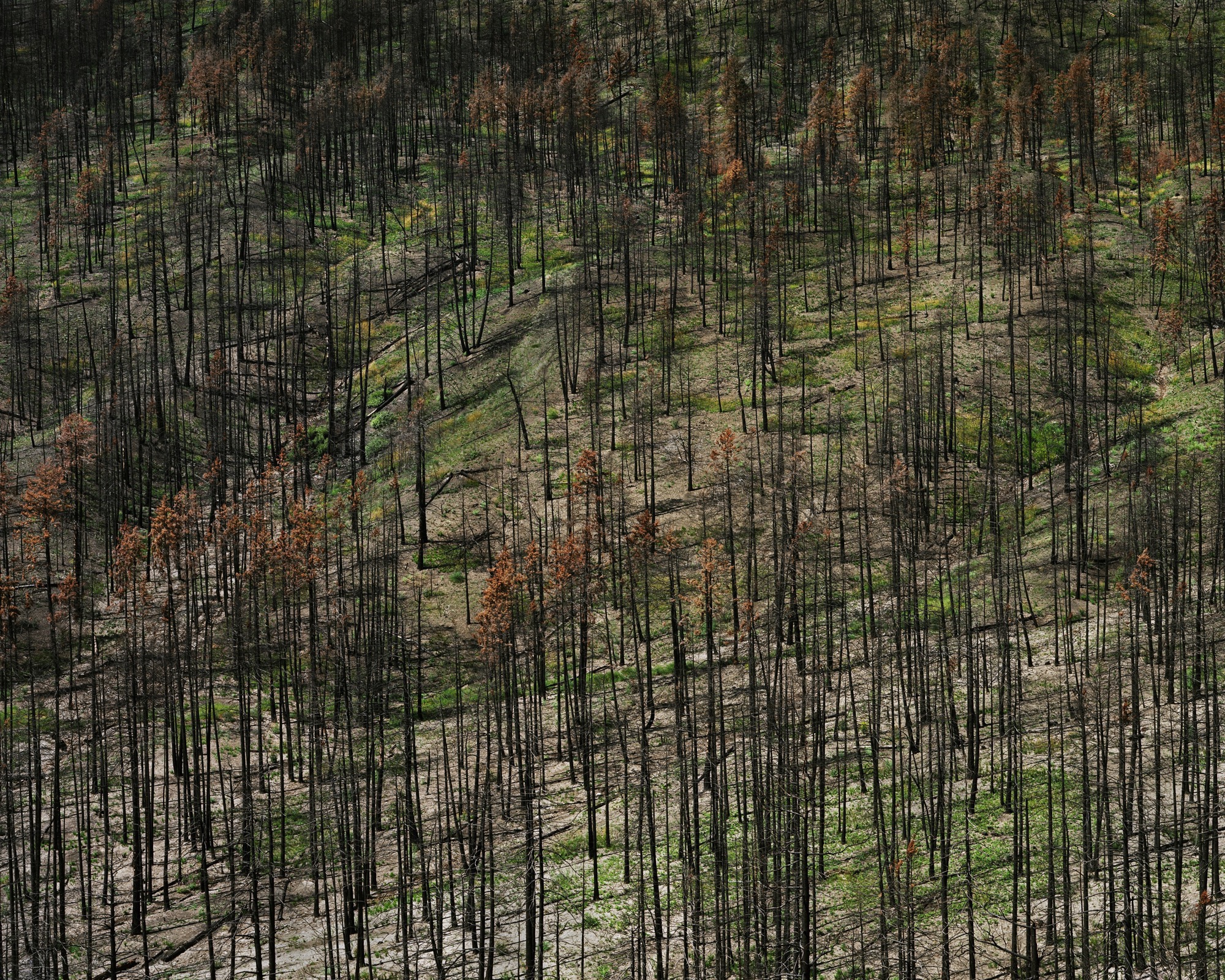
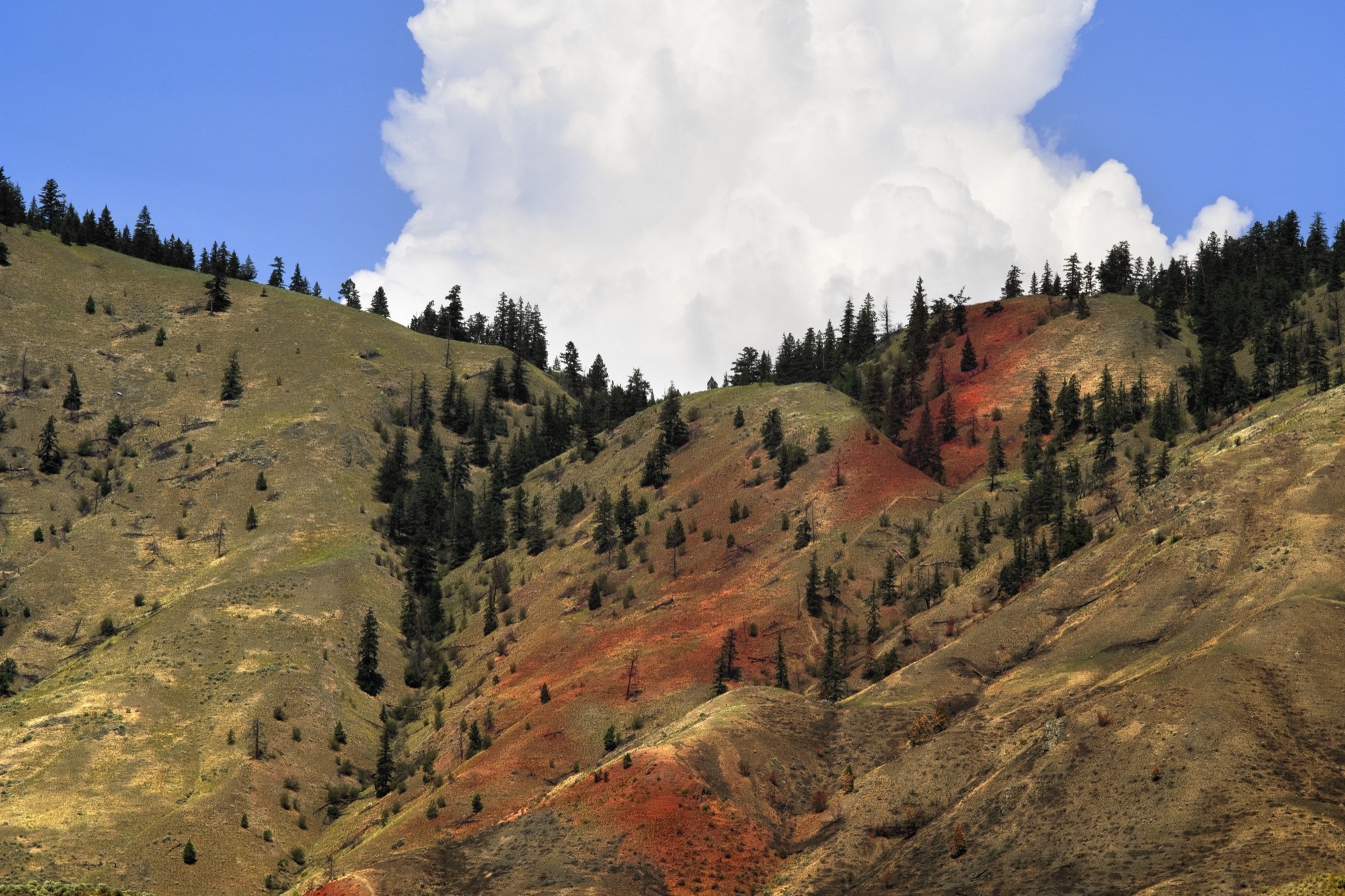
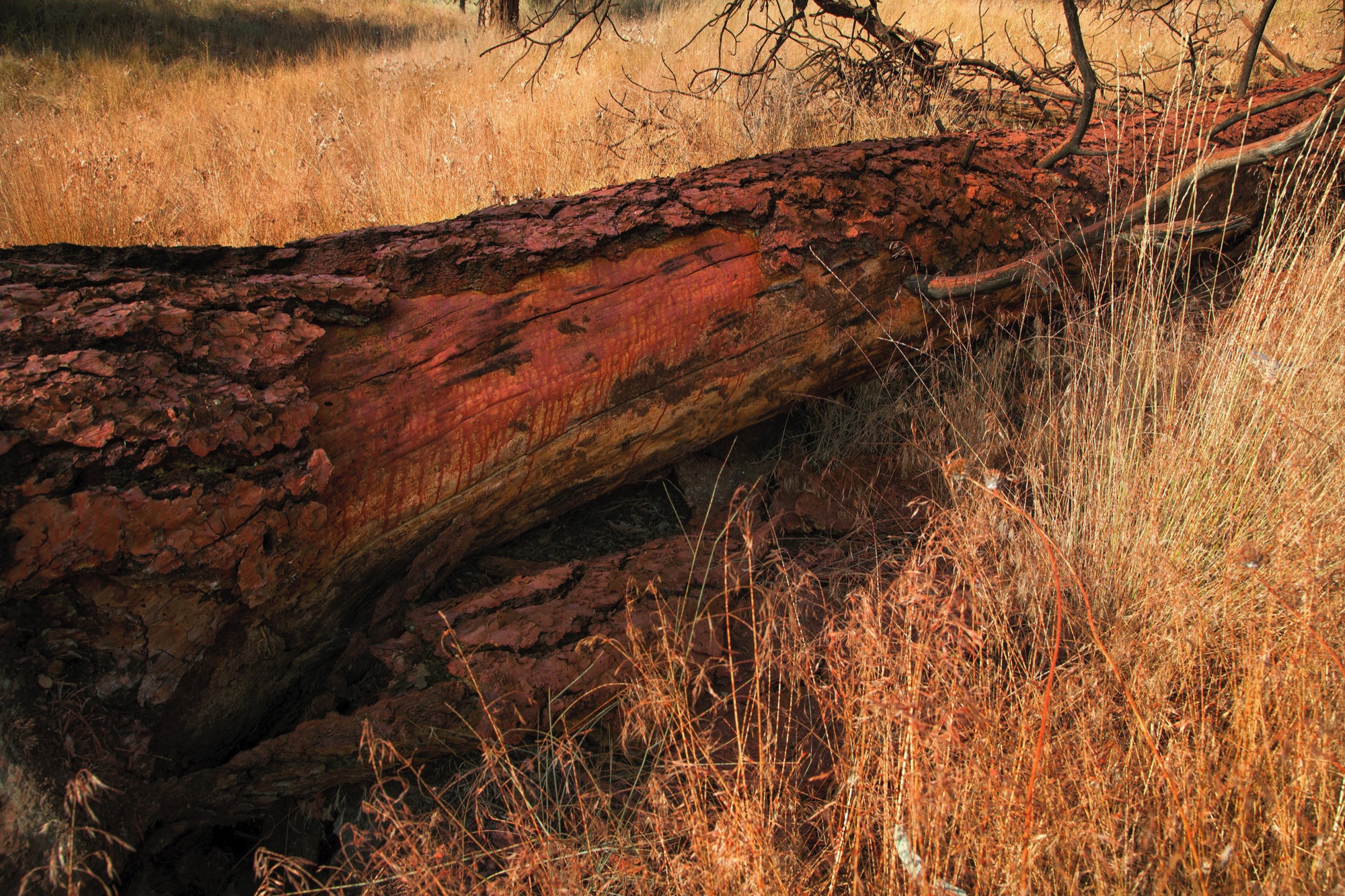
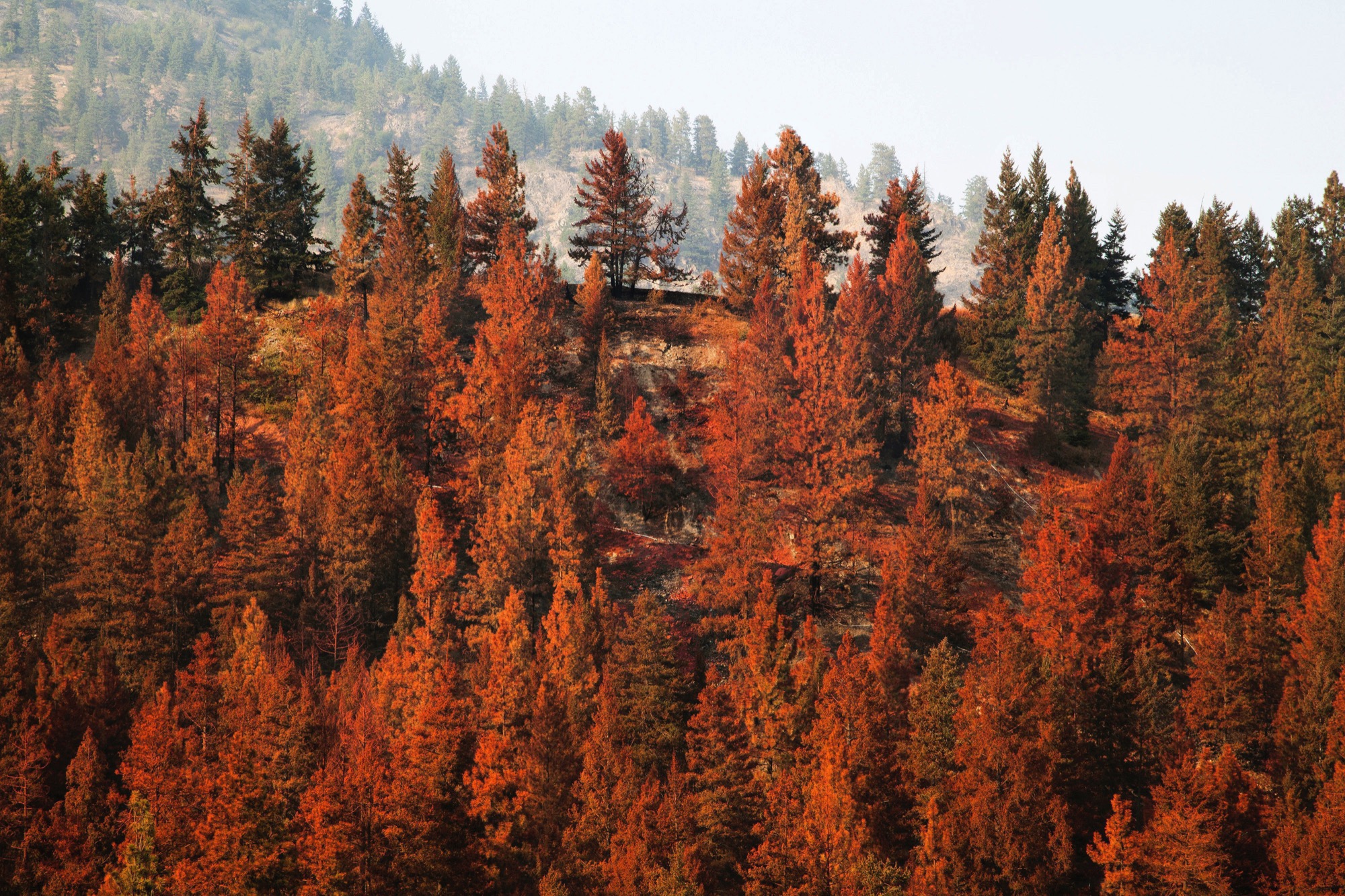
Andreas Rutkauskas, Crandell Mountain Campground, Waterton Lakes National Park (fire occurred in 2017), 2018
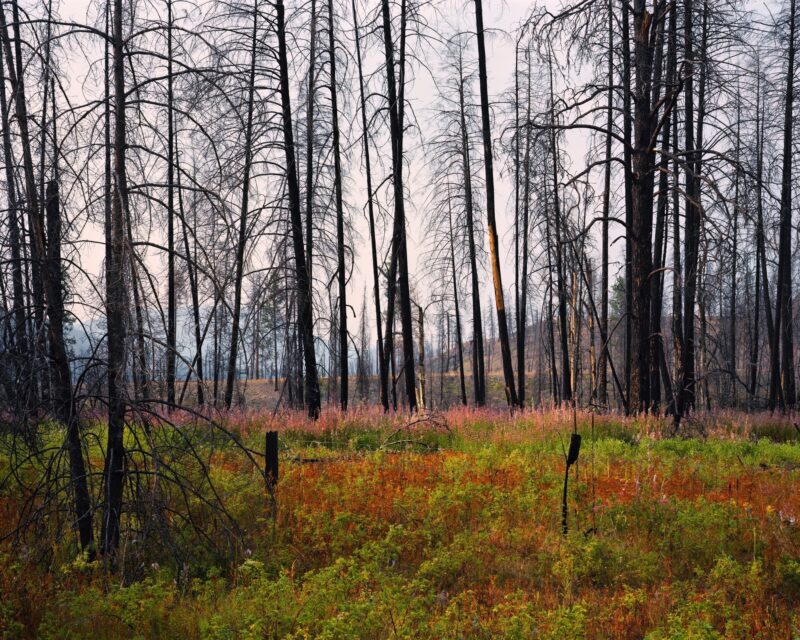
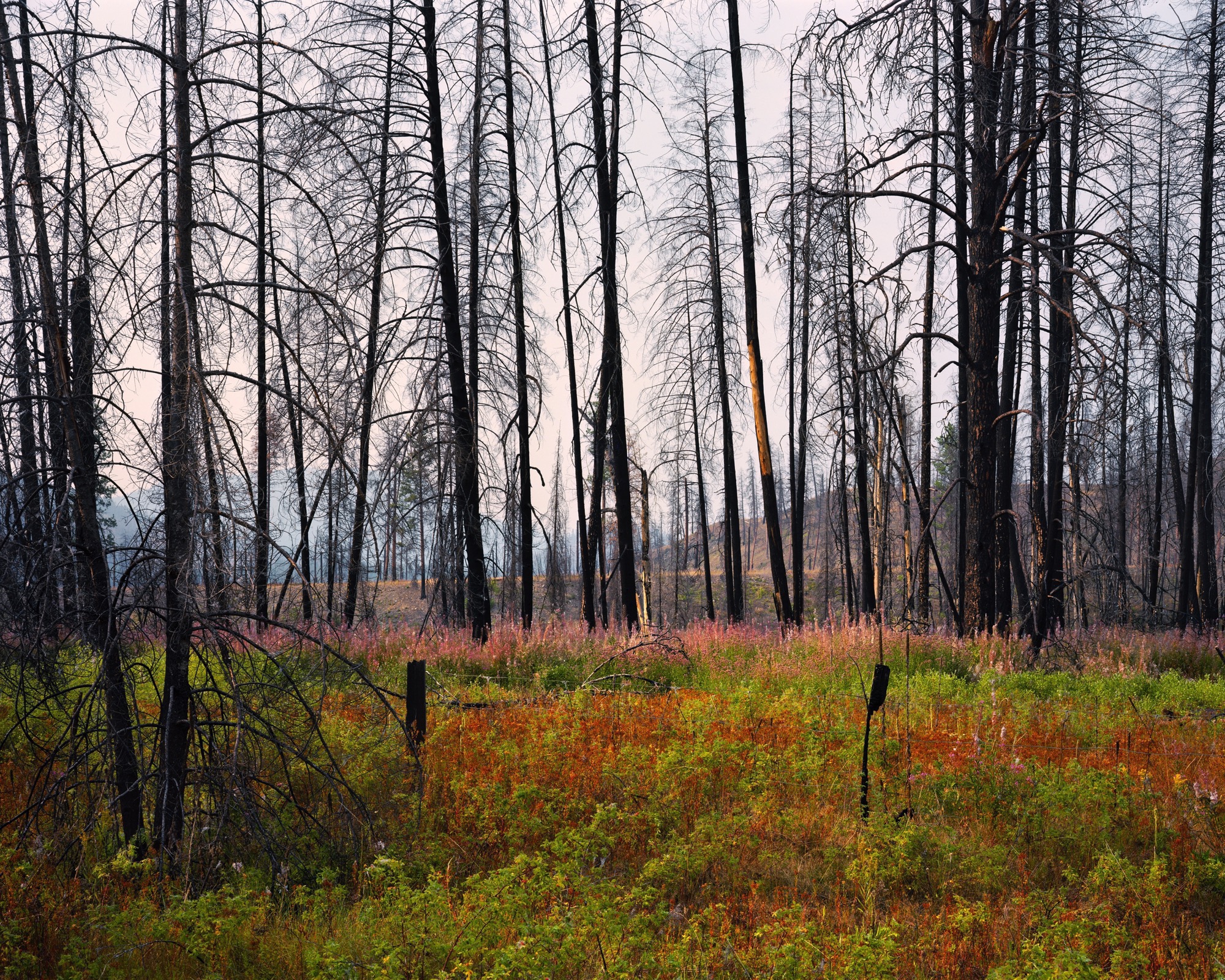
Andreas Rutkauskas, Kettle River Recreation Area (fire occurred in 2015), 2018
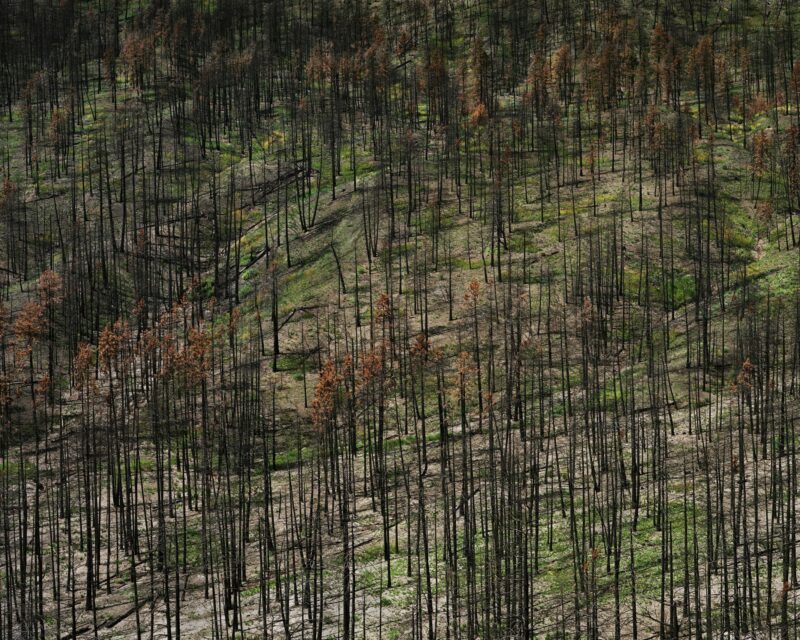
Andreas Rutkauskas, Elephant Hill Wildfire, Ashcroft, British Columbia (fire occurred in 2017), 2018
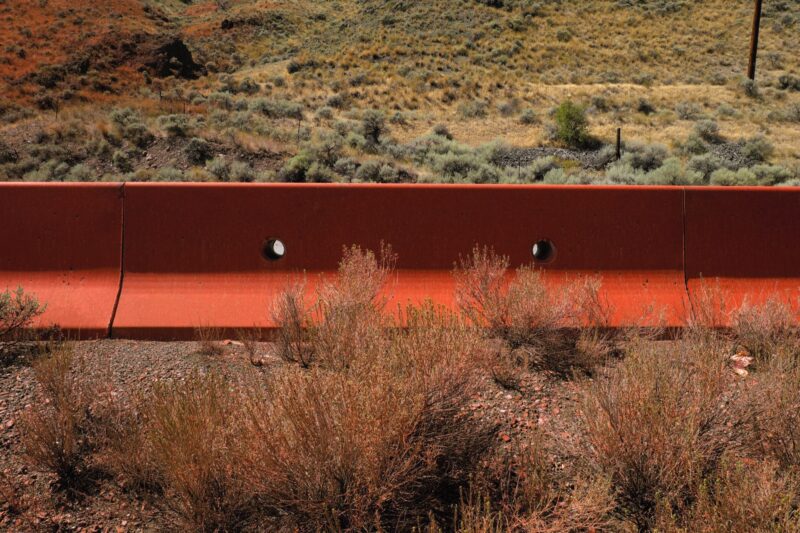
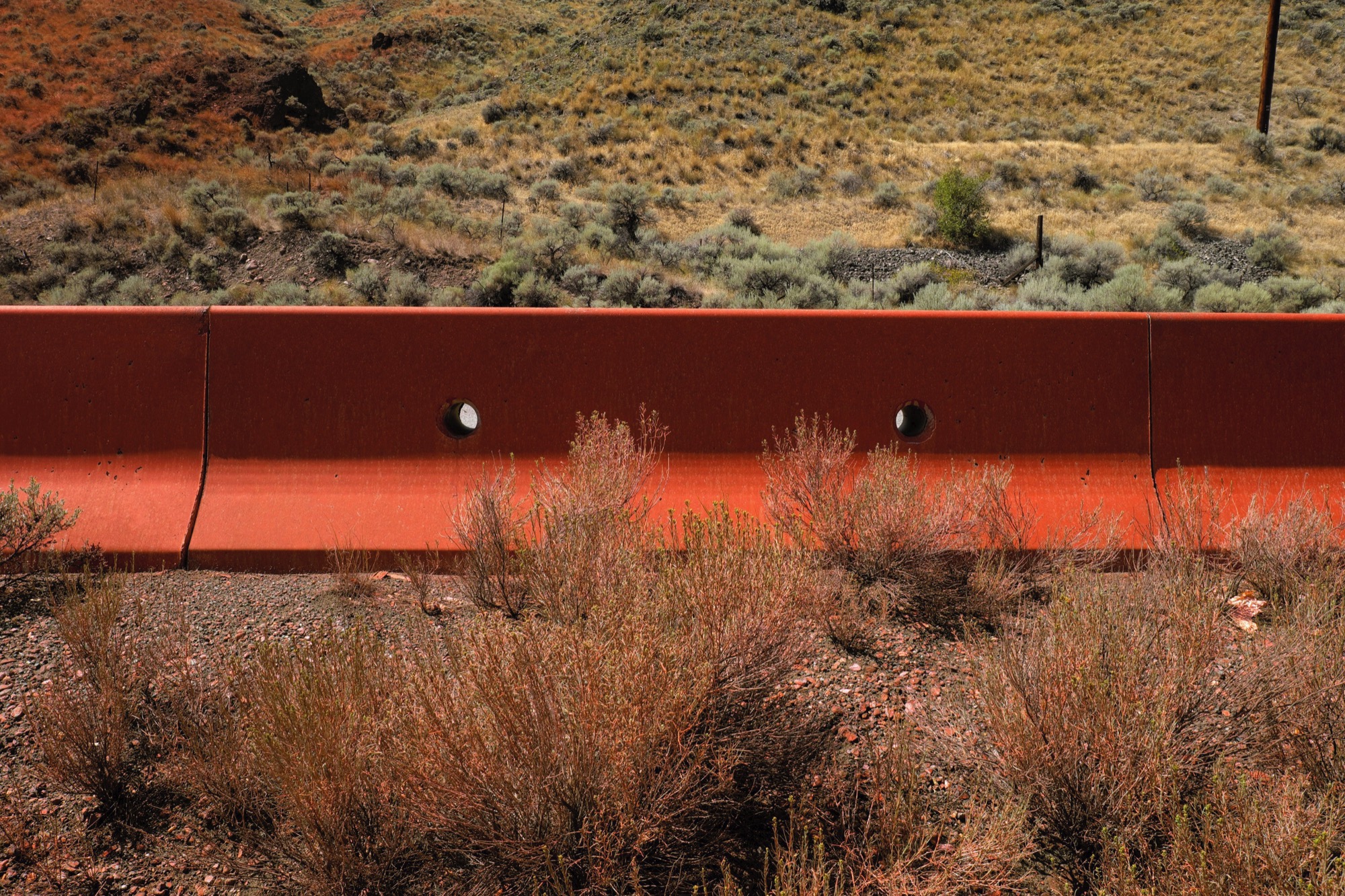
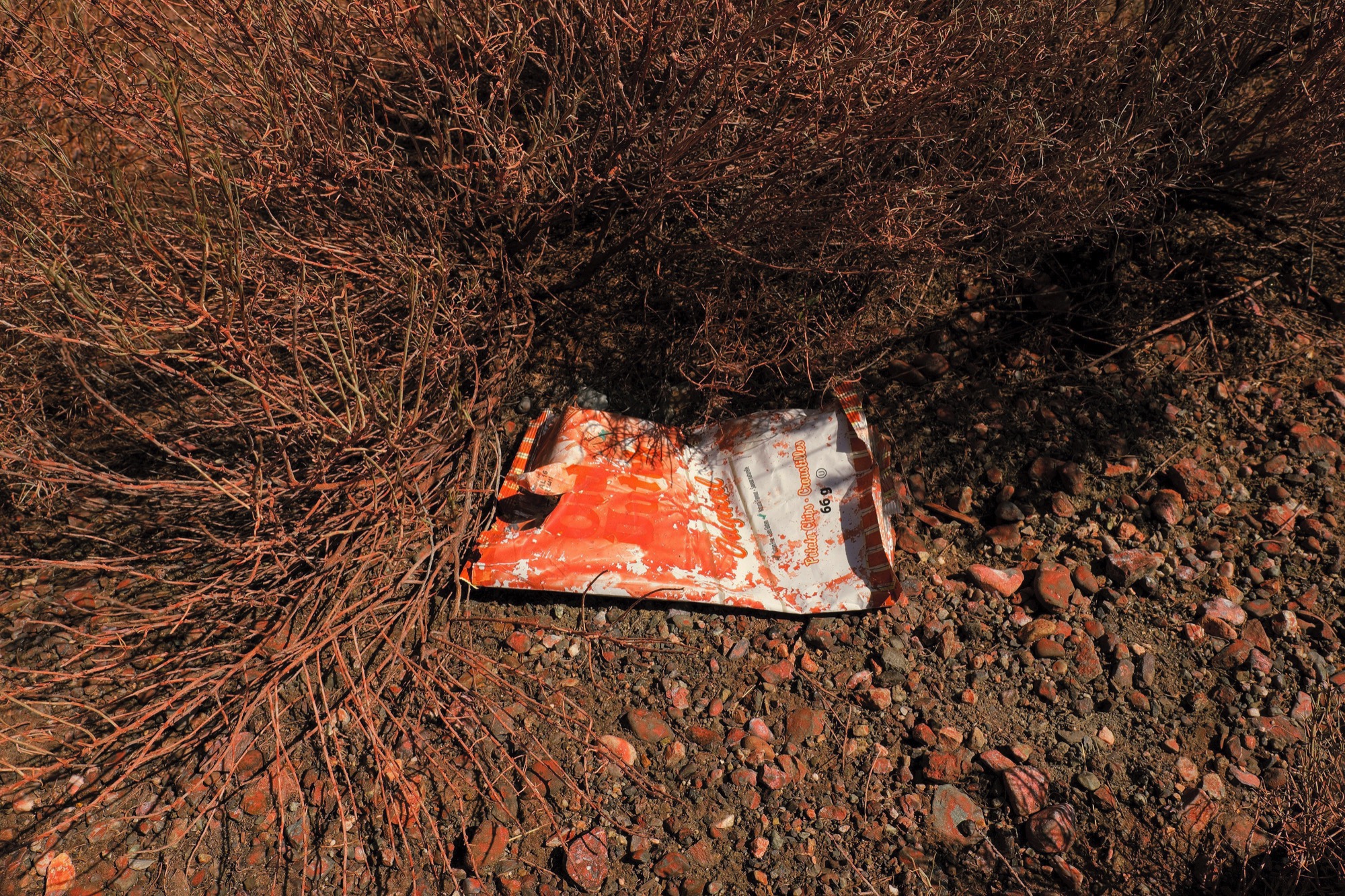
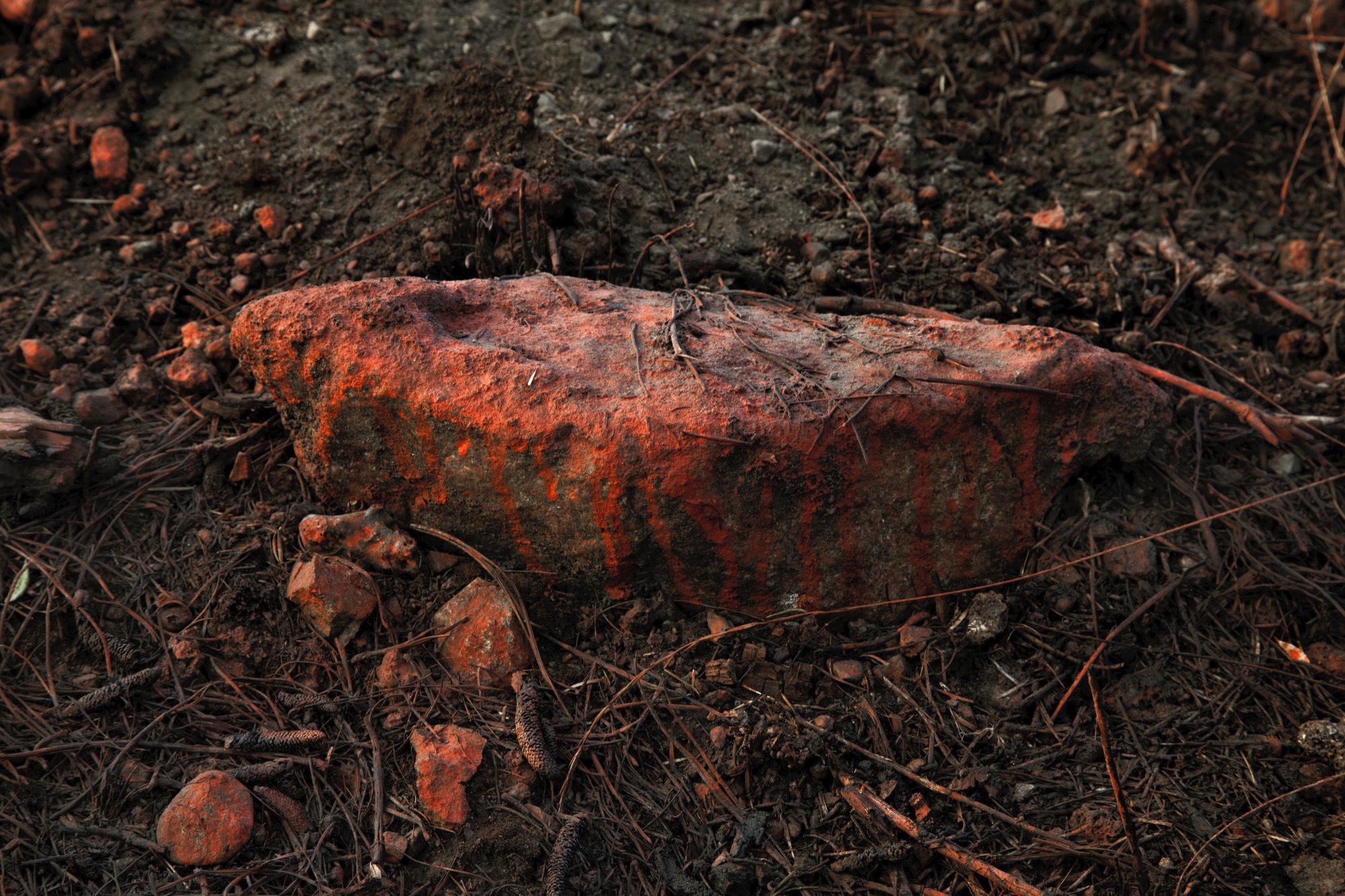
Andreas Rutkauskas, Extraits de / excerpts from Retardant Grid
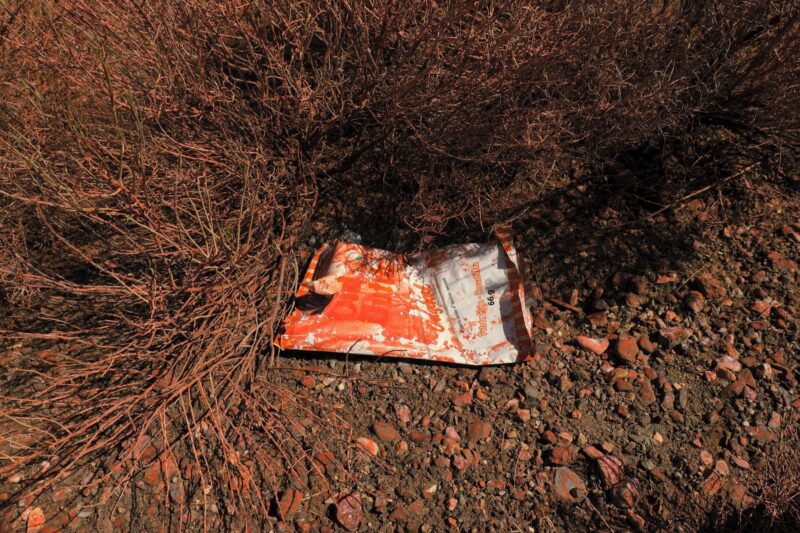
Andreas Rutkauskas, Extraits de / excerpts from Retardant Grid
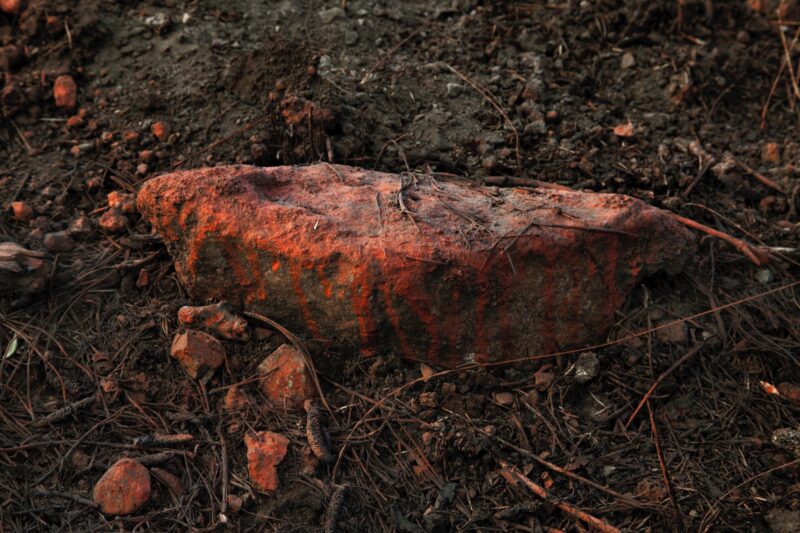
Andreas Rutkauskas, Extraits de / excerpts from Retardant Grid
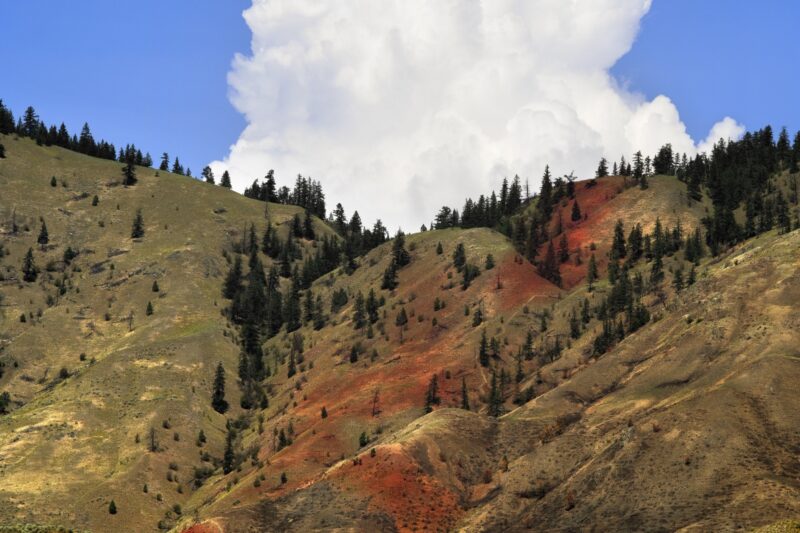
Andreas Rutkauskas, Extraits de / excerpts from Retardant Grid
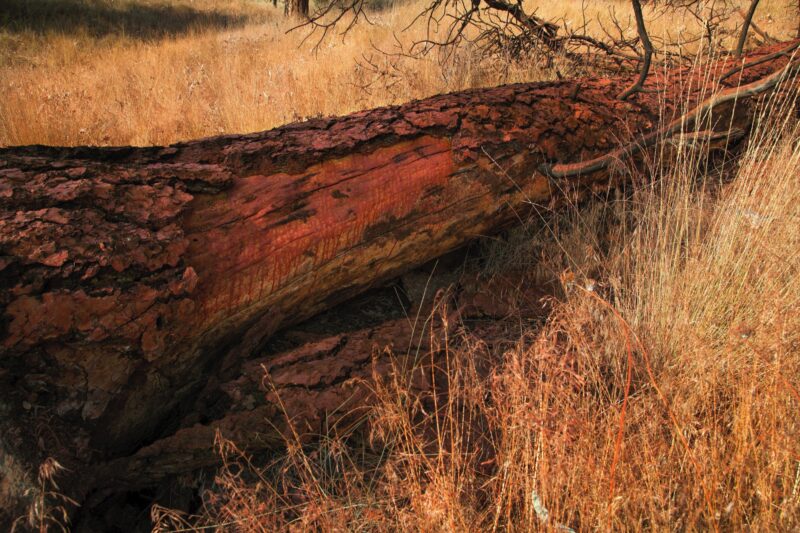
Andreas Rutkauskas, Extraits de / excerpts from Retardant Grid
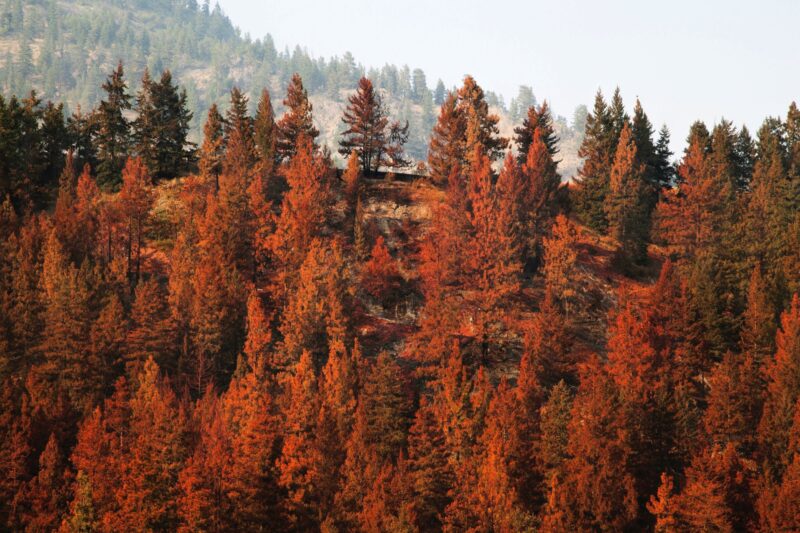
Andreas Rutkauskas, Extraits de / excerpts from Retardant Grid
[Winter 2022]
The Resilience of Landscapes
By Franck Michel
The landscape enwraps,
penetrates, it is not before one as
an object. . . . It is an atmosphere, a
sensory halo, and not simply a
visual through-line.
– DAVID LE BRETON
The history of landscape photography offers an incomparable source of information on the evolution of territories and the human influence over them. Photographers walk in the footsteps of these transformations. From nineteenth-century explorations of wild lands to engaged documentation of Anthropocene environmental upheavals, they provide us with valuable and indispensable evidence. Advocating a phenomenological approach to the world, Andreas Rutkauskas contributes to this vast photographic encyclopedia of landscapes in transformation. For the past fifteen years, his projects have dwelt on the consequences of the exploitation of natural resources and on the strategies and technologies deployed by human beings to control their environment. Although he has a firm environmentalist orientation, his approach never protests or provokes, and it is not at all sensationalist. He stands astride the line between engaged practice and the walking photographer’s exploration of landscape experience. The strength of his work resides in this subtle balance.
Following his photographic survey of the porosity of the Canada–United States border,1 since 2017 he has been interested in the reactions and regeneration of forest ecosystems following forest fires in the Canadian West. The resulting project, After the Fire, was presented at the Grantham Foundation in Quebec.2 It is inscribed within a broad-reaching interdisciplinary scientific research study, Living with Wildfire, headed by the University of British Columbia,3 the objective which is to expand knowledge about the role and consequences of forest fires and to raise public awareness of their importance in the succession of ecosystems. Certainly, forest fires can be terribly destructive, and the effects of climate change exacerbate the risk further. In 2017 and 2018, British Columbia suffered the worst fire seasons in its history, with more than 2.5 million hectares destroyed by 3,470 fires. “In this region [the Okanagan],” Rutkauskas explains, “fire has been used for millennia to manage the forests, but for the last century we’ve had this preoccupation with fire suppression rather than fire management. The result is dense forests with high fuel loads in areas, and when fire hits that forest it can grow into a large-scale wildfire quickly.” Fire has many positive effects on ecosystems, for both plant and animal species. The jack pine is an eloquent example: its “cones are enveloped in a waxy substance that releases seeds when melted by fire, an adaptation that exploits post-fire growing conditions.”
Through his artistic approach, Rutkauskas wants to help change perceptions and improve comprehension of the regenerative role of forest fires. In recent years, many landscape photographers have looked at the dramatic effects of overexploitation of natural resources and climate change: desertification, clear-cutting, oil and natural gas extraction, mining, melting glaciers, and so on. Surprisingly few of them have evinced an interest in forest fires. Rutkauskas’s work is thus more pertinent and essential than ever. Walking on trails in woods that have been burned in the Okanagan and are now in various stages of regeneration, he strives to patiently document the delicate reawakening of vegetation and its adaptation to its new environment. Not only does he cast an attentive gaze at this ecosystem in transformation, but he immerses himself in it, confronts it. “Looking at the landscape,” writes Gilles A. Tiberghien, “is to slip within it, and deciding to be interested in one or another framing, suspending this movement, is to be aware, as satisfying as the chosen image might be, that it is only temporary.” Rutkauskas’s photographs are such testimonials to this experience of the landscape. They bear its emotional and sensory weight.
Rutkauskas’s choice of using a large-format analogue camera matches perfectly with his desire to make the landscape “come alive”; at the same time, it inscribes his approach within the great tradition of North American landscape photography. As a corollary, the single shot that can be taken at a time with this type of camera enables him to adopt a contemplative posture and renew his acquaintance with the lost slowness of the photographic medium. The result is highly precise images that reveal each detail of the remains of charred vegetation from which emerges, here and there, reawakening nature. The serene ambience that the photographs portray contrasts with the violence of the fires whose traces are still very visible.
As interested in technological innovations as in historical processes, Rutkauskas also uses a digital camera to capture 360-degree images. In the version of the exhibition at the Grantham Foundation, an immersive slide show included ten images taken with this technology at different stages of post-fire regeneration over the seasons. Titled Awful Splendour, the work shows the landscape as three-dimensional starting from a fixed point. Visitors can don virtual reality goggles and dive into these forests, which become almost supernatural after the flames pass, and become one with them for a short time.
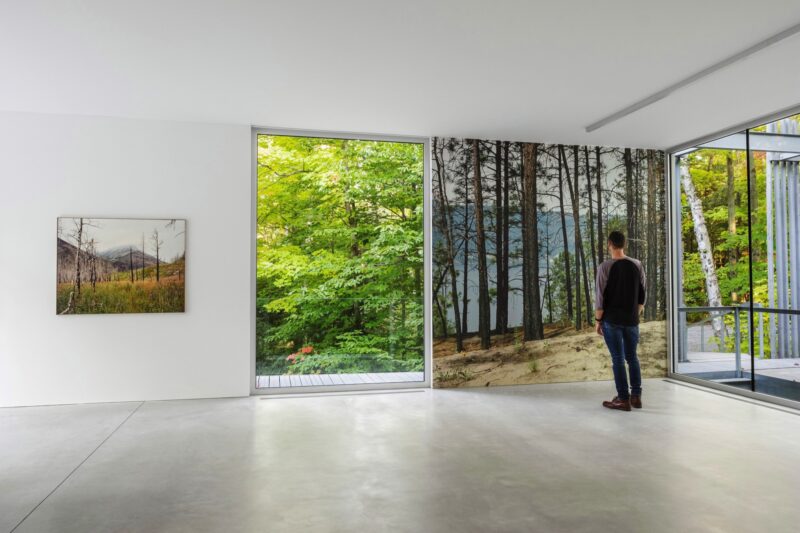
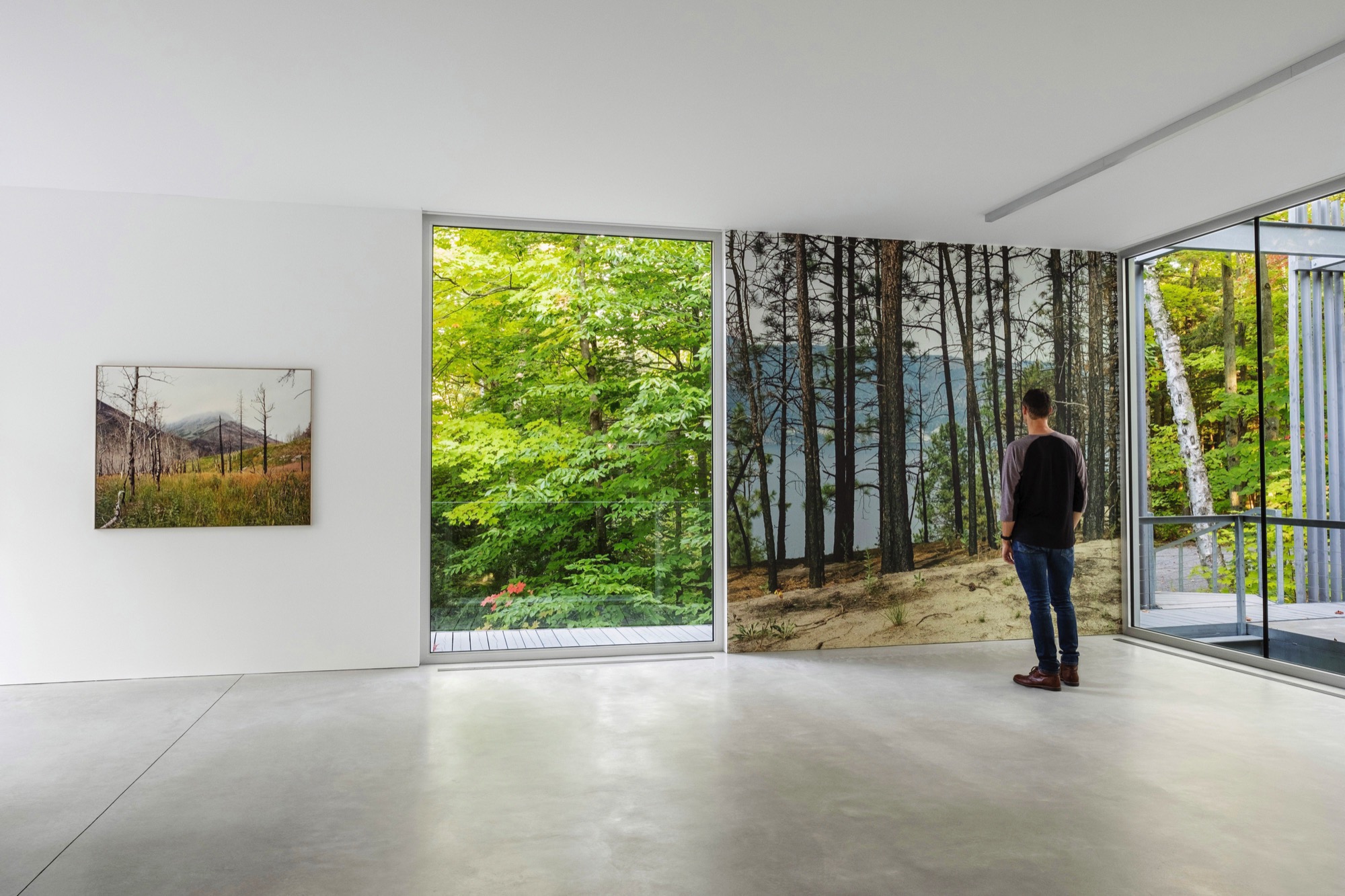
The artist and guest curator Geneviève Chevalier designed the exhibition by playing with the unique architecture of the venue, which is situated in a woodlands. Thoughtfully installed, the photographs, most of them in large format, resonate with the imposing visual openings in the glass pavilion on stilts. The forest ecosystem of the Canadian West therefore comes into dialogue with that of Eastern Canada, the charred trees with the lush vegetation surrounding the building. This confrontation between represented and real landscapes encourages us to reflect on the precarious situation of the forest ecosystem. Inevitably, we are surprised to find ourselves hoping that the immense stretches of burned land photographed by Rutkauskas can come alive once again – as alive as the forest that surrounds us.
Although they illustrate, above all, the magnificent resilience of nature, these images, whether printed or projected, provoke a certain uneasiness. Forest fires such as those in British Columbia are the consequences of our negligence. It is undeniable. And Rutkauskas forces us to admit it. Translated by Käthe Roth.
2 The result of a 2020 residency at the Grantham Foundation and produced under the aegis of guest curator Geneviève Chevalier, the exhibition Refuge: après l’incendie/After the Fire was presented from September 26 to November 28, 2021. It brought together a group of a dozen printed photographs, an immersive work, a video piece, and an audio excerpt of a meeting with the naturalist Michel Durand-Nolette.
3 For more information on Living with Wildfire, see https://news.ok.ubc.ca/2021/09/10/living-with-wildfire/.
4 “Living with Wild Fire,” UBC Okanagan News, September 2021, https://news.ok.ubc.ca/2021/09/10/living-with-wildfire/.
5 On this subject, see the fascinating essay by scientist Mathieu Bourbonnais, “Fire Ecology – A Primer,” Les Cahiers de la Fondation, Cahier 02 (Grantham Foundation, 2021), 42–45, https://e-artexte.ca/id/eprint/33188/1/CAHIER_02.pdf.
6 Bourbonnais, “Fire Ecology,” 43–44.
7 See, however, Paolo Pellegrin’s disturbing project, produced for Magnum, on the forest fires in Australia in 2020.
8 Gilles A. Tiberghien, Le paysage est une traversée (Paris: Parenthèses, 2020), 9 (our translation).
Franck Michel lives in Rimouski. In his thirty years working in the visual arts field, he has curated more than fifteen exhibitions, been the editor of several publications, and written numerous essays, most of them around representation of the landscape in contemporary photography and landscape as sensory experience. As a cultural manager, he has directed several organizations, including the Musée régional de Rimouski and Culture Montérégie.
Born in Manitoba and living in British Columbia, Andreas Rutkauskas works in photography and video, focusing on landscapes that have undergone changes due to a range of technologies, such as those under surveillance along the Canada–U.S. border. He was the inaugural recipient of a residency with the Fondation Grantham pour l’art et l’environnement in 2020. In 2018, he was a Research Fellow with the Canadian Photography Institute, and he was a finalist for the Gabriele Basilico Prize in Architecture and Landscape Photography in 2016. www.andreasrutkauskas.com