
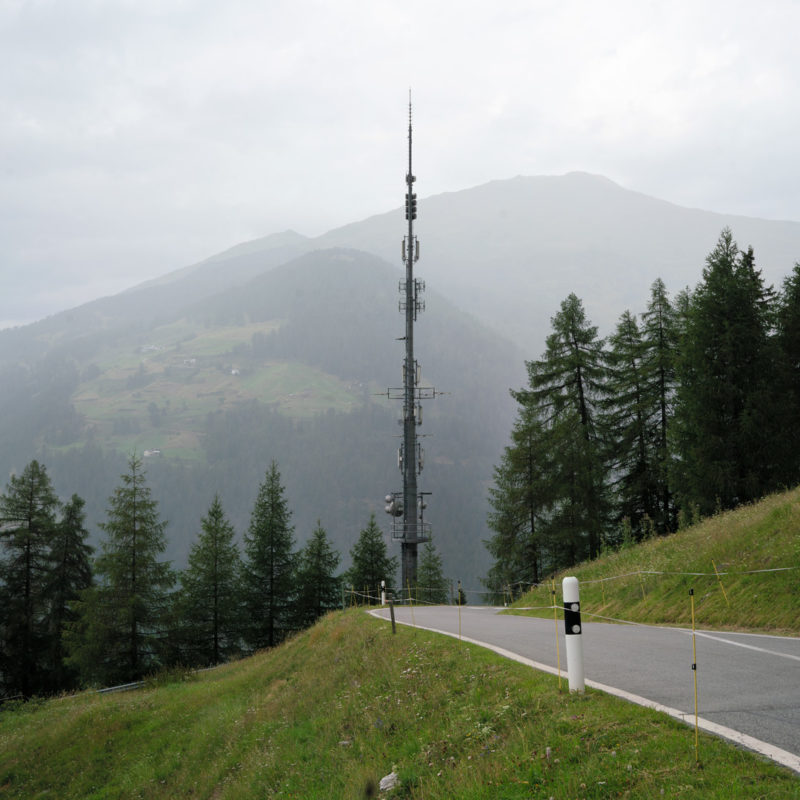
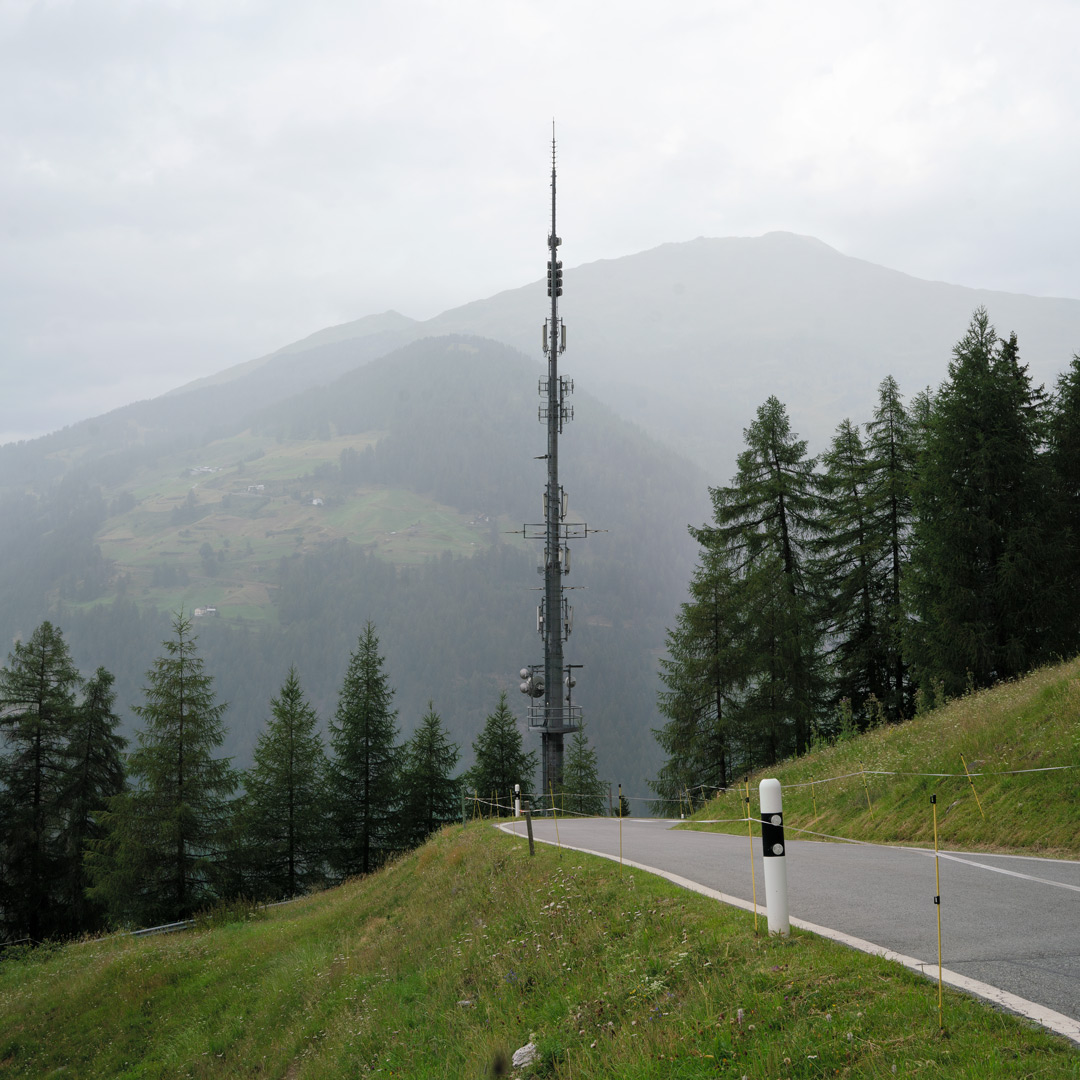
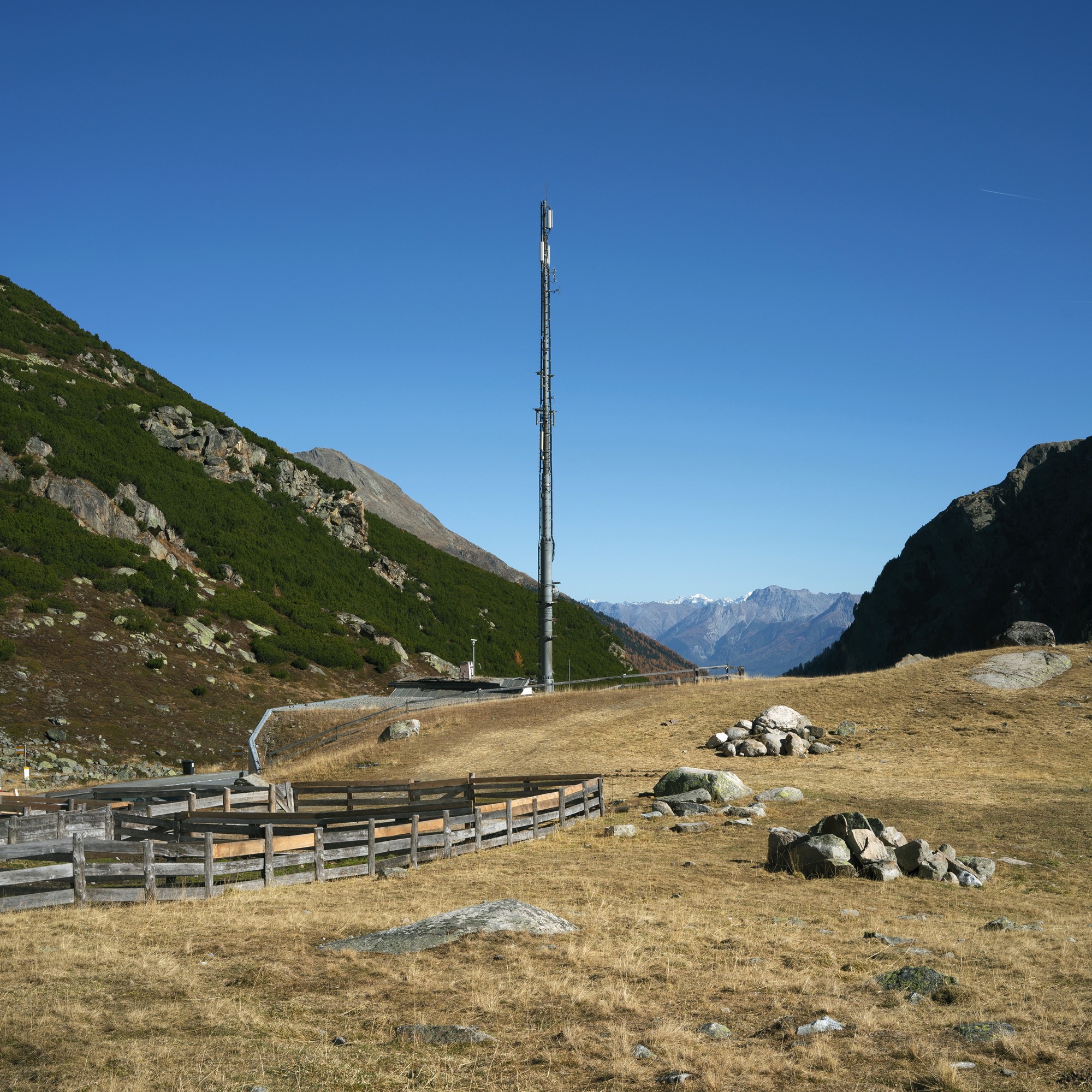
Thomas Kneubühler, Alpine Signals (Santa Maria), 2021
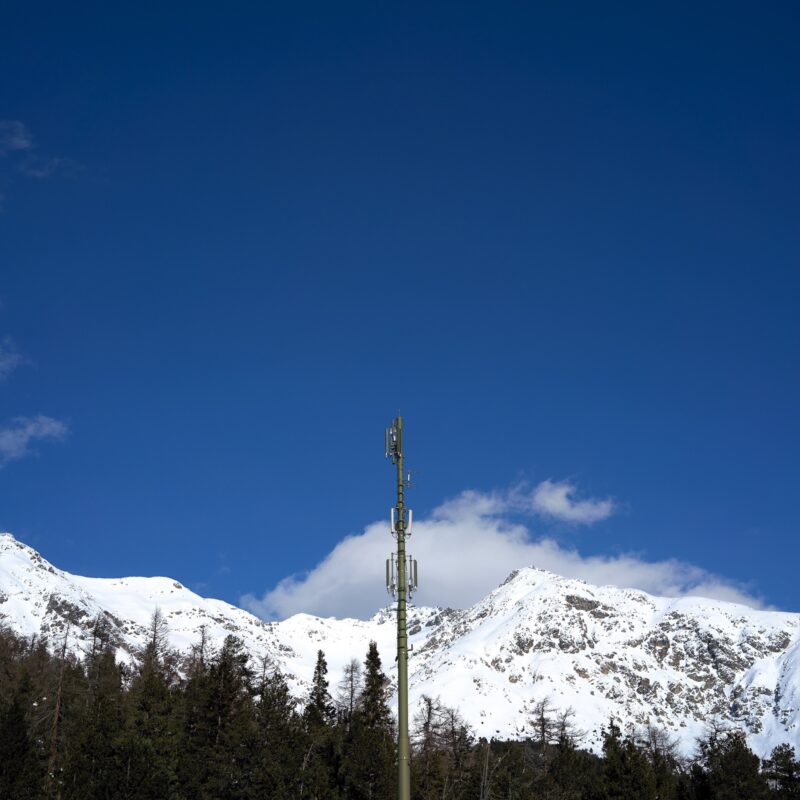
Thomas Kneubühle, Alpine Signals (Ova Spin)
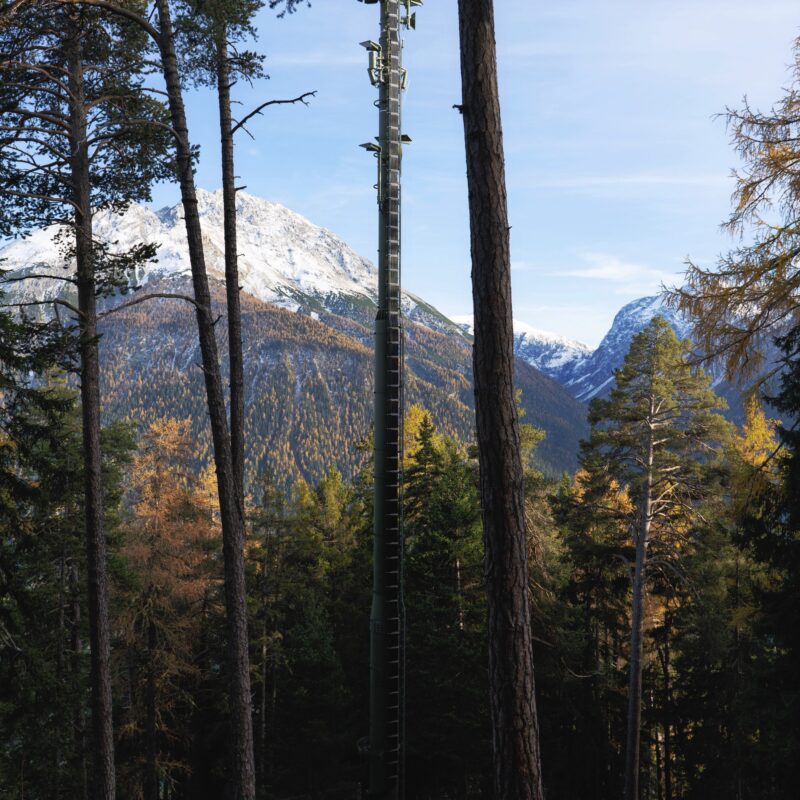
Thomas Kneubühle, Alpine Signals (God dal Vinadi), 2021
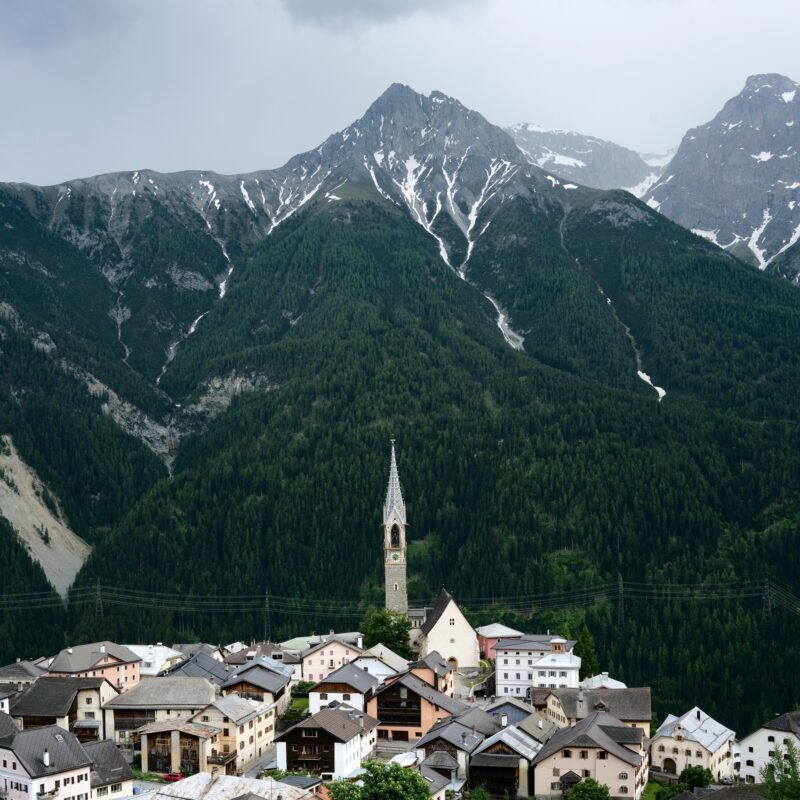
Thomas Kneubühle, Alpine Signals (Sent)
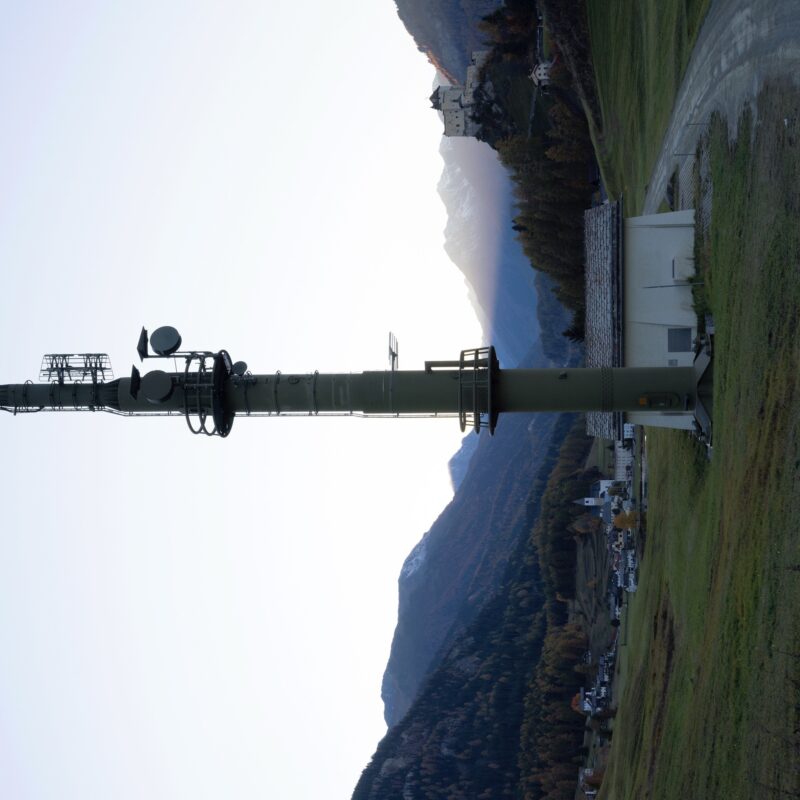
Thomas Kneubühle, Alpine Signals (Tarasp), 2021
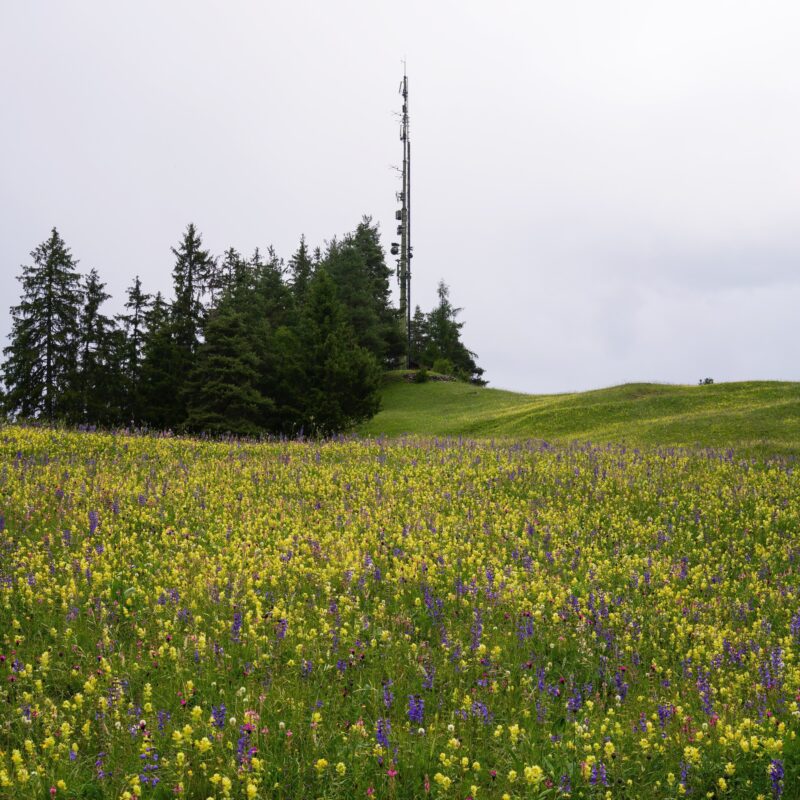
Thomas Kneubühle, Alpine Signals (San Niclà),
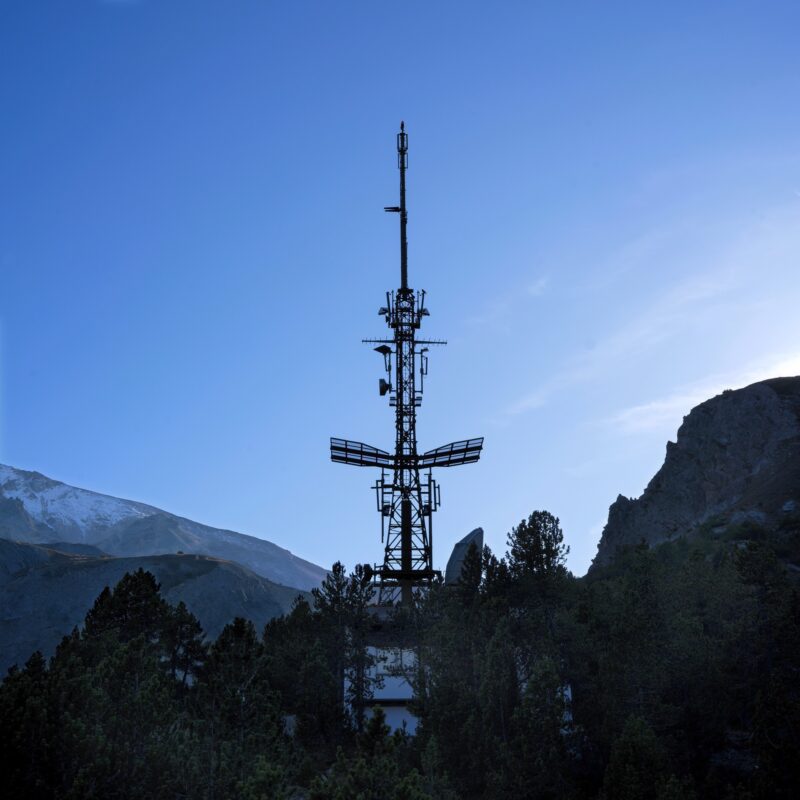
Thomas Kneubühle, Alpine Signals (Pass dal Fuorn)
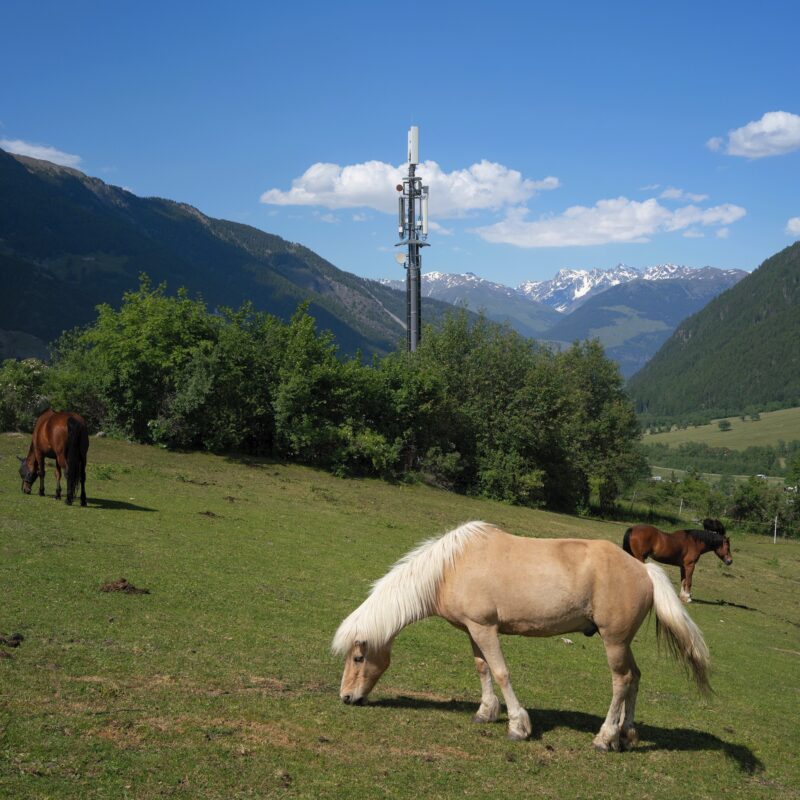
Thomas Kneubühle, Alpine Signals (Müstair)
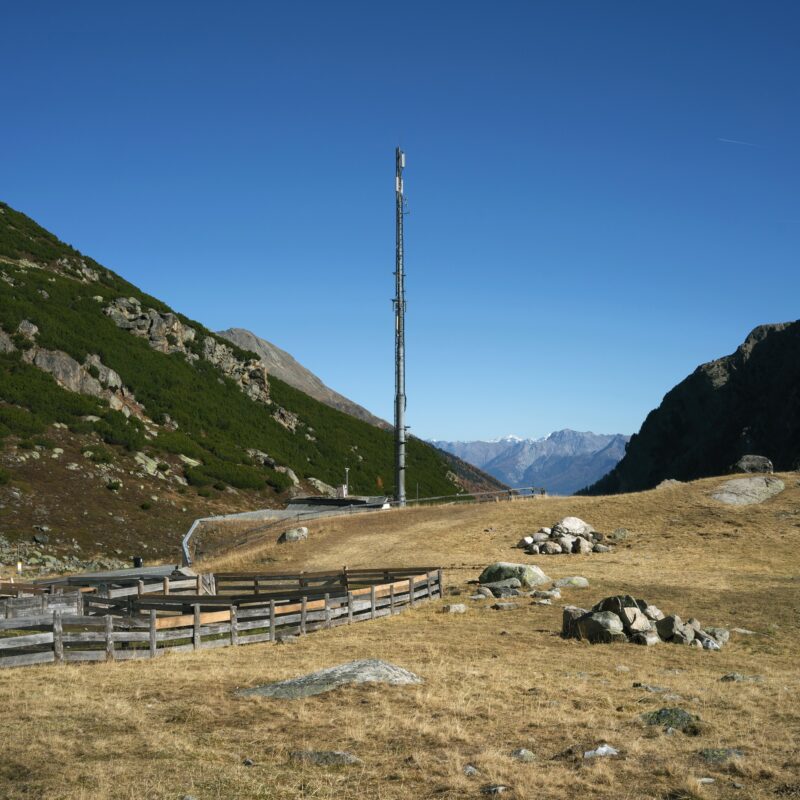
Thomas Kneubühle, Alpine Signals (Chant Sura)
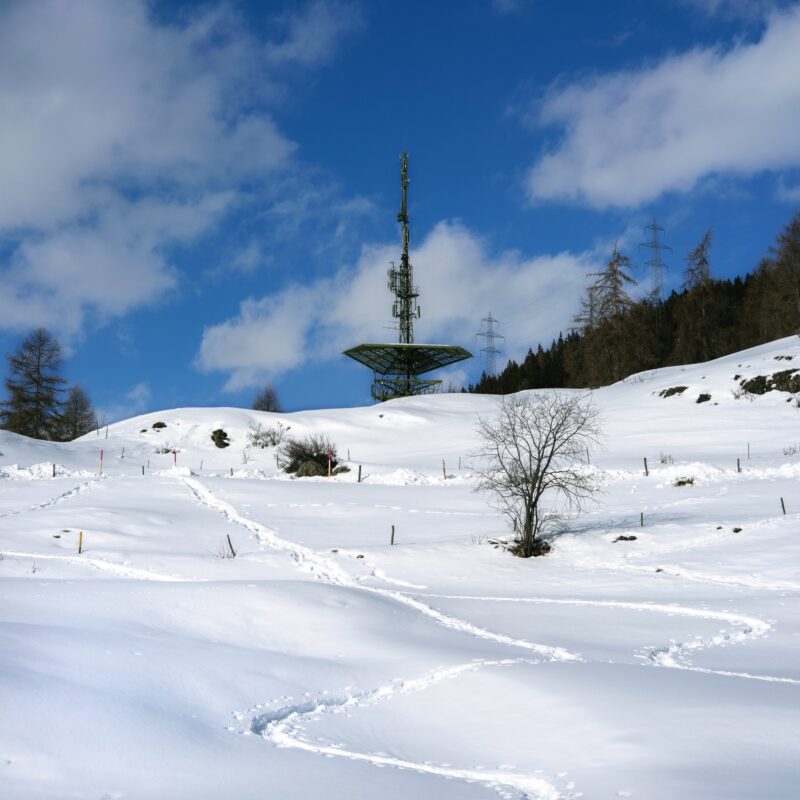
Thomas Kneubühle, Alpine Signals (Zernez), 2021

Thomas Kneubühle
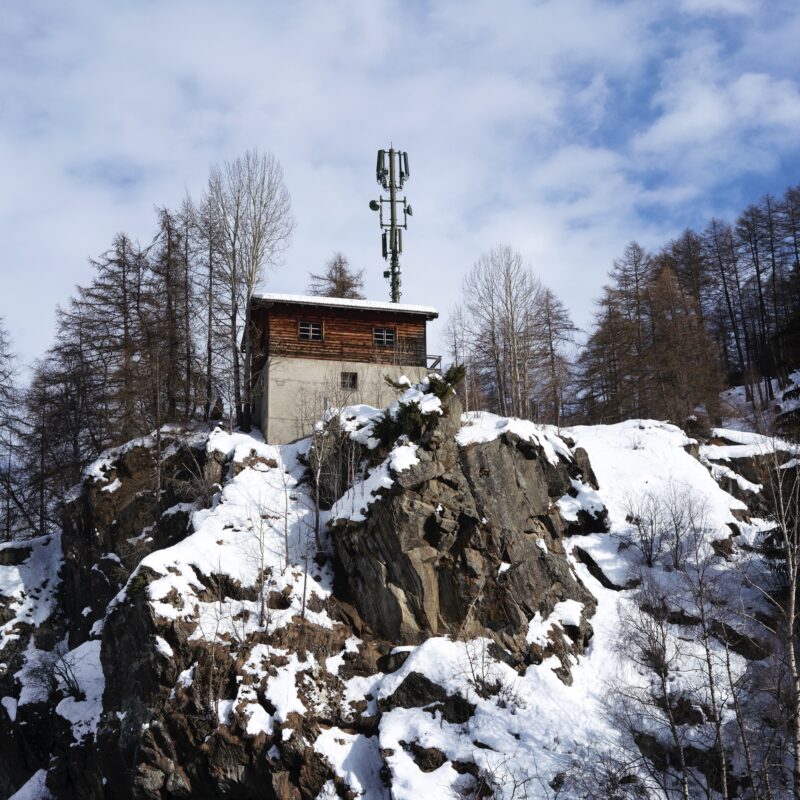
Thomas Kneubühle, Alpine Signals (Susch), 2021
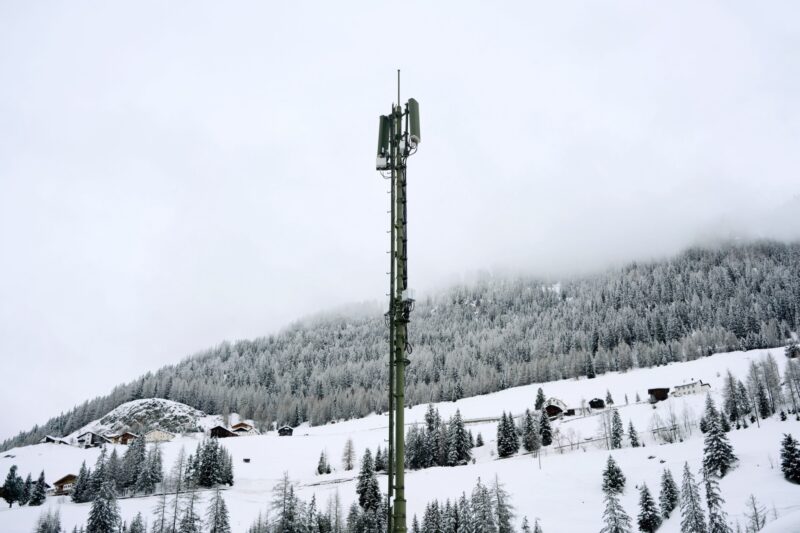
Thomas Kneubühle, Alpine Signals (Acla da Fans), 2021
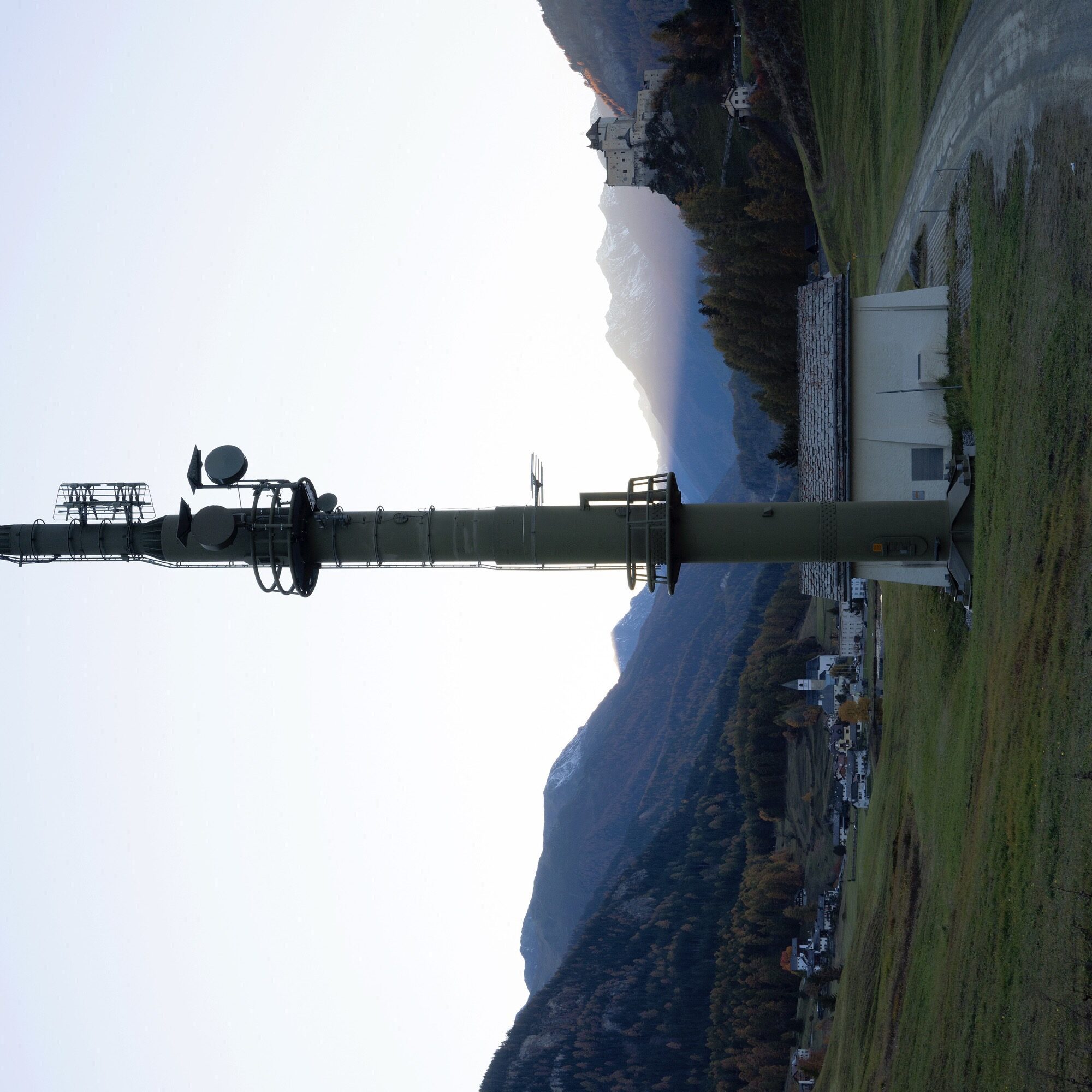
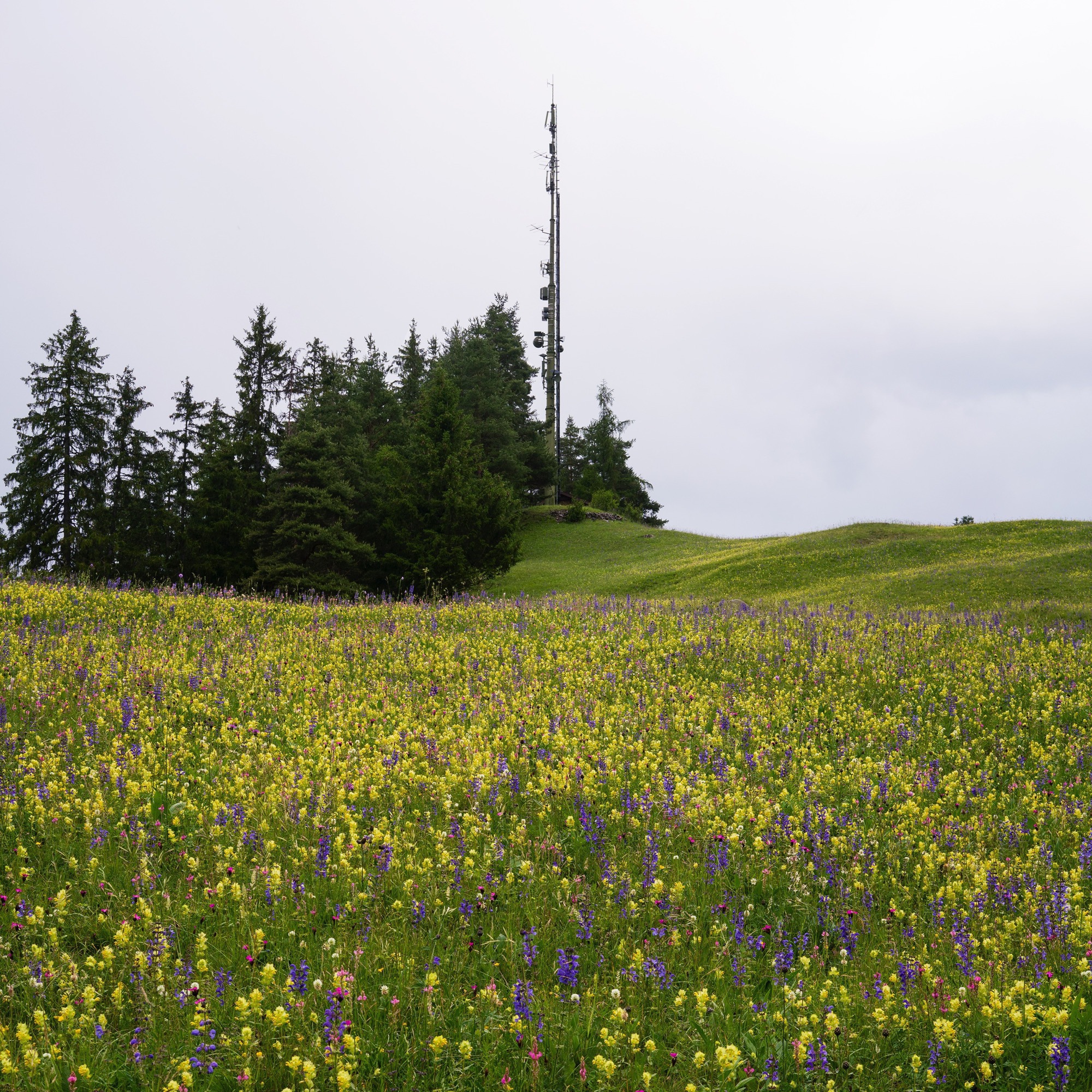
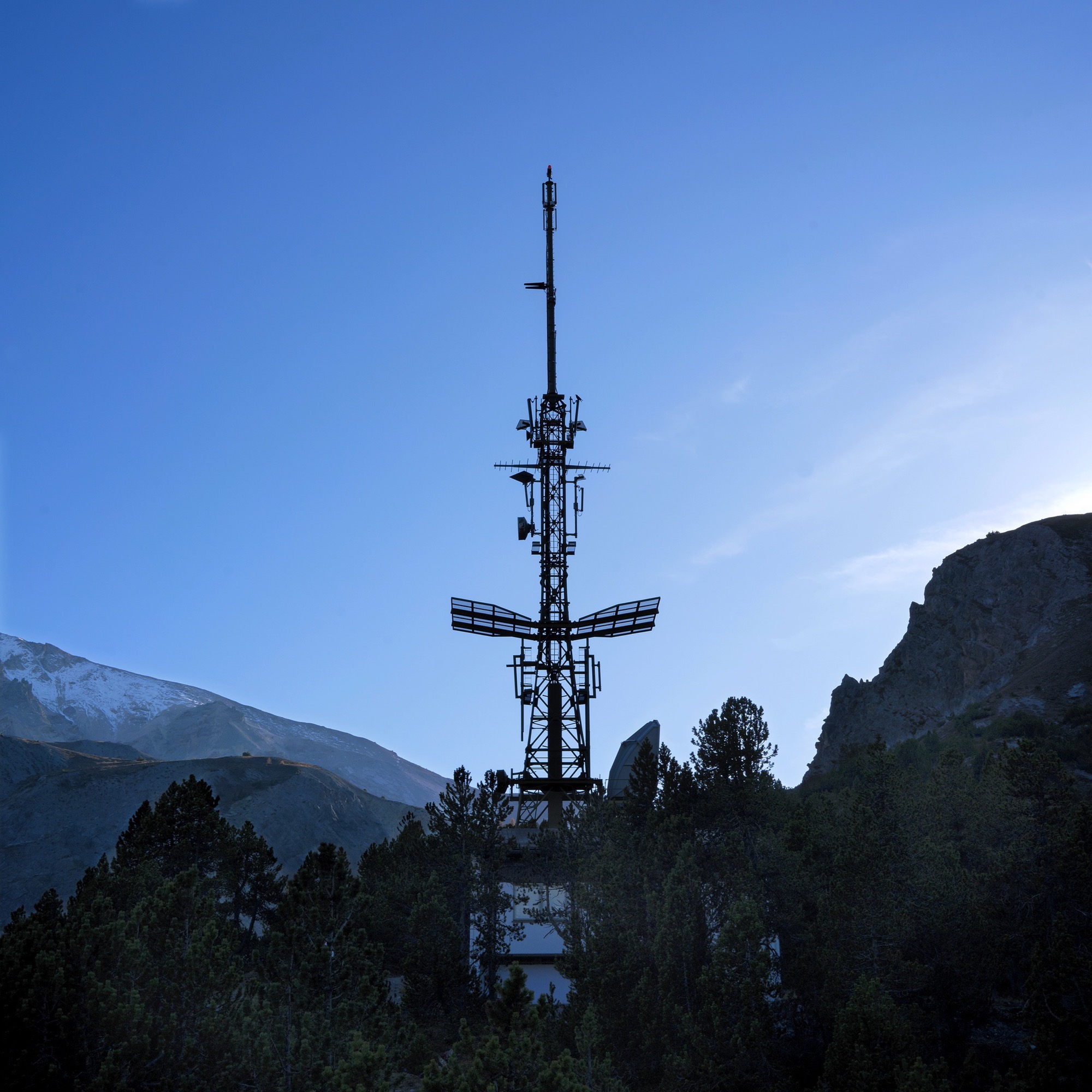
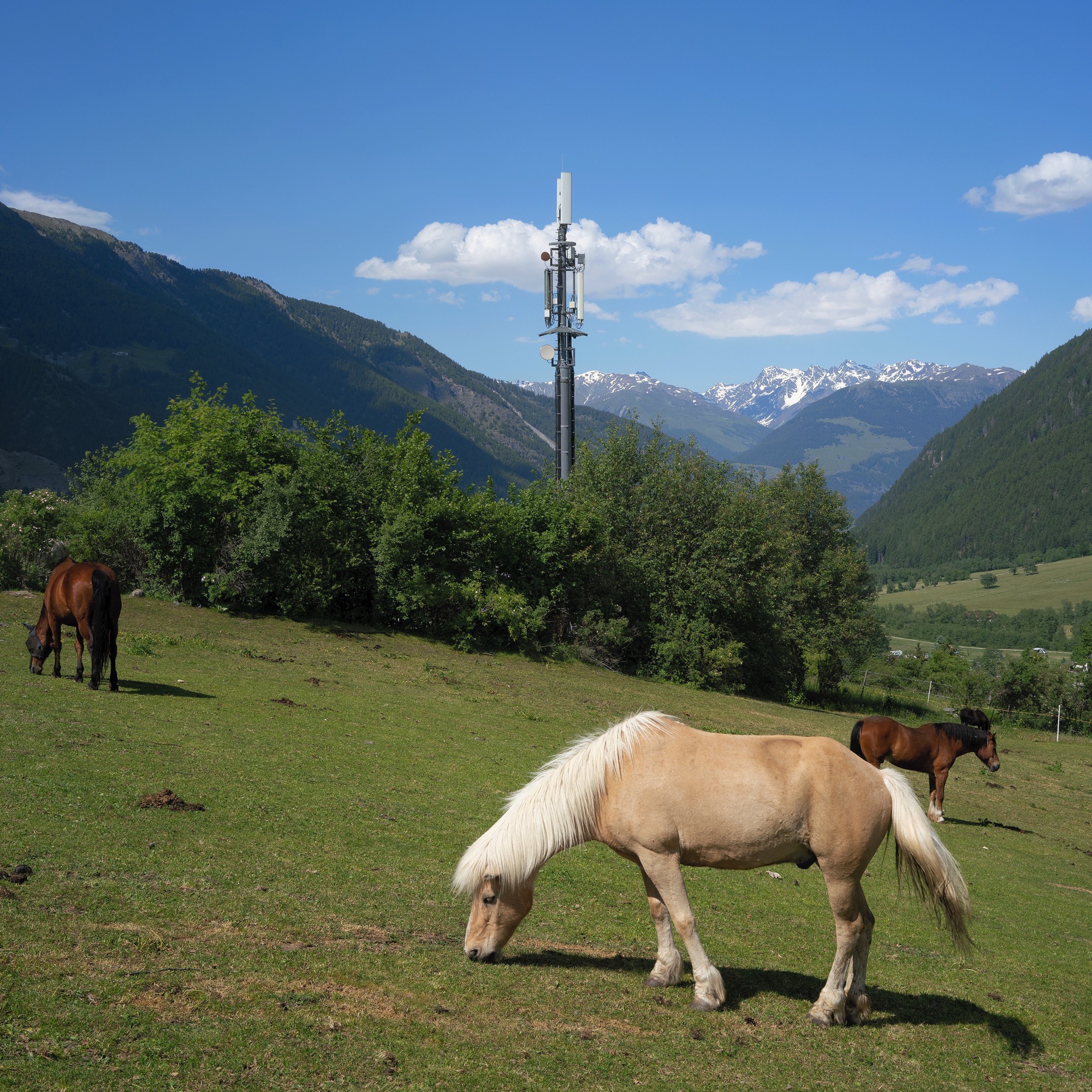

[Winter 2022]
Without Data Loss
by Louis Perreault
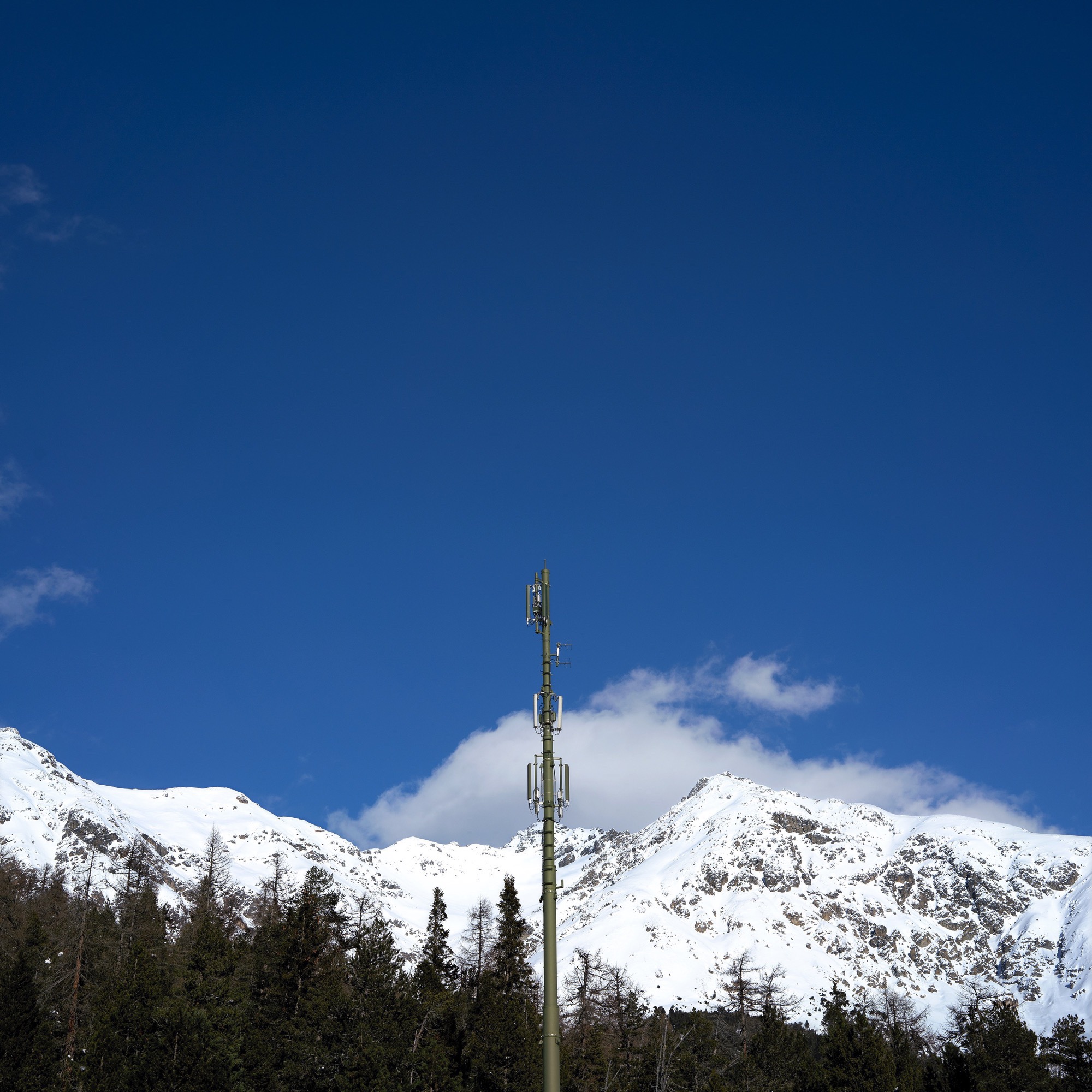
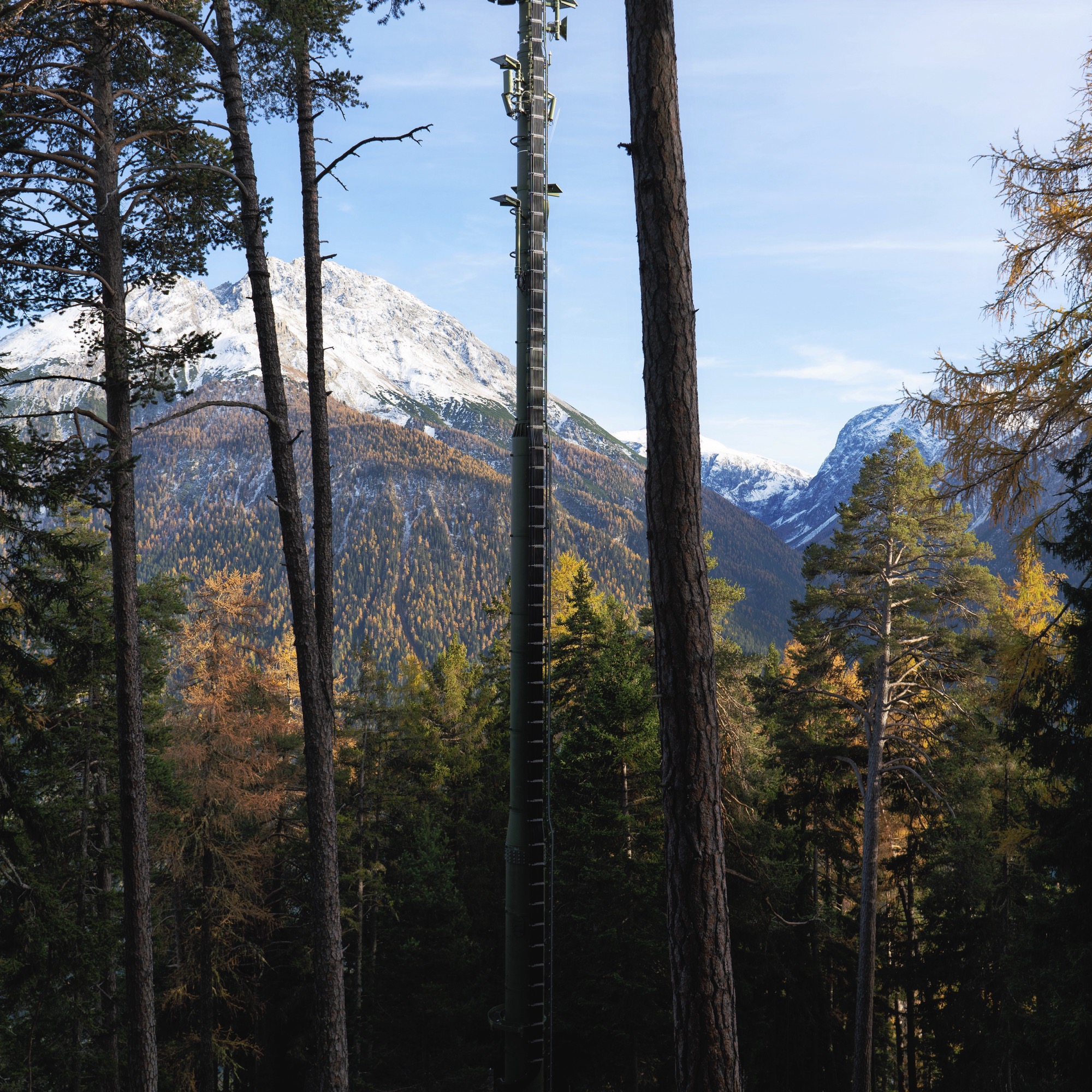
In the first photograph in Alpine Signals, the immaculate white of a horse’s mane offers a reminder of the clouds that overhang the distant mountains. The blue sky spreads above the shrubs positioned in the centre of the composition, which pick up the colour of the verdant nature in the valleys. However, in this image from Thomas Kneubühler’s most recent book1 rises, triumphantly, a cellular network tower that reverberates strongly with the very first sentence of W. J. T. Mitchell’s celebrated Landscape and Power: “The aim of this book is to change ‘landscape’ from a noun to a verb.”2
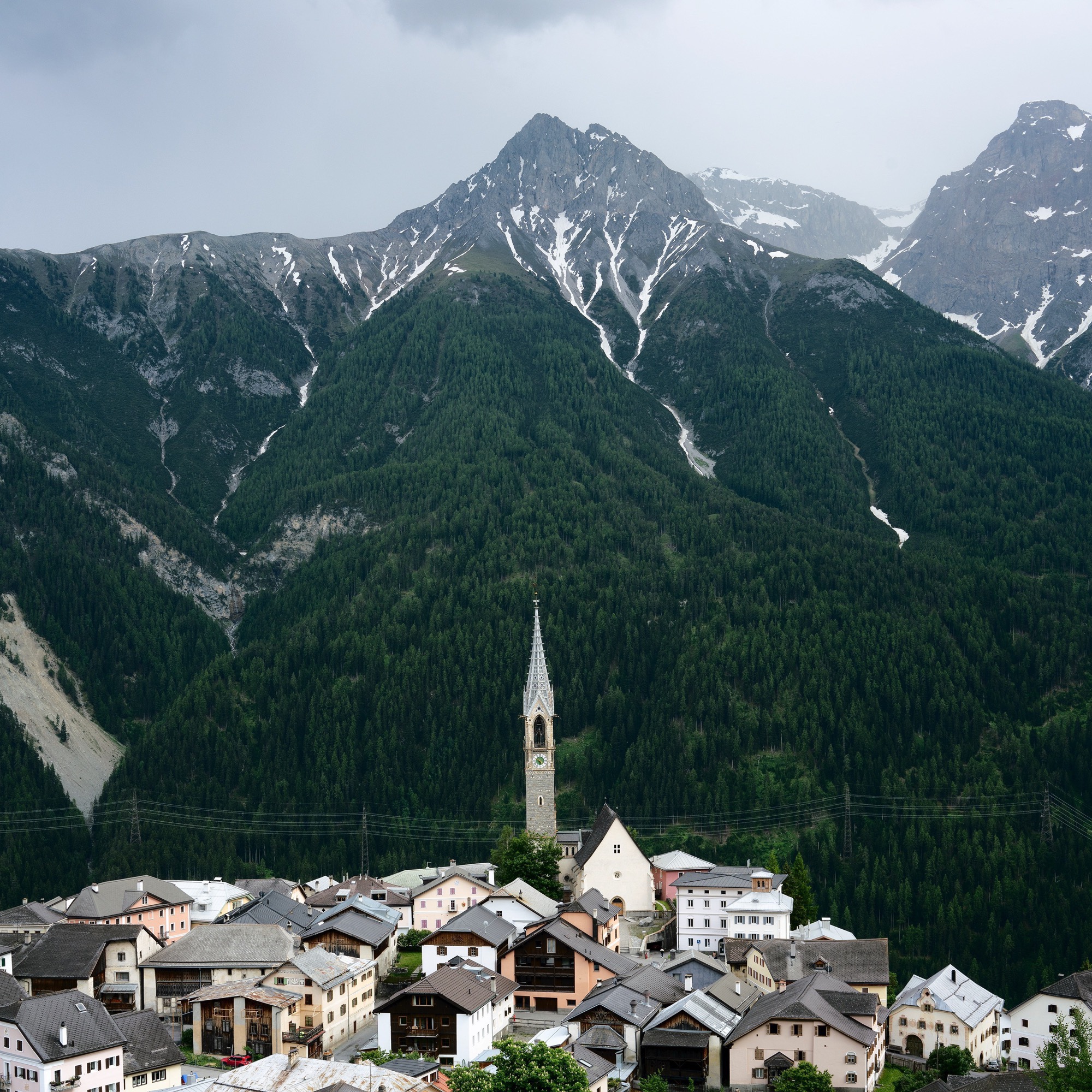
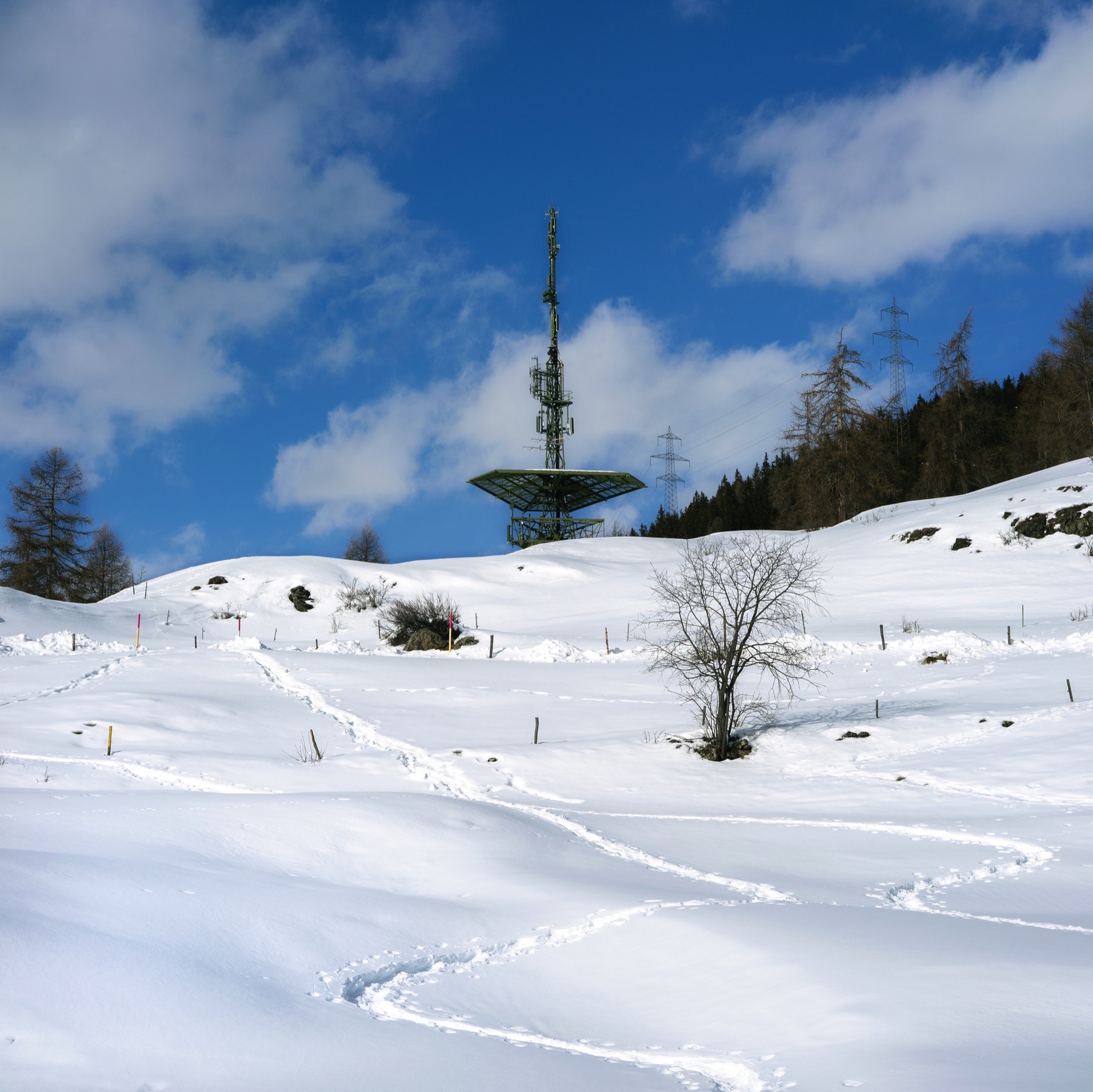
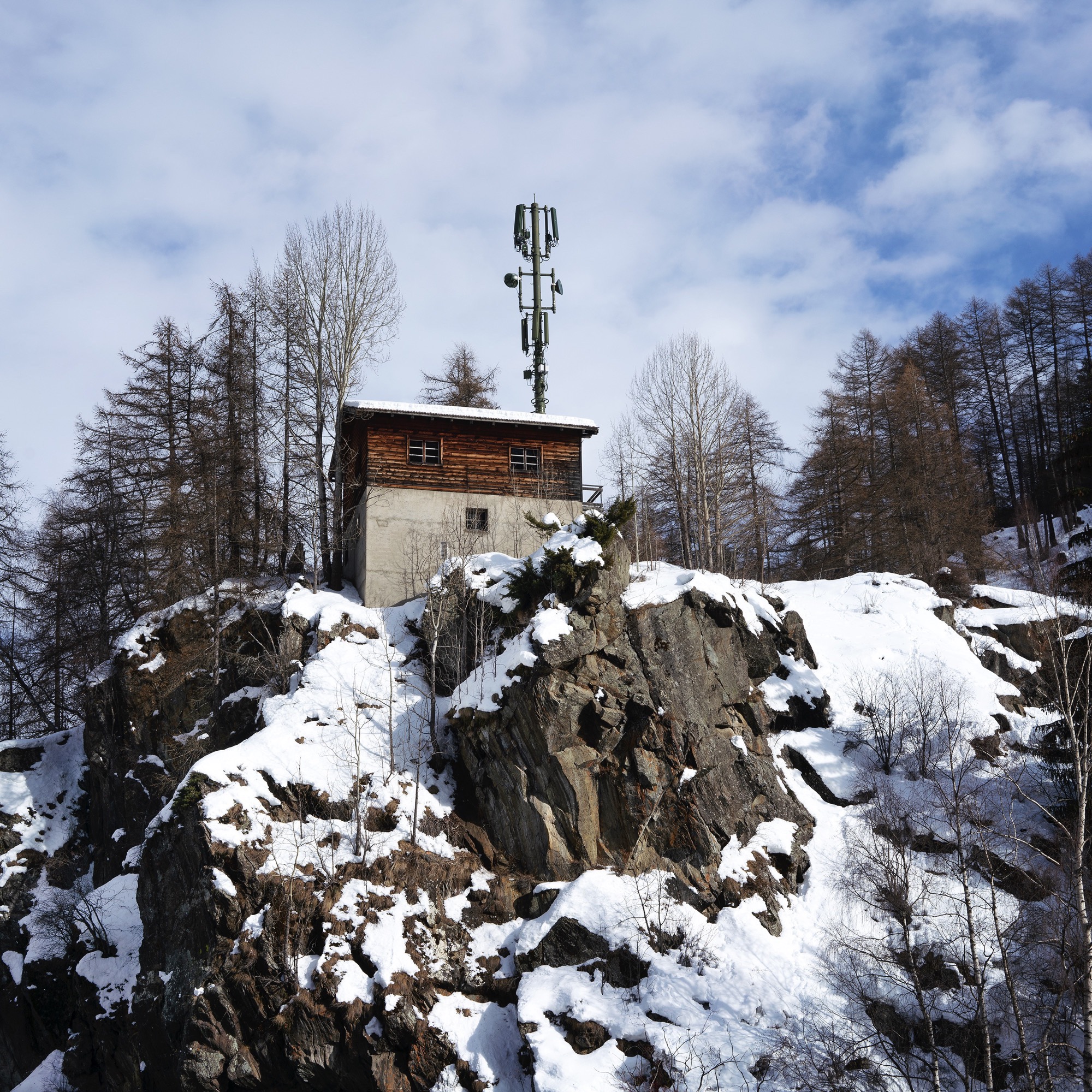
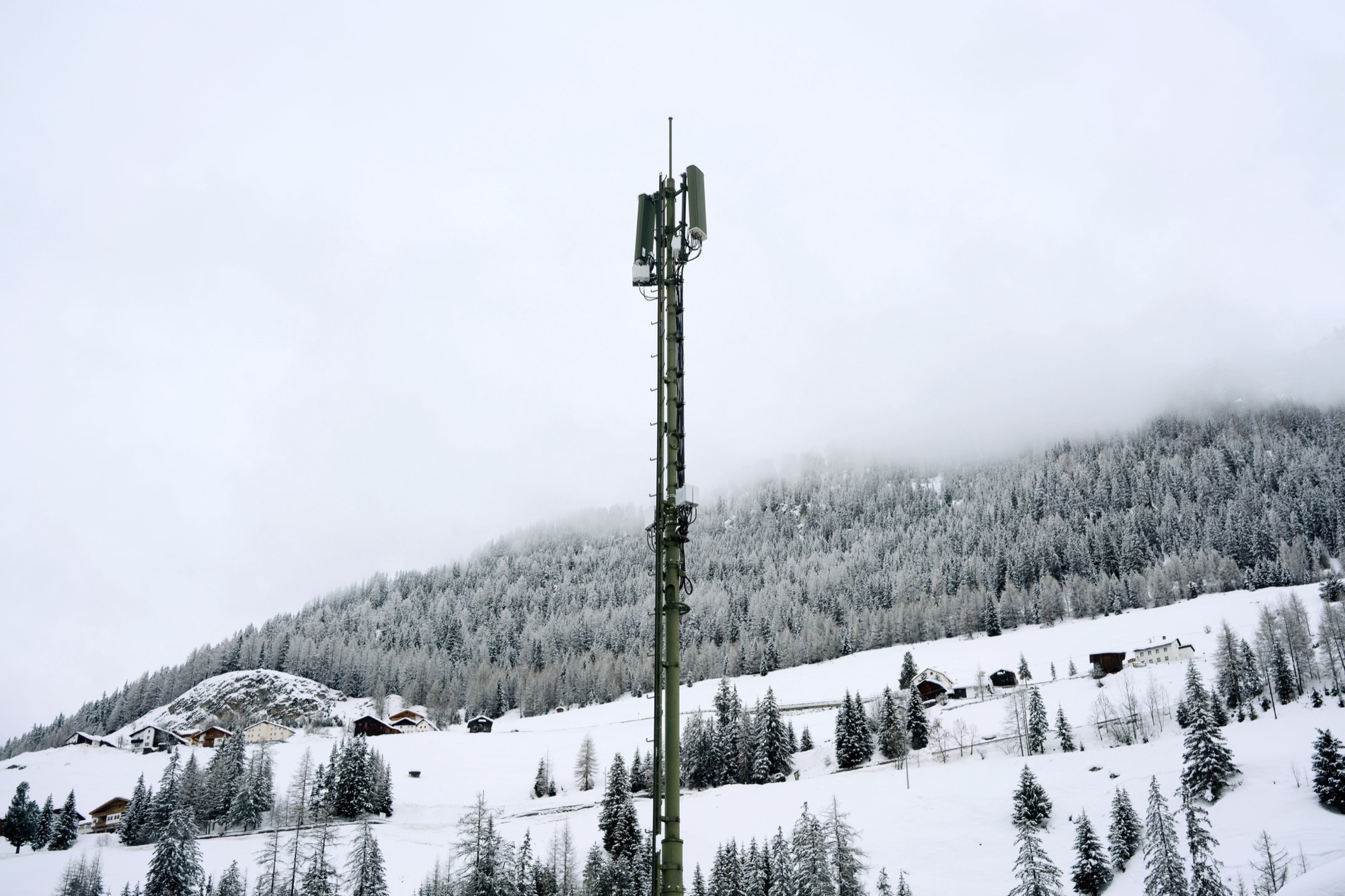
So, it is a series of landscapes that awaits us in this book. The subtitle gives us a clue, and the images confirm it: the typology rarely lends itself to ambiguity. Each of the twenty-six photographs offers the reader an alternative to the picturesque images often associated with the Swiss Alps. Kneubühler’s perspective is clear: the sites chosen as subjects of the photographs, although framed in such a way as to provide the reader with a certain aesthetic experience, are not those in which we would want to lose ourselves in contemplation. On the contrary, Kneubühler asks us to leave the image in order to reflect on the issues of digital communications. His work uncovers, in a way, the invisible stitches in the social fabric, weaving links between nature and culture in order to underline their inseparability. The landscapes, here, are verbs conjugating the conditions necessary for human beings to cope with a hyper-connected world.
The neutral afternoon light that dominates many images in the book, along with the precise, clean details that compose Kneubühler’s photographic style, imposes a descriptive character on these photographs, captured in the alpine region of Engadin, between the borders with Italy and Austria. This photographic precision, obtained by the picture-taking technique and materialized in a striking quality of printing, corresponds well with the subject addressed. From these images emanates a striking clarity that is, in a way, analogous to the atmospheric clarity preferred for transmission of cellular signals. In the crystalline air of Kneubühler’s landscapes, frequencies and oscillations undulate, amplifying the connections that enable digital communications in these mountainous regions. We can almost hear the intermittent fluctuations that interfere with the signal in the few images of beclouded mountains found in the book.
And so, a paradox is brought to light in these images: that which is visible reveals that which is not – the growing digitization of our lives. The relationship between the photographic medium and these images is also significant: photographs, like digital communications, are increasingly disseminated in a complex technical form so that we can experience them, but they depend on a technological and material infrastructure whose importance we often forget. It is always surprising to learn that a simple internet search indirectly necessitates the cooling of energy-voracious data centres. We can imagine what all of the uploads of all the photographs that document our most insignificant activities can engender in terms of an ecological footprint. Yet, even though this footprint remains abstract for many, the infrastructure that permits digital actions is nevertheless concrete. Kneubühler, through his work, recalls the theory of the sociologist Bruno Latour’s actor network theory, in which it is essential to recognize the “actant” role of objects. Although we are living in an era of technologism unequalled in history, Latour insists on the necessity of extending, in our studies of society, the network of what is considered to have the power to act and make act. This is exactly what Kneubühler’s photographs accomplish, by throwing into relief the insistence on the digital in the development of our relations with nature.
The desire to make communications infrastructure visible is not new for Kneubühler. Indeed, Alpine Signals calls to mind the installation titled Landing Sites, produced at the Dazibao artist-run centre, in Montreal, in 2018. It included two large prints, each showing a beach that seemed to be calm and ahistorical. Yet, between the two places portrayed in the images stretches an underwater fibre-optic cable linking France and the United States. Unlike the cell towers in Alpine Signals, it was the invisibility of this impressive infrastructure that was striking in the installation. In both cases, however, a “metatechnological” manifestation forces viewers to consider their own relationship with technologies and the grasp that they may have on their lives. By being connected to everything all the time, do we lose a form of essential engagement with the present and with the places where we actually are? Or, as Kneubühler formulates it in the presentation of Alpine Signals, “How much data do we need, even in the remote mountain world?”
We could very well imagine Kneubühler, an expert hiker and photographer accustomed to producing images in isolated regions, discovering the importance of these questions as he experienced the mountains and the remoteness. In fact, it is not uninteresting to delve into the topographic map included following the twenty-six photographs and to imagine oneself in the space travelled by Kneubühler. What is more, in previous bodies of work (notably Off-Grid, which presented northern communities in Nunavik, and Electric Mountains, which showed alpine ski centres lit up in the dark of night), the photographic situation in which Kneubühler placed himself added to the fascination engendered by the images. Although he does not appear directly in his work, it is worth highlighting the experiential dimension of his practice. One suspects that he hopes to avoid spectacularization of his adventures, but, with their originality and the relevance of the reflection that they encourage, they provide a glimpse of a complex research and creation process that overflows the works produced.
The decision to present this work in book form is certainly meaningful. Of course, the subtitle, Twentysix Cell Towers in the Engadin, will speak to anyone interested in the history of the photo book. Indeed, Ed Ruscha’s Twentysix Gasoline Stations, published in 1963, remains an essential of the genre. Like Kneubühler, Ruscha repeatedly photographed the subject mentioned in the title of his book, probably also thinking about what implicitly, yet practically, causes society to advance. But although Alpine Signals borrows the layout from Ruscha’s book and evokes the original cover with the use of similar typography for the title, the resemblance is relatively skin-deep. The format of Alpine Signals, with its essays before and after the photographs, brings the book into a more conventional monograph tradition, quite distanced from Ruscha’s radical publishing work. A different era, a different way of doing things: the design of Kneubühler’s book, with its coated and uncoated paper, its immaculate layout, and its semi-rigid tooled cover, make it an undeniably elegant book. The attention paid to each detail is a great match for Kneubühler’s unquestioned and acknowledged mastery of photography. Translated by Käthe Roth.
2 « The aim of this book is to change “landscape” from a noun to a verb. », W.J.T. Mitchell, Landscape and Power, Chicago, The University of Chicago Press, deuxième édition, 2002.
3 See Nicola Jones, “How to Stop Data Centres from Gobbling Up the World’s Electricity,” Nature 13 (September 2018): 163–66, https://www.nature.com/articles/d41586-018-06610-y.
4 See Bruno Latour, “Troisième source d’incertitude: Quelle action pour quels objets?,” in Changer de société, refaire de la sociologie (Paris: Éditions La Découverte, 2007), 91–124.
5 Kneubühler’s website, http://thomaskneubuhler.com/publications.
6 The first edition of the book was printed in four hundred numbered copies, followed by two editions in 1967 and 1969, of five hundred and three thousand copies, respectively, identical to the first edition.
Louis Perreault lives and works in Montreal. His practice is deployed within his personal photographic projects and in publishing projects to which he contributes through Éditions du Renard, which he founded in 2012. He teaches photography at Cégep André-Laurendeau and is a regular contributor to Ciel variable, for which he reviews recently published photobooks.
Thomas Kneubühler uses photography and video to examine complex sociopolitical issues and the limits of representation. His work is based on extensive research, including fieldwork in remote locations and places where access is restricted. Born in Solothurn, Switzerland, Kneubühler has been living in Montreal since 2000, while maintaining ties with Europe. Holder of a master’s degree from Concordia University, he has shown his works at, among others, the Canadian Cultural Centre in Paris, the Kunstmuseum Bern, and the Musée d’art contemporain de Montréal. www.thomaskneubuhler.com