
[Winter 2022]
Françoise Sullivan, The 1970s
By Didier Morelli
Galerie de l’UQAM, Montreal
14.05.2021 — 16.07.2021
Even in her nineties, the seminal Quebec interdisciplinary artist Françoise Sullivan never ceases to inspire. Françoise Sullivan: The 1970s, organized by the Galerie de l’UQAM, delves into her experimentation five decades ago, with particular attention to her time in Italy. Filmed and photographed while performing within the ancient architecture of Rome, Tuscany, and Sicily, or employing the camera herself to document her environment, Sullivan bridges her own conceptual, aesthetic, and political identity to those of the Arte Povera movement and the Situationist International. After sifting through her archives during the COVID-19 pandemic with the assistance of curator Louise Déry, Sullivan presents old, previously unseen works alongside more well-known pieces. The exhibition presents her photography, video, collage, performance, and written word, repositioning her as a leading North American conceptual and performance artist of the 1970s.
From the outset of the exhibition, photographs of Sullivan performing in various natural and architectural settings in Italy announce the overall themes: linking “art and real life,” exploring the kinesthetic potential of a moving body, and creating parallels between European archaeological sites and their myths. These collections of small black-and-white prints are precious peeks into a compelling and rich embodied practice. One series shows Sullivan creating a sundial with her dancing figure, arms outstretched in the middle of an amphitheatre. In another set of images, a similar shadowcasting action is performed at the centre of a circle of stones. Simple, precise, and confident in their execution while remaining playful in their appearance, these photographs illustrate the exhibition’s interest in aligning Sullivan with the bare, conceptually rigorous, and ascetic aesthetics of 1970s Western conceptualism, while acknowledging her individual flare.
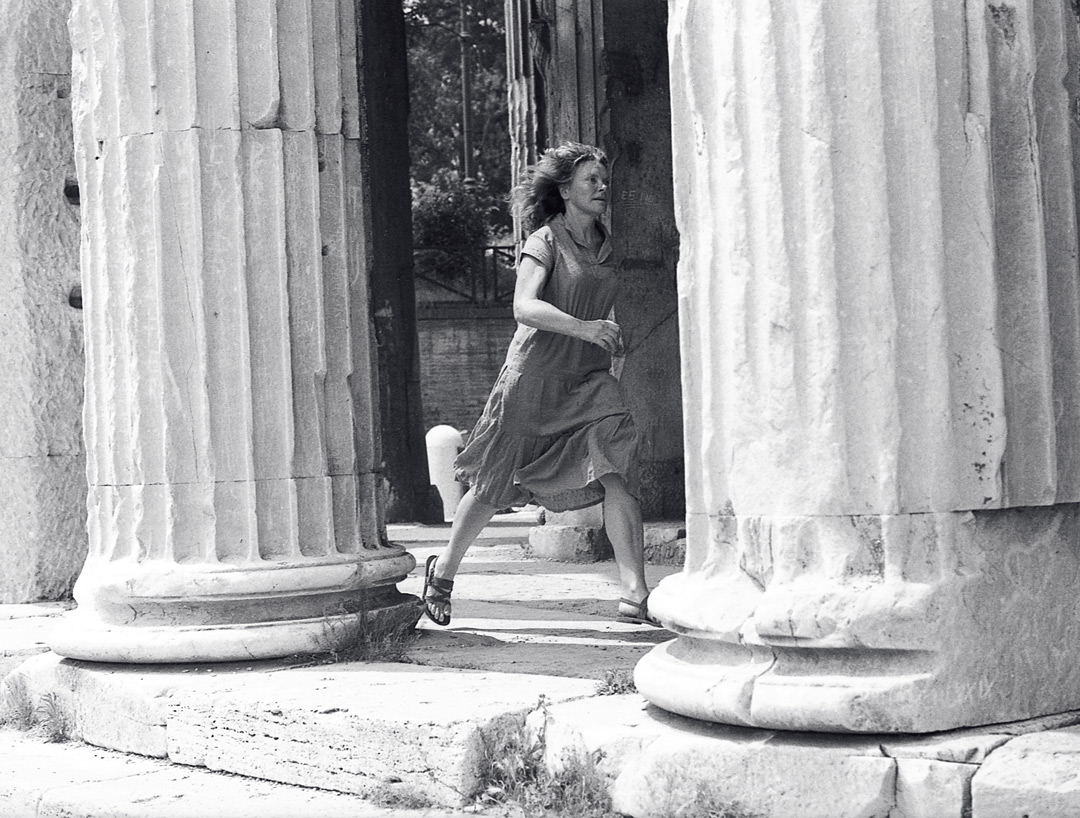
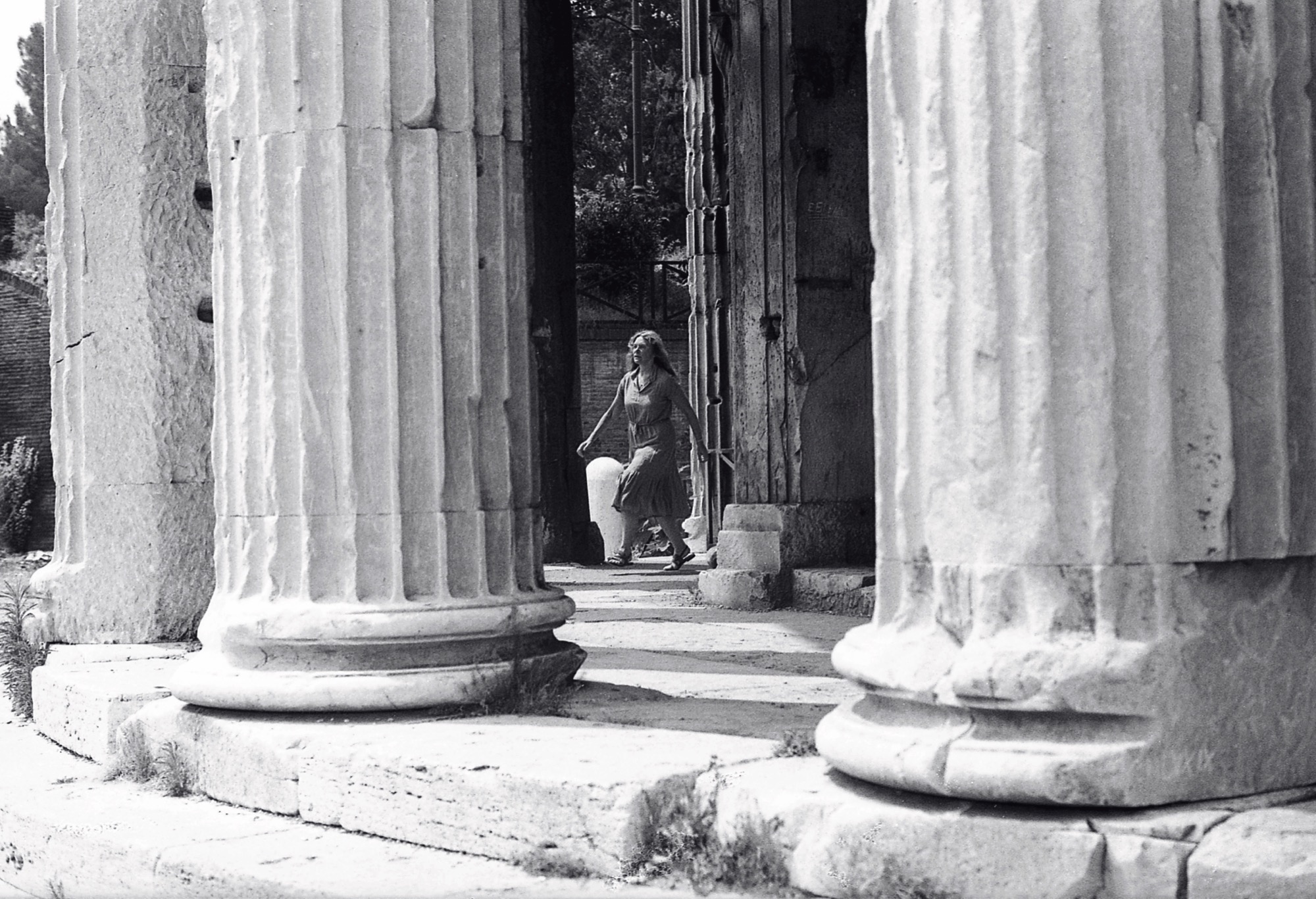
Two photomontage friezes of thirteen digital prints, arranged across the gallery’s main walls, make up the crux of Françoise Sullivan: The 1970s. The first, nearly fourteen feet long, shows Sullivan gliding between large Doric columns at the Tempio di Ercole in Rome. Originally documented by David Moore in 1976, the black-and-white photographs have been reprinted and arranged in a repetitive sequence that gives a new sense of time and space to the initial action. In this new installation of the work, which resembles a film strip, Sullivan concretely draws on the architecture of the tholos – a round Greek temple completely encircled by a colonnade – to transform her kinetic energy into a structural component of the building. Remixing archival images of her younger self briskly walking between the portals, Sullivan becomes enmeshed in the physical composition and historicity of the site. This gesture is reminiscent of the psycho-geographic wanderings of the Situationists, a group that Sullivan became familiar with during her time in Italy with her family; snapshots in the exhibition show her in the company of Gianfranco Sanguinetti and Guy Debord. Not only does the frieze at the Tempio di Ercole point to past performative abilities in engaging the built environment, but it also marks her contemporary astuteness in rethinking her own archives as malleable source material.
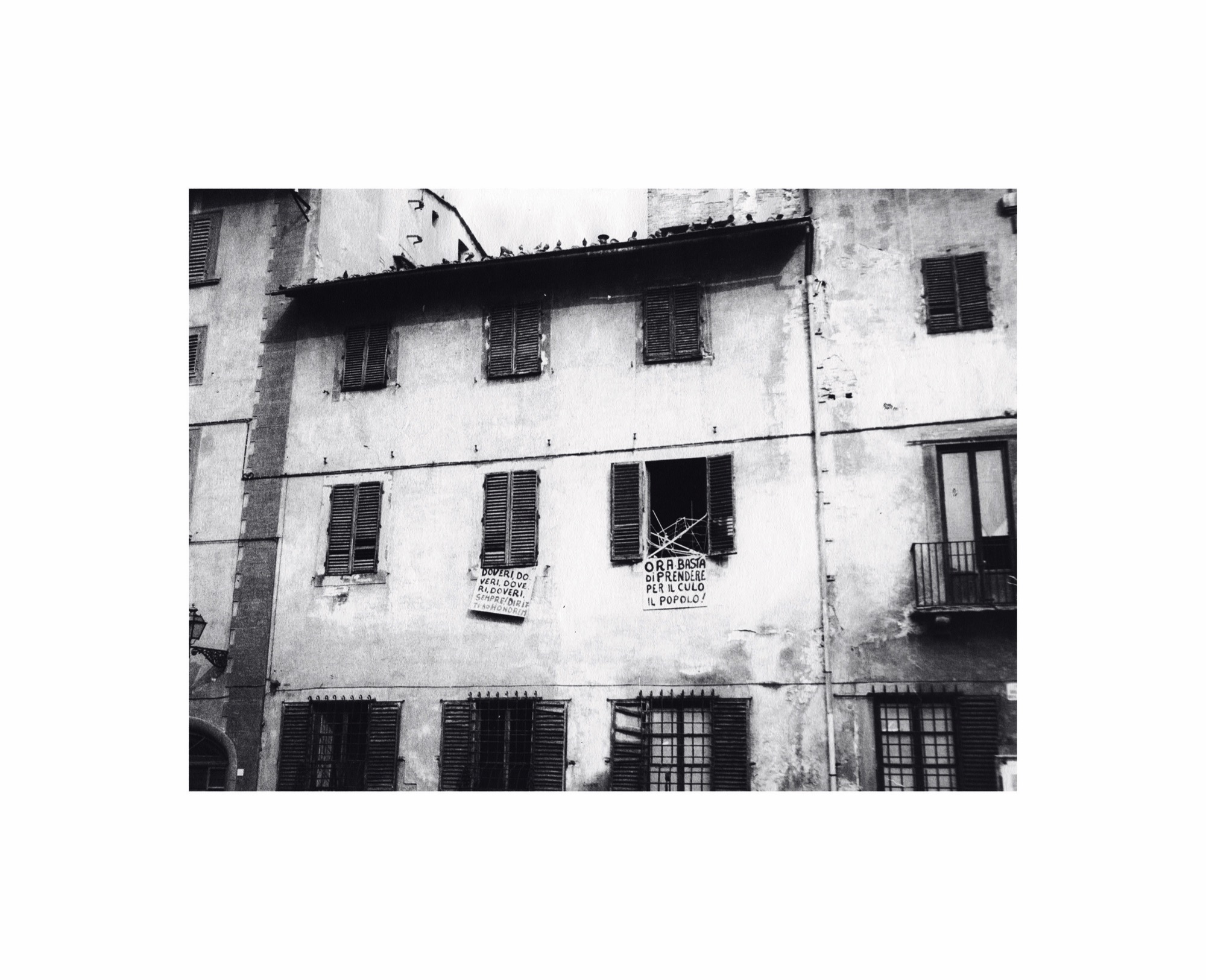
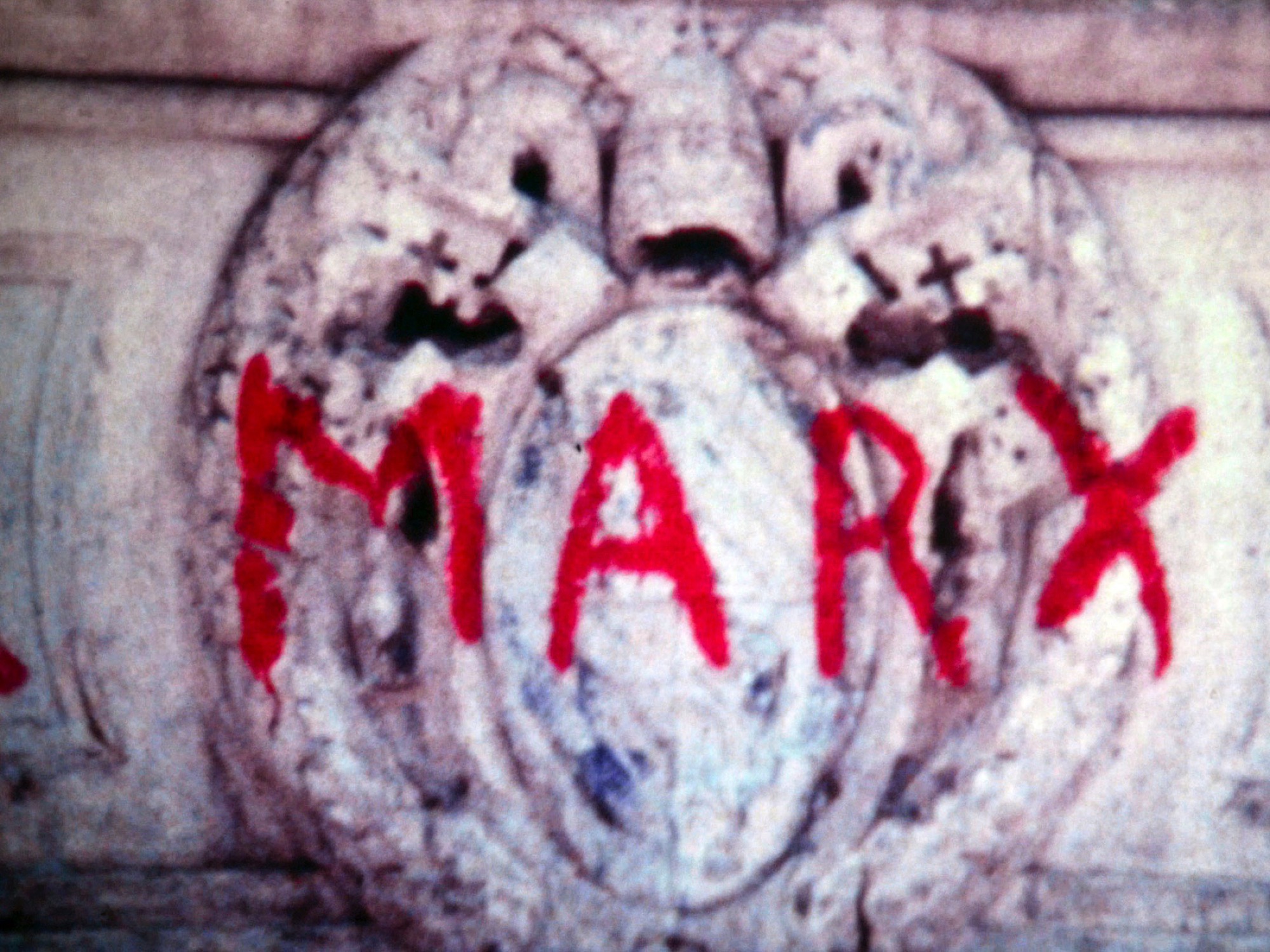
Sullivan’s political interests come to the fore in a room dedicated to her documentation of graffiti in Italy. Graffiti (1976–2021) is a Super 8 silent colour film that catalogues the tumultuous socio-political moment in the country as expressions of dissent adorned the architectures of cities and towns. The slogans, caricatures, and public paintings of feminist, Marxist, and other social movements become a visual and conceptual vocabulary that Sullivan redeploys in her own performance videos. Io sono mia/I Am My Own/Je suis à moi-même (c. 1976) shows her tracing the words from the title on a sandy beach as the waves repeatedly come ashore and wash the letters away. Working with written word and the natural elements, Sullivan uses her body to mark the landscape in an ephemeral gesture that is both poetic and inscribed in traditions of scored performances of the 1970s.
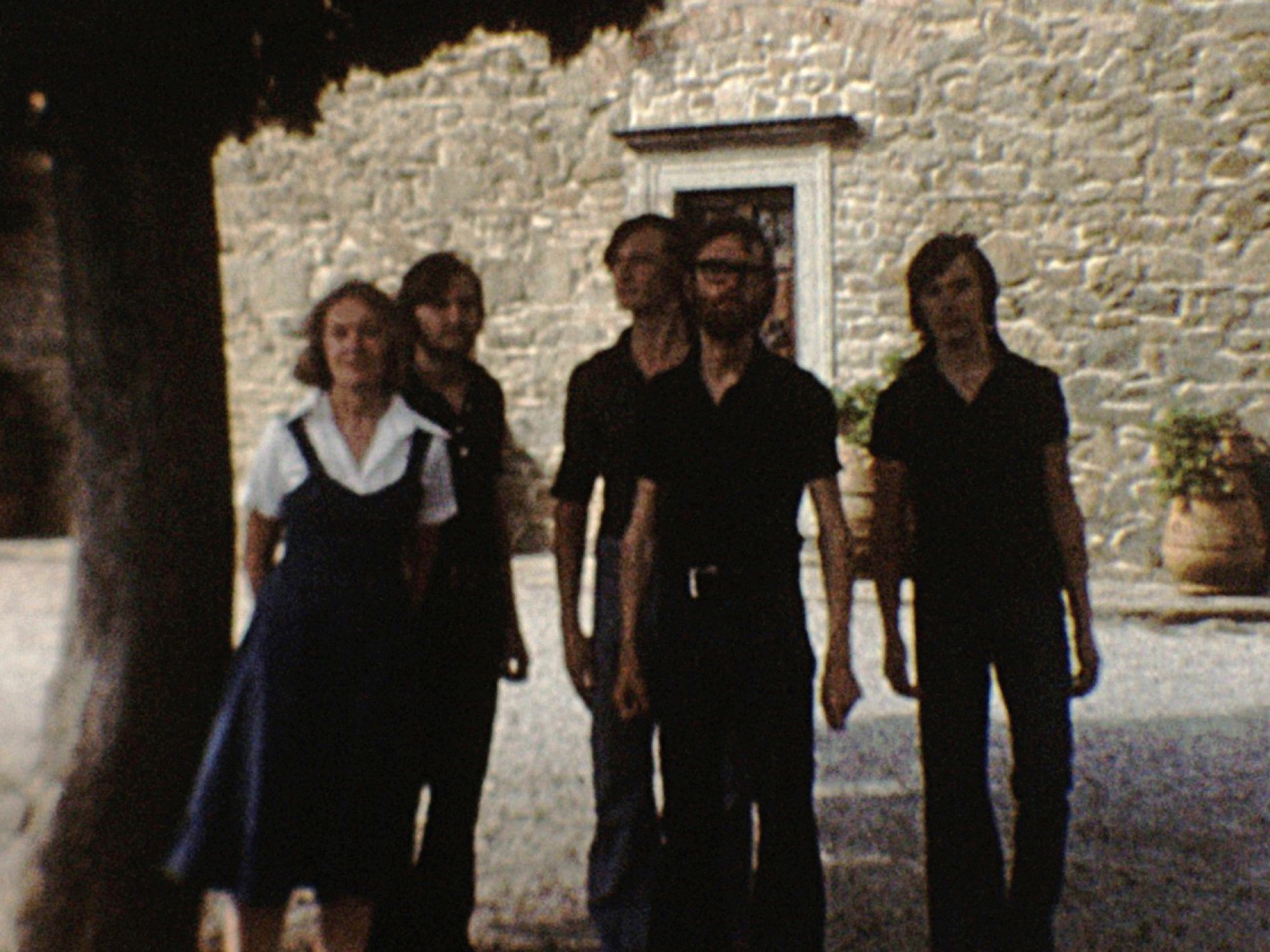
In a black-and-white video, Promenade à Greve in Chianti avec mes quatre garcons (1975), Sullivan leads her sons through Greve in a loosely choreographed walk. This work, alongside a series of delicately beautiful photomontages of blocked architectural surfaces in Europe, Maison aux ouvertures bloquées (1977), is reminiscent of works that she completed in Quebec during the same period. The final piece on view, Et la couleur revient (c. 1978), is a fifteenminute video of Sullivan gradually brushing bright primary-colour rectangles onto folded newspapers one after the other, and then beginning to apply paint onto her own arms and hands. This process work, filmed on a tiled studio or kitchen floor in Montreal, harkens back to an era of body art during which performance artists challenged disciplinary boundaries by intervening in the materiality of traditional media with their own physicality. Placed at the end of Françoise Sullivan: The 1970s, it is a reminder of Sullivan’s innovative spirit and historical relevance, and another testament to her enduring legacy.
Didier Morelli’s research focuses on the relationship between the built environment and the kinesthetic nature of performing bodies. A writer, cultural critic, and visual artist based in Montreal, he has recently contributed to Art Journal, Canadian Theatre Review, Esse, and TDR: The Drama Review. He is currently completing a PhD in performance studies at Northwestern University in Chicago, Illinois.
[ Complete issue, in print and digital version, available here: Ciel variable 119 – AGAINST NATURE ]