
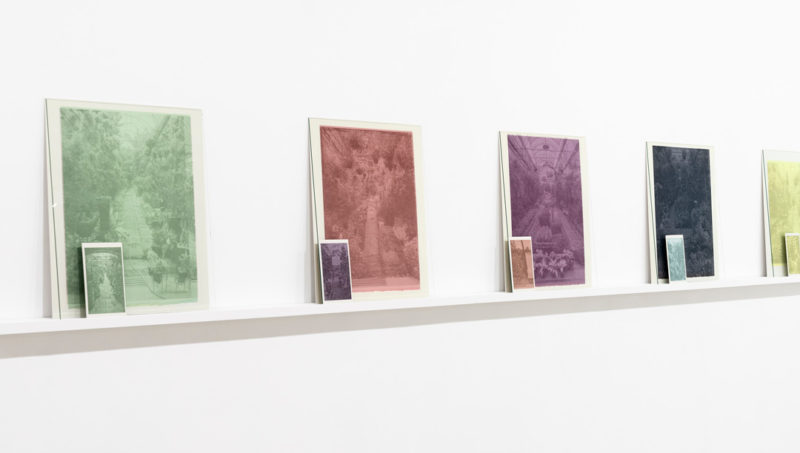
Catherine Bodmer, Viveros (nuancier), 2018-2020, série de 12 images, plaque de verre sur tablette, impression jet d’encre sur soie Haboitai et sur papier Entrada Rag / series of 12 images, glass plates on shelf, inkjet prints on Haboitai silk and Entrada Rag paper
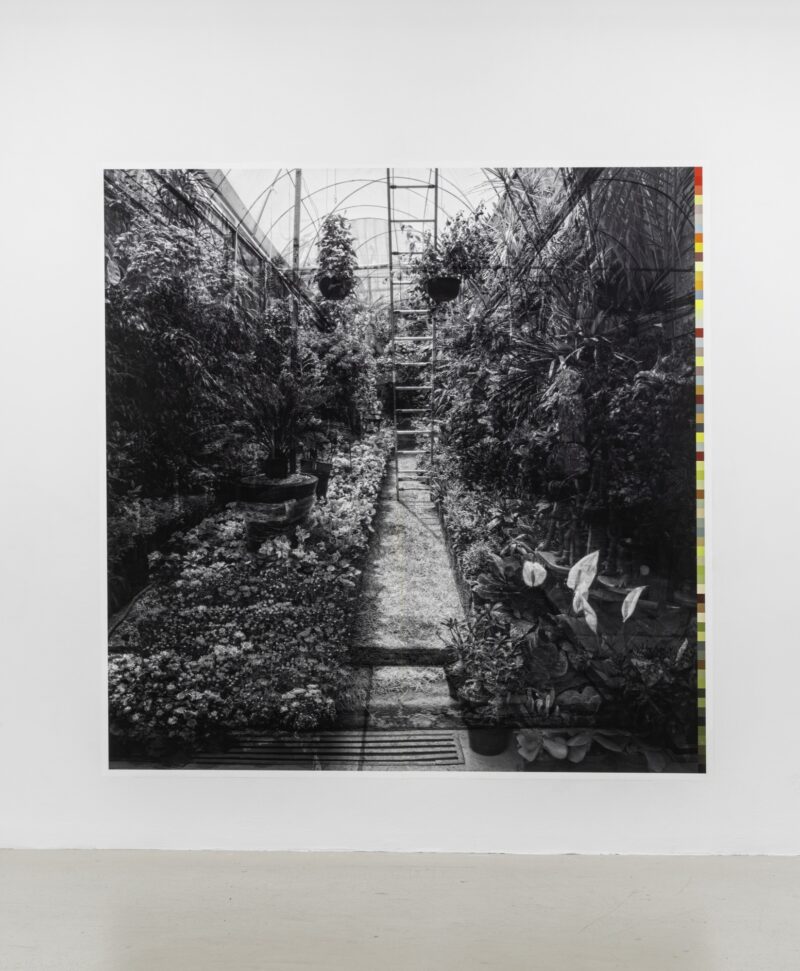
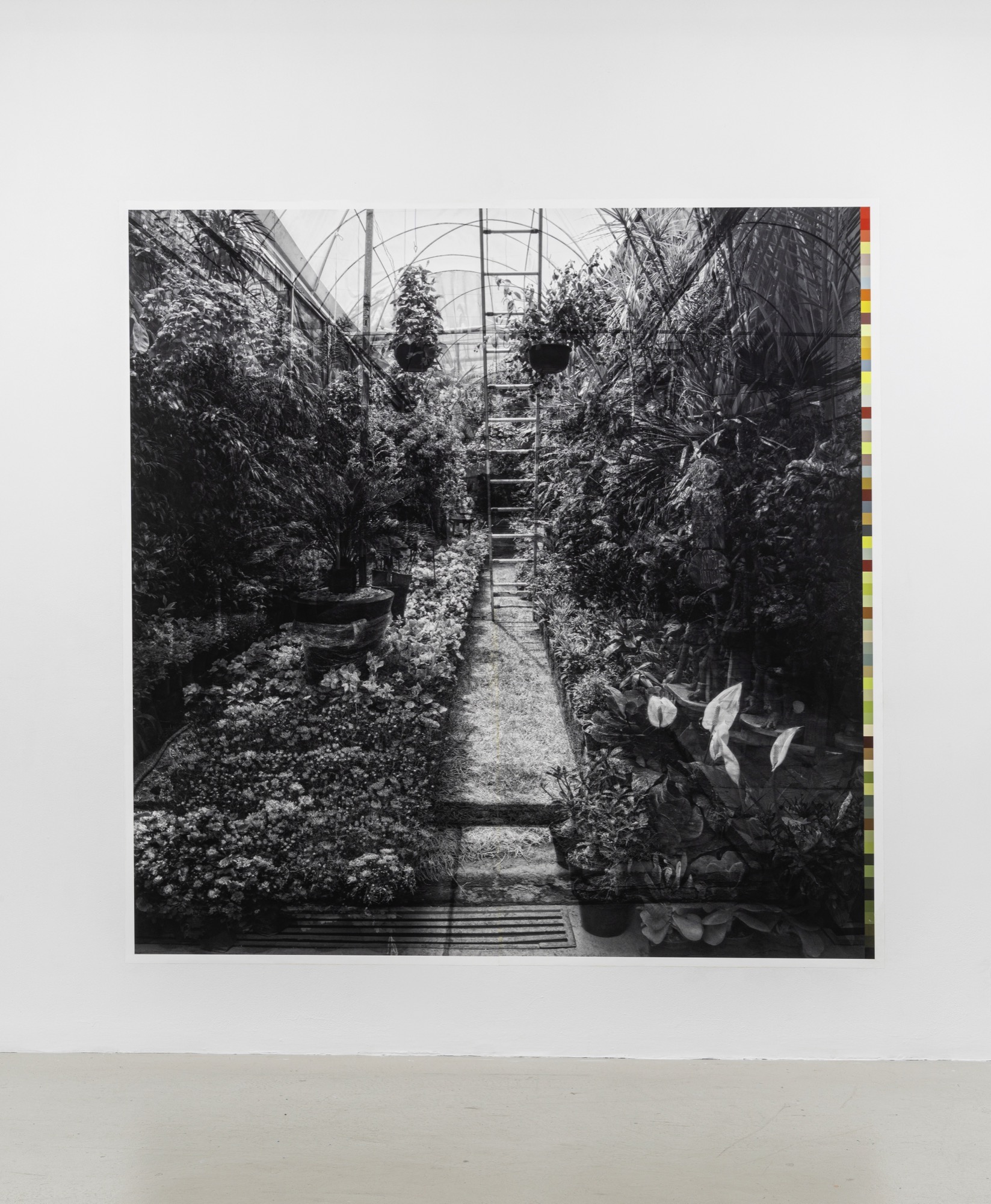
Catherine Bodmer, Viveros (conversion), 2018, impression au jet d’encre sur polypropylène montée au mur / inkjet print on polypropylene mounted on the wall
Catherine Bodmer
[Winter 2022]
Catherine Bodmer, Synonymes
By Emmanuelle Choquette
Galerie B-312, Montréal
7.05.2021 — 23.06.2021
The exhibition Synonymes is an outcome of Catherine Bodmer’s long-term research conducted during residencies in Mexico City between 2010 and 2018. Pairing photography and text, the body of work on display in Galerie B-312’s two exhibition spaces addresses Bodmer’s relationship, developed over time, with a particular place: a plant market in Viveros, a public park and municipal tree nursery situated in the Coyoacán neighbourhood. Bodmer’s works provide an overview of this spacious market, with its many lines of stands featuring greenhouses filled with potted flowers, plants, and trees, as well as peat and other gardening items.
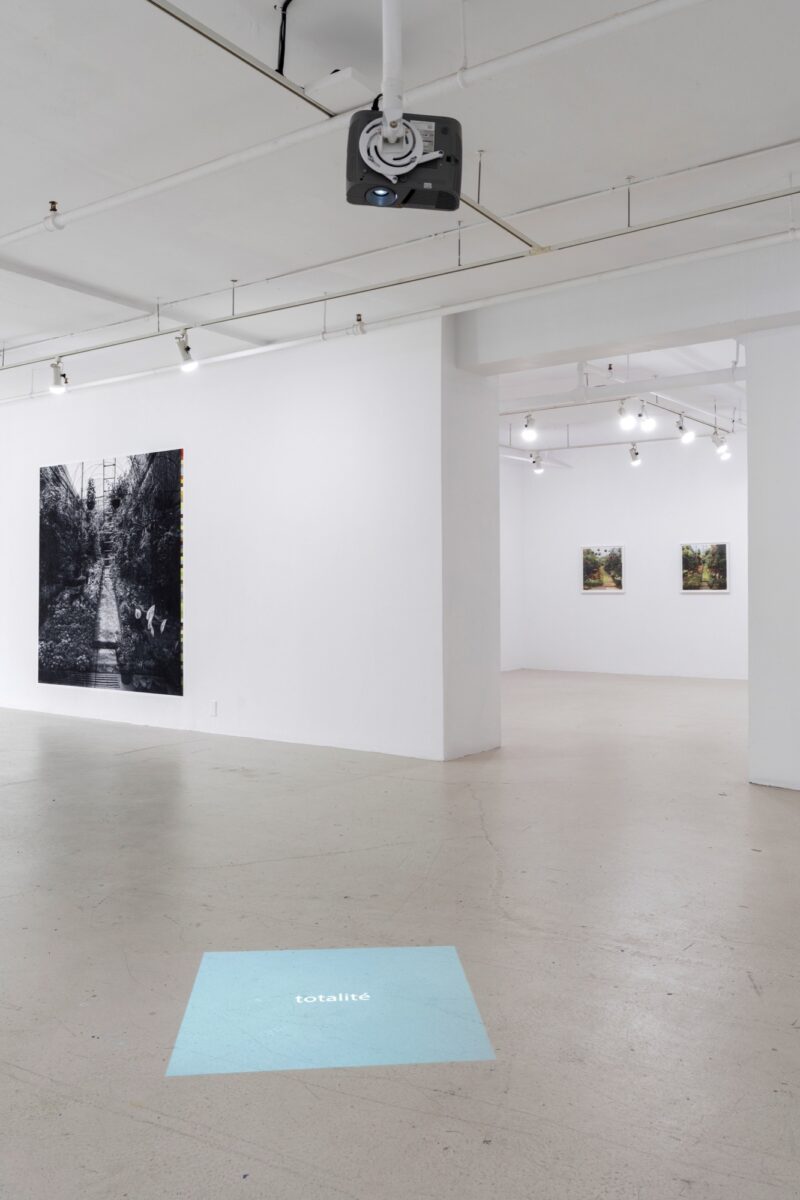
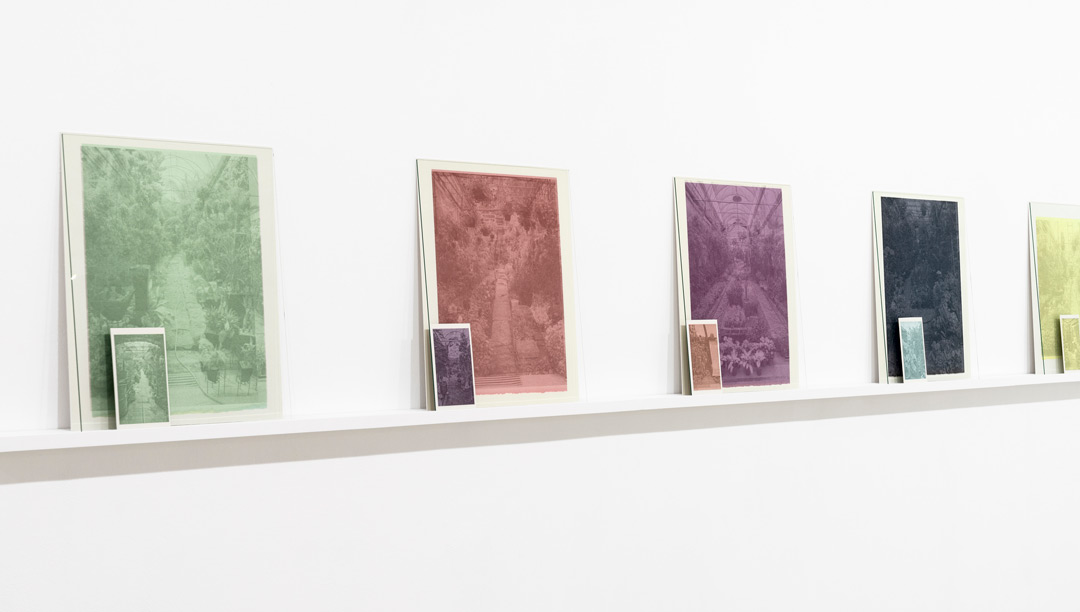
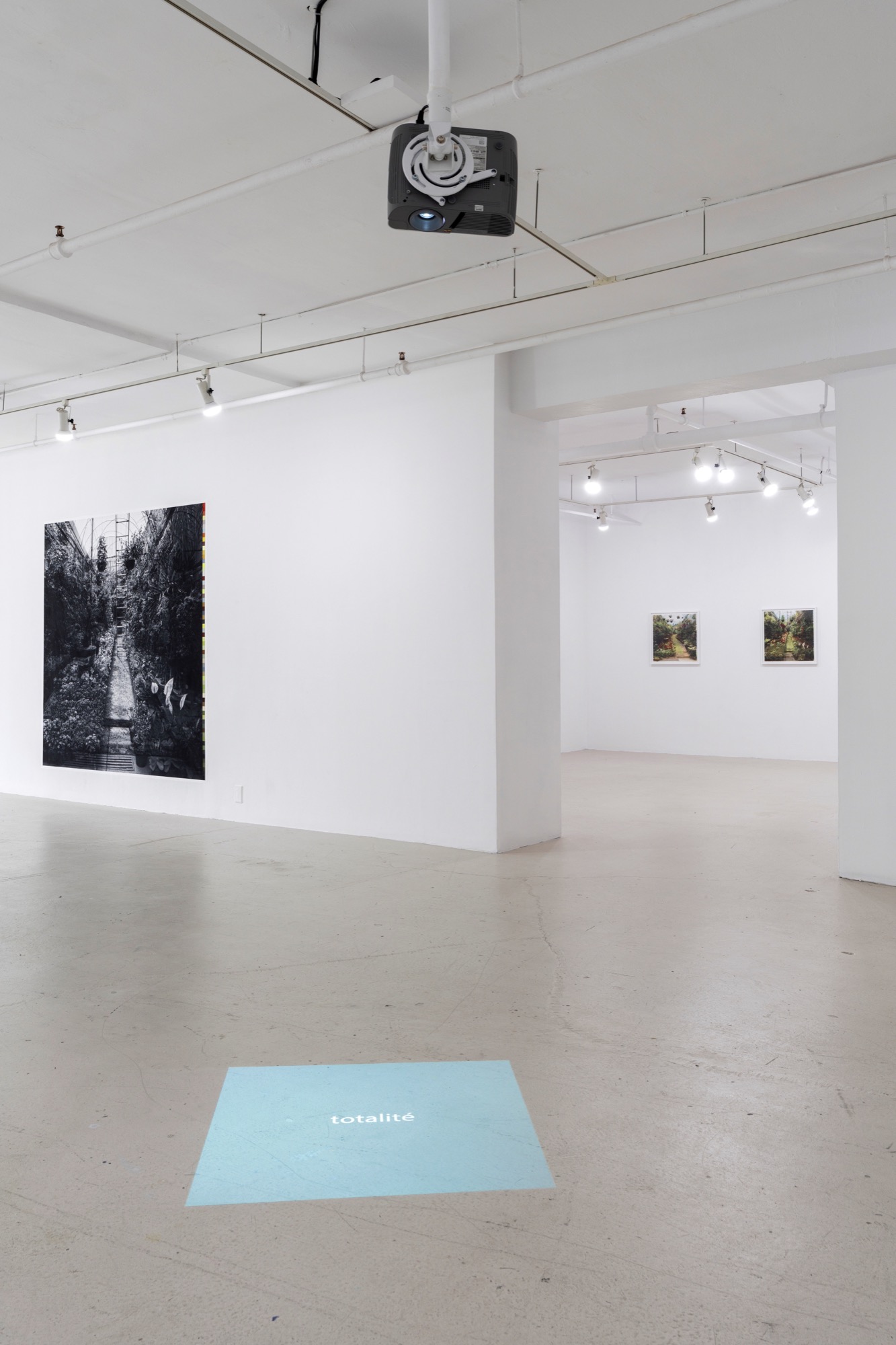
The rooms in the large gallery are arranged as variations on the central subject, functioning as synonyms. As viewers walk in, a video projection on the floor and a sculptural grouping of a series of superimposed words evoke an exalted experience of luxuriant, abundant nature.1 In parallel, the photographs take up the motif of the garden as a way of organizing living things in an idealized, sometimes even utopian, collection. We see this in the series Viveros (nuancier), presented on a long shelf attached to the wall that holds six pairs of photographs, one medium size and the other smaller, placed in front of the first. The two images are separated by glass, forming a sort of screen that calls to mind greenhouse walls. In this sequence, the images unveil the customer’s point of view from the front of the stand and the employee’s from the back. The cameo treatment evokes places bathed in coloured light, in a dreamlike ambience. In a subtle gesture that reflects this idea, Bodmer has also covered parts of the gallery’s windows with green and pink acetate film, drawing attention to the light that comes through them.
Facing this series is a large-format image in a pictorial language that is asserted more strongly by Bodmer’s manipulations. The transparent superimposition of grass textures, floral motifs, the geometric shapes of pots, and lines traced by architectural structures make the image seem to almost vibrate. The choice of desaturating the colour and the matte printing on a support glued directly to the wall evoke drawing, as if Bodmer had traced the passage of time in charcoal. On the edge of the photograph, a colour chart shows the original colours and refers to the process of transforming and composing the image.
In this project, Bodmer is interested not only in the space, but also in those who inhabit and move around in it. To her documentary photographic approach, she adds the dimension of discussion with the managers of the booths. In recorded conversations, she speaks with Laura, Alberto, Humberto, Gabriel, Samantha, and Óscar, retailers whose trade has been passed from generation to generation. Excerpts are printed on cards placed on a shelf so they can be picked up by visitors. This collection of testimonials conveys the multiplicity of possible relations with the site. When we read them, we find that although some do this work out of necessity, respect for family tradition remains fundamental. The beautiful presentation, the meticulous care of the plants, the mastery of botanical knowledge, the art of communication with customers – all this is part of the attraction to the trade. At the same time, the pressure of dominant economic systems highlights the strength and resilience with which small local and family shops must operate to survive. They face certain constraints; many interviewees underline the sacrifices and compromises that must be made: leaving school, giving up other careers, and so on.
Throughout the exhibition, Bodmer uses the strategy of accumulating layers to highlight tension between legible and illegible, between similar and dissonant. In the small gallery, playing in this register are the first six photographs in the series, seemingly frontal points of view of the stands that are, upon second glance, a complex superimposition of several shots. This digital manipulation evokes successive captures of the image, like an assemblage of fragments that form the memory of a place at various times. The final image in the series takes this idea further, as multiple strata are added, sometimes adding up to black, creating an enigmatic image. Bodmer’s treatment of the images absorbs us even as it summons the reality of the people to whom these spaces have been entrusted, who are both guardians and captives. Translated by Käthe Roth
Emmanuelle Choquette is an author, researcher, and curator. She holds a master’s degree in art history from the Université du Québec à Montréal. In her research, she explores the articulation of political, institutional, and performative spaces within installation practices that generate a critical look at exhibition formats. She is also inter–ested in the ways in which artists appropriate the archive as a site of resistance.