

[Winter 2022]
Valérian Mazataud, liwa mairin, la femme de l’eau
By Serge Allaire
Montréal, à compte d’auteur, 2021, non paginé
Valérian Mazataud’s most recent work takes us on an adventure to the island of Bobel, a huge rock rising out of the Caribbean Sea fifty kilometres off the coast of La Mosquita, one of the last untouched regions on the planet. The Honduran and Nicaraguan Miskitos who live on the island are considered the best divers in Central America and are recruited by Honduran fishing businesses to gather lobsters, sea cucumbers, and conches for North American and Asian markets. It’s a highly lucrative trade that generates millions of dollars for these companies.
Over the years, this systematic fishery has been exhausting the ocean depths, forcing the divers to descend ever deeper, and endangering their health and even their lives. They are forced to seek their bounty at more than forty metres’ depth – a risky undertaking. Given the horrible working conditions, due among other things to equipment that is in large part obsolete, many end up disabled or die at a young age.
Valérian Mazataud’s most recent work takes us on an adventure to the island of Bobel, a huge rock rising out of the Caribbean Sea fifty kilometres off the coast of La Mosquita, one of the last untouched regions on the planet. The Honduran and Nicaraguan Miskitos who live on the island are considered the best divers in Central America and are recruited by Honduran fishing businesses to gather lobsters, sea cucumbers, and conches for North American and Asian markets. It’s a highly lucrative trade that generates millions of dollars for these companies.
Over the years, this systematic fishery has been exhausting the ocean depths, forcing the divers to descend ever deeper, and endangering their health and even their lives. They are forced to seek their bounty at more than forty metres’ depth – a risky undertaking. Given the horrible working conditions, due among other things to equipment that is in large part obsolete, many end up disabled or die at a young age.
In 2015 and 2016, to experience their dives, Mazataud accompanied the Miskitos into the water, producing several photo reports. Now, in a photobook titled liwa mairin, la femme de l’eau, he offers a vibrant account of the gruesome lives of this population. The title refers to the legend of liwa mairin, a Miskito siren, both goddess and demon, who watches over the seas and oceans and punishes those who abuse her treasures.
The publication reveals a new approach for Mazataud, who has been associated with photojournalism and photo essays. Unlike the classic documentary style that he used in his first book, Le plan (2020), devoted to the social housing project Habitations JeanneMance, this time he takes a poetic approach. As he describes it himself, this book is midway between story, documentary, and poetry. The documentary dimension is borne by the texts: the first, integrated into the publication, offers an account of the myth of liwa mairin; the second, in the form of an offprint, presents a critical perspective on the geographic realities of the island, the fishermen’s activities, their miserable living conditions, the exploitative labour, and the uncontrolled economy to which this fishery is subjected. Mazataud thus directs attention to the images, which, without captions, leave much up to the reader’s subjective interpretation. He wanted to provide an intimate experience of these events – his perceptions – rather than the information that would be found in a photo report.
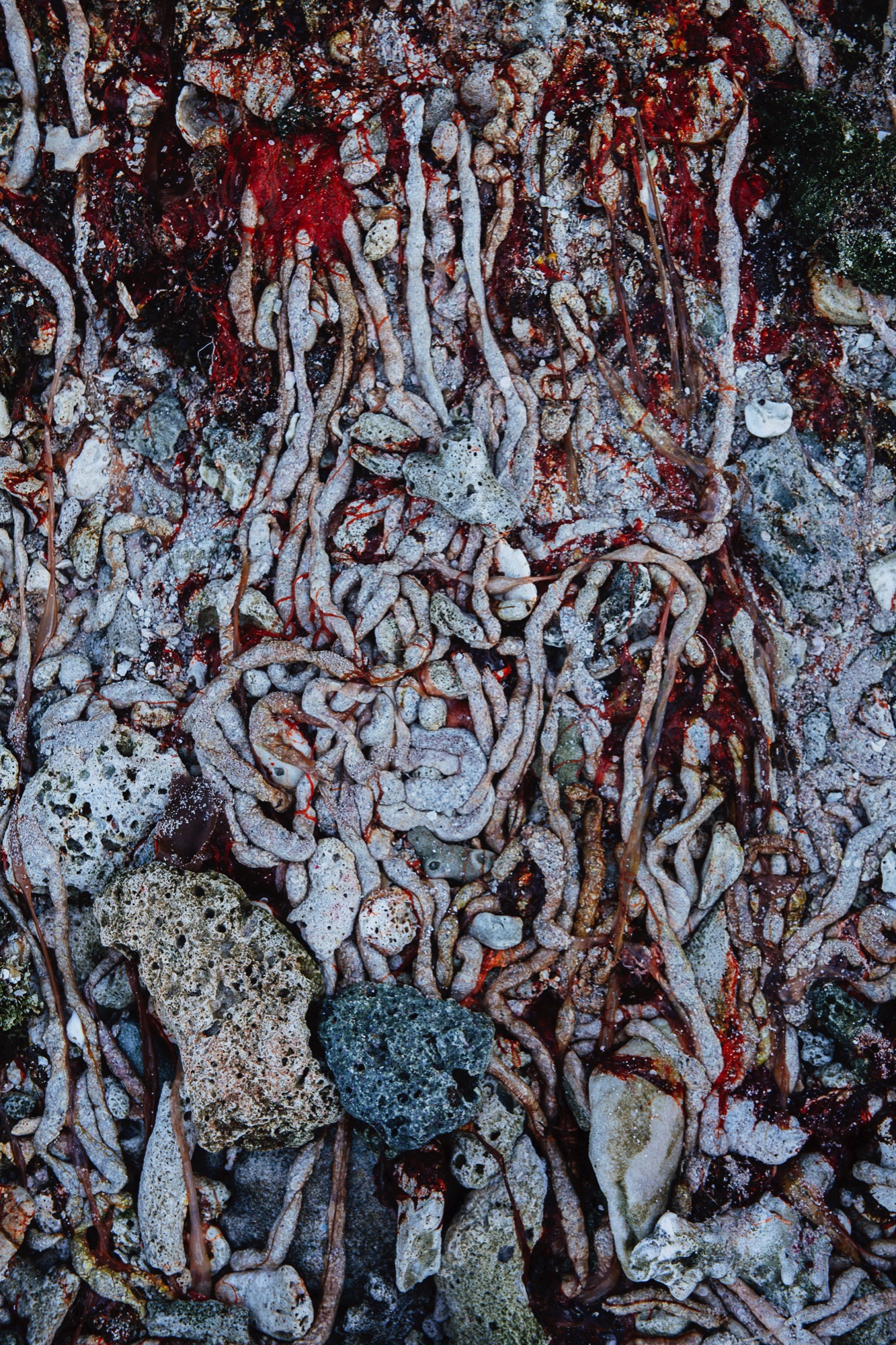
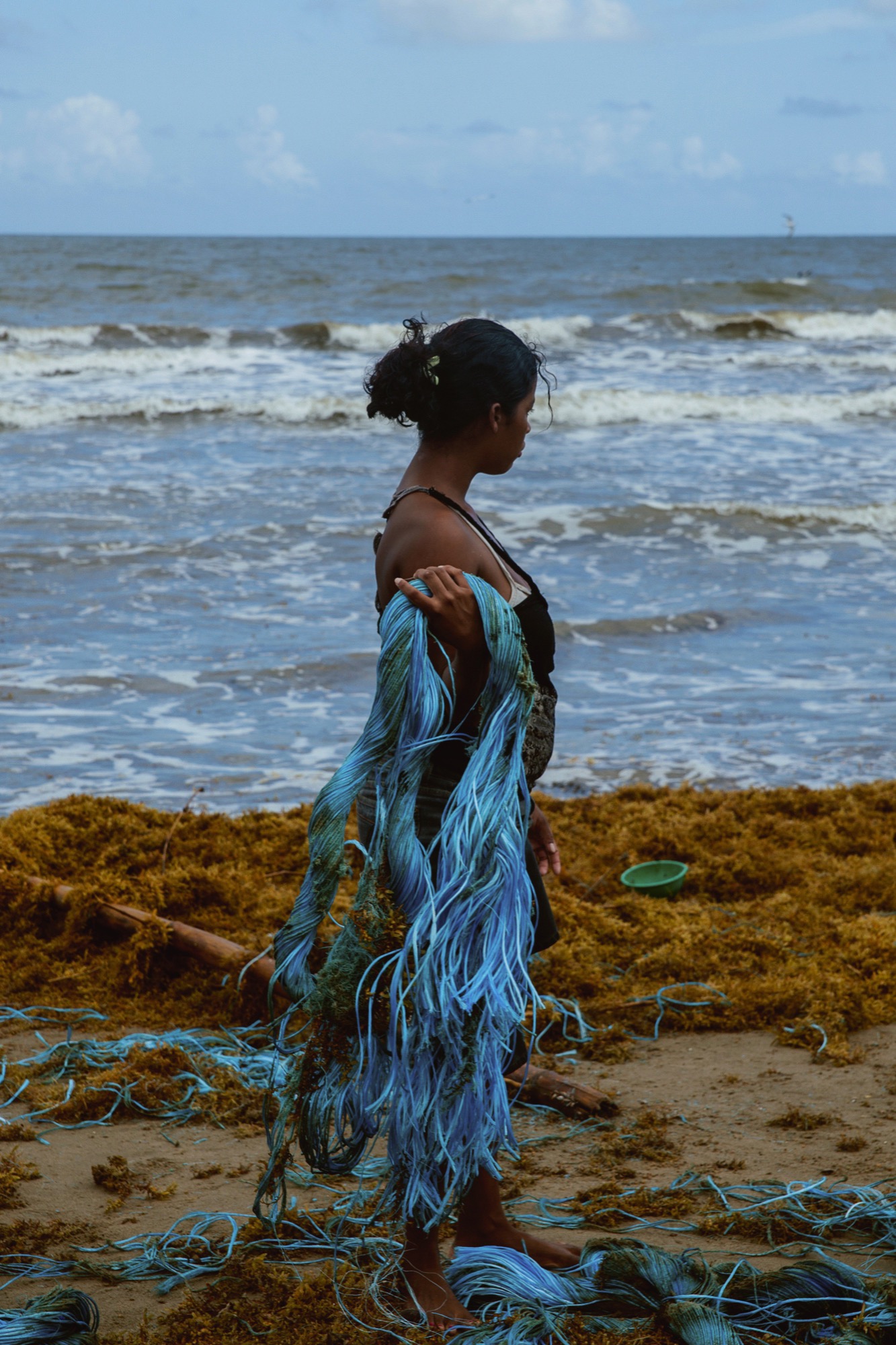
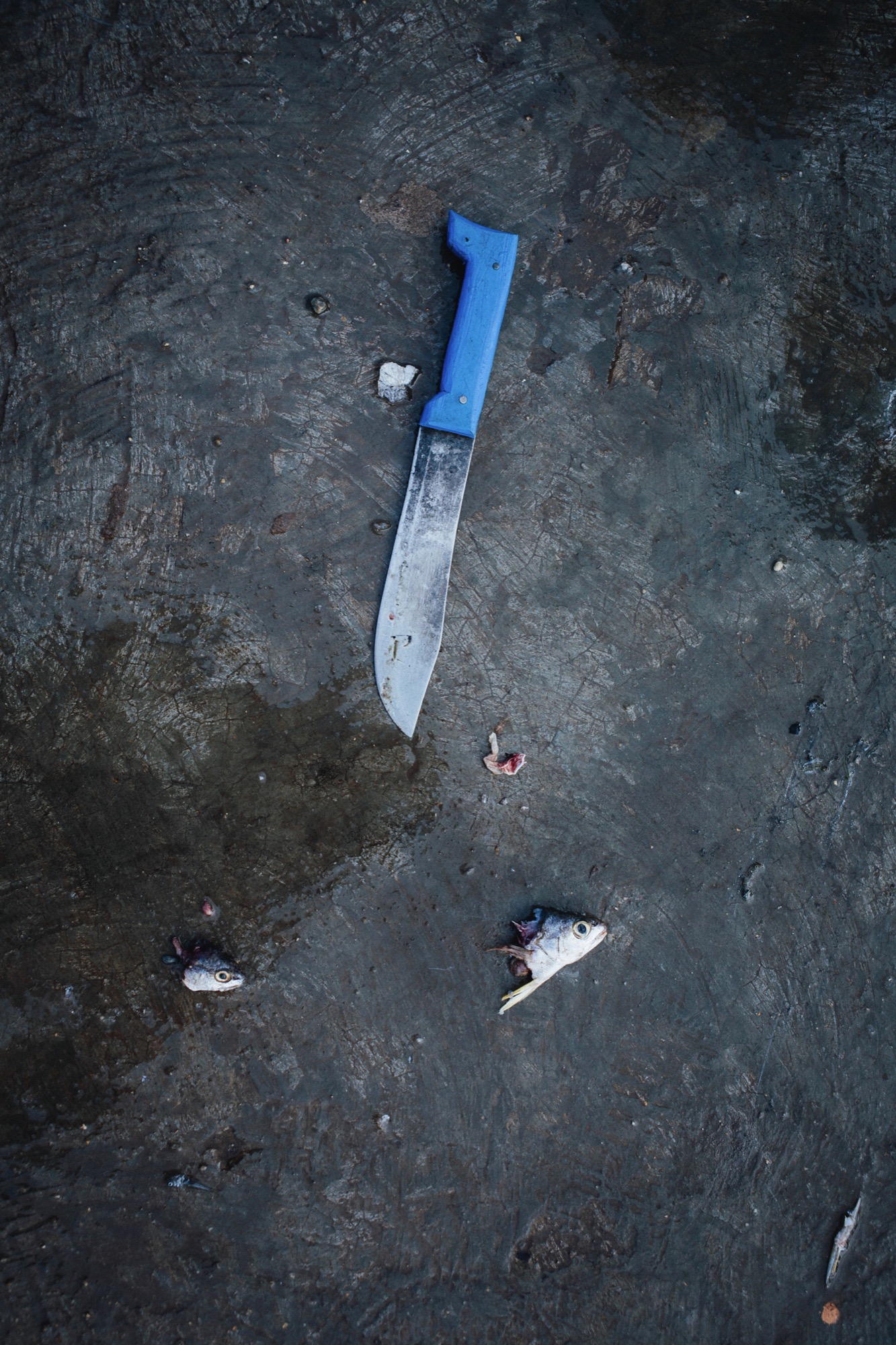
One by one, the images evoke key moments in the daily life of these divers and their working conditions, through portraits, landscapes, and still lifes, reconstructing the atmosphere in which these men execute their tasks. The closeups, tightly framed, provide an intimate introduction to the fishermen. The photographs, all in shades of blue, evoke the world of the ocean, often enhanced by strong contrasts of red and orange that heighten the luminosity of the deep indigo.
The very first image presents the tragic consequences of the work. A young man, his hands held up to either side of his mouth to form a megaphone, looks through the porthole of a hyperbaric chamber. It’s an attempt at communication and contact with his brother, the victim of a fishing accident, to offer him a bit of comfort. It’s a heartbreaking picture, which lends its tone to the book as a whole, notably in the portraits devoted to fishermen, young and old. Throughout the book, death prowls. On page after page, the fragmentary, intense pictures immerse us in the atmosphere, both sombre and luminous, of the lives of the divers and Mazataud’s intimate experience with them.
As a colour photographer, Mazataud pays as much attention to the chromatic qualities as to the composition of his pictures, which often take on the appearance of small paintings. Some photographs, particularly those in the landscape and still life genres, sacrifice contextual information in favour of abstraction. Like a pause, a silence, they attenuate the tragic dimension of the working and living conditions of the inhabitants of Bobel. Translated by Käthe Roth.
Serge Allaire has taught in the department of art history at UQAM. An independent curator and history of photography researcher, he has contributed to Mois de la Photo à Montréal as an author and written for many photography magazines. More recently, he has devoted himself to bringing Quebec photobooks to prominence in Canada and France.