
[Winter 2022]
Anne-Marie Proulx, Le Jardin d’après
By Élisabeth Recurt
Paris, Éditions Loco, 2021, 192 p.
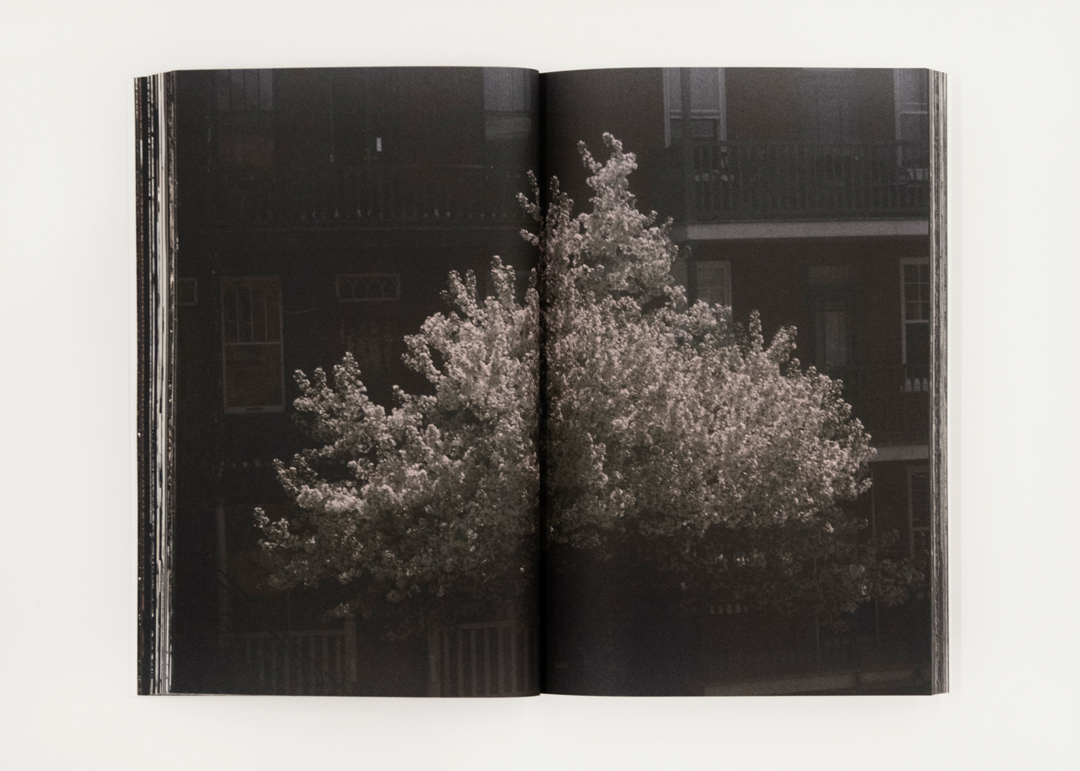
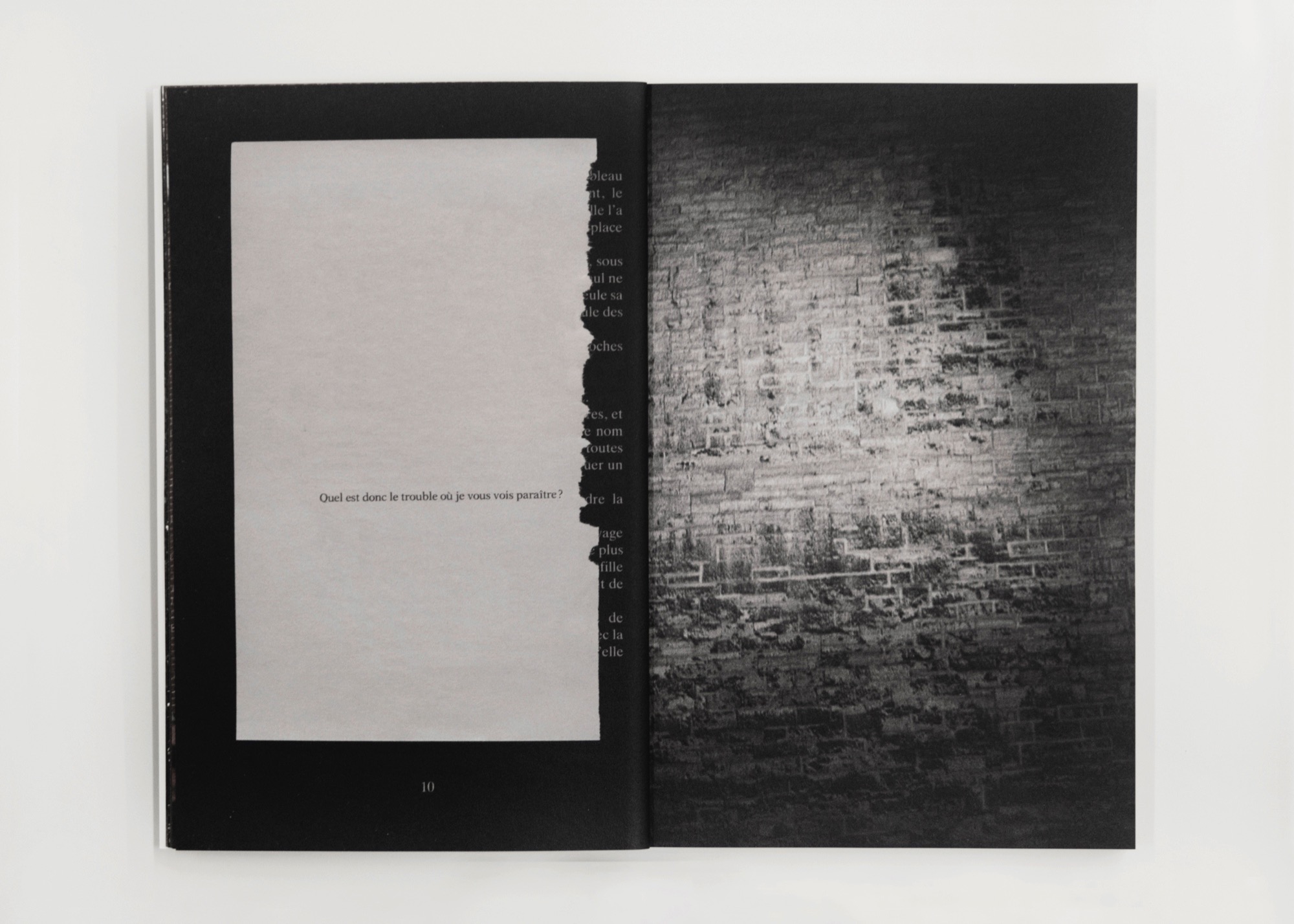
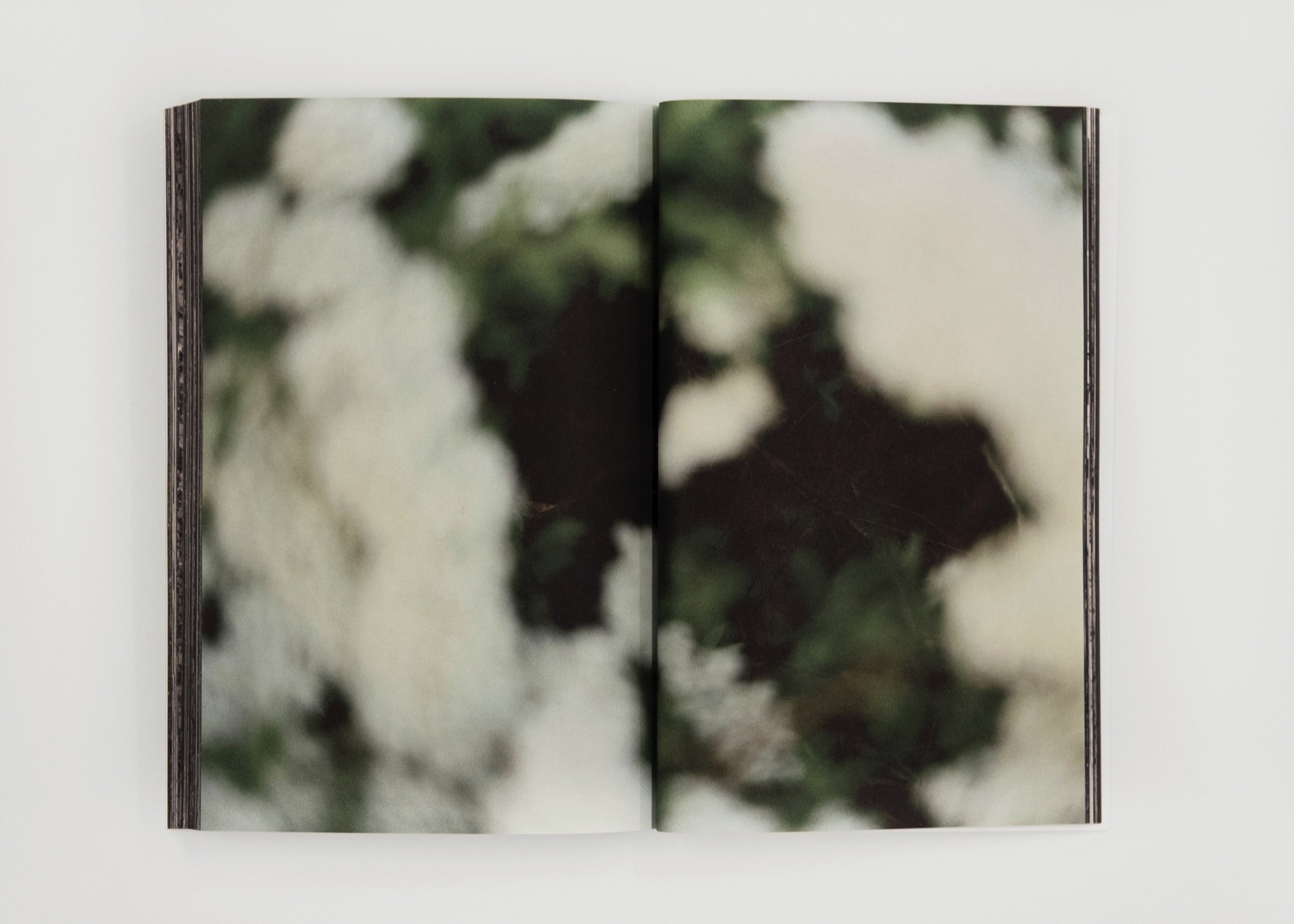
Freely inspired by a novel by Anne Hébert,1 Anne-Marie Proulx’s photobook is composed of 125 black-and-white and colour photographs (taken on a 35 mm analogue camera and a cell phone), lines from plays (spoken by the protagonist of the novel, Flora Fontanges), and an excerpt from the novel itself, Premier jardin. The two books look the same (with the exception of the colour of the banner framing the respective cover pages). Le jardin d’après was previously presented as a photographic installation at L’Espace F in Matane in 2020.
Proulx is known for her creation of poetic worlds that explore our ambiguous connections with our environment, which predestined her for this interpretation of Hébert’s novel. The uncontrollable influx of memories washing over the character of Flora Fontanges when she returns to the city of her birth, which she had deliberately left years before, provokes an uneasy interplay between a search for clues and a denial of the past.
Grasping the essence of this multitemporal novel is the challenge that Proulx rises to: here, she gives Hébert’s work a second life, and her elliptical vision leaves observers to use their own imaginations. In the novel, the city is never named, leaving us the task of constructing an identity that Fontanges herself has difficulty forming. Having returned to play a role in a Samuel Beckett play, she reveals a multiple personality, combining snippets of her youth and the parts she has played onstage. Her fragmented childhood, the characters in the plays she has performed, and figures who have marked the history, small and large, of New France are summoned in turn. The result is a polyphonic novel the duality of which – Fontange’s real and fictional parts – Proulx investigates instinctively: the contradictory aspects of being and appearing, of past and present, of acceptance and escape. Both the subjects and the formal means that Proulx have chosen subtly evoke opposites and skilfully sketch out the landscape.
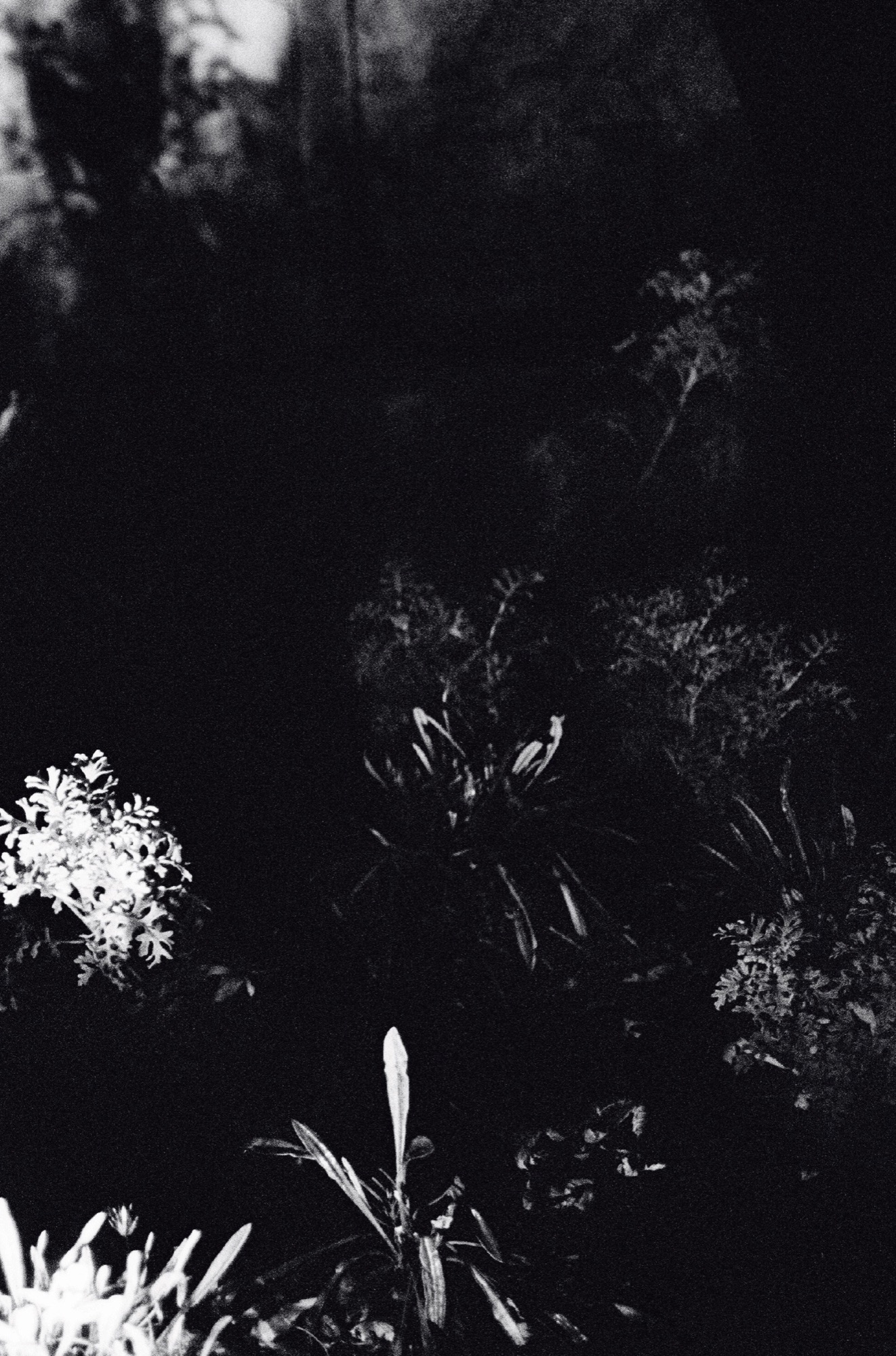
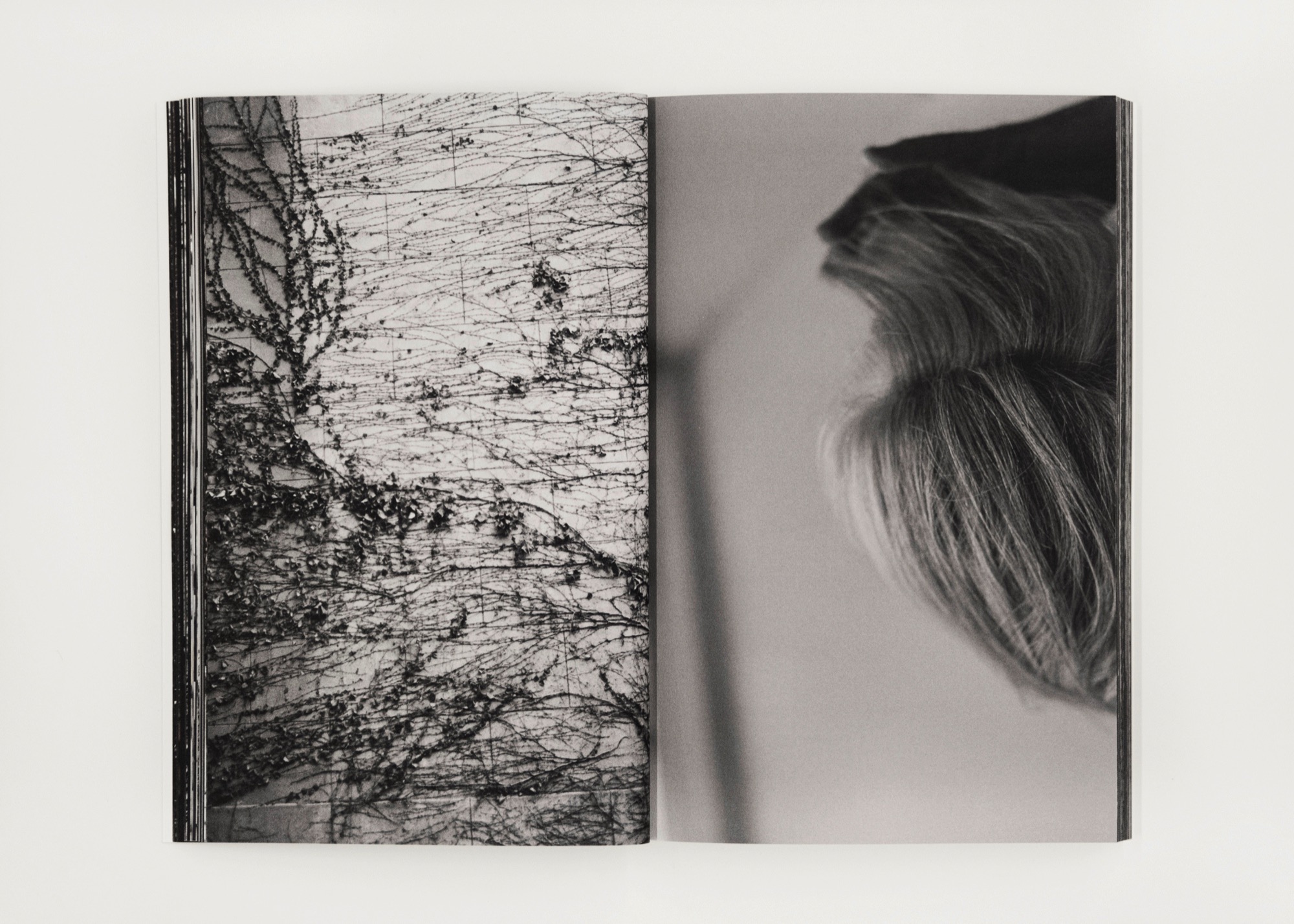
In her captures mainly of elements that are natural (plant motifs whose fragrance we can almost smell) and material (such as sections of wall, door handle, fences, thresholds, wet asphalt), along with a minimal human presence, Proulx favours tight frames, usually removing the possibility of situating the subject in its environment, and thus cutting off the possibility of clues. She concentrates, rather, on defining the subject by rendering the relief, texture, and luminosity that reveal the place’s spirit. With this proximity, she explores what Fontanges prefers to evade until she can no longer ignore it and must face the real, the past. To capture the essence of Fontanges’s confusion, Proulx blurs (which sometimes evokes motion) or darkens the photographs, reflecting the uncomfortable position of a person who has erased her memories even as those memories try to take over her present life. She probes the difficulty of making a clear image of a territory, whether mental or physical – an exercise she had previously engaged in for the installation Nuit des longs jours (2015), composed of dark landscapes. One thinks of Beckett’s line, recited by Fontanges: “Je suis nette, puis floue, puis plus, puis de nouveau floue.” Whereas the blurring that Hébert produces in her novel is induced by points of view and multiple focalizations, reflecting Fontanges’s plural identity, Proulx, through the photograph of pages torn from the novel and the choice of lines quoted intercut with photographs, manages to unveil Fontanges’s wandering spirit. She also employs other strategies for translating the narrative discontinuity of the novel and the difficulty of accessing the real: photographed interstices (such as cracks in the asphalt, in the wall section, in ice) and superimpositions (snow covering rocks, grille in a wall).
Proulx excels in using both unveiling and concealment to link textual and visual elements. Text is omnipresent in her explorations, whether written or not (one thinks of the intimate relationship between oral and territorial in the installation Les falaises se rapprochent, 2017–18). Often working with archives, excerpts of novels, and newspapers, she traces her path and uses her voice to bear witness to the fragility of the links between human presence and territorial strength. Translated by Käthe Roth
Élisabeth Recurt is an art critic, college professor (art history, visual art), cultural columnist on CIBL radio, and long-time contributor to magazines such as ETC and Espace art actuel. She also writes fiction (poetry, novellas, stories).